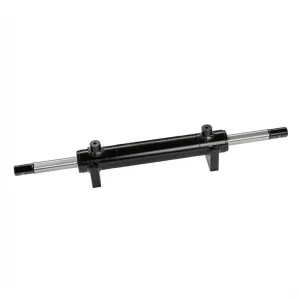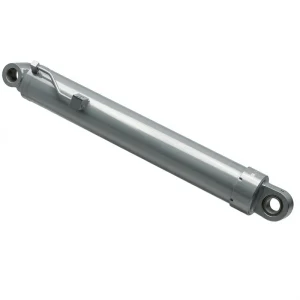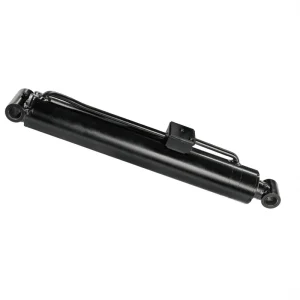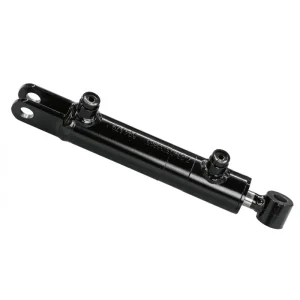
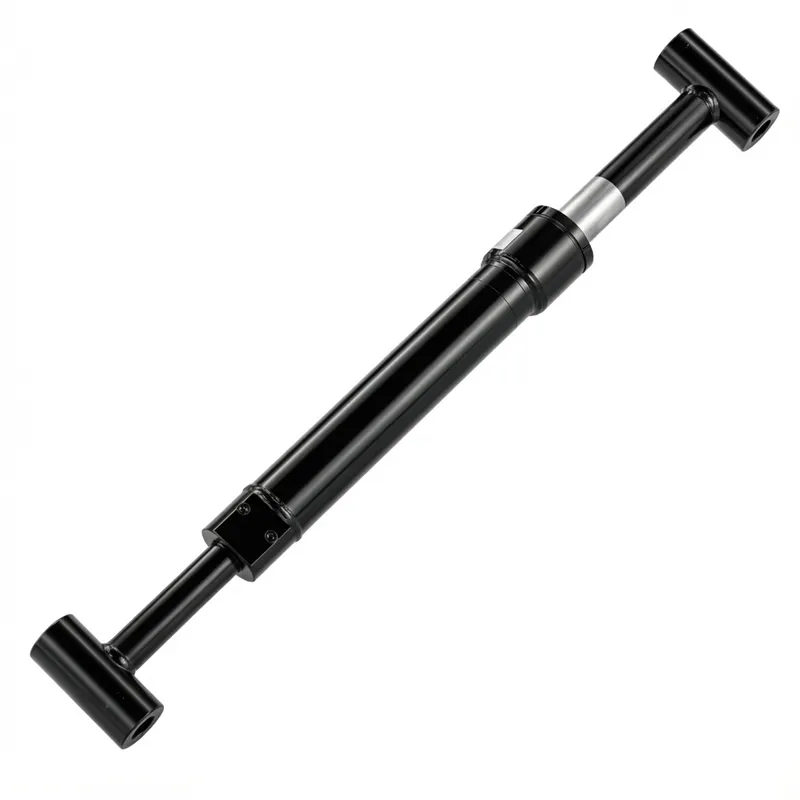
กระบอกปรับมุมบูมหลัก EP-Φ55×Φ50×506
The EP-Φ55×Φ50×506 Main Boom Angle Cylinder (Model HCYY11112005) is engineered for the main boom articulation of aerial work platforms. It features a 55 mm bore, 50 mm rod, and a 506 mm stroke, with a pin-to-pin installation distance of 1259.7 mm. Rated for a working pressure of 21 MPa, it withstands a maximum pressure of 26.5 MPa, ensuring a 1.5:1 safety margin compliant with EN 280 standards. Weighing 32 kg, this cylinder utilizes a clevis-pin mount (R30 radius, 2-Φ30 holes) on both ends for full rotational freedom, preventing side loading during boom elevation. The unit is built with a hard-chrome plated piston rod and premium PU/PTFE seals compatible with ISO VG 46/68 hydraulic oil, designed for reliable performance in demanding outdoor environments across France and the EU.
EP Series | Aerial Work Vehicle Hydraulic Cylinder
EP-Φ55×Φ50×506
กระบอกปรับมุมบูมหลัก
Model HCYY11112005 • Working pressure 21 MPa • Max withstand pressure 26.5 MPa • Trip 506 mm • Installation distance 1259.7 mm • Weight 32 kg • B2B global supply including France and the EU
1. Technical Specifications — EP-Φ55×Φ50×506 Main Boom Angle Cylinder
Model HCYY11112005 • Cylinder series for aerial work vehicle • Main boom angle cylinder
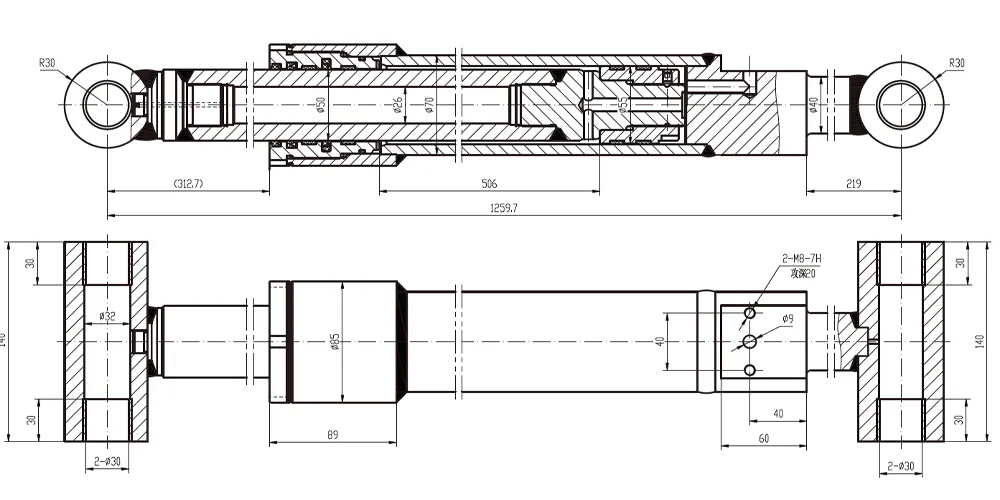
Dimension reference (from engineering drawing): Bore Φ55 mm • Rod Φ50 mm • Trip 506 mm • Installation distance 1259.7 mm • Pin bore R30, 2-Φ30 both ends • Rod-end detail: Φ9 oil hole, 2-M8-7H ports, ΦN20 port depth • Flange detail: Φ32, length 89 mm • Clevis pin dimension: 40 mm / 60 mm spacing • All dimensions in mm.
| Cylinder Model | Specifications (Bore × Rod × Stroke) | Working Pressure | Max Withstand Pressure | Trip (mm) | Installation Distance (mm) | Weight |
|---|---|---|---|---|---|---|
| HCYY11112005 | Φ55 × Φ50 × 506 | 21 MPa | 26.5 MPa | 506 | 1259.7 | 32 kg |
Additional Dimensional Data (from engineering drawing):
| Parameter | Value | Parameter | Value |
|---|---|---|---|
| Bore diameter | Φ55 mm | Rod diameter | Φ50 mm |
| Active stroke (Trip) | 506 mm | Installation distance | 1259.7 mm |
| Pin bore radius | R30 (both ends) | Mounting hole | 2‑Φ30 (both ends) |
| Rod-end oil port | Φ9, 2‑M8‑7H × ΦN20 | Clevis pin spacing | 40 mm / 60 mm |
| Flange diameter | Φ32 | Flange length | 89 mm |
| Head flange height | 140 mm | Base dimension (Z) | 3(12.7) mm shoulder |
| Retracted section length | 219 mm (rod-end body) | Weight | 32 kg |
| สื่อกลางในการทำงาน | Hydraulic mineral oil ISO VG 46 / VG 68 | Acting type | Double acting |
All dimensions in millimeters unless stated otherwise. Dimensional drawing shows cross-section view with internal seal groove, guide bush position, and piston assembly arrangement. Custom bore, stroke, and port configurations available on request for OEM fitment.
2. About Our Φ55×Φ50×506 Main Boom Angle Cylinder
The EP-Φ55×Φ50×506 is a precision-engineered main boom angle cylinder designed specifically for the boom articulation mechanism of aerial work vehicles — including truck-mounted boom lifts, articulated knuckle boom platforms, and self-propelled telescopic work platforms commonly deployed on French construction sites, utility infrastructure maintenance operations, and industrial facility service projects. The cylinder controls the angular elevation of the main boom assembly, converting hydraulic pressure into the precise linear force needed to raise or lower the boom through its full operating arc while maintaining stable load positioning at height.
Carrying model number HCYY11112005, this elevation cylinder is built to the dimensional specification Φ55×Φ50×506 — denoting a 55 mm bore diameter, 50 mm rod diameter, and a 506 mm stroke. The cylinder operates at a rated working pressure of 21 MPa (equivalent to 210 bar or approximately 3,046 PSI) and withstands a maximum test pressure of 26.5 MPa, providing a safety margin that meets the structural load verification requirements of EN 1570-1 (safety requirements for lifting tables) and the more broadly applicable EN 13000 (mobile cranes — safety) that governs aerial work platforms used across European Union member states including France.
With an installation distance of 1,259.7 mm from pin center to pin center in the fully extended position and a unit weight of 32 kg, this cylinder integrates into the main boom pivot linkage of the aerial work vehicle chassis without requiring structural modifications to the boom frame. The double-acting configuration — accepting pressurized fluid for both extension and retraction — gives the aerial platform control system precise, responsive authority over the main boom angle throughout the full working range of the machine.
3. Five Key Product Advantages
Operating at 21 MPa rated working pressure with a maximum withstand pressure of 26.5 MPa, this main boom angle cylinder handles the combined weight of the boom structure, operator platform, and rated payload load throughout the full elevation arc. The 26% safety margin between working and maximum withstand pressure aligns with EN 12999 (lorry loaders) and EN 280 (mobile elevating work platforms) structural verification requirements applicable to aerial work vehicles in France.
The 55 mm bore diameter generates adequate thrust force for main boom elevation at the rated pressure, while the 50 mm rod diameter provides the compressive buckling resistance needed across the full 506 mm stroke and the 1,259.7 mm pin-to-pin installation distance. This bore-to-rod area ratio supports both push and pull force requirements in the double-acting circuit, ensuring consistent boom angle control under both lifting and gravity-assisted descent conditions encountered in French utility and construction work platforms.
The clevis-eye end fittings on both cylinder ends (R30 radius pin bore, 2-Φ30 mounting holes per end per the engineering drawing) allow full rotational freedom at both pivot points as the main boom traces its elevation arc. This articulation mount prevents side loading on the piston rod — a failure mode that causes accelerated seal and rod bearing wear in fixed-mount cylinders used incorrectly in angular-travel applications. The pin bore geometry matches standard aerial work vehicle chassis pivot pins used across European OEM specifications.
The 506 mm active stroke translates to a total installation distance of 1,259.7 mm from closed to open position, which matches the geometric requirements of the main boom pivot geometry on the target vehicle platform. A compact, well-proportioned stroke-to-installation ratio reduces the flexural bending moment on the rod under side loading conditions, and the shorter retracted length simplifies packaging within the boom structure — an important consideration for compact articulated work platforms used in dense urban French infrastructure work zones.
The EP series boom elevation cylinder is available as a direct aftermarket replacement for OEM cylinders matching the HCYY11112005 specification. For French aerial work vehicle fleet operators and service workshops managing ongoing maintenance programs, this availability eliminates the long lead times and high costs associated with ordering replacement boom cylinders directly from OEM parts channels, while maintaining the dimensional and pressure specification conformity required by EN 280 maintenance inspection criteria for mobile elevating work platforms in France.
4. Working Principle — How the Boom Elevation Cylinder Controls Aerial Platform Angle
The main boom angle cylinder in an aerial work vehicle is a double-acting hydraulic cylinder positioned between two pivot points in the boom lifting linkage — typically connecting the chassis turntable frame or lower boom section to the upper main boom structure. When the operator commands a boom rise, the aerial platform control system directs pressurized hydraulic fluid from the pump into the cap-end port of the boom cylinder. The pressurized fluid acts on the full piston face area (calculated from the 55 mm bore: A = π/4 × 55² ≅ 2,376 mm²), generating a compressive push force that extends the rod and pivots the main boom upward through the kinematic arc defined by the pivot geometry of the machine.
When boom descent is commanded, the control valve switches and directs pressure to the rod-end port, while the cap-end port is connected to the hydraulic return line. The annular piston area (cap-end bore area minus rod area: π/4 × (55² − 50²) ≅ 415 mm²) generates the pull force that retracts the rod and lowers the boom. In practice, gravity acting on the boom and platform assembly also assists descent — the rod-end pressure provides controlled deceleration, allowing the operator to manage descent rate precisely. This is why the boom and tilt cylinder design of an aerial platform must account for both active force generation and passive deceleration loading.
The hydraulic lift cylinder circuit in an aerial work vehicle typically includes a load-holding valve (a counterbalance valve or pilot-operated check valve) mounted directly at the cap-end port of the boom elevation cylinder. This valve traps hydraulic fluid in the cap end when the control valve returns to neutral, preventing the boom from descending under gravity load if a hydraulic hose fails between the control valve and the cylinder. The load-holding valve is a mandatory safety device specified in EN 280 section 5.9 for mobile elevating work platforms operated in France and across EU member states, and the EP cylinder port geometry is designed to accept standard metric-thread counterbalance valve cartridges without additional machining.
The cylinder rod is finished with a chrome plating layer that provides corrosion resistance against the outdoor environmental exposure inherent in aerial work platform operation — morning condensation, rain, UV exposure, and contact with cleaning agents used during routine maintenance. The chrome layer hardness (typically Rockwell C 65 to 70) also resists surface damage from the boom-pivot dust seal contact during repeated extension and retraction cycles throughout the service life of the aerial work vehicle.
5. Materials and Construction
The performance and service life of the EP main boom angle cylinder are determined by precise material choices that reflect the demanding duty cycle of aerial work vehicle operation — sustained high-pressure loading, cyclical extension and retraction, outdoor environmental exposure, and the safety-critical nature of the application in which a structural hydraulic cylinder failure could result in the platform and operator descending uncontrolled from elevation.
The barrel is produced from cold-drawn seamless steel tube in 27SiMn or equivalent high-strength low-alloy steel grade, selected for its combination of yield strength (above 700 MPa), good weldability, and toughness under dynamic loading. The barrel inner bore is honed to Ra 0.2 to 0.4 μm surface finish — consistent with what is achieved on the aftermarket hydraulic cylinders used in European aerial work platform service — providing the seal contact surface quality needed for minimum dynamic seal leakage across the full operating pressure range up to 26.5 MPa maximum withstand.
The 50 mm diameter piston rod is machined from alloy steel bar (45# or 40Cr grade), induction-hardened to HRC 50 to 58 at the rod surface, and hard-chrome plated to a minimum of 25 μm. This construction matches the piston rod specification of the hydraulic lift cylinder for aerial work vehicles in the European aftermarket hydraulic cylinders segment. The chrome layer provides the corrosion resistance needed for prolonged outdoor exposure on aerial platforms in coastal French cities like Nantes, Bordeaux, and Marseille where salt-laden air accelerates surface oxidation on unprotected steel.
The piston carries the primary dynamic seal assembly and the wear rings that center the piston within the bore under side loading. The piston is machined from ductile iron (GGG50 grade) or alloy steel to provide adequate seal groove dimensional accuracy, with the piston-to-rod connection using a high-strength threaded or welded joint verified for the full rated load at 21 MPa. The gland (front seal carrier) is machined from structural steel or ductile iron and carries the rod seal, dust wiper, and guide bush that together form the primary barrier against external contamination ingress into the cylinder bore.
The rod and piston seals are selected from premium seal compound families — polyurethane (PU) for the dynamic rod seal, PTFE-backed O-ring energized seals for the piston assembly, and PTFE or NBR compounds for the wear rings. These compounds are chosen for compatibility with ISO VG 46 / VG 68 mineral hydraulic oil across the operating temperature range of -20 to +80 degrees Celsius, covering the conditions encountered in both alpine French construction sites in winter and summer operations on hot concrete surfaces in southern France. The dust wiper prevents contamination ingress during boom retraction.
Looking for a compatible forklift lifting cylinder or boom cylinder for your aerial work vehicle or material handling fleet? Our range covers a wide selection of hydraulic lift cylinder products for industrial applications.
6. Regulatory Compliance — France and International Standards
Boom angle cylinders used in aerial work vehicles are safety-critical hydraulic components subject to a comprehensive regulatory framework covering design, testing, inspection, and maintenance across France and the European Union. Engineers and fleet managers sourcing replacement or OEM cylinders must ensure compliance with the applicable standards.
France and EU (EN 280 — Mobile Elevating Work Platforms): EN 280:2013+A1:2015 is the primary European standard governing the safety of mobile elevating work platforms (MEWPs), the category of machine in which this boom elevation cylinder operates. It specifies hydraulic circuit safety requirements including load-holding valve mandatory installation at the boom cylinder port (section 5.9), cylinder test pressure requirements (minimum 1.5 times rated working pressure — our 26.5 MPa maximum withstand pressure satisfies this for the 21 MPa rated cylinder), and structural verification requirements that the cylinder must meet as a load-bearing component. French authorities require that MEWPs operating on public works or French government-managed infrastructure sites carry CE marking under the Machinery Directive 2006/42/EC, with the boom hydraulic cylinder covered by the machine Declaration of Conformity.
EN 13000 (Mobile Cranes) and EN 12999 (Lorry Loaders): Truck-mounted aerial platforms and knuckle boom lorry loaders used in France also fall under EN 13000 and EN 12999 respectively, which impose additional hydraulic cylinder requirements including fatigue life calculation per EN 13852 methodologies and hydraulic circuit safety requirements aligned with EN ISO 4413. The EP cylinder design is dimensioned and rated to satisfy the structural load requirements of these standards for the bore and pressure combination specified.
EN ISO 4413 (Hydraulic Fluid Power — General Rules): This European standard governs the design, construction, and installation of hydraulic systems in machinery sold across the EU including France. It mandates minimum proof pressure testing (satisfied by our 26.5 MPa maximum withstand test), seal material compatibility documentation, and hydraulic hose/fitting pressure ratings that must match or exceed the cylinder rated working pressure. Compliance with EN ISO 4413 is incorporated into the CE marking requirements for the aerial work vehicle as a complete machine.
INRS and CNAMTS Inspection Requirements (France): In France, aerial work platforms above 2 metres in height are subject to periodic safety inspection requirements administered through the Institut National de Recherche et de Securite (INRS) guidelines and enforced by the Caisse Nationale de l Assurance Maladie des Travailleurs Salaries (CNAMTS). Maintenance inspection checklists for MEWPs specifically include hydraulic cylinder external seal inspection for leakage, rod surface condition assessment, and verification that load-holding valves are correctly installed and functional — all documentation requirements our EP boom cylinder can support through its quality manufacturing record and dimensional inspection reports.
ISO 9001:2015 and Quality Certification: Our manufacturing facility operates under ISO 9001:2015 quality management certification, providing documented material traceability, dimensional inspection records, and pressure test certificates for every production batch of boom elevation cylinders. These documents are typically required by French aerial work vehicle fleet operators and maintenance contractors when qualifying new cylinder suppliers for their safety-critical parts programs.
7. Application Scenarios
The EP-Φ55×Φ50×506 boom elevation cylinder is engineered for the boom elevation mechanism of aerial work vehicles — a category of equipment that encompasses a range of machine types deployed across French and European construction, utilities, and industrial maintenance sectors.
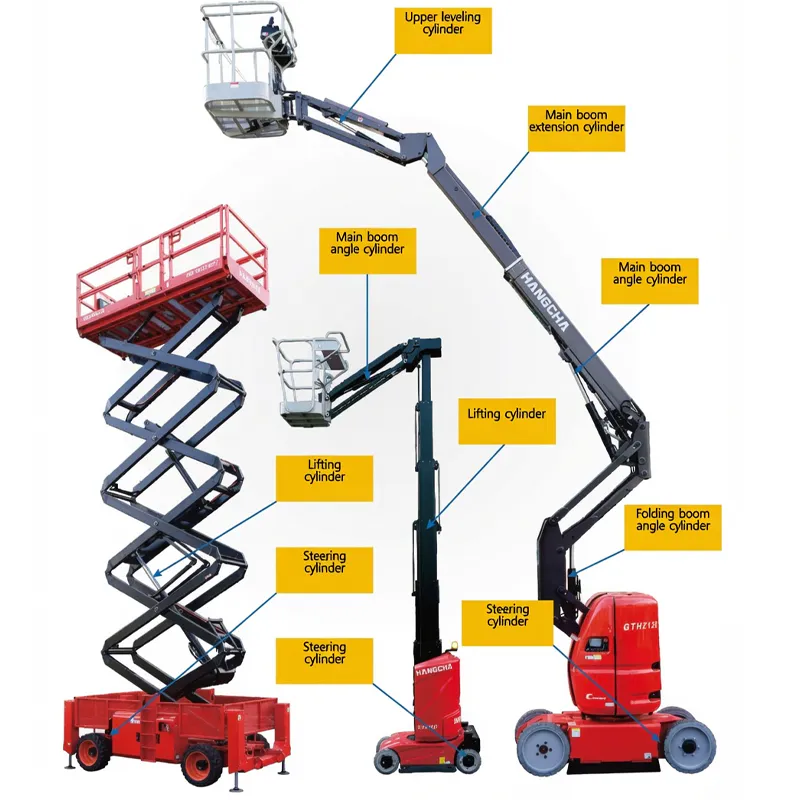
Articulated boom lifts use a boom elevation cylinder (often referred to as a boom cylinder in this context) at the pivot connecting the lower and upper boom sections. This is the primary elevation mechanism — extending the cylinder raises the main boom upward from its stowed horizontal position. In French construction sites across Paris, Lyon, and Bordeaux, articulated boom lifts regularly access heights of 15 to 30 metres, placing sustained demands on the boom elevation cylinder that the EP 21 MPa rated unit is designed to meet over a multi-year service life.
Truck-mounted aerial platforms (known in France as nacelles sur camion) use a heavy-duty main boom angle cylinder to rotate the main boom from the stowed transport position to the elevated working position. The cylinder in this application experiences the highest structural loading at the initial boom lift phase — when the boom is horizontal and the gravity moment arm is greatest — which is where the 21 MPa rated pressure of the EP cylinder provides the force margin needed for reliable operation with platforms at full rated capacity.
Electric power line maintenance vehicles and telecommunications tower access vehicles operated by French utility companies (ENEDIS, Orange, GRDF) use precision-controlled boom cylinders that must hold the operator platform at a fixed elevation for extended periods while line maintenance work is carried out. The load-holding function of the boom elevation circuit — combined with a correctly specified counterbalance valve at the cylinder port — is the primary safeguard against platform descent during these static-hold operations.
Self-propelled boom lifts used inside French industrial facilities — automotive assembly plants, aerospace manufacturing halls, food processing plants — access elevated equipment, structural steel, and overhead conveyors. These indoor applications demand low-emission, electrically powered platforms where the hydraulic boom cylinder is driven by a battery-powered electric hydraulic pump. The EP cylinder operates at the same pressure rating in electric-powered systems as in engine-powered machines, with identical dimensional and port specifications.
Specialized underbridge inspection platforms and bridge maintenance access vehicles used on French road and rail infrastructure (by SNCF Reseau, SANEF, and Departmental road authorities) deploy articulated boom systems with main boom angle cylinders that must operate reliably in exposed outdoor environments including wind loading above structures. The 506 mm stroke of the EP cylinder provides the boom angular travel needed to position the inspection platform relative to the bridge deck or understructure element being surveyed or repaired.
Aerial platforms and cherry picker type vehicles (nacelles arboricoles) used by French municipal green space departments and private arborists for tree surgery and canopy management operate in environments where the boom cylinder is frequently driven to its full elevation angle to access high branch zones. This application involves large main boom angle changes in short time intervals, placing the cylinder through high cycle counts that are best served by a main boom angle cylinder with premium seal materials and a bore finish designed for low-friction, long-interval maintenance requirements.
8. Compatible Products — Complete Aerial Work Vehicle Hydraulic Supply
The EP boom angle cylinder is one component in a complete aerial work vehicle hydraulic system. We supply compatible hydraulic products that support the full system from primary lift cylinders through secondary tilt and steering cylinders, ensuring dimensional and pressure specification compatibility across the entire machine hydraulic circuit.
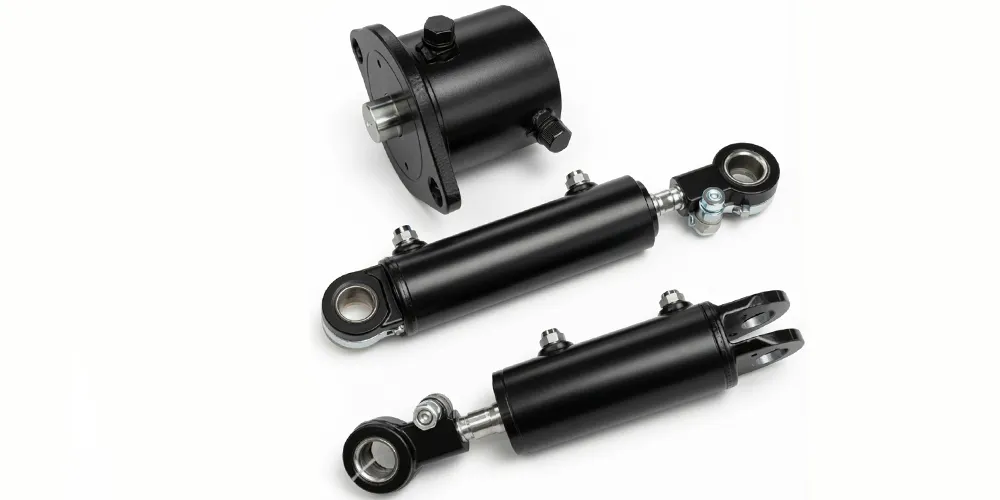
The tilt cylinder on an aerial work vehicle controls the angle of the work platform or boom section relative to the horizontal, ensuring the platform remains level as the boom elevation changes. Using a tilt cylinder from the same hydraulic cylinder supply program as the main boom angle cylinder ensures compatible port sizes, operating pressure ratings, and seal material specifications — simplifying fluid compatibility and maintenance scheduling for French aerial platform fleet operators.
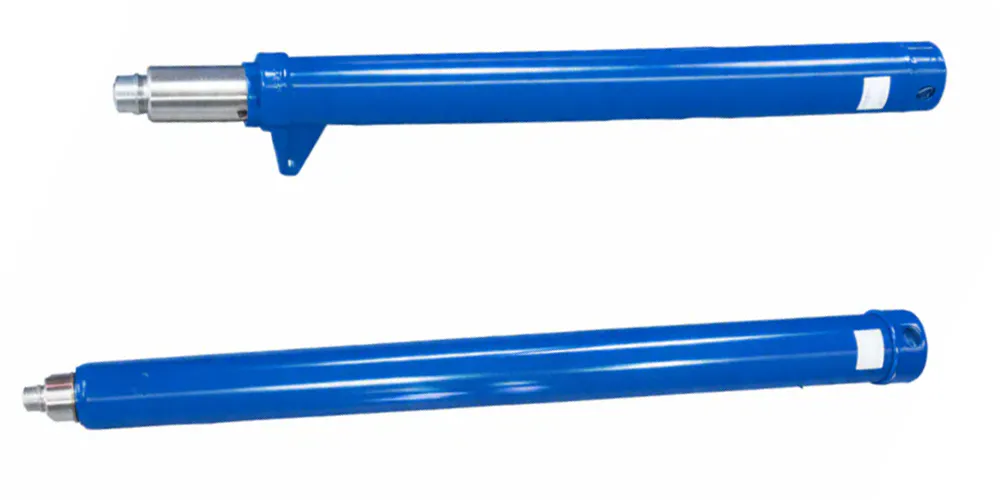
For fleets that include both aerial work vehicles and counterbalance forklifts, sourcing lift cylinders — including the กระบอกยกไฮดรอลิก for forklift mast applications — from the same supplier as the boom cylinder streamlines procurement and enables consolidated maintenance part stocking. Our forklift lifting cylinder range covers OEM and aftermarket replacement cylinders for major European forklift brands used in French logistics and manufacturing facilities.
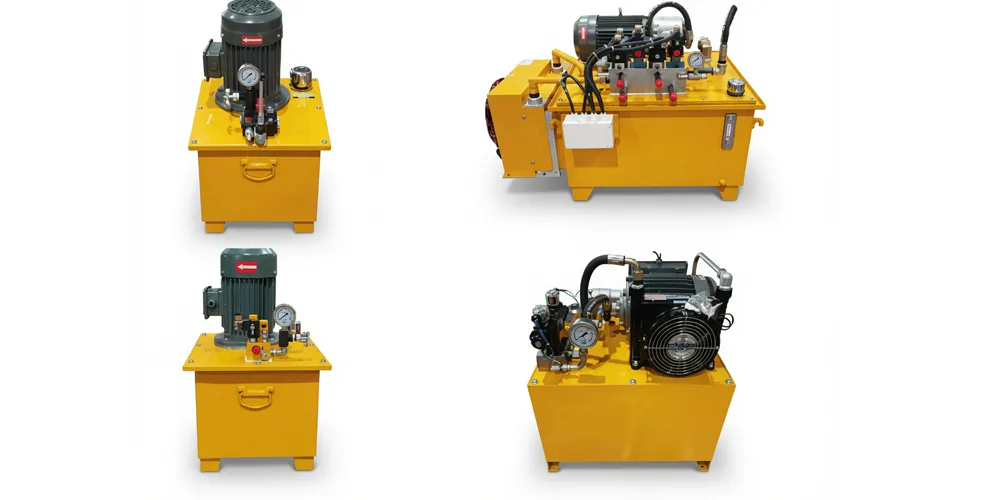
A correctly specified hydraulic pump station — matched to the boom cylinder bore areas, rated system pressure of 21 MPa, and required cycle speed of the aerial platform — ensures consistent and reliable boom angle control performance. For French aerial platform service workshops building or refurbishing machine hydraulic systems, pairing the boom cylinder with a correctly sized pump station from our hydraulic systems program eliminates flow mismatches that cause slow boom response or excessive pump heating.
9. About Us
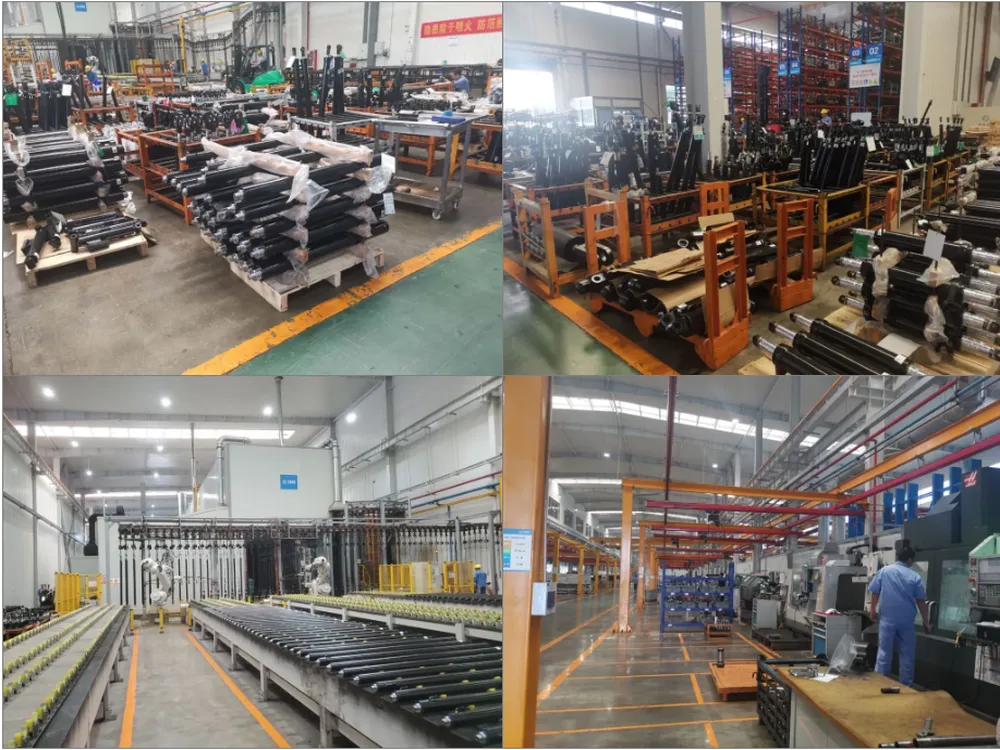
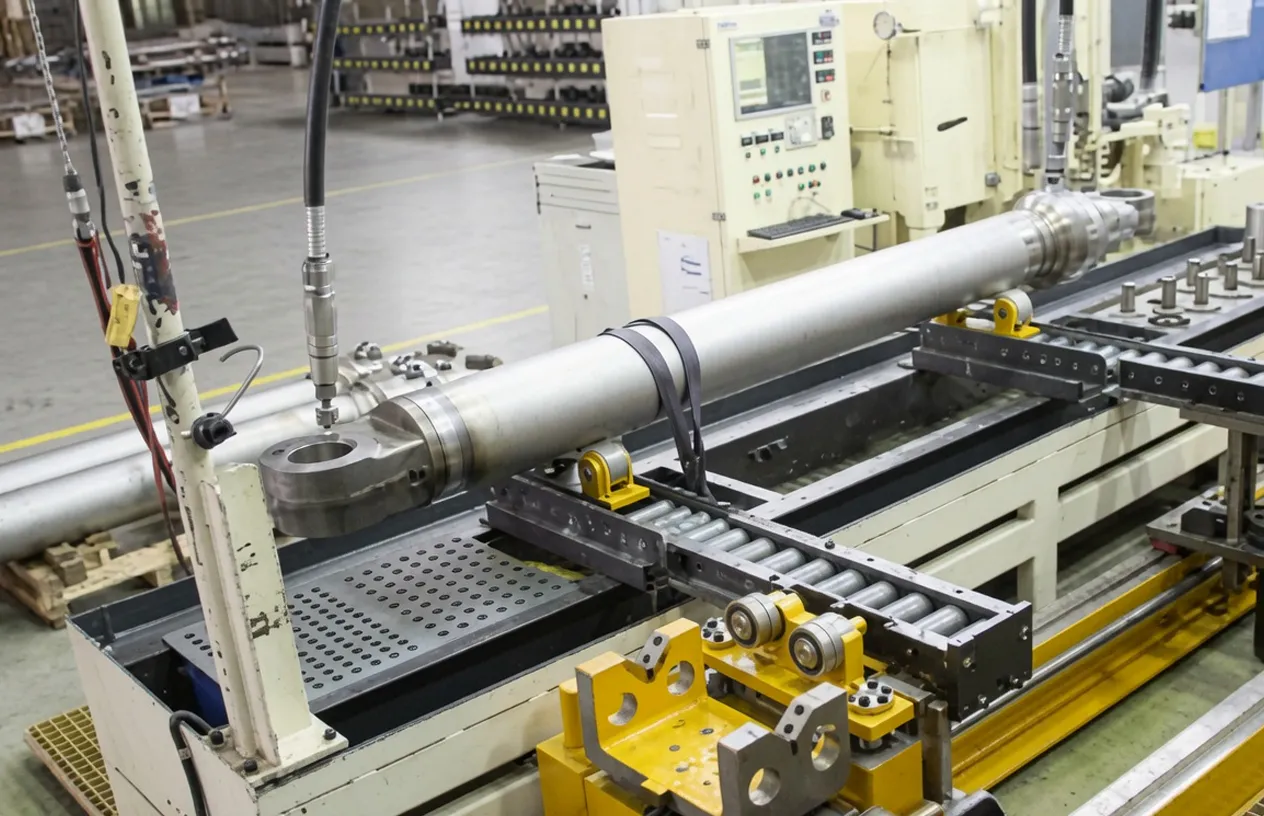
We are a specialist manufacturer and global supplier of hydraulic cylinders for aerial work vehicles, industrial lift equipment, and mobile crane applications. Our ISO 9001:2015 certified production facility operates precision CNC machining centers, automated honing lines, hard-chrome plating baths, and dedicated hydraulic cylinder assembly and test stations. Every cylinder produced passes a hydrostatic pressure test to maximum withstand pressure before dispatch, with a test certificate provided as part of the standard documentation package.
We export hydraulic cylinders to France, Germany, Italy, Spain, Belgium, Netherlands, Poland, and across the broader European Union, as well as to North America and the Middle East.
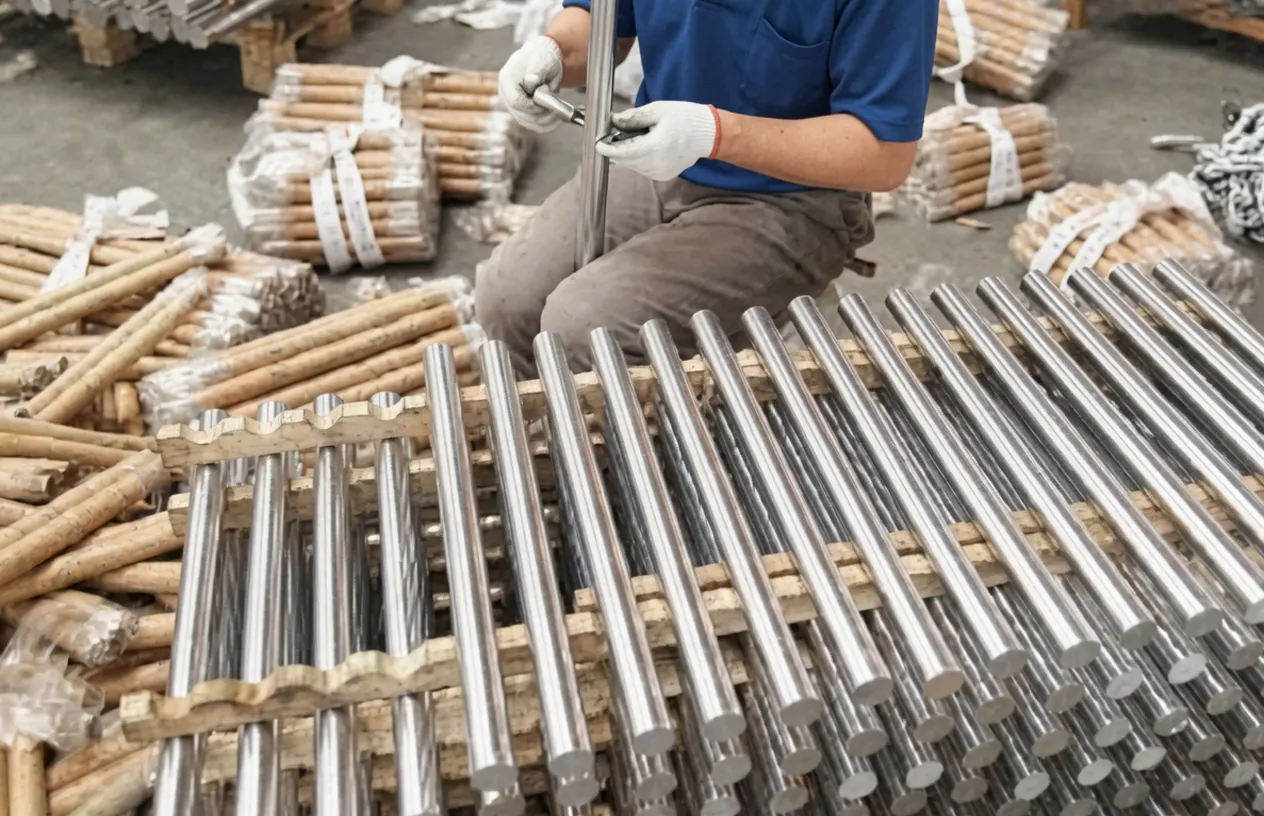
WorkShop
Frequently Asked Questions
Q1. What is a main boom angle cylinder and how does it function in an articulated aerial work platform used on French construction sites?
Q2. What working pressure rating should the main boom angle cylinder have for a mobile elevating work platform used in France under EN 280?
Q3. What is a boom angle in the context of aerial work vehicles and why does it matter for cylinder sizing when selecting an aftermarket hydraulic cylinder for a French work platform?
Q4. Which hydraulic cylinder seal materials are best for a boom cylinder operating on outdoor aerial platforms in the humid Atlantic climate of western France?
Q5. Where can I find a reliable boom cylinder supplier in France with proper EN 280 documentation and short lead times for aerial platform maintenance?
Q6. How do I identify the correct installation distance for a main boom angle cylinder when replacing a worn unit on a cherry picker or boom lift in Bordeaux?
Q7. What is the typical service life of a main boom angle cylinder on a heavy-duty aerial work vehicle operating in French infrastructure maintenance?
Q8. How does the main boom angle cylinder differ from a boom offset cylinder and which configuration does the EP-HCYY11112005 represent?
Editor: PXY