EP-Φ100×Φ60×1100 Telescopic Hydraulic Cylinder
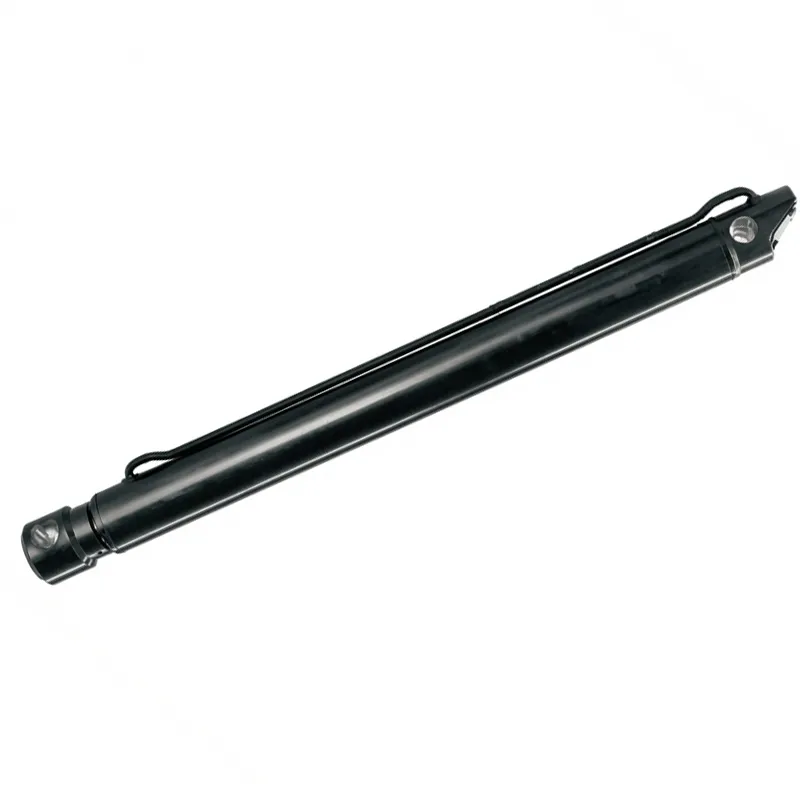
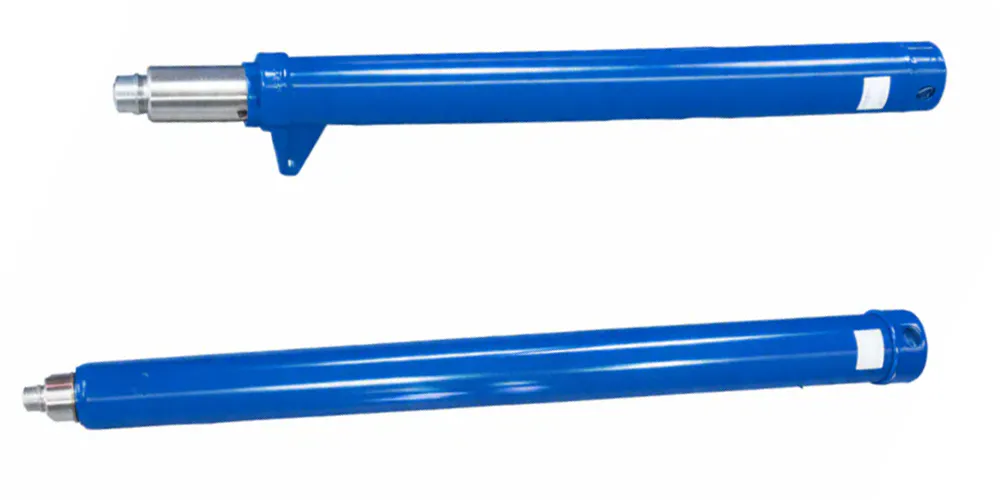
The EP-Φ100×Φ60×1100 Telescopic Hydraulic Cylinder is a compact yet powerful telescopic hydraulic cylinder designed for applications requiring extended stroke within limited installation space. It features a 100 mm bore, 60 mm rod diameter, and an 1100 mm stroke, with a total installation distance of 1400 mm and a weight of 90 kg. Engineered for high-pressure environments, it operates at a working pressure of 30 MPa and withstands up to 35 MPa, ensuring reliable performance under heavy loads. Ideal for dump trucks, lifting platforms, and material handling equipment, this cylinder combines durability with efficient force transmission. Its robust construction supports demanding industrial use while maintaining precise control during extension and retraction cycles.
EP Series | Environmental Protection Hydraulic Cylinder
EP-Φ100×Φ60×1100
Telescopic Hydraulic Cylinder
Model HCYY11112015 • Working pressure 30 MPa • Max withstand pressure 35 MPa • Trip 1100 mm • Installation distance 1400 mm • Weight 90 kg • B2B global supply including France and the EU
1. Technical Specifications — EP-Φ100×Φ60×1100 Telescopic Hydraulic Cylinder
Model HCYY11112015 • Cylinder series for environmental protection machinery • Telescopic cylinder
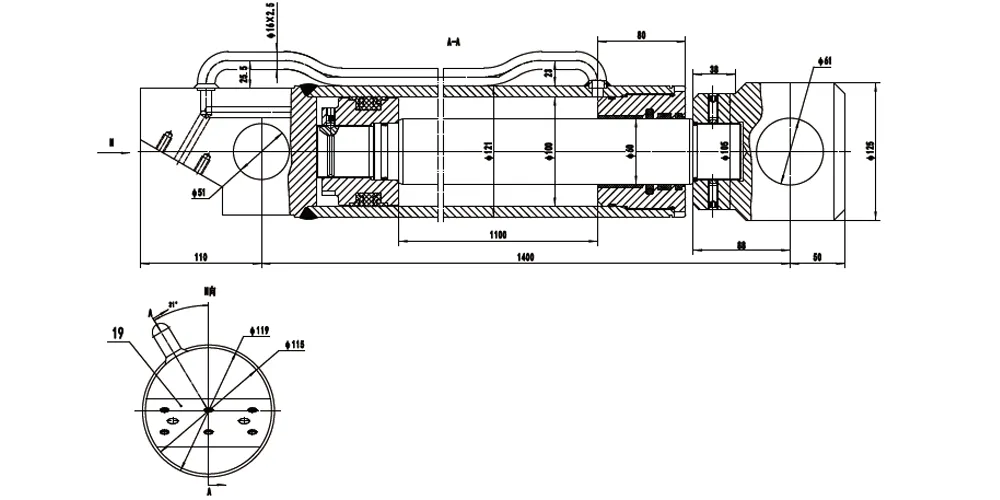
Specifications: Primary bore Φ100 mm • Inner rod diameter Φ60 mm • Total trip 1,100 mm • Installation distance 1,400 mm • All dimensions in millimeters unless otherwise stated.
| Cylinder Model | Specifications | Working Pressure | Max Withstand Pressure | Trip (mm) | Installation Distance (mm) | Weight |
|---|---|---|---|---|---|---|
| HCYY11112015 | Φ100 × Φ60 × 1100 | 30 MPa | 35 MPa | 1100 | 1400 | 90 kg |
Extended Technical Performance Data:
| Parameter | Value / Specification | Parameter | Value / Specification |
|---|---|---|---|
| Cylinder type | Two-stage telescopic | Acting type | Double acting |
| Primary bore | Φ100 mm | Inner rod diameter | Φ60 mm |
| Total active stroke (Trip) | 1,100 mm | Installation distance (pin-to-pin) | 1,400 mm |
| Rated working pressure | 30 MPa (300 bar) | Maximum withstand pressure | 35 MPa (350 bar) |
| Primary stage extension force (at 30 MPa) | approx. 236 kN | Secondary stage extension force (at 30 MPa) | approx. 85 kN |
| Bore surface finish | Ra 0.2 – 0.4 μm (CNC honed) | Rod surface | Hard chrome, minimum 25 μm |
| Seal system | PU rod seals, PTFE-backed piston seals, dust wipers | Hydraulic fluid compatibility | ISO VG 46 / VG 68 mineral oil |
| Operating temperature range | -20°C to +80°C | Unit weight | 90 kg |
| End fittings | Clevis-pin mount (trunnion pivot, both ends) | Application category | Environmental protection vehicle cylinder series |
Force calculations are theoretical at rated working pressure on the stated bore areas; actual output force depends on friction, seal losses, and hydraulic circuit efficiency. Custom bore dimensions, stroke lengths, port positions, and seal materials available on request for OEM integration into specific environmental protection vehicle platforms.
2. About Our Φ100×Φ60×1100 Telescopic Hydraulic Cylinder
The EP-Φ100×Φ60×1100 is a heavy-duty telescopic hydraulic cylinder engineered specifically for environmental protection machinery — a category that includes refuse collection vehicles, compactor trucks, rear-loading garbage trucks, and street cleaning equipment deployed by municipal sanitation departments and private waste management contractors across France and the broader European Union. Bearing model number HCYY11112015, this telescopic hydraulic cylinder combines a 100 mm primary bore, a 60 mm inner rod diameter, and a 1,100 mm total trip in a two-stage telescoping design that delivers long working stroke within a compact retracted length, making it ideal for rear-opening tailgate actuators and body-lifting mechanisms where the stowed length must remain within tight vehicle body constraints.
At a rated working pressure of 30 MPa and a maximum withstand pressure of 35 MPa, this telescopic hydraulic cylinder operates at the upper end of the pressure range for compact environmental vehicle applications. The 35 MPa proof test pressure corresponds to a 1.17 times safety margin above the rated working pressure — a conservative but appropriate test criterion given that refuse vehicle hydraulic systems experience frequent pressure cycling, thermal variation, and contamination exposure that accelerate seal and component fatigue relative to more controlled industrial environments. The 90 kg weight is characteristic of a compact two-stage telescopic hydraulic cylinder intended for mounting within the confined structure of a rear-loading refuse vehicle body.
With an installation distance of 1,400 mm from pin center to pin center at maximum extension, this telescopic hydraulic cylinder integrates directly into standard rear-loading compactor body hinge geometry. The long 1,100 mm active stroke enables the full opening and closing range of rear tailgates and body-lift mechanisms required for complete refuse discharge, while the retracted length remains compatible with standard body frame mounting dimensions used across major European refuse vehicle OEM platforms including those operated by French municipalities.
3. Five Key Product Advantages
The two-stage telescoping design achieves a full 1,100 mm active stroke — adequate for complete rear tailgate swing and refuse body lift on standard European refuse collection vehicles — while the retracted length remains significantly shorter than an equivalent single-stage piston cylinder. This stroke-to-retracted-length advantage is the fundamental engineering reason why the telescopic hydraulic cylinder dominates the rear-loading refuse vehicle actuator application over single-stage alternatives in the French and European municipal fleet market.
Rated at 30 MPa (equivalent to 300 bar or approximately 4,350 PSI), this telescopic hydraulic cylinder generates the force needed to drive the tailgate mechanism of a fully loaded compactor truck — where the compacted refuse mass can exert significant resistance to tailgate opening at the beginning of the discharge cycle. The 35 MPa maximum withstand pressure, verified through factory hydrostatic testing, provides a safety margin consistent with EN ISO 4413 hydraulic system design requirements applicable across France and the EU.
The primary stage bore of 100 mm generates the maximum extension force for initial movement against the compacted load, while the secondary stage inner rod of 60 mm provides the extension force needed throughout the full stroke. This graduated force characteristic — natural to the telescopic hydraulic cylinder design — matches the load profile of a tailgate or body-lift mechanism where the initial breakaway force requirement is highest and the force needed at full extension is lower as the mechanical advantage of the linkage improves.
This telescopic hydraulic cylinder is specifically catalogued under the environmental protection vehicle cylinder series — meaning its dimensional specification, port configuration, and seal system are optimized for the hydraulic fluid, operating temperature range, duty cycle frequency, and contamination levels characteristic of municipal refuse vehicle operation. French municipalities operating daily refuse collection routes subject their hydraulic systems to 8 to 12 full tailgate open/close cycles per hour, every working day — a duty intensity that demands cylinder seals and bore finish quality significantly higher than comparable agricultural or construction hydraulic applications.
Production under an ISO 9001:2015 quality management system ensures material traceability from steel tube through to the finished telescopic hydraulic cylinder, with individual hydrostatic pressure test records available for each unit. For French municipal procurement officers and fleet managers operating under UGAP public purchasing framework agreements, the availability of conformant documentation — material certificates, dimensional reports, and test certificates — is a contractual requirement for hydraulic cylinder replacement parts in regulated municipal vehicle maintenance programs.
4. Working Principle — How the Telescopic Hydraulic Cylinder Operates
เอ telescopic hydraulic cylinder achieves its long stroke by nesting two or more concentric cylindrical stages within one another — each stage sliding out of the one enclosing it when hydraulic pressure is applied. In the EP-HCYY11112015 two-stage configuration, the outer barrel (the housing cylinder at 100 mm bore) contains the first-stage plunger, which in turn contains the second-stage inner tube (at 60 mm diameter). When hydraulic fluid enters through the base port and the system is pressurized, it acts simultaneously on the piston areas of both stages. The outer stage (larger bore, larger piston area) extends first because it generates greater force from the same pressure; as it reaches its end travel, the inner stage then extends under continued hydraulic pressure until the full 1,100 mm stroke is achieved. This is the core telescopic hydraulic cylinder working principle that makes this design effective for refuse vehicle applications.
In the retraction phase, the double acting telescopic hydraulic cylinder configuration uses hydraulic pressure in the rod-end circuit to drive the inner stage back first, then the outer stage, returning the assembly to its minimum retracted length. A single-acting telescopic hydraulic cylinder, by contrast, relies on gravity or spring force for retraction — common in dump truck body-lift applications but less suitable for tailgate mechanisms that require positive-pressure retraction to pull the tailgate closed against the weight of compacted refuse pressing on it from inside the body. For environmental protection vehicle tailgate actuators in France, the double-acting telescopic hydraulic cylinder is the predominant specification.
The force output of a two-stage telescopic hydraulic cylinder is not constant throughout the stroke — it varies with stage geometry. In the initial extension phase, the full primary bore area generates thrust: at 30 MPa working pressure and 100 mm bore, the theoretical extension force is approximately 30 MPa × π/4 × 0.1² ≅ 236 kN. When the primary stage is fully extended and the secondary stage begins to travel, the effective force drops to that generated by the 60 mm bore: 30 MPa × π/4 × 0.06² ≅ 85 kN. This force reduction from primary to secondary extension must be accounted for in the mechanism design — the linkage geometry should ensure that the load requirement at the second-stage travel point does not exceed the secondary-stage force output of the telescopic hydraulic cylinder.
Seal integrity across all stage interfaces is the primary maintenance-critical feature of any telescopic hydraulic cylinder. Each stage boundary carries dynamic rod seals, wear rings, and dust wipers — and any bypass leakage at a stage junction allows hydraulic fluid to migrate between stages, disrupting the sequencing behavior and potentially causing simultaneous uncontrolled extension. The bore surface finish (Ra 0.2 to 0.4 μm) and the seal compound selection for the EP telescopic hydraulic cylinder are specified to minimize inter-stage leakage across the full operating cycle frequency of an environmental protection vehicle in daily municipal service.
5. Materials and Construction
The material specification for the EP telescopic hydraulic cylinder in the environmental protection vehicle category must address a more demanding set of operating conditions than standard industrial cylinders — high daily cycle count, contamination exposure from refuse material, exposure to cleaning chemicals used on the vehicle body, temperature cycling from cold morning starts to elevated operating temperatures during continuous urban collection routes, and outdoor exposure to weather including rain, frost, and UV radiation in all French climate regions from alpine Grenoble to Mediterranean Marseille.
All telescoping stages of this telescopic hydraulic cylinder are manufactured from 27SiMn (or equivalent) high-strength low-alloy seamless steel tube in the cold-drawn condition. This alloy grade provides a minimum yield strength above 700 MPa, adequate toughness at low temperatures for winter operation in northern France and alpine regions, and good weldability for the end cap welding operations. Each tube bore is finished by CNC honing to Ra 0.2 to 0.4 μm, which is critical for both dynamic seal life and stage interface sealing in a telescoping hydraulic cylinder where the bore-to-rod surface finish relationship governs inter-stage leakage control.
The innermost rod (60 mm diameter) is the final extending stage of the telescopic hydraulic cylinder and the component exposed to the most aggressive environmental contamination during refuse vehicle operation — contact with refuse material, cleaning compounds, and road grit during extension. It is manufactured from alloy steel bar (40Cr or 42CrMo grade), heat-treated to HRC 45 to 55 at the surface, and hard-chrome plated to a minimum of 25 μm. This combination resists the mechanical surface damage from dust wiper contact, minor debris impact, and the corrosive attack from salt spray on winter-salted French roads that would rapidly degrade an unprotected steel rod.
The end caps (base and rod-end) and stage glands of the telescopic hydraulic cylinder are machined from structural steel or ductile iron bar stock. The stage glands carry the dynamic seals, wear rings, and dust wipers for each stage boundary. In a two-stage telescopic hydraulic cylinder, there are two sets of stage glands — one at the outer barrel exit (sealing the primary stage tube) and one at the primary stage tube exit (sealing the inner rod). The gland seal groove dimensions are machined to tight tolerances to ensure consistent seal squeeze across the service life of the cylinder.
The seal system for this environmental protection vehicle telescopic hydraulic cylinder is specified for high-cycle duty: polyurethane (PU) dynamic rod seals for each stage boundary, PTFE-backed or fabric-reinforced piston seals on the primary piston, wear-compensating guide rings in filled PTFE or bronze-filled PTFE, and polyurethane or FKM dust wipers. These compounds maintain effective sealing over a service interval of 5,000 to 10,000 operating cycles before maintenance inspection is recommended, matching the typical annual service interval of French municipal fleet maintenance programs administered through workshop contracts.
6. Regulatory Compliance — France and International Standards
Hydraulic cylinders used in environmental protection vehicles — refuse collection trucks, compactors, and street cleaning equipment — are subject to a multi-layer regulatory framework that covers vehicle safety, hydraulic system design, and component quality. For French municipal procurement and fleet maintenance operations, compliance with the relevant standards is a prerequisite for vehicle CE marking and public tender qualification.
France and EU (Machinery Directive 2006/42/EC / EN 1501 Refuse Collection Vehicles): Refuse collection vehicles sold in France must carry CE marking under the Machinery Directive, with the hydraulic system — including the telescopic hydraulic cylinder — forming part of the safety-relevant powertrain that must comply with the Directive essential health and safety requirements. EN 1501-1 through EN 1501-5 (rear, side, and front loading refuse collection vehicles) directly specify hydraulic system safety requirements for the compaction, tailgate, and body-lift circuits. The EP telescopic hydraulic cylinder is dimensioned and pressure-rated to meet these standard requirements for use in EN 1501 compliant vehicle builds and retrofits.
EN ISO 4413 (Hydraulic Fluid Power — General Rules and Safety Requirements): This European standard governs the design, construction, maintenance, and safety of hydraulic fluid power systems across all machinery categories sold in France and the EU. EN ISO 4413 requires that telescopic hydraulic cylinders be tested to proof pressure before commissioning (satisfied by our 35 MPa test versus 30 MPa rated working pressure), that sealing systems be selected for compatibility with the specified hydraulic fluid, and that load-holding provisions are incorporated where load descent would be hazardous — relevant to body-lift and tailgate cylinders on refuse trucks where unintended lowering could injure maintenance personnel.
INRS Recommendations for Refuse Vehicle Maintenance (France): The Institut National de Recherche et de Securite (INRS) publishes specific guidance on refuse vehicle maintenance safety in France, referencing hydraulic cylinder inspection requirements for tailgate and body-lift mechanisms. Maintenance teams inspecting telescopic hydraulic cylinders are required to check for external leakage at stage seals, rod surface condition, end fitting pin condition, and hydraulic hose integrity — all elements that our EP telescopic hydraulic cylinder documentation supports through its material traceability records and test certificates.
European Waste Framework Directive (2008/98/EC) and French Environment Code: While not directly governing telescopic hydraulic cylinder specifications, the Waste Framework Directive drives the standards for refuse collection equipment performance and reliability in France, as municipalities operating under French Environment Code (Code de l Environnement) obligations must maintain reliable collection schedules. Hydraulic cylinder reliability directly impacts municipal waste collection compliance — a telescopic hydraulic cylinder failure on a rear-loading refuse truck in Paris or Lyon typically requires vehicle withdrawal from service for the duration of the repair, disrupting daily collection routes.
ISO 9001:2015 and CE Documentation: Our manufacturing facility holds ISO 9001:2015 certification covering the complete production cycle for every telescopic hydraulic cylinder. For French municipal fleet operators and vehicle manufacturers participating in UGAP (Union des Groupements d Achats Publics) framework purchasing agreements, ISO 9001 certification is a standard vendor qualification requirement. We supply material certificates (EN 10204 Type 3.1), dimensional inspection reports, and hydrostatic pressure test certificates with every export batch.
6a. Telescopic Hydraulic Cylinder Selection and Sizing Guide
Selecting the correct telescopic hydraulic cylinder for an environmental protection vehicle application requires coordinating three parameters: the required force at each stage of extension, the total stroke needed to cover the full mechanism travel arc, and the maximum installation distance the vehicle chassis can accommodate in the retracted position. For rear-loading refuse compactor vehicles in France, the EP-HCYY11112015 telescopic hydraulic cylinder addresses all three simultaneously — 236 kN at primary stage extension against compacted refuse resistance, 1,100 mm total stroke for complete tailgate opening, and a 1,400 mm retracted installation distance compatible with standard French municipal refuse vehicle body dimensions.
When comparing a double acting telescopic hydraulic cylinder against a single-acting alternative for a specific refuse vehicle application, the decision hinges on whether gravity alone can reliably retract the mechanism without jamming. For tailgate applications where compacted refuse inside the body exerts a closing force that partially closes the tailgate before the single-acting telescopic hydraulic cylinder can retract, the double-acting configuration avoids this operational problem by supplying positive hydraulic retraction force independent of gravity at every stage position. For body-tip applications where the full body weight reliably drives retraction, a single-acting telescopic hydraulic cylinder may be adequate and reduces hydraulic circuit complexity.
French municipal operators procuring a telescopic hydraulic cylinder as a spare part replacement should verify four parameters from the existing cylinder before ordering: the bore diameter of each stage (Φ100 and Φ60 mm for this model), the total trip length (1,100 mm), the retracted installation distance (1,400 mm), and the hydraulic port thread type. Any mismatch in installation distance will prevent correct fitment to the existing chassis mounting brackets without modification. We provide a dimensional drawing with every telescopic hydraulic cylinder order to support pre-installation verification against chassis mounting points before the old cylinder is removed.
7. Application Scenarios
The EP-Φ100×Φ60×1100 telescopic hydraulic cylinder is designed for the environmental protection vehicle cylinder category, covering a range of municipal and industrial waste management machinery applications where the combination of long stroke, high working pressure, and compact retracted length makes a telescopic hydraulic cylinder the optimal actuator choice.
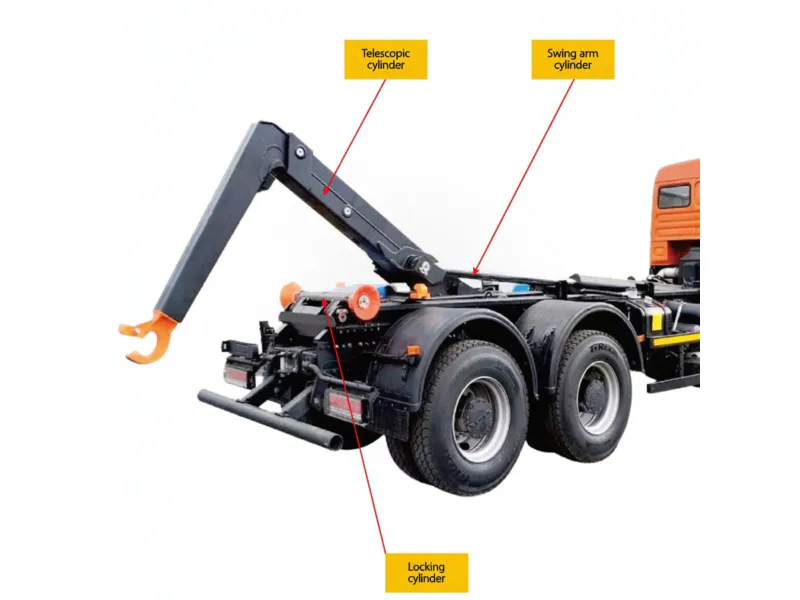
The primary application for this telescopic hydraulic cylinder in the environmental protection category is the tailgate-opening mechanism of rear-loading refuse compactor trucks — bennes tasseuses in French municipal terminology. The tailgate cylinders lift and lower the full width rear opening to allow the compacted refuse to discharge. The 1,100 mm stroke provides the angular travel needed for complete tailgate opening on standard European rear-loader body dimensions, while the 30 MPa pressure rating overcomes the resistance of compacted refuse pressing against the tailgate from inside.
Some refuse vehicle designs incorporate a body-tip mechanism for discharging directly at waste treatment facilities or landfill sites — the vehicle body tilts rearward and downward using a telescopic hydraulic cylinder rather than requiring a dedicated refuse discharge door. The long stroke of the telescopic hydraulic cylinder for dump truck applications and equivalent two-stage environmental vehicle cylinders like this EP unit provides the angular tipping range needed while fitting within the sub-frame mounting envelope of the vehicle chassis.
Municipal street sweeper and washing vehicles (balayeuses in French) use a telescopic hydraulic cylinder to raise and lower the sweeper brush assemblies and water spray booms. A compact two-stage telescopic hydraulic cylinder provides the necessary brush-lift stroke within the tight underbody clearance of the sweeper vehicle. French cities including Paris (run by the Direction de la Proprete et de l Eau), Lyon, and Marseille operate large municipal sweeper fleets where hydraulic cylinder reliability directly affects daily street cleaning schedule compliance.
Fixed refuse compaction stations at French transfer stations (centres de tri, quais de transfert) and industrial waste collection points use high-pressure hydraulic presses to reduce refuse volume before transport. A double acting telescopic hydraulic cylinder at 30 MPa provides the compaction force needed in a compact actuator format that fits within the press frame dimension. The high working pressure of this EP telescopic hydraulic cylinder — 30 MPa versus the 21 MPa typical for aerial platform cylinders — reflects the higher compaction force requirements of fixed-station press applications.
Beyond municipal collection, the environmental protection vehicle cylinder series covers industrial waste handling equipment — skip loaders, roll-off vehicle body-lift systems, and hydraulic baling press actuators used in French industrial and commercial waste recycling operations. The telescopic hydraulic cylinder double acting configuration provides positive control of both extension and retraction in these applications, allowing precise positioning of lifting frames and compression platens that single-acting telescoping cylinder designs cannot achieve without external retraction mechanisms.
Portable skip-lift trucks (camions grue a bennes in France) used by waste management contractors to collect industrial skips from construction sites and industrial premises use a telescopic hydraulic cylinder for both the primary lift and the skip tipping mechanisms. The two-stage telescopic hydraulic cylinder for dump truck and skip-tip applications provides the stroke range needed to lift skips over the truck body sides while maintaining adequate retracted clearance below the vehicle chassis during road travel.
8. Compatible Products — Complete Environmental Vehicle Hydraulic Supply
The EP telescopic hydraulic cylinder works as part of a complete hydraulic system on environmental protection vehicles. Sourcing telescopic hydraulic cylinder and system components from coordinated suppliers eliminates hydraulic compatibility issues and simplifies maintenance documentation for French municipal fleet operators.
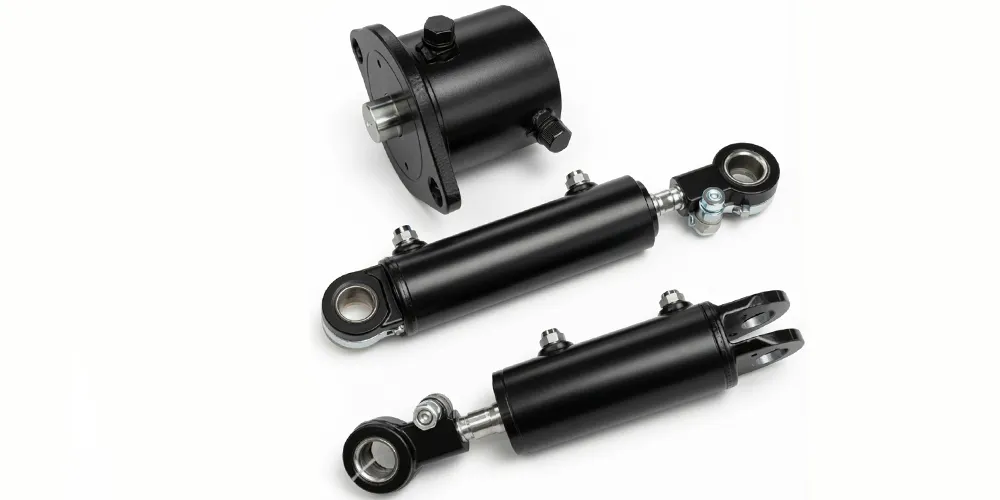
In vehicle applications where a tilt or angle-adjustment function operates alongside the main telescopic hydraulic cylinder lift or tip function, a matched tilt cylinder ensures compatible pressure ratings, port dimensions, and seal specifications with the primary telescopic hydraulic cylinder circuit. For French refuse vehicle operators managing mixed hydraulic system maintenance, sourcing both telescoping and tilt cylinders from the same supplier reduces procurement complexity and ensures unified documentation for fleet maintenance records.
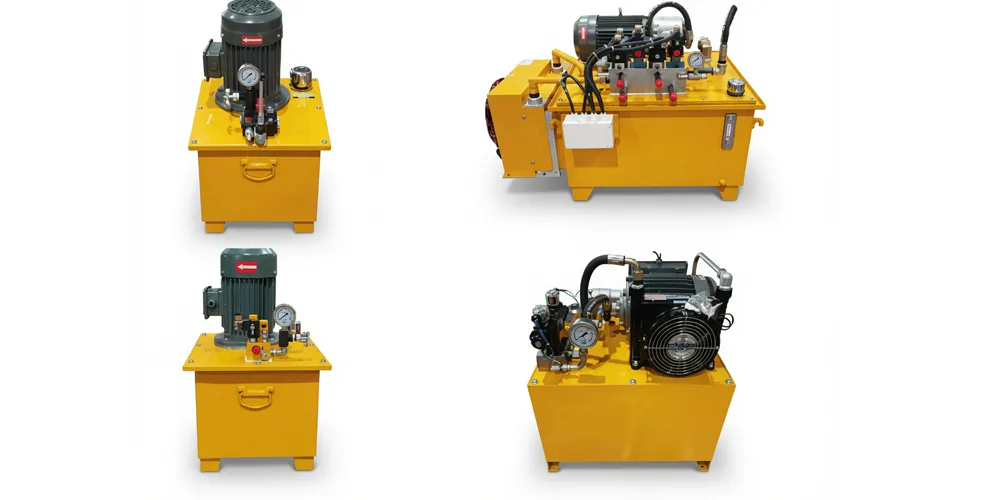
The hydraulic pump station provides the pressurized fluid supply that powers the telescopic hydraulic cylinder circuit at 30 MPa system pressure. A correctly sized pump station — matched to the cylinder bore areas, rated system pressure, and the required extension and retraction cycle time for the refuse vehicle tailgate or body-tip mechanism — ensures full telescopic hydraulic cylinder performance throughout the daily collection route duty cycle without pump overheating or pressure deficit at peak load points.
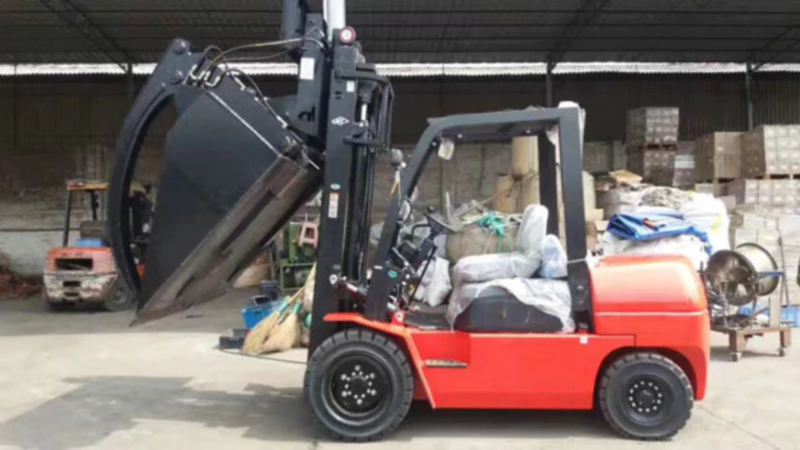
For fleet maintenance programs that include both environmental protection vehicles and material handling equipment, our forklift lifting cylinder range provides OEM and aftermarket replacement cylinders for all major European forklift brands. Sourcing lifting cylinders from the same supplier as the environmental vehicle telescopic hydraulic cylinder consolidates procurement across the fleet and enables unified material certification documentation for maintenance file compliance under French vehicle maintenance regulations.
9. About Us
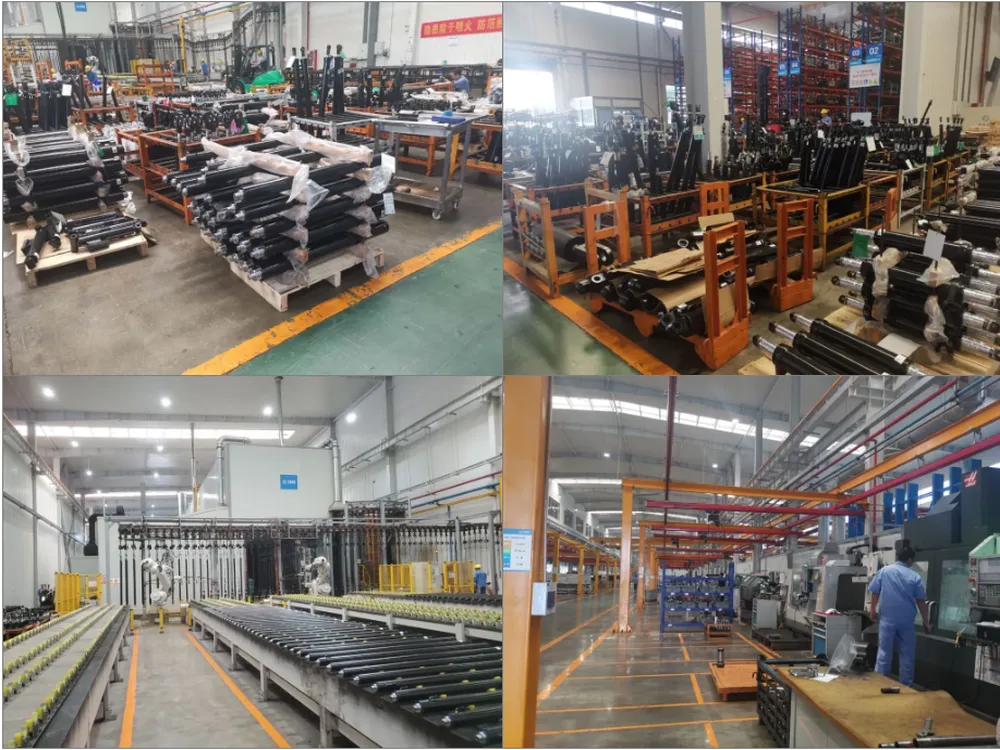
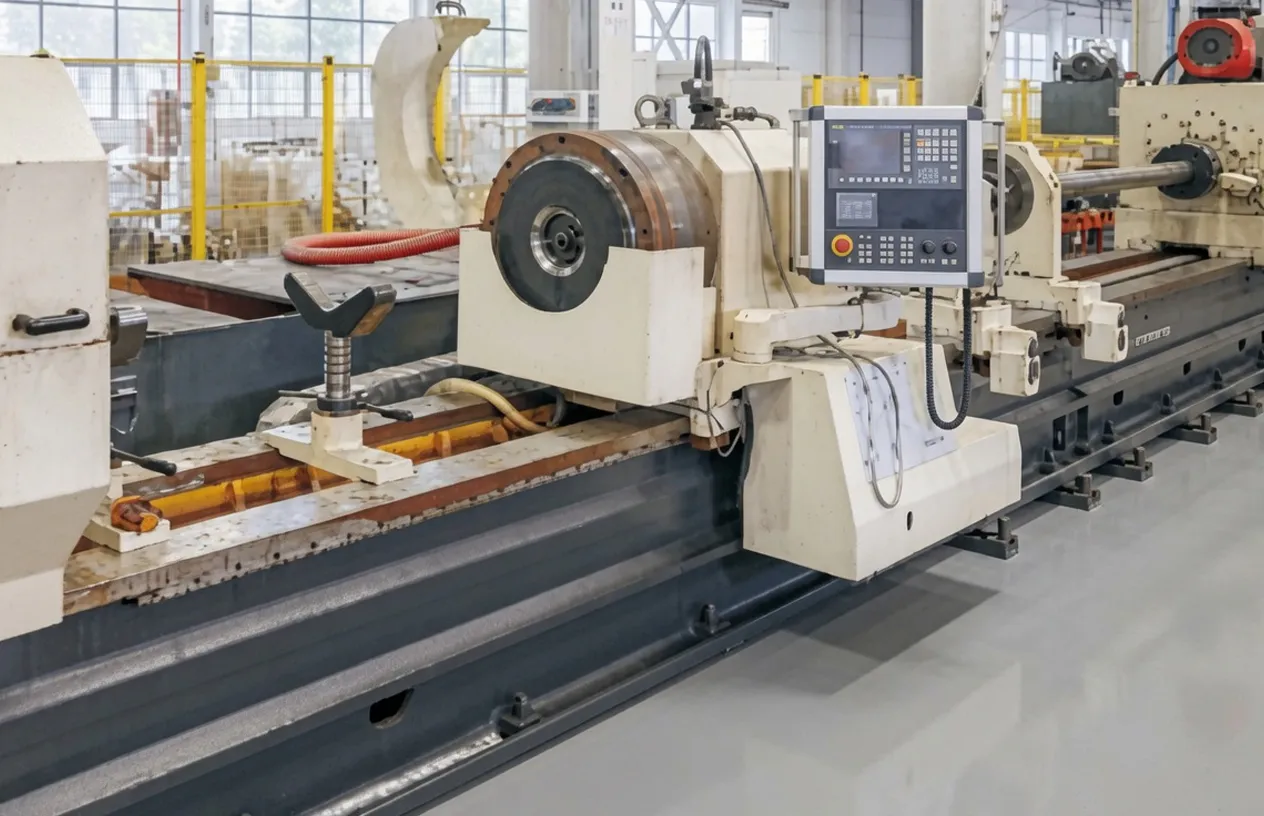
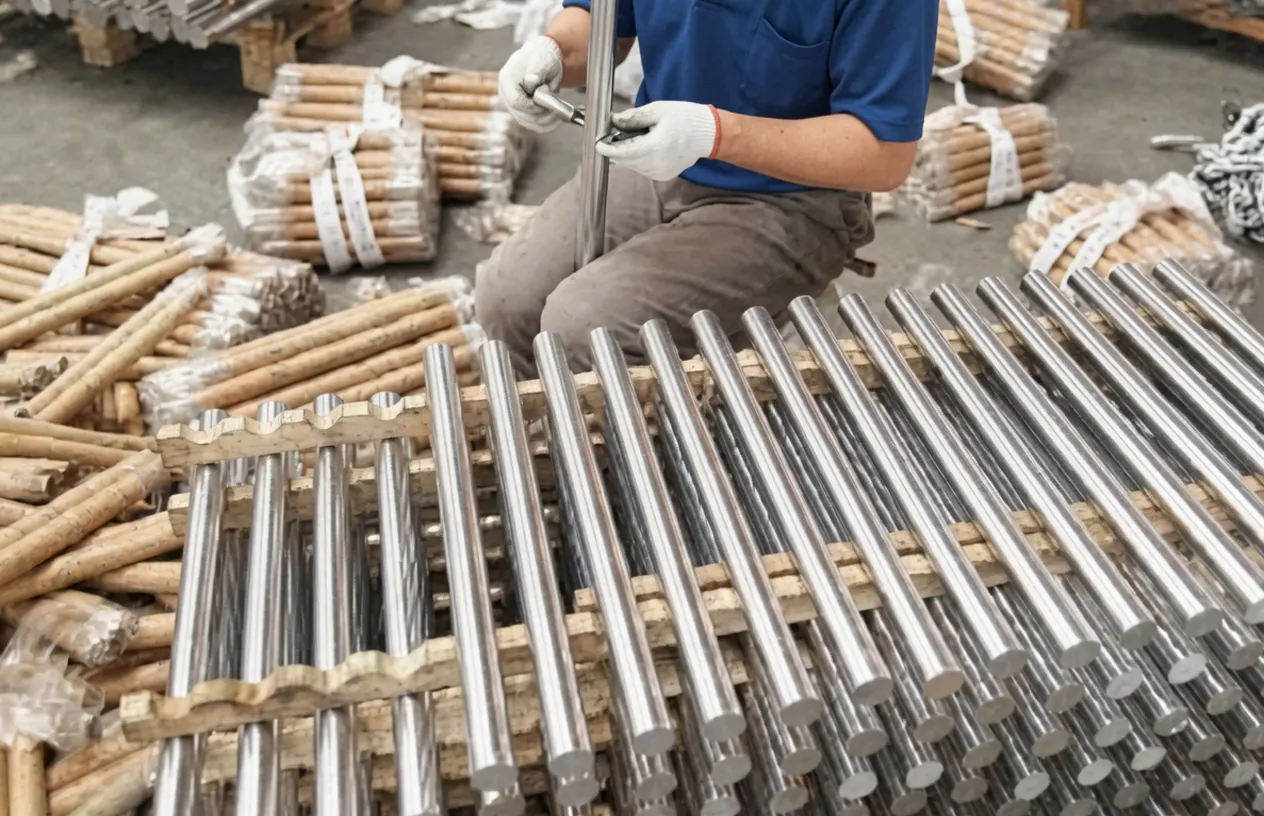
We are a specialist hydraulic cylinder manufacturer and global supplier serving the environmental protection vehicle, aerial work platform, material handling, and construction machinery markets. Our ISO 9001:2015 certified production facility operates CNC-controlled honing lines, precision welding stations, hard-chrome plating baths, and automated hydrostatic pressure test equipment, ensuring every telescopic hydraulic cylinder meets its dimensional and pressure specification before leaving the factory. Annual production capacity for the environmental protection cylinder series exceeds 50,000 units, supporting large-volume municipal fleet supply programs as well as single-unit aftermarket replacement orders.
WorkShop
Frequently Asked Questions
Q1. What is a telescopic hydraulic cylinder and how does it achieve a long stroke in a compact retracted length for refuse vehicle applications in France?
Q2. What is the difference between a single acting telescopic hydraulic cylinder and a double acting telescopic hydraulic cylinder for environmental vehicle use?
Q3. Which French regulations apply to telescopic hydraulic cylinders used in refuse collection vehicles and what documentation do I need for a municipal fleet maintenance program in France?
Q4. How does a telescopic hydraulic cylinder working sequence differ from a standard piston cylinder in terms of force output through the stroke?
Q5. Where can I find a reliable telescopic hydraulic cylinder supplier for environmental protection vehicles in France with short lead times and EU compliance documentation?
Q6. How often should I service the seals on a telescoping hydraulic cylinder fitted to a rear-loading refuse truck operating a daily 8-hour collection route in Bordeaux or Nantes?
Q7. What hydraulic oil viscosity grade should I use in a refuse truck telescoping cylinder circuit operating year-round in northern France where winter temperatures can reach -10 degrees Celsius?
Q8. What is the maximum working pressure for a telescopic hydraulic cylinder in environmental protection applications and how does the EP-HCYY11112015 compare to dump truck cylinder specifications?
Editor: PXY