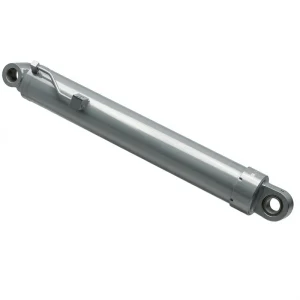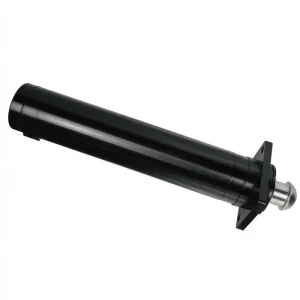
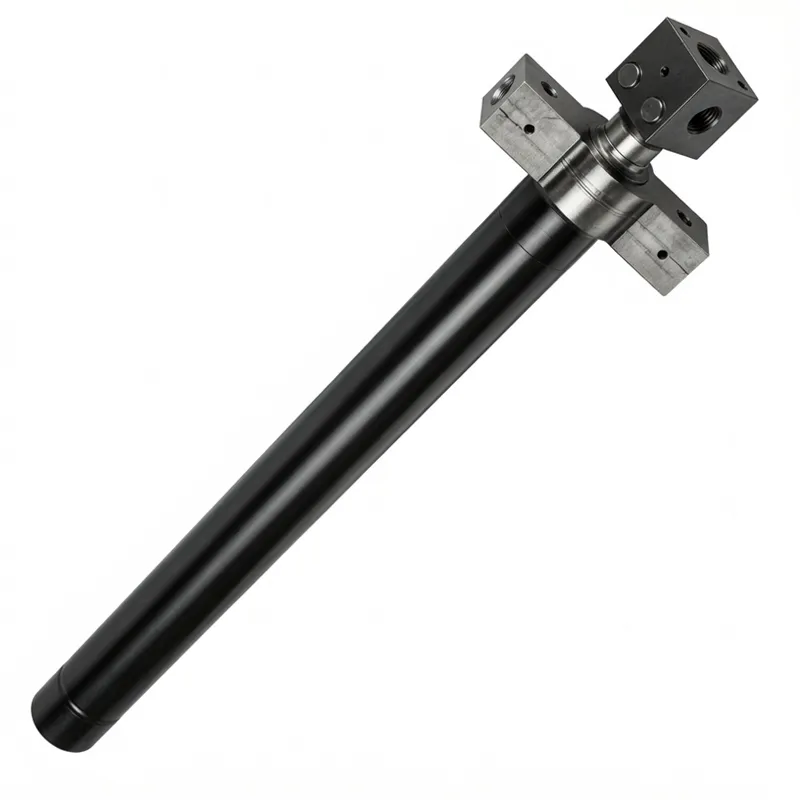
EP-Φ70×Φ50×1237 Truck Crane Cylinder for Opening Rack Support
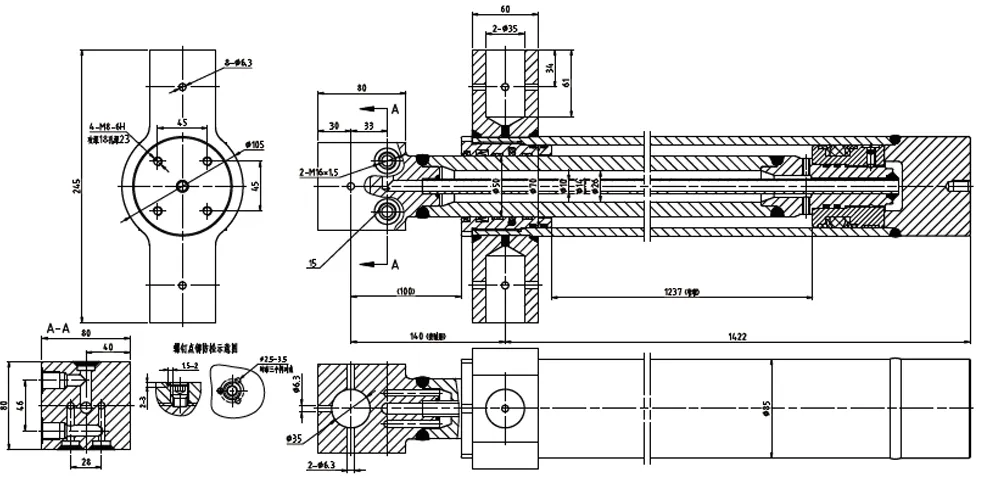
The EP-Φ70×Φ50×1237 truck crane cylinder is a purpose-engineered hydraulic actuator designed specifically to manage the mechanical deployment of the opening rack support on mobile crane platforms. Carrying model designation HCYY11112022 and built to a bore diameter of 70 mm with a rod diameter of 50 mm and a stroke length of 1237 mm, this unit handles the full travel needed to extend or retract a truck-mounted crane’s outrigger framing in a single smooth motion. The working pressure ceiling sits at 20 MPa, while the burst-tested maximum withstand pressure reaches 30 MPa, a margin that reflects the demanding load cycles typical in heavy-lift operations. Weighing in at 48 kg and requiring an installation distance of only 140 mm, the cylinder delivers an outstanding power-to-envelope ratio that keeps crane deck layouts compact without compromising structural integrity.
1. Technical Parameters
The table below lists the full performance specification of the HCYY11112022 truck crane cylinder for opening rack support. All parameters of this truck crane cylinder are factory-verified and referenced against operating conditions typical of medium-duty mobile cranes in European fleet environments.
| Cylinder Model | Specifications (Bore×Rod×Stroke) | Working Pressure | Max Withstand Pressure | Trip (mm) | Installation Distance (mm) | Weight |
|---|---|---|---|---|---|---|
| HCYY11112022 | Φ70×Φ50×1237 | 20 MPa | 30 MPa | 1237 | 140 | 48 kg |
| Bore Diameter | 70 mm | Seamless precision steel barrel | ||||
| Rod Diameter | 50 mm | Hard-chrome plated, ground finish | ||||
| Seal System | Imported polyurethane / NBR composite seals | |||||
| Port Thread | G1/4 standard (BSP) | |||||
| Operating Temp. | -20°C to +80°C | |||||
2. Five Key Advantages
High-Pressure Rated Safety Margin
With a rated working pressure of 20 MPa and a maximum withstand pressure of 30 MPa, this truck crane hydraulic cylinder maintains reliable structural integrity even during accidental pressure spikes or overload events on challenging job sites.
Precision-Matched Stroke for Rack Support Deployment
The 1237 mm stroke of this truck crane cylinder is engineered to match the travel range demanded by opening rack support mechanisms on medium-to-heavy truck cranes, eliminating the need for stroke spacers or adaptor assemblies and shortening on-site installation time considerably.
Compact Installation Footprint
The 140 mm installation distance keeps this truck crane cylinder close-coupled within the crane chassis, preserving ground clearance and frame geometry while still delivering the full bore-and-rod force required to lock the rack support in its deployed position under full rated load.
Durable Material Construction
The truck crane cylinder barrel is manufactured from seamless cold-drawn precision steel tubing, while the piston rod is ground and hard-chrome plated to resist corrosion, surface scoring, and wear from particulate contamination — all conditions commonly encountered on French infrastructure and demolition projects.
Broad Cross-Application Compatibility
While purpose-built as a cylinder for opening rack support, this unit's port sizing, mounting clevis geometry, and pressure ratings align with many widely used hydraulic circuit architectures, making it suitable as a truck crane cylinder replacement in a range of OEM and aftermarket applications without circuit re-engineering.
3. Working Principle
The EP-Φ70×Φ50×1237 truck crane cylinder operates as a double-acting linear actuator. Pressurised hydraulic fluid from the crane's pump circuit enters the cap-end port, bearing against the full bore area of 70 mm and pushing the piston assembly — and the attached rod — outward along the cylinder axis. This extension stroke of the truck crane cylinder mechanically drives the opening rack support arms apart to their deployed, load-bearing position. When the operator commands retraction, fluid is routed to the rod-end port; the effective annular area (bore minus rod cross-section) generates the retract force, pulling the rack support arms back to their stowed configuration so the crane truck can travel.
Because this truck crane cylinder is double-acting, precise position control is possible in both directions, allowing the crane operator to hold the rack at any intermediate opening angle if the application demands it. Internal leakage is kept to a minimum by closely toleranced piston-to-barrel clearances combined with multi-lip polyurethane seals rated for continuous cycling at 20 MPa. A wiper seal at the gland prevents road grime, concrete dust, and other abrasives from entering the rod seal zone — a critical feature for any truck crane cylinder given the outdoor environments where French BTP (Bâtiment et Travaux Publics) contractors typically deploy truck-mounted cranes.
4. Materials & Construction
Every truck crane cylinder destined for crane applications undergoes material scrutiny that standard industrial cylinders rarely face. The HCYY11112022 truck crane cylinder reflects this reality across each of its constituent parts. The cylinder barrel is fabricated from cold-drawn seamless precision steel tube, honed to a surface finish of Ra 0.4 μm or finer to reduce seal wear and internal leakage over the service life. Barrel-end caps are machined from high-tensile low-alloy steel forgings and welded to the barrel using a full-penetration weld qualified to established international welding standards.
The 50 mm piston rod of this truck crane cylinder is produced from 45# carbon structural steel, heat-treated to a core hardness that resists buckling under the compressive side-loads that can accompany misaligned clevis connections. The exposed rod surface receives a hard-chrome electrodeposit of 0.025 mm minimum thickness, ground to a mirror finish and then inspected for micro-cracks using fluorescent dye penetrant methods. Piston rings of this truck crane cylinder are manufactured from filled PTFE for low friction and chemical compatibility with the mineral hydraulic oils and biodegradable ester-based fluids increasingly required by environmentally sensitive French project sites near waterways or protected zones.
Seamless cold-drawn precision steel, bore honed to Ra 0.4 μm
45# heat-treated carbon steel, hard-chrome plated & ground
High-tensile low-alloy steel forging, full-penetration welded
Imported PU / NBR composite; PTFE piston rings; polyurethane wiper
5. Application Scenarios
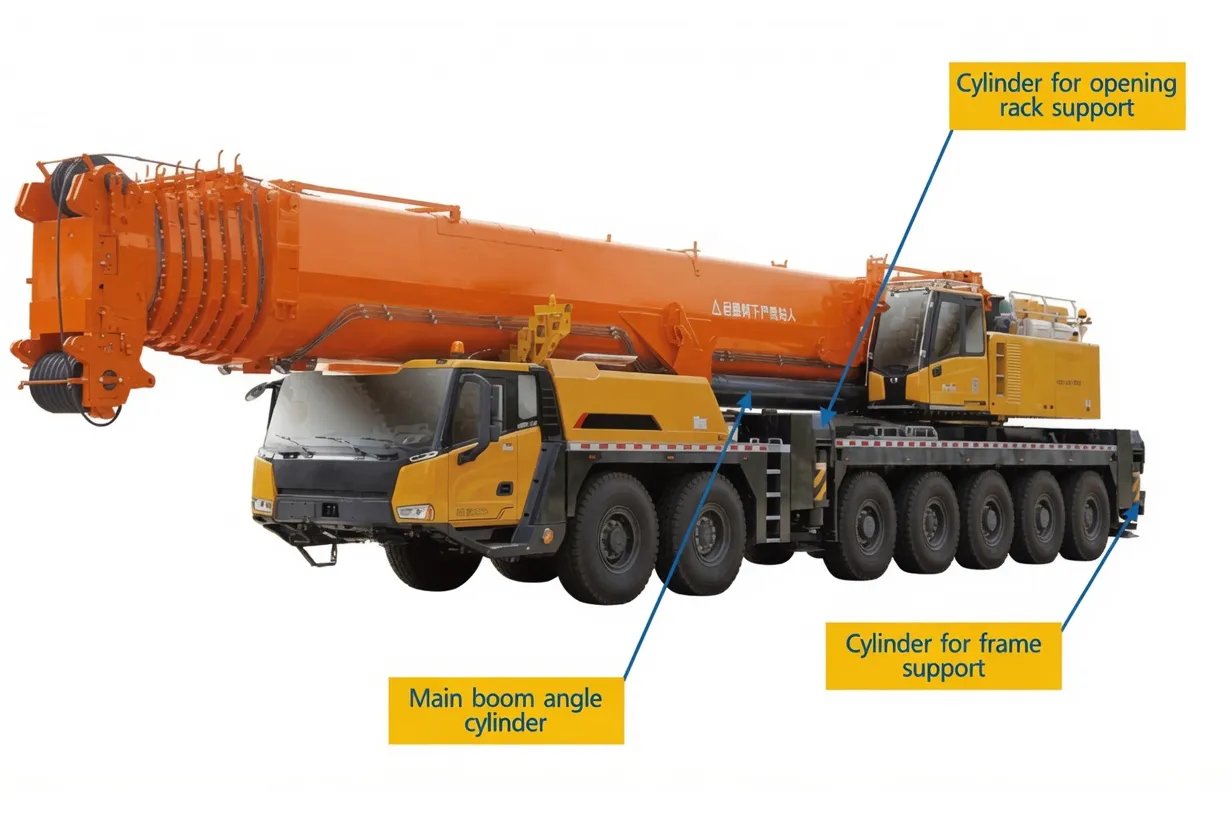
The truck crane cylinder for opening rack support is engineered for environments where mechanical reliability and hydraulic precision are non-negotiable. Below are the primary deployment contexts where operators and fleet managers in France and broader Europe specify this component.
Urban Construction & Building Renovation (France)
Compact city-centre projects in Paris, Lyon, and Marseille regularly deploy truck-mounted cranes to lift prefabricated panels and structural steel in confined streets. The opening rack support must deploy and retract rapidly between lifts. A reliable truck crane outrigger cylinder with consistent stroke control prevents setup delays and keeps the crane within its certified operating envelope.
Road & Bridge Infrastructure Maintenance
France's extensive motorway and bridge maintenance programme — managed under CEREMA technical guidelines — demands cranes that can set up on narrow shoulders or deck structures. The 140 mm installation distance of this truck crane cylinder allows deployment in tight chassis bays while the 30 MPa rated withstand pressure accommodates the dynamic load fluctuations that occur when lifting over live traffic.
Port & Logistics Handling
At major French ports such as Le Havre, Marseille, and Nantes, truck cranes support container and break-bulk handling. The truck crane cylinder in these machines works under sustained duty cycles, and the high-chrome rod finish directly extends mean time between seal replacements — reducing downtime in around-the-clock port operations where every hour of crane availability has measurable commercial value.
Energy & Industrial Plant Installation
Wind turbine component erection, transformer handling at substations, and reactor vessel installation at nuclear facilities all require a truck crane cylinder that delivers stable outrigger performance. The truck crane cylinder parts in these applications must meet tighter quality traceability requirements. The HCYY11112022 is compatible with documentation packages supporting ISO 9001 and EN 13000 crane safety compliance.
Emergency Services & Disaster Recovery
Fire brigades and civil protection agencies across France rely on crane trucks for heavy rescue operations. In these scenarios, the truck crane cylinder must deploy correctly on the first hydraulic command, regardless of environmental conditions. The wide operating temperature range of -20°C to +80°C and the wiper seal design ensure the cylinder remains fully functional from winter mountain rescues in the Alps to summer heatwave incidents in southern France.
6. Regulatory Compliance & Standards
Hydraulic cylinders used in mobile crane applications are subject to overlapping layers of regulation depending on the country of deployment and the classification of the crane. Buyers sourcing a truck crane cylinder for European crane fleets should verify that their selected components are compatible with the following frameworks — and that the truck crane cylinder specification includes the documentation needed for in-service inspection.
| Region / Country | Standard / Regulation | Scope & Relevance |
|---|---|---|
| European Union (incl. France) | Machinery Directive 2006/42/EC | Governs safety requirements for machinery including mobile cranes; hydraulic components must withstand rated loads with prescribed safety factors. |
| EU / ISO | EN 13000:2010+A1:2014 | Mobile crane safety requirements including hydraulic system performance, stability testing, and outrigger deployment criteria. |
| France | NF EN ISO 4413:2011 | Hydraulic fluid power — General rules and safety requirements for systems and their components; specifies pressure testing and hose assembly standards. |
| France | INRS / Code du Travail (R.4323-1 et seq.) | French Labour Code provisions on work equipment inspections; crane hydraulic systems must pass periodic VGP (Vérification Générale Périodique) inspections. |
| Germany | DGUV Vorschrift 52 / BetrSichV | Crane operation regulations; requires hydraulic cylinders on outrigger and support systems to be periodically inspected by notified bodies. |
| United Kingdom | LOLER 1998 / PSSR 2000 | Lifting Operations & Lifting Equipment Regulations and Pressure Systems Safety Regulations apply to crane hydraulics; thorough examination every 12 months minimum. |
| ISO / Global | ISO 6020-2 / ISO 6022 | Dimensional and performance standards for hydraulic cylinders used in industrial and mobile equipment applications. |
When procuring truck crane cylinder components for European crane fleets, it is advisable to request material certifications (EN 10204 3.1 or 3.2), test pressure records, and dimensional inspection reports to support in-service compliance documentation.
7. About Us
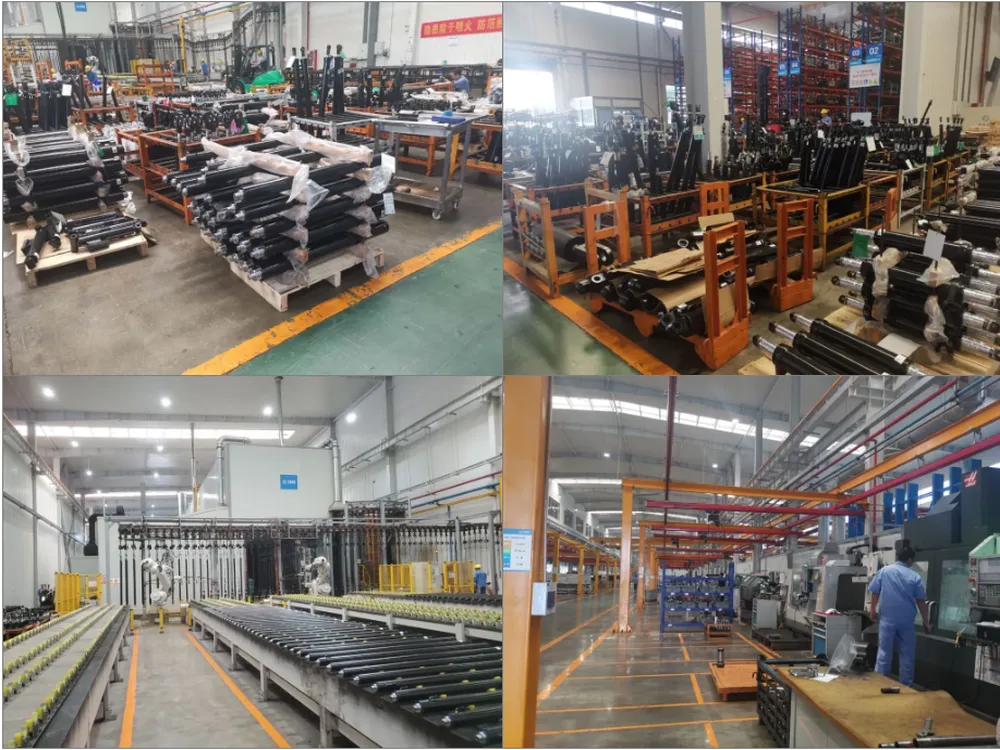
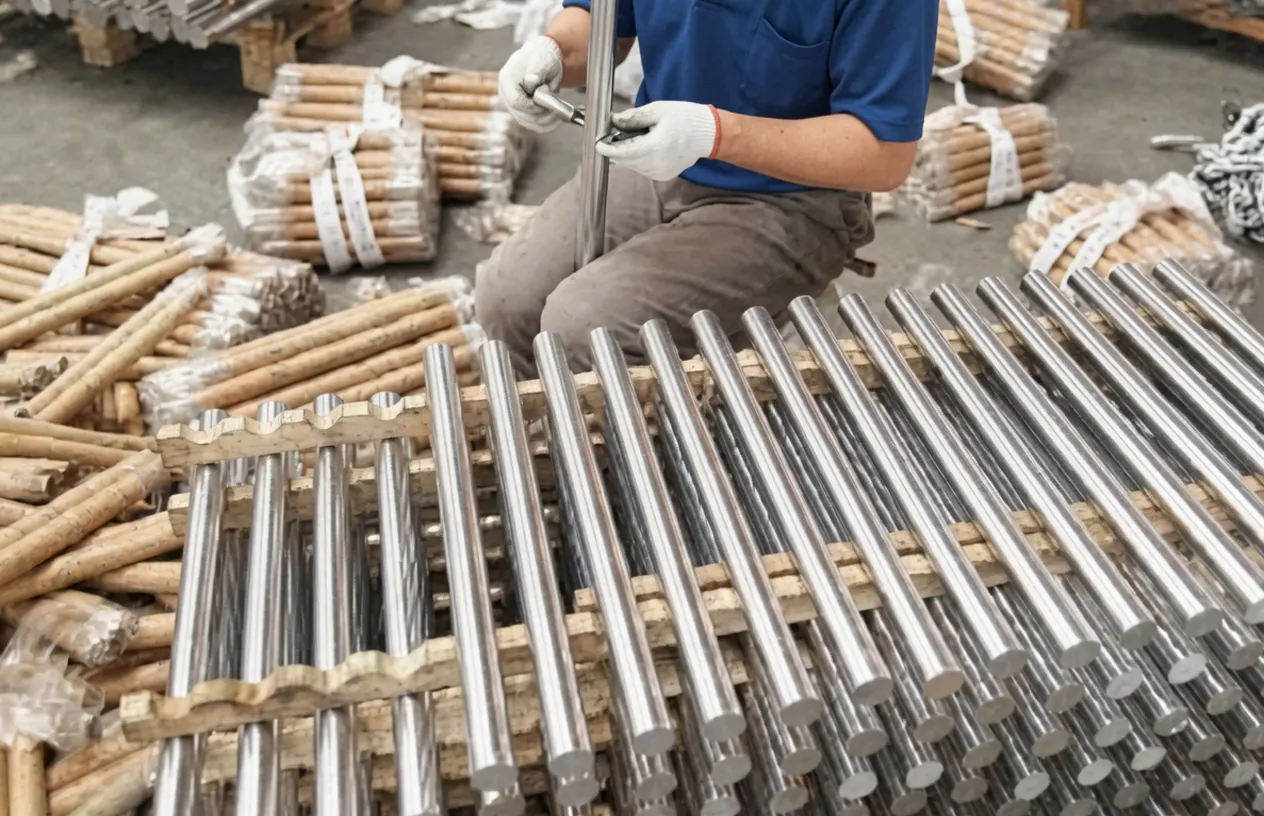
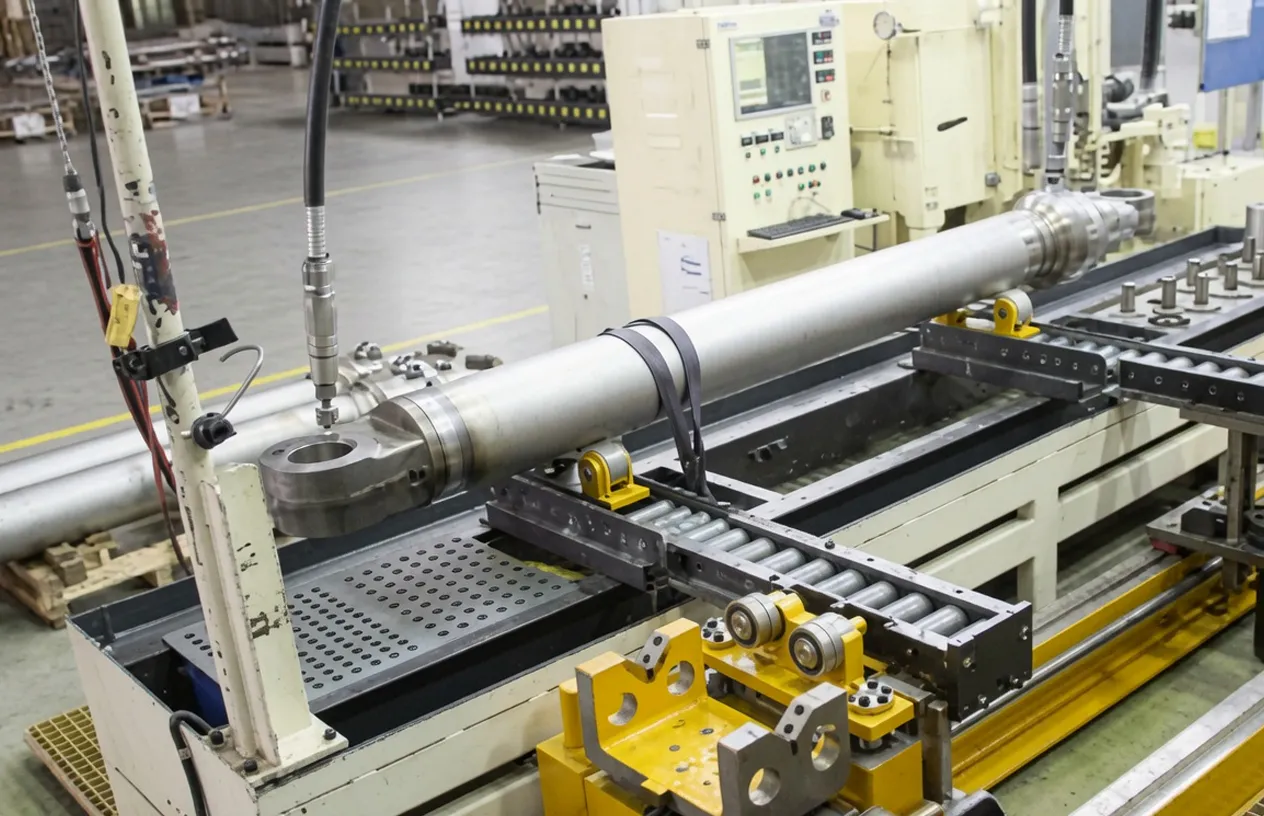
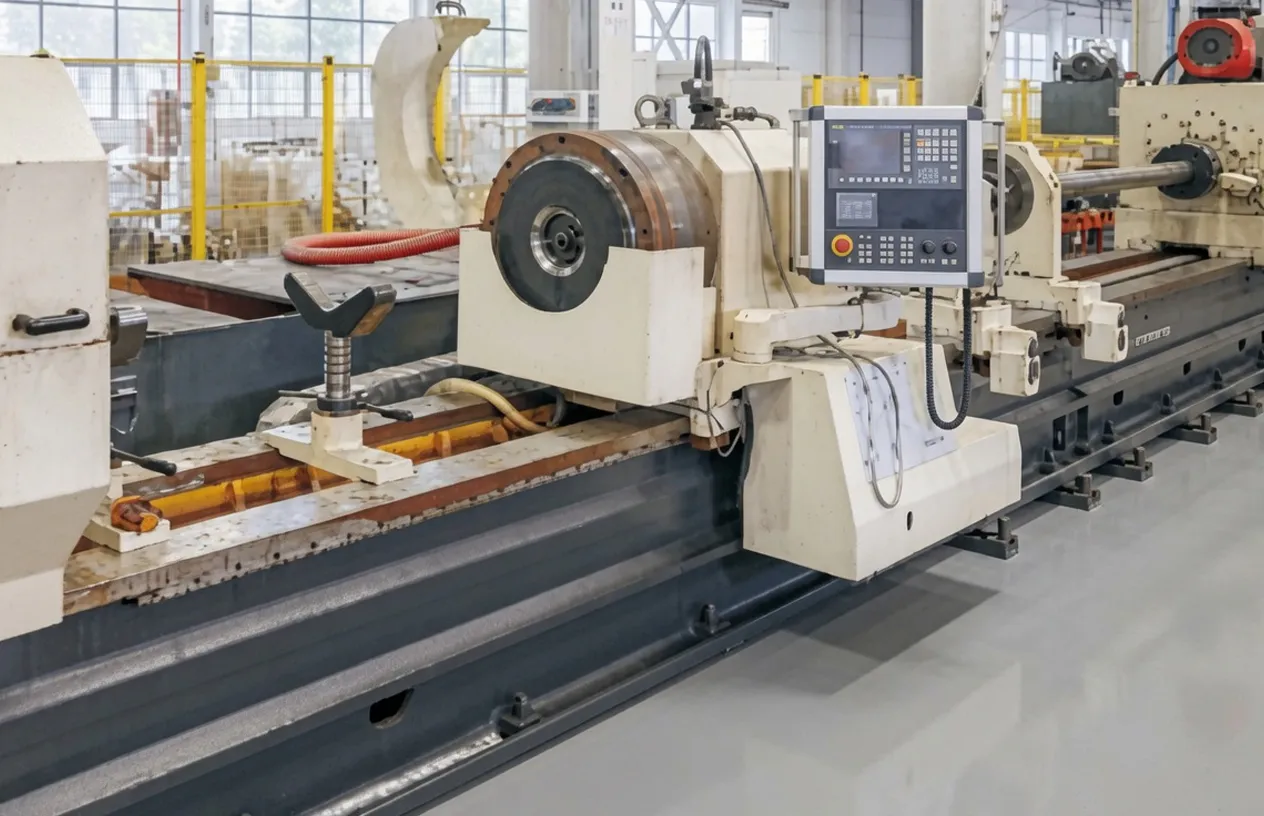
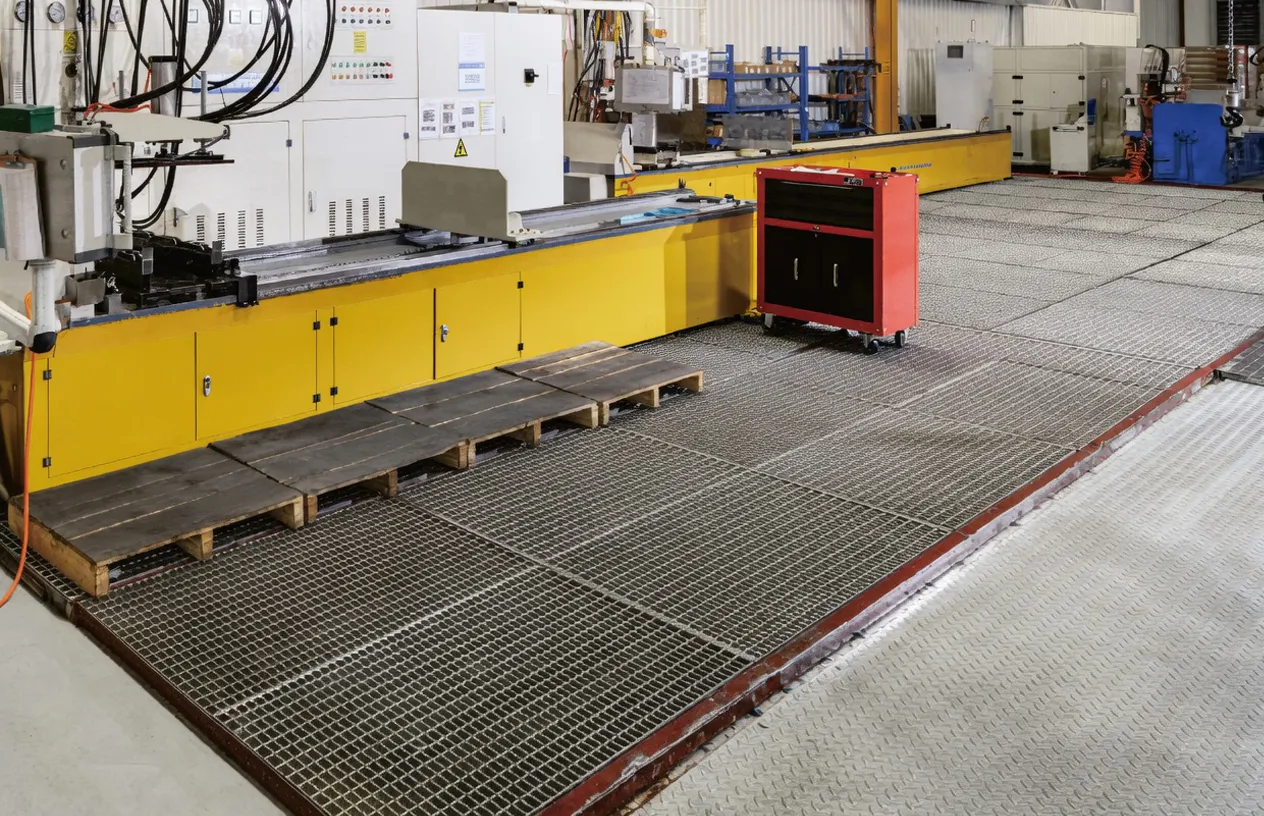
We are a professional hydraulic cylinder manufacturer and exporter with over two decades of engineering experience covering the design, fabrication, testing, and delivery of truck crane cylinder actuators for mobile crane, forklift, construction, and industrial applications. Our production facilities operate under ISO 9001 quality management frameworks, and our engineering team carries depth across both standard catalogue products and fully custom-engineered solutions. From single-piece samples to container-load batch orders, we support B2B buyers across France, the broader EU, the UK, Middle East, and Southeast Asia with consistent quality and responsive technical service. We maintain full documentation capability — including EN 10204 material traceability certificates, hydrostatic test records, and dimensional inspection reports — to satisfy the procurement requirements of European engineering contractors, fleet operators, and OEM crane builders.
WorkShop
8. How to Select the Right Truck Crane Cylinder
Choosing the correct truck crane cylinder for a replacement or new-build project involves more than matching the bore dimension — each truck crane cylinder must be validated against the crane's complete hydraulic circuit requirements. Each truck crane cylinder in the opening rack support circuit must be assessed across at least four parameters: bore and rod diameters, full stroke length, operating pressure rating, and installation distance. Selecting the wrong truck crane cylinder bore or stroke leads to circuit pressure shortfalls or mechanical interference that cannot be corrected on site. The EP-Φ70×Φ50×1237 truck crane cylinder covers the specifications most frequently found in 20–30 tonne crane classes deployed across French and European markets. If your application sits outside those parameters — for example, a heavier lift crane requiring a larger bore or longer stroke — our engineering team can size a custom truck crane cylinder from our manufacturing range without the need for third-party adaptor kits.
For fleet procurement managers handling truck crane cylinder replacement programmes across multiple crane models, we recommend a simple three-step process: first, identify the OEM part reference or measure the installed cylinder's key dimensions; second, confirm the operating pressure and fluid type currently used in the crane's hydraulic circuit; third, specify documentation requirements such as EN 10204 certificates or hydrostatic test reports. Once these inputs are shared, we can validate compatibility and generate a formal supply proposal. This structured approach avoids the mismatched truck crane cylinder orders that result in costly remachining or circuit pressure drops on the job site. Whether you need a single truck crane cylinder or a batch order for a rental fleet refresh, our process handles both with equal rigour — and every truck crane cylinder leaves our facility with a full inspection record.
9. Related Products
We offer a complete hydraulic cylinder ecosystem — enabling fleet operators and crane builders to source complementary components from a single, quality-controlled supply chain. This approach eliminates interface compatibility risks and simplifies procurement logistics across your entire crane hydraulics programme.
झुकाव सिलेंडर
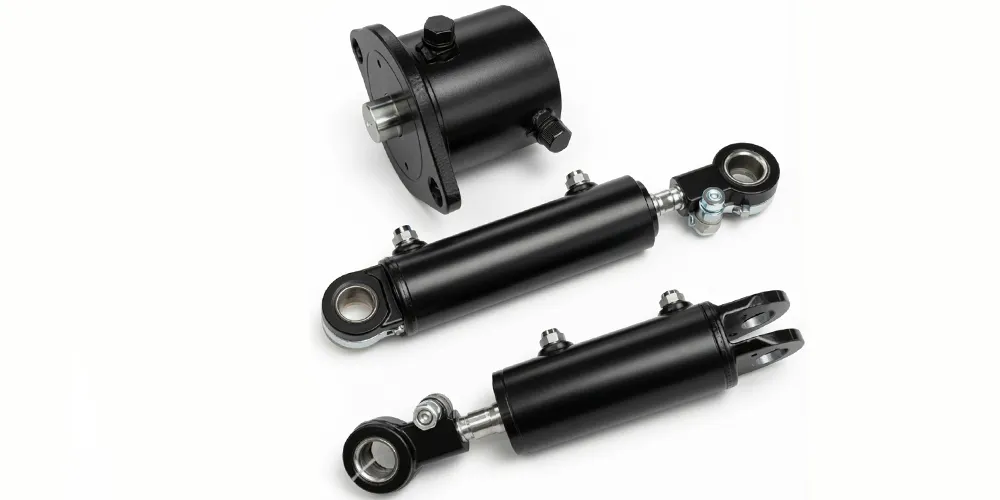
Engineered as a direct partner component to the truck crane cylinder for opening rack support, our tilt cylinders manage the angular positioning of crane booms and support structures. They share pressure ratings and port standards with the HCYY11112022 series, making system-level integration straightforward. Consistent with one-stop sourcing principles, both components can be ordered, documented, and dispatched together.
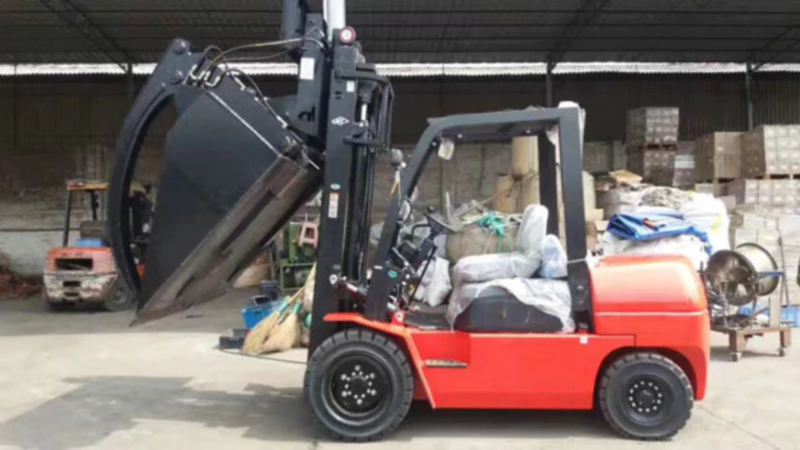
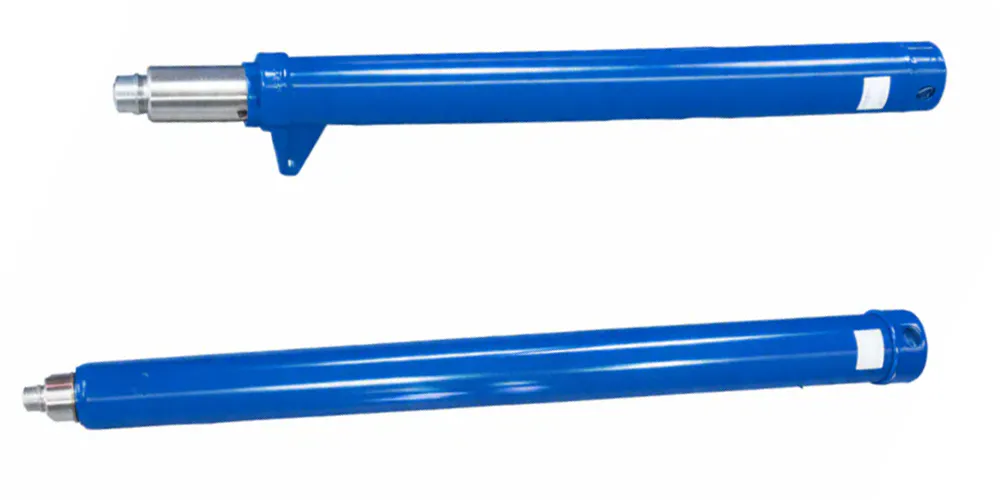
Our forklift lifting cylinder range extends the same precision manufacturing standards used in truck crane cylinder production into the material-handling sector, with each truck crane cylinder and lifting cylinder sharing the same raw material qualification and pressure test protocol. Whether you need a direct OEM-equivalent or a custom-stroke small hydraulic cylinder for a compact fork truck mast, our engineering team configures solutions from our standard bore-and-rod matrix. Cross-referencing with the truck crane series ensures compatible seal and fluid specifications throughout your equipment fleet.
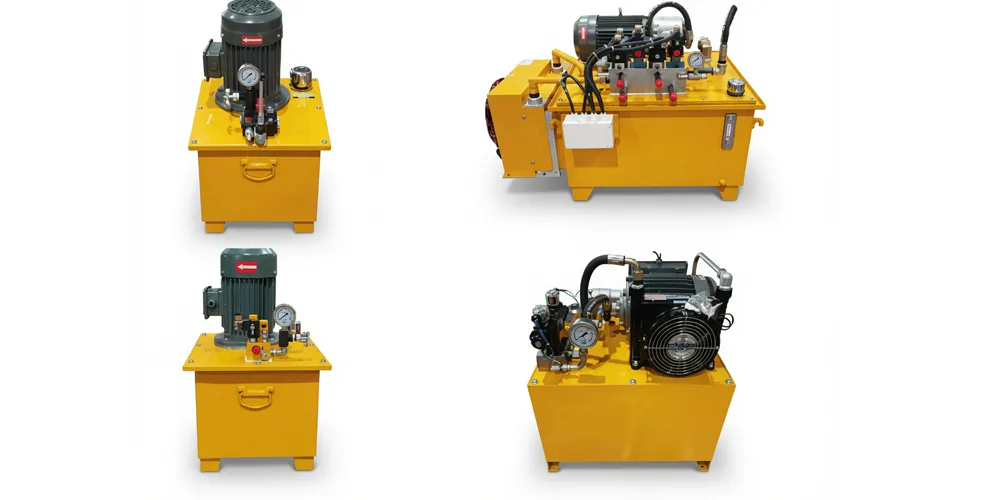
Hydraulic Pump Station Series
A correctly specified hydraulic pump station is essential for delivering clean, conditioned fluid to the truck crane cylinder at the correct flow rate and pressure. Our pump station series is available in fixed and variable displacement configurations, with filtration packages and reservoir sizing suited to mobile crane circuit volumes. Pairing the cylinder with our pump station removes the integration risk of mismatched flow characteristics and simplifies maintenance scheduling across the whole system.
Frequently Asked Questions
Q1. What is the correct truck crane cylinder for opening rack support on a 25-tonne mobile crane used in French construction sites?
For most medium-duty truck cranes in the 20–30 tonne class common on French BTP projects, the EP-Φ70×Φ50×1237 (HCYY11112022) truck crane cylinder is an appropriate choice. Its bore-and-rod configuration delivers the push and pull forces needed at 20 MPa operating pressure to fully deploy and lock rack support arms against their mechanical stops. Always confirm the required stroke and installation distance against your crane's OEM documentation before ordering.
Q2. How do I find a reliable truck crane hydraulic cylinder supplier in Europe who can provide EN 10204 material certificates?
Look for manufacturers who explicitly state EN 10204 3.1 or 3.2 mill certification in their standard documentation package. These certificates trace the barrel and rod steel to the heat or batch level, which is required for VGP compliance under French Labour Code provisions and for EN 13000 audit trails. We provide these documents as standard with every HCYY series cylinder order.
Q3. What causes premature seal failure in a truck crane outrigger cylinder, and how can it be prevented on outdoor job sites in France?
The most frequent cause of early seal failure in an outdoor truck crane cylinder is abrasive contamination bypassing a worn or damaged wiper seal on the gland. Fine concrete dust, silica sand, and road grit cut into the polyurethane rod seal lips on each retraction stroke. Prevention involves inspecting and replacing the wiper seal at every scheduled VGP service interval, keeping the rod surface free of nicks or scoring, and using hydraulic fluid filtered to ISO 16/14/11 cleanliness or better.
Q4. Where can I get a truck crane cylinder replacement for a HCYY11112022 with the same bore, rod, and stroke dimensions?
We supply direct-fit replacements for the HCYY11112022 specification — Φ70 bore, Φ50 rod, 1237 mm stroke — as a standard catalogue item. Replacement units are available with the same port sizing, installation distance, and clevis geometry as the original, so no chassis modifications are needed. Contact our technical sales team with your crane make, model, and crane serial number for a matched supply confirmation.
Q5. Which hydraulic cylinder components are most critical to inspect during the annual VGP crane inspection in France?
During a French VGP inspection of a truck crane cylinder, inspectors typically assess the rod for chrome damage, bowing, or pitting; the gland area for visible external leakage; port fittings and hose connections for seepage; and the end-cap welds for cracks or corrosion. The inspector may also apply a hold-pressure test at rated working pressure to confirm that internal leakage across the piston seal is within tolerance. Having a recent test pressure certificate from the cylinder manufacturer can support the inspection record.
Q6. What is the difference between a truck crane opening rack support cylinder and a telescopic hydraulic cylinder used on the same crane?
The truck crane cylinder used for opening rack support is a single-stage, fixed-stroke double-acting actuator whose role is mechanical deployment of the support structure — it does not need multi-stage extension. A telescopic hydraulic cylinder, by contrast, achieves very long extension from a short retracted length by nesting multiple barrel stages. Telescopic units are typically used on the crane's main boom hoist or long-reach outrigger beams where the retracted length must fit within tight chassis dimensions despite requiring large total stroke.
Q7. How should I request a quote for truck crane cylinder parts that meet EN 13000 documentation requirements for a European equipment fleet?
When requesting a quote for a truck crane cylinder, specify the model (e.g., HCYY11112022), required quantity, intended crane application, working pressure, and documentation requirements — particularly if EN 10204 mill certificates, hydrostatic test reports, or dimensional inspection records are needed. Providing your crane OEM reference number or drawing helps our team confirm a correct fit before order confirmation. We respond to technical enquiries within one business day for standard catalogue items.
Q8. Can a universal truck cylinder for opening rack support be used as a direct replacement across multiple crane brands operating in French rental fleets?
Dimensional compatibility is the primary check when substituting any truck crane cylinder — bore, rod, stroke, installation distance, port thread, and clevis or lug geometry must all match the OEM part. While the HCYY11112022's specifications are common in the 25 tonne crane class, crane models from different manufacturers may use different stroke lengths or clevis designs for the same function. Our technical team can cross-reference your fleet's crane models against our catalogue and flag any modifications needed before supply.
Q9. What hydraulic fluid types are compatible with the seals used in this truck crane hydraulic cylinder for outdoor use in European climates?
This truck crane cylinder — the HCYY11112022 — is fitted with polyurethane and NBR composite seals compatible with standard mineral hydraulic oil (HLP type per ISO 6743-4) as well as zinc-free HLP-D variants. For environmentally sensitive French project sites near rivers, wetlands, or protected areas — where Arrêté du 2 février 1998 or regional environmental permits may restrict mineral oil use — the seals also tolerate HEES-type synthetic ester biodegradable fluids, provided the circuit is flushed and charged to the fluid manufacturer's specification.
Q10. What is the best truck cylinder for opening rack support when operating at low temperatures during winter crane work in northern France or Belgium?
For winter operation below 0°C, the key selection criteria for a truck crane cylinder are seal material cold-crack resistance and hydraulic fluid viscosity at minimum ambient temperature. The HCYY11112022's polyurethane seals maintain flexibility down to -20°C, which covers the winter temperature range of northern France and Belgium. Pair the cylinder with a low-temperature HLP hydraulic oil (ISO VG 46 or VG 32 with a pour point below -30°C) and allow a brief warm-up cycle at low load before putting the crane to full duty after cold overnight storage.
Editor: PXY