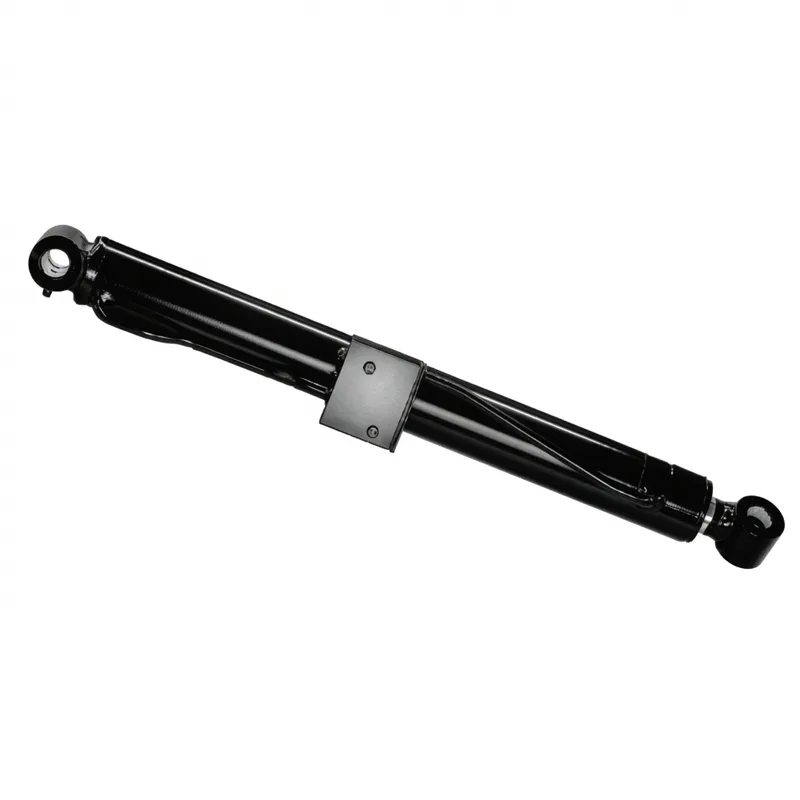
ईपी-Φ100×Φ80×1458 फोल्डिंग बूम एंगल सिलेंडर
The EP-Φ100×Φ80×1458 Folding Boom Angle Cylinder is a heavy-duty hydraulic cylinder engineered for folding boom articulation in aerial work platforms. It features a 100 mm bore, 80 mm rod diameter, and a 1458 mm stroke, with an installation distance of 1899 mm and a weight of 137 kg. Rated for a working pressure of 21 MPa and capable of withstanding up to 32 MPa, this cylinder ensures robust performance under high-load conditions. Its durable construction and precise engineering make it ideal for demanding applications requiring reliable boom angle control. This product adheres to industry standards, offering exceptional durability and efficiency for heavy-duty use in elevated platforms.
Aerial Work Vehicle Series · Hydraulic Cylinder
ईपी-Φ100×Φ80×1458 फोल्डिंग बूम एंगल सिलेंडर
Model: HCYY11112011 · Large-Bore Clevis-Mount Boom Folding Angle Cylinder · 21MPa Rated Pressure · ISO 6020 / CE Documentation Available
Rod Φ80mm
1458mm Stroke
137 kg
1. Technical Specifications & Performance Parameters
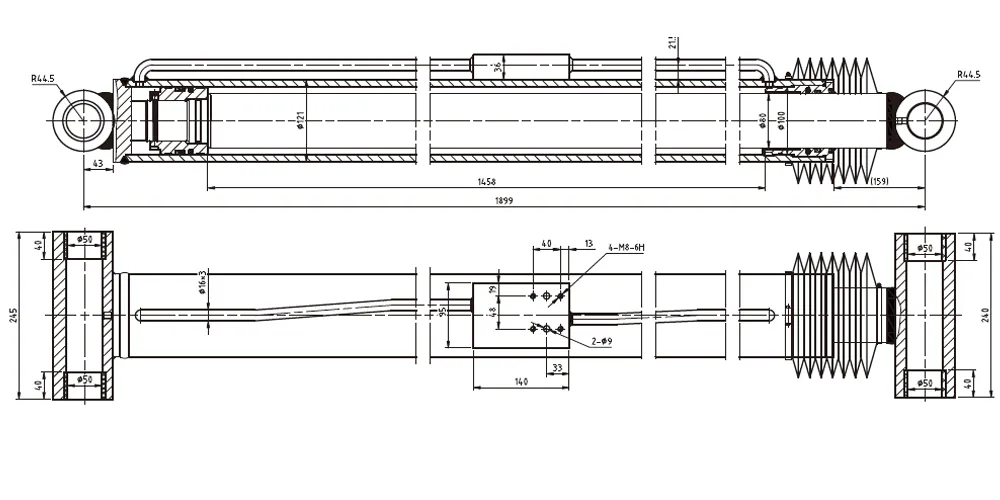
The dimensional and pressure values below correspond to the HCYY11112011 specification sheet. The clevis rod-eye and trunnion base mount, combined with the long 1458mm stroke, support the wide angular swing required between the main boom and the folding section on large aerial platforms.
| Parameter | Value / Specification | Notes |
|---|---|---|
| Cylinder Model | HCYY11112011 | OEM part reference |
| Specification | Φ100×Φ80×1458 | Bore Φ100mm · Rod Φ80mm · Stroke 1458mm |
| Cylinder Type | Single-Rod Double-Acting Folding Boom Angle Cylinder | Clevis rod-eye and trunnion base mount |
| Working Pressure | 21 MPa (210 bar) | Rated continuous operating pressure |
| Maximum Withstand Pressure | 32 MPa (320 bar) | Hydrostatic burst-test pressure |
| Trip (Stroke) | 1458 mm | Full single-direction piston travel |
| Installation Distance | 1899 mm | Fully retracted eye-to-eye distance |
| Weight | 137 kg | Approximate dry mass |
| Bore Diameter | Φ100 mm | Internal cylinder bore |
| Rod Diameter | Φ80 mm | Hard-chrome plated piston rod |
| Mount Type | Clevis Eye (Rod End) / Trunnion or Eye (Base End) | Pin-mounted swivel connection at boom joint |
| Theoretical Push Force (at 21MPa) | ≈ 165 kN | Calculated from bore area × working pressure |
| Theoretical Pull Force (at 21MPa) | ≈ 112 kN | Calculated from annulus area × working pressure |
| Overall Body Length (Retracted) | ~1899 mm | Clevis pin centre to clevis pin centre |
| Typical Boom Working Height Range | 16m – 30m+ | Mid-size to large self-propelled boom lifts |
2. About Our Large-Bore Folding Boom Angle Cylinder for Aerial Work Platforms
The EP-Φ100×Φ80×1458 is a heavy-duty folding boom angle cylinder engineered to control the articulation angle of the folding section on boom-type aerial work platforms. This large-bore clevis-mount actuator manages the pivot relationship between the main boom and the folding (knuckle) section, allowing the platform to reach over obstacles, under structures, and into confined access points that a straight telescoping boom cannot service. With a generous 1458mm stroke and Φ100mm bore, this folding boom angle cylinder is positioned at the upper end of the aerial work vehicle cylinder range, suited to mid-size and large self-propelled boom lifts used across French and broader European construction, maintenance, and industrial access markets.
Rated for 21MPa continuous working pressure with a 32MPa maximum withstand rating, the HCYY11112011 folding boom angle cylinder delivers the substantial force needed to articulate a loaded boom section through its full angular range, including the demanding moment when the boom is extended and the folding joint carries maximum leverage. At 137kg and an installation distance of 1899mm, this unit reflects the scale of force and travel genuinely required on boom lifts in the 16-metre to 30-metre-plus working height category, where the main boom angle cylinder and the folding section angle cylinder work together to position the platform precisely.
This boom angle cylinder is manufactured to ISO 6020-2 mounting dimension standards and ISO 10766 seal groove geometry, with full CE technical documentation available to support equipment certification under the EU Machinery Directive 2006/42/EC. For French and European aerial work platform manufacturers and rental fleet operators researching what is a boom cylinder and how it differs from a straight telescoping section, this folding boom angle cylinder represents the articulation-control half of the equation — distinct from the extension cylinder that lengthens the boom, but equally critical to overall platform reach and positioning accuracy.
3. Five Key Advantages of This Folding Boom Angle Cylinder
A 1458mm stroke gives this folding boom angle cylinder the travel needed to swing the folding boom section through its complete working angle, from fully folded for transport and storage through to fully extended for maximum overhead and over-obstacle reach. This stroke length is matched specifically to the geometry of mid-to-large boom lifts, where insufficient travel would limit the platform's effective working envelope.
At 21MPa working pressure, the Φ100mm bore of this boom cylinder generates roughly 165kN of theoretical push force — sufficient to control the folding joint angle even when the boom is extended and the platform is positioned at maximum offset, a condition that places significant leverage and bending moment on the articulation point. This force margin is essential for maintaining controlled, judder-free movement of the folding boom angle cylinder under load.
The clevis rod-eye paired with a trunnion or eye base mount allows this folding boom angle cylinder to absorb the side loads and bending forces transmitted through the boom structure during lateral platform movement and wind loading, common operating conditions on construction sites across France. This mounting arrangement is the established configuration for boom offset cylinder and folding angle cylinder applications across the European aerial platform manufacturing sector.
Hydraulic cushioning built into both ends of this folding boom angle cylinder, also referred to as a main boom angle cylinder decelerates the piston smoothly as it approaches full extension or full retraction, preventing the mechanical shock that would otherwise transmit through the boom structure and folding joint pivot pins at the end of each angular travel cycle. This protects both the cylinder seals and the surrounding structural pivot hardware from repetitive impact fatigue.
Built to ISO 6020-2 mounting dimensions and ISO 10766 seal groove geometry, this folding boom angle cylinder is dimensionally cross-compatible with comparable units from other ISO-compliant manufacturers, simplifying aftermarket sourcing for this folding boom angle cylinder. Hydrostatic test certification and material traceability documentation accompany every unit, supporting CE technical file preparation for French and EU aerial work platform OEMs and importers.
4. Working Principle of the Folding Boom Angle Cylinder
This folding boom angle cylinder operates as a single-rod, double-acting hydraulic actuator positioned between the main boom section and the folding (or knuckle) boom section at their shared pivot joint. When the operator commands the folding section to unfold or angle upward, the platform's hydraulic control valve for this folding boom angle cylinder directs pressurised fluid into the cap-end chamber, driving the piston and rod outward and rotating the folding section about its pivot pin relative to the main boom. Reversing the flow path retracts the rod of this folding boom angle cylinder, folding the section back toward the main boom. Because this is a single-rod design, the cap-end area is larger than the rod-end annulus, meaning the folding boom angle cylinder produces greater force on extension than on retraction for an equivalent supply pressure — an asymmetry that boom lift hydraulic system designers account for when sizing pump flow and valve response for smooth, predictable folding section motion.
The relationship between this cylinder and the main boom angle cylinder is sequential rather than simultaneous in most boom lift control logic: the main boom angle cylinder sets the overall elevation angle of the primary boom section, while this boom offset cylinder independently sets the angle of the folding section relative to the main boom. Together, these two angle cylinders — plus the telescoping extension cylinder inside the main boom, where fitted — give the platform's control system three independent degrees of positioning freedom, allowing the operator to place the work platform at a precise point in three-dimensional space rather than along a single fixed arc.
On this folding boom angle cylinder, load-holding valves integrated into the cylinder's port block or mounted directly to the cylinder ports prevent the folding section from drifting downward under its own weight and the platform's load if hydraulic pressure is lost or the control valve centres. This is a critical safety function for any boom cylinder supporting a personnel platform, and it is a design feature specifically addressed in European aerial work platform safety standards. The cylinder's internal cushioning, described in the advantages section above, works alongside these load-holding valves to ensure that folding section movement remains controlled throughout the full stroke, from initial unfolding through to final positioning at height.
5. Material Composition & Construction Quality
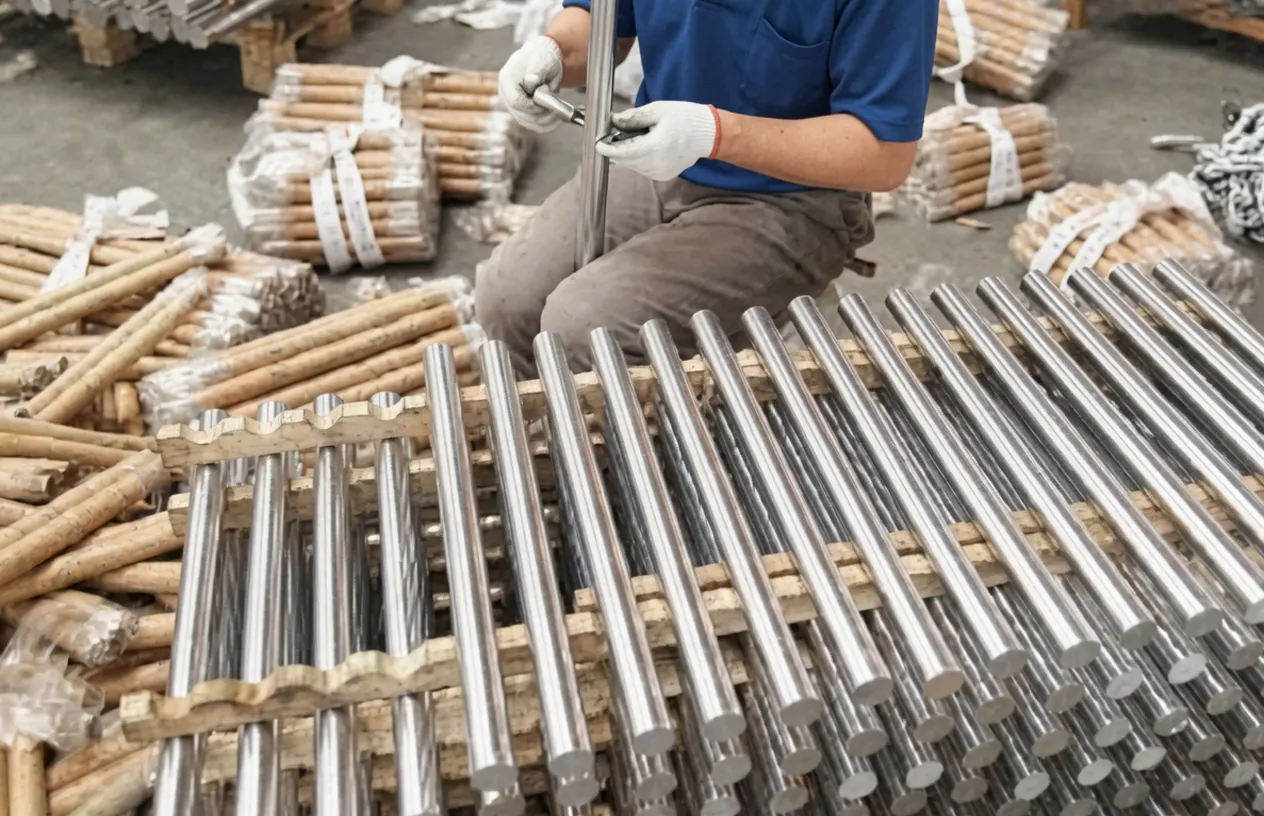
The cylinder barrel of this folding boom angle cylinder is fabricated from seamless cold-drawn precision steel tubing, internally honed to a controlled cross-hatch finish that maintains seal contact integrity across the full 1458mm stroke length — a meaningfully longer bore section than smaller aerial-platform cylinders, requiring tighter straightness tolerance to avoid uneven seal wear over the extended travel distance. On this folding boom angle cylinder, the piston rod is forged from high-tensile alloy steel, heat-treated for core strength, then precision-ground and hard-chrome plated to a minimum 25μm thickness, providing the corrosion resistance and surface hardness needed for a rod exposed to weather across its near-1.5-metre length whenever the folding section is extended.
On this folding boom angle cylinder, the clevis rod-eye and trunnion base mount are forged from medium-carbon steel and machined to accept hardened steel pins running in bronze or composite self-lubricating bushings, an arrangement that minimises pin wear under the cyclic bending loads typical of folding boom articulation. Seal technology for this folding boom angle cylinder includes a polyurethane piston seal rated for the 21MPa pressure class, a PTFE-composite rod seal, and a dedicated buffer seal to manage the pressure spikes that occur when the boom suddenly decelerates at the top of its angular travel.
On this folding boom angle cylinder, external surfaces undergo phosphate pre-treatment followed by a marine-grade powder-coat or baked enamel finish, giving the cylinder corrosion resistance appropriate for outdoor construction site exposure across French and Northern European weather conditions. Given the size and structural role of this boom angle cylinder, every unit undergoes full hydrostatic pressure testing to the 32MPa rated maximum before despatch, with results recorded and supplied as part of the standard documentation package for OEM and aftermarket buyers.
6. Application Scenarios
The HCYY11112011 folding boom angle cylinder is purpose-built for mid-to-large aerial work platforms where boom articulation geometry, not just straight-line extension, determines the machine's effective reach. Representative deployment scenarios are listed below.
Articulated Boom Lifts
Articulated boom lifts used for façade work, tree maintenance, and where a folding boom angle cylinder governs the knuckle joint, and telecoms infrastructure access in France rely on a folding boom angle cylinder at the knuckle joint to reach over walls, fences, and other obstacles that a straight telescopic boom cannot clear. The 1458mm stroke matches the angular swing typically required on platforms in the 18-metre to 28-metre working height class common across European rental fleets.
Truck-Mounted Aerial Platforms
Truck-mounted aerial work platforms used by French utility companies relying on a folding boom angle cylinder and tree care contractors integrate a folding boom section to navigate around overhead obstructions while maintaining reach into the work zone. This large-bore boom cylinder provides the force margin needed for the heavier boom structures typical of truck-mounted platforms compared to self-propelled units.
Crane and Lifting Boom Systems
Mobile crane jib and lifting boom systems use comparable folding boom angle cylinder configurations to control jib offset angle relative to the main boom, optimising lift radius and load chart compliance. The structural mounting principles of this folding boom angle cylinder — clevis and trunnion ends rated for combined axial and lateral loading — translate directly to crane jib offset cylinder applications in industrial lifting equipment.
Aerial Work Vehicle Lower Arm Systems
On many boom aerial work vehicle designs, the boom aerial work vehicle lower arm hydraulic cylinder and the upper folding boom angle cylinder work in coordinated sequence to lift and then angle the platform into position. This folding boom angle cylinder typically governs the upper articulation while a separate, often larger-bore lower arm cylinder manages initial boom elevation from the chassis-mounted pivot.
Industrial Reach & Maintenance Platforms
Industrial maintenance access platforms used in French refineries and ports, often equipped with a folding boom angle cylinder, and large manufacturing facilities frequently incorporate folding boom geometry to reach into process equipment, tank interiors, and overhead structures. The 21MPa pressure rating of this folding boom angle cylinder supports the higher duty-cycle demands of continuous industrial maintenance scheduling compared to occasional construction-site use.
Aftermarket Replacement & Fleet Maintenance
As a dimensionally matched replacement for the HCYY11112011 reference, this folding boom angle cylinder supports French and European aftermarket repair networks servicing boom lift rental fleets. Workshops servicing this folding boom angle cylinder can source a complete hydraulic cylinder seal kit separately for units where the barrel and rod remain serviceable, reducing the total repair cost compared to full cylinder replacement on these larger, higher-value boom angle cylinder assemblies.
7. Regulatory Compliance — France & International Standards
European Union — Machinery Directive 2006/42/EC: Aerial work platforms sold or operated within France and the EU must carry CE marking under the Machinery Directive, with the boom articulation system, including this folding boom angle cylinder, treated as a safety-critical structural element under the Directive's essential health and safety requirements. Hydrostatic test certification and dimensional inspection records are supplied as standard, supporting the technical documentation file required for CE conformity assessment by a Notified Body.
France — INRS & EN 280 Compliance: The Institut National de Recherche et de Sécurité (INRS) publishes maintenance and inspection guidance for mobile elevating work platforms operating in France, and EN 280:2013+A1:2015 specifies design, stability, and safety examination requirements applicable to boom articulation cylinders. French MEWP operators are required under the Code du Travail (Article R4323-108) to maintain documented service records for structural hydraulic components such as this boom angle cylinder as part of the periodic six-monthly technical inspection regime.
ISO Standards — Cylinder Dimensions & Performance: This folding boom angle cylinder conforms to ISO 6020-2 for medium-pressure cylinder mounting dimensions and ISO 10766 for seal groove geometry, while EN ISO 4413 governs general hydraulic system safety requirements for mobile machinery integration. Conformity with these standards supports dimensional interchangeability and predictable performance when this cylinder is specified as an aftermarket hydraulic cylinder replacement on existing boom lift fleets.
EN 280 — Load-Holding & Failure-Tolerance Requirements: For boom-type MEWPs specifically, EN 280 mandates that hydraulic actuators supporting the work platform incorporate failure-tolerant load-holding, typically achieved through integrated or close-coupled load-holding valves. This requirement directly informs the valve integration approach used on this same folding boom angle cylinder, the folding boom angle cylinder, ensuring the folding section cannot descend uncontrollably in the event of a hose failure or sudden pressure loss elsewhere in the hydraulic circuit.
RoHS & REACH Compliance: Materials used in the construction of this folding boom angle cylinder, including seals, surface coatings, and structural steel, comply with EU RoHS Directive 2011/65/EU and REACH Regulation (EC) 1907/2006 restrictions on substances of very high concern. Declarations of compliance are available on request to support environmental due diligence requirements for French equipment OEMs and procurement teams.
8. Related Products — Complete Hydraulic System Supply
Alongside this folding boom angle cylinder, we manufacture a complete range of complementary hydraulic actuators and power units, allowing French and European aerial work platform manufacturers and aftermarket distributors to source an entire hydraulic system from a single supplier.
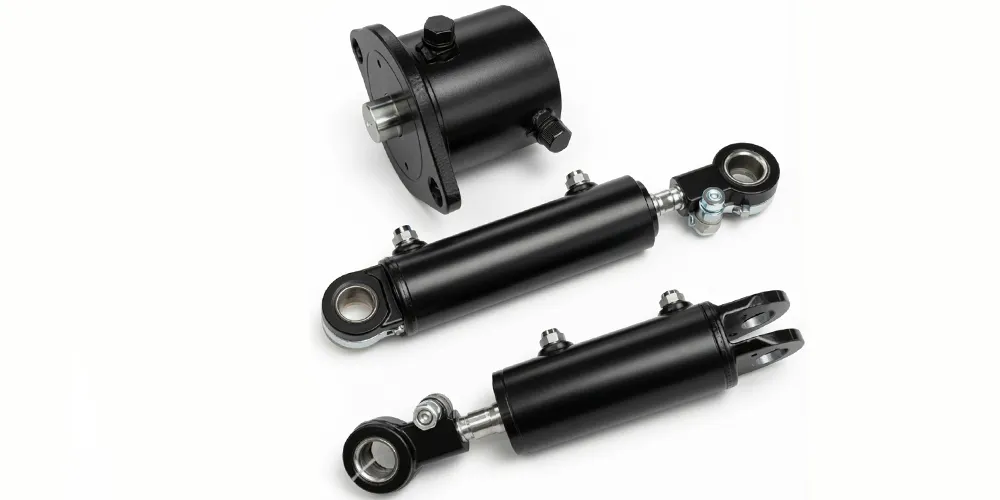
झुकाव सिलेंडर
Heavy-duty tilt cylinders engineered for platform leveling and mast tilt functions, sized to complement this folding boom angle cylinder's pressure class for unified hydraulic circuit design across the complete aerial work vehicle.
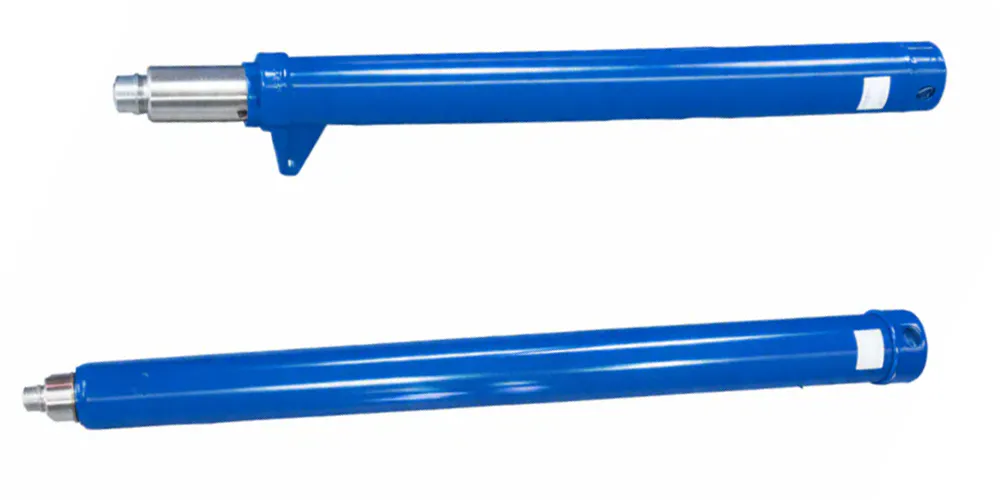
फोर्कलिफ्ट लिफ्टिंग सिलेंडर
High-pressure lifting cylinders for mast stage actuation, manufactured with the same hard-chrome rod technology and seal engineering used in this folding boom angle cylinder range, supporting consistent quality across an entire equipment fleet.
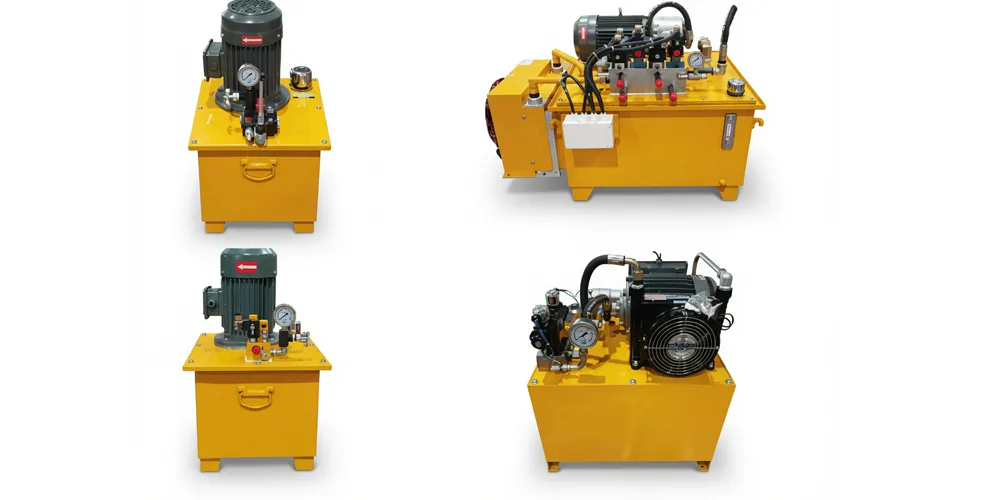
Hydraulic Pump Station Series
Complete hydraulic power units sized to deliver the 21MPa working pressure and flow rate required by this large-bore folding boom angle cylinder, with piston pump options and integrated valve manifolds for streamlined boom lift integration.
9. About us - Folding Boom Angle Cylinder Manufacturer
We specialise in the design and production of precision hydraulic actuators for aerial work platforms, heavy mobile equipment, and material handling vehicles. Our manufacturing range covers the complete spectrum of hydraulic cylinder components — from compact mini hydraulic cylinders and small hydraulic cylinders through to large-bore folding boom angle cylinder units, telescopic hydraulic cylinders, and other दोहरी क्रियाशील हाइड्रोलिक सिलेंडर configurations for construction, industrial access, and lifting applications, all manufactured under an ISO 9001-certified quality management system with complete material traceability.
Our folding boom angle cylinder programme works directly with aerial work platform OEMs, boom lift manufacturers, and aftermarket distributors across France, the wider EU, and international markets to supply both catalogue-standard actuators and application-engineered folding boom angle cylinder solutions matched to specific boom geometry requirements. Our engineering team can support customers researching what is a boom cylinder and what is a folding boom angle cylinder and how folding angle cylinders differ from telescopic extension cylinders, helping specify the correct combination of bore, stroke, and mounting configuration for new platform designs or replacement programmes.
Every folding boom angle cylinder leaving our facility undergoes dimensional verification, surface finish inspection, and full hydrostatic pressure testing to its rated maximum before despatch. Export documentation — including CE declarations, EN 10204 3.1 material certificates, and hydrostatic test reports — is prepared as standard for shipments to France and across the European Union, supporting the compliance and traceability expectations of European aerial platform manufacturers and rental fleet operators.
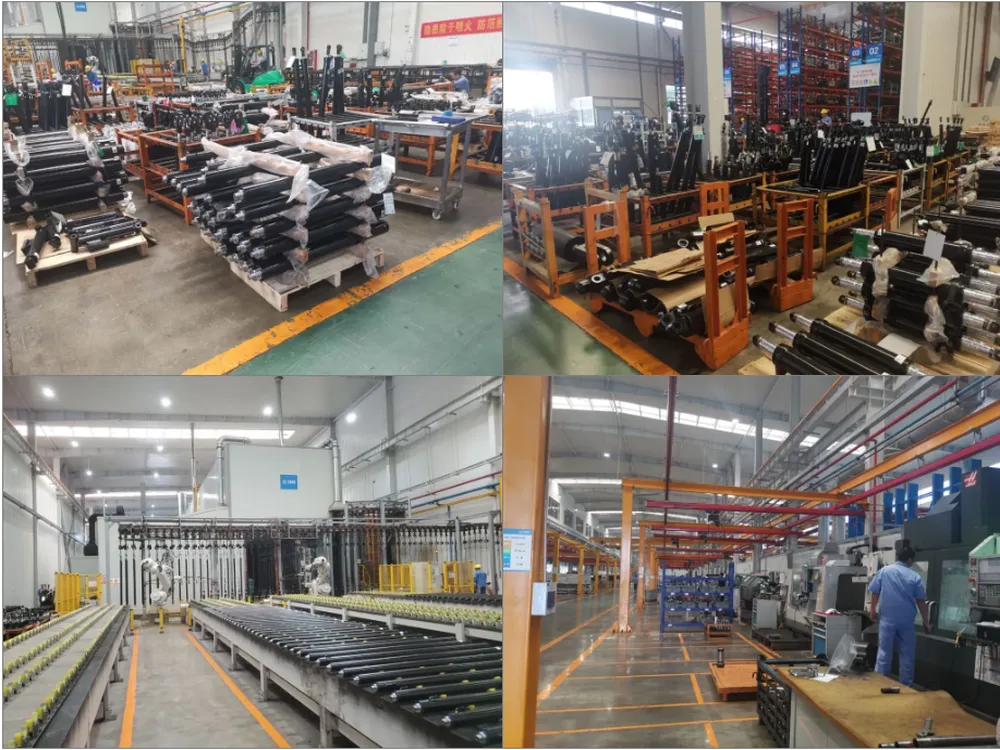
WorkShop
Frequently Asked Questions
Request a Quote for Folding Boom Angle Cylinder HCYY11112011
For a single replacement unit or a full fleet maintenance supply programme across France and the EU, our team can provide prompt quotations, CE documentation, and technical cross-reference support.
Editor: PXY