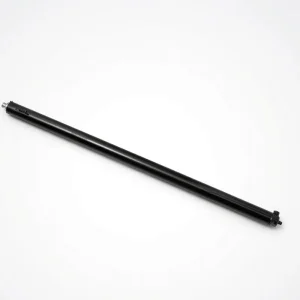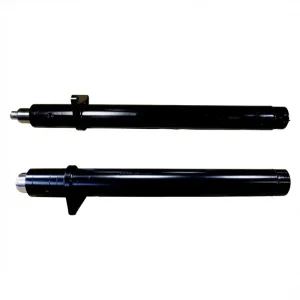
EP High-Quality Forklift Lift Cylinder
The EP High-Quality Forklift Lift Cylinder is a robust hydraulic actuator engineered for counterbalance, reach, and sideloader forklifts. Built to international standards, it features a precision CNC-honed bore (Ra 0.2–0.4 µm) and a hard-chrome plated piston rod (Ra ≤ 0.4 µm) for superior wear resistance. This series utilizes premium sealing systems from Parker, NOK, and BUSAK SHAMBAN, ensuring compatibility with mineral oils and biodegradable fluids.
Rated for continuous operation at 3,000 PSI (207 bar), every unit undergoes a rigorous 6,000 PSI (414 bar) factory pressure test, meeting ISO 10100 and ISO 4413 requirements. The cylinder is constructed from high-grade 20#/45# cold-drawn seamless steel and QT600 ductile iron, with an automated water-based paint finish for corrosion protection. Available in both single and double-acting configurations, it supports OEM/ODM customization for bore, stroke, and fittings. Backed by ISO 9001:2015 certification, this cylinder is designed for reliability in demanding industrial environments across France and the EU.
EP Series — Hydraulic Cylinder
EP High-Quality Forklift Lift Cylinder — Customised Hydraulic Lifting Solution
Purpose-built for the lifting demands of counterbalance, reach, and sideloader forklifts, this EP forklift lift cylinder combines a precision-honed cylinder bore, superior-strength chrome-plated piston rod, and world-class sealing systems into a single, field-proven hydraulic assembly. Backed by ISO 9001:2015 certification and OEM/ODM capability, this forklift lift cylinder series is the preferred choice for warehouse operators, fleet maintenance teams, and equipment manufacturers across France and the wider European market.
OEM/ODM Available
ISO 9001:2015
France & EU Export
1. Forklift Lift Cylinder — Component Parts List
The following 27-item parts list covers every internal and external component of the EP forklift lift cylinder assembly. All parts are available individually for field service or seal replacement, enabling French forklift maintenance workshops to carry targeted spare-parts stock rather than complete forklift lift cylinder assemblies.
| No. | Component | No. | Component | No. | Component |
|---|---|---|---|---|---|
| 1 | Cylinder Housing Assy | 11 | Sprocket Seat | 21 | O-Ring |
| 2 | Piston | 12 | Sprocket Cover | 22 | Grease Nipple |
| 3 | Oil Pipe | 13 | Spring Washers | 23 | O-Ring |
| 4 | Check Valve | 14 | Hex Bolt | 24 | Washer |
| 5 | Circlips For Hole | 15 | Du Bush | 25 | Screws |
| 6 | O-Ring | 16 | Back-Ring | 26 | Piston Rod |
| 7 | Wear-Ring | 17 | Rod Seal | 27 | Plug |
| 8 | Hole Seal | 18 | Dust Wiper | ||
| 9 | Round Wire | 19 | Back-Ring | ||
| 10 | Guide Bush | 20 | O-Ring | ||
2. EP Forklift Lift Cylinder — Technical Specifications
All standard specifications below apply to the EP forklift lift cylinder series. Custom bore diameter, stroke length, port size, and end fitting geometry are available on request for OEM/ODM orders. Confirm customised forklift lift cylinder specifications at the time of enquiry.
| Parameter | Standard Specification |
|---|---|
| Product Name | Customised Hydraulic Lift Cylinder for Industrial Vehicle / Forklift |
| Condition | New (OEM replacement or first-fit supply) |
| Acting Type | Single Acting or Double Acting (specified at order) |
| Structure | Piston Cylinder (standard) / Telescopic available on request |
| Body / Tube Material | 20# / 45# Cold-drawn seamless steel tube |
| Piston & Gland Material | High-grade ductile iron QT600, CNC machined |
| Piston Rod | 45# / 40Cr steel; hard-chrome plated ≥ 25 µm; Ra ≤ 0.4 µm |
| Bore Inner Surface Finish | CNC honed; Ra 0.2 – 0.4 µm |
| Rated Working Pressure | 3,000 PSI (≈ 207 bar) |
| Test Pressure | 6,000 PSI (≈ 414 bar) — 100% factory tested |
| Seal Brand | Parker, NOK, BUSAK SHAMBAN (Hallite) |
| Typical Unit Weight | ≈ 45 kg (varies by bore diameter and stroke) |
| Warranty | 1 year (core components: piston rod and piston) |
| Certification | ISO 9001:2015 / ISO 4001 / ISO 45003 |
| Surface Treatment | Automated water-based paint; colour per customer RAL code |
| Service Type | OEM & ODM; custom bore, stroke, port, and fitting available |
| MOQ | 1 piece (standard range); confirm for custom specifications |
| Annual Production Capacity | 1,200,000 pieces per year; monthly supply ≥ 100,000 pieces |
| Packaging | Export crate, pallet, or per customer requirement |
| Applicable Industries | Manufacturing, warehousing, logistics, Machinery Repair Shops, Farms |
| Video Outgoing Inspection | Provided (full video documentation of pressure test) |
| Machinery Test Report | Provided with each consignment |
3. Compatible Forklift & Equipment Brands — Available Reference Models
The EP forklift lift cylinder is engineered to replace OEM cylinders across all major forklift and construction equipment brands. The table below lists the reference machine models for which EP forklift lift cylinders are available. Custom forklift lift cylinder specifications for unlisted models can be manufactured from customer drawings or from measurements of the original cylinder.
| Brand | Available Models / Series |
|---|---|
| KOMATSU (PC) | PC30, PC40, PC50, PC56, PC60, PC78, PC100, PC110, PC120, PC130, PC160, PC200-3/5/6/7/8/8MO, PC210, PC220-5/6/7/8/8MO, PC240, PC300/350/360-5/6/7/8/8MO, PC400/450-5/6/7/8/8MO, PC800, PC850 |
| CATERPILLAR (E) | E301.5, E302, E305.5, E306, E307V1/V2/B/C/D/E/F, E308B/C, E120B, E312V1/V2/B/C/D, E313D2, E312D2, E315D, E200B, E320V1/V2/A/B/C/D, E324D, E325C/D, E329D, E330/336C/D, E345C, E349D, E365C, E374, E390 |
| KOBELCO (SK) | SK60-3/5/8, SK75-8/SR, SK100, SK120-3/5, SK135-8/SR, SK140-8, SK200-3/5/6/6E, SK210-3/5/6/6E, SK230/250-6E, SK250-8, SK260-8, SK350-8/S8, SK460/480-8 |
| HYUNDAI (R) | R55-5/7, R60-5/7, R80, R110, R130, R200-5, R210-5, R215-5/7, R220-5/7/9, R225-5/7/9, R250, R260, R265, R290, R305, R445, R485, R505 |
| HITACHI (EX / ZX) | EX60, EX100-1/2/3, EX120-1/3/5/6, EX200-1/3/5, EX230-5, EX300-1, EX400; ZAX60, ZAX70, ZA120-6, ZAX200/210-1/3/5/5K, ZAX240, ZAX250, ZAX260, ZAX330-3/5/6, ZAX450/470, ZAX650/670, ZAX850/870 |
| DOOSAN (DH / DX) | DH55, DH60, DH80, DH150, DH215-5/7, DH220-5, DH225-5/7, DH258, DH300-5/7, DH370, DH420, DH500; DX55, DX60, DX75, DX130, DX225-9, DX300, DX380, DX420, DX500 |
| VOLVO (EC) | EC55, EC60, EC75, EC80, EC140, EC210B/D, EC220D, EC240, EC250, EC290, EC300, EC360, EC380, EC460, EC480, EC700, EC750, EC950 |
| KATO (HD) | HD307/308, HD450, HD512, HD700-5/7, HD820-1/2/3/5/R, HD1023-1/3, HD1430-1/3 |
| Other Brands | XCMG, LIUGONG, KUBOTA, CASE, YANMAR, SUNWARD, ZOOMLION, LISHIDE, LIEBHERR — and all major European forklift brands including Linde, Still, Jungheinrich, Crown, Manitou, Hyster, Toyota |
4. What Is a Forklift Lift Cylinder?
A forklift lift cylinder is the primary hydraulic actuator responsible for raising and lowering the fork carriage along the mast of a forklift truck. When hydraulic fluid is directed under pressure into the forklift lift cylinder barrel, the piston extends and the forks rise; when the control valve releases pressure, gravity and the weight of the load return the piston to its retracted position, lowering the load smoothly. This simple yet robust single-acting operating principle—supplemented by twin-lip piston seals and precision-ground rod surfaces—gives the forklift lift cylinder its characteristic combination of high force output and smooth, controllable descent speed that warehouse operators and logistics teams across France depend on every day.
Most standard forklifts carry two forklift lift cylinders—one on each side of the mast—working in parallel to provide balanced, even lifting across the full fork width. In reach trucks and narrow-aisle forklifts, a single central forklift main lift cylinder is more common, providing vertical travel within the inner mast section before the free-lift stage engages. Whatever the mast configuration, the forklift lift cylinder must resist side loads from uneven load distribution, axial compression from the load weight, and the cyclic fatigue of hundreds of lift cycles per shift over years of service. The EP forklift lift cylinder is engineered to meet these demands through a combination of high-grade steel tube, hardened piston rod, and internationally branded seal systems that comply with the expectations of French and European industrial maintenance standards.
Beyond standard counterbalance forklift applications, the forklift lift cylinder concept extends to reach trucks, pallet stackers, order pickers, aerial work platforms, and specialised industrial vehicles. The EP series accommodates this breadth through OEM and ODM customisation — bore diameter, stroke length, port positioning, and end fitting geometry can all be specified to match the original forklift lift cylinder dimensions of virtually any forklift model currently in service in France or elsewhere in the EU, including Linde, Still, Toyota, Hyster, Crown, Jungheinrich, and Manitou machines.
5. How Does a Forklift Lift Cylinder Work? — Pascal's Law in Practice
The operating principle of a forklift lift cylinder is grounded in Pascal's law: pressure applied to a confined, incompressible fluid is transmitted uniformly in all directions throughout that fluid. In the context of a forklift hydraulic system, the electric motor or internal combustion engine drives a gear or piston pump that draws hydraulic oil from the reservoir and forces it through control valves into the forklift lift cylinder barrel. That pressurised oil acts on the full cross-sectional area of the piston face. Because force equals pressure multiplied by area, even modest pump pressure—typically operating at 150–250 bar in standard forklift systems—generates thousands of Newtons of linear pushing force on the piston, which in turn lifts the fork carriage and any load attached to it.
When the operator releases the lift lever, the control valve shifts to block the supply port and open a metered return path. The weight of the forks, carriage, and load then pushes the piston back down against the oil, which flows back to the reservoir at a controlled rate governed by the lowering valve. In a forklift free lift cylinder configuration, an inner mast section travels first without raising the outer mast — this free-lift stroke allows loads to be raised within the confines of a low-headroom environment, such as a container or a cold-store facility, before full mast extension begins. Understanding this two-stage operation is important when specifying a replacement forklift lift cylinder, as the free-lift cylinder and the full-lift cylinder are separate components with different stroke and bore specifications.
The five principal system components supporting this forklift lift cylinder in operation are: the hydraulic reservoir that stores clean oil, the pump that generates flow, the directional control valve that governs direction and speed, the forklift lift cylinder assembly itself where hydraulic energy converts to mechanical linear motion, and the return hose network that completes the circuit. Each EP forklift lift cylinder is 100% factory pressure-tested at a minimum of 1.5 times the rated working pressure before despatch — a standard that satisfies both internal quality requirements and the field expectations of professional forklift service technicians in France, Germany, and across the EU.
6. Five Key Advantages of the EP Forklift Lift Cylinder
3,000 PSI Rated / 6,000 PSI Tested
Every forklift lift cylinder in this series carries a 3,000 PSI (≈ 207 bar) continuous working pressure rating and is pressure-tested at 6,000 PSI before leaving the production floor. This 2:1 test-to-rated ratio exceeds the minimum requirements of ISO 10100 and provides the performance headroom that French and EU fleet operators need for high-cycle warehouse environments, cold-store facilities, and outdoor heavy-goods yards where pressure spikes from rapid load handling are common.
Chrome-Plated Hard Rod — Corrosion and Wear Resistant
The piston rod is manufactured from high-tensile steel, then hard-chrome plated and ground to a surface finish of Ra ≤ 0.4 µm. This chrome layer provides a hardness exceeding 850 HV at the rod surface — resisting the galling, scoring, and seal-abrading damage that shortens the service life of inferior forklift lift cylinders. For French logistics operators dealing with wet, dusty, or chemically aggressive field conditions — from Atlantic coastal ports to Alpine cold-chain facilities — the rod quality determines long-term seal life and, consequently, forklift lift cylinder overhaul intervals.
Premium Seal Brands — Parker, NOK, BUSAK SHAMBAN
The hydraulic seal systems in EP forklift lift cylinders are sourced from Parker Hannifin, NOK, and BUSAK SHAMBAN (Hallite) — the three global leaders in fluid power sealing. These premium seals maintain their elastic recovery and chemical compatibility across the full operating temperature range encountered in European forklift applications, from sub-zero cold-store operations to high-cycle summer warehouse peaks. Twin-lip piston seals maximise efficiency by maintaining pressure on both the extend and retract paths simultaneously, reducing hydraulic oil bypass and keeping descent speed consistent across the forklift lift cylinder's service life.
CNC Honed Bore — Surface Roughness 0.2–0.4 µm
The forklift lift cylinder tube inner surface is produced from cold-drawn seamless steel tube, then CNC honed to an internal surface roughness of Ra 0.2–0.4 µm. This precision finish provides a consistent oil film layer between piston seal and bore wall, reducing stick-slip at low speeds, minimising seal wear, and ensuring the forklift lift cylinder reaches its full rated stroke smoothly at any load. For forklift operators who need precise load lowering at controlled speed — as required in high-value goods handling, vehicle loading docks, and mezzanine lift operations common in French distribution centres — this bore quality is a non-negotiable specification.
OEM/ODM — One-Piece Minimum Order Quantity
Unlike most hydraulic cylinder manufacturers who impose volume minimums, EP accepts orders from a single piece — making the forklift lift cylinder series accessible to French forklift service workshops that need a single replacement forklift lift cylinder for an out-of-production machine, as well as to OEM equipment builders ordering in production volume. Full OEM and ODM services are available: bore diameter, stroke, port sizes, end fitting geometry, and surface coating can all be engineered to match the original equipment manufacturer's specification, with ISO 9001:2015 controlled production and full dimensional inspection records provided with each forklift lift cylinder consignment.
7. Materials & Construction — Built for Long-Cycle Industrial Service
The material selection in the EP forklift lift cylinder reflects the demanding operational environment of industrial lifting: sustained static loads, high cyclic fatigue, hydraulic fluid exposure, and abrasive environmental contamination. Every major component of the forklift lift cylinder is specified for both mechanical performance and long-term compatibility with the hydraulic system fluids used across the French and European forklift fleet.
Cylinder Barrel
Cold-drawn seamless steel tube (20# or 45# steel grade), selected for its consistent wall thickness, high tensile yield strength (≥ 540 MPa for 45# grade), and suitability for high-speed honing to the Ra 0.2–0.4 µm finish required for premium forklift lift cylinder seal life. Heavy-duty welded construction at end caps uses automated robotic welding for consistent penetration and full-strength joints throughout the pressure zone.
Piston Rod
High-tensile steel bar (45# or 40Cr alloy steel), precision-turned, induction-hardened, and hard-chrome plated to a minimum chrome thickness of 25 µm. Ground after plating to Ra ≤ 0.4 µm. The chrome layer resists corrosion from water contamination in hydraulic oil — a common cause of seal lip damage in forklift lift cylinders operating in outdoor or wash-down environments prevalent in French agri-logistics and cold-chain facilities.
Piston & Gland
High-grade ductile iron (QT600 grade), machined directly from bar stock to final dimension — avoiding the porosity risks of cast blanks. Ductile iron provides sufficient strength under both compressive and bending loads acting on the piston during off-centre loading, while remaining machinable to the tight bore tolerances required for seal groove concentricity. The gland (guide bush assembly) combines ductile iron body with DU (Du Bush) wear-resistant bronze-PTFE composite bearings for smooth, low-friction rod guidance in the forklift lift cylinder.
Seal Package
Complete seal kit from Parker, NOK, or BUSAK SHAMBAN (specified at order stage): twin-lip piston seals, rod seal, dust wiper (scraper), back-rings, O-rings at all static joints. All seal compounds are compatible with standard mineral hydraulic oil (HLP/HM grades per ISO 11158) and biodegradable HEES fluids increasingly required by French municipal and agri-food equipment operators under environmental legislation for the forklift lift cylinder.
Surface Finish
External forklift lift cylinder surfaces receive a fully automated water-based paint coating applied by robotic spray system: multi-coat primer plus topcoat in the specified colour (customer colour RAL codes accepted). The coating process provides corrosion protection meeting ISO 12944 Class C3 or C4 for moderately or highly corrosive environments — covering the salt-exposure conditions typical of Atlantic coast logistics facilities and the chemical splash risk at agri-food processing sites in Normandie and Bretagne.
8. Regulatory Compliance — Forklift Hydraulic Cylinders in France and the EU
Forklift lift cylinders fall under multiple overlapping regulatory frameworks in France and across the European Union. Procurement managers, maintenance technicians, and fleet operators should be aware of the following standards and directives before purchasing replacement or OEM-supply forklift lift cylinders for use in French workplaces.
🇫🇷 France — Code du Travail & INRS
The French Code du Travail (Labour Code), specifically Articles R4323-1 onwards, governs work equipment including forklifts and their hydraulic systems. INRS (Institut National de Recherche et de Sécurité) publishes technical guides ED 781 and related documents covering forklift maintenance, hydraulic system inspection, and the requirement for qualified personnel to perform forklift lift cylinder replacement. CARSAT regional bodies conduct compliance inspections and may require documented evidence that replacement forklift lift cylinders meet the original equipment's rated specifications — which the EP test reports and material certificates provide.
🇪🇺 EU — Machinery Directive 2006/42/EC
The EU Machinery Directive 2006/42/EC (and its successor, Machinery Regulation (EU) 2023/1230, effective January 2027) governs forklifts as machinery. Hydraulic cylinders are classified as safety components under this regulation, as failure could lead to uncontrolled load lowering with serious injury risk. Replacement forklift lift cylinders for CE-marked forklifts must meet equivalent safety standards — which the EP series achieves through its ISO 9001:2015 quality system, 100% pressure test documentation, and rated-pressure compliance. EU importers must ensure hydraulic cylinder seal material compliance with REACH Regulation (EC) No 1907/2006.
🌐 ISO Hydraulic Cylinder Standards
ISO 10100:2020 (Hydraulic fluid power — Cylinders — Acceptance tests) defines acceptance test conditions and test pressure multiples for hydraulic cylinders — including the 1.5× minimum test-to-rated pressure ratio that the EP forklift lift cylinder series exceeds. ISO 4413:2011 (Safety requirements for hydraulic fluid power systems) governs the installation and maintenance environment for forklift lift cylinders in France and across the EU. Dimensional standards for hydraulic cylinder mounting interfaces include ISO 6020 and ISO 6022. Procurement engineers should verify that any replacement forklift lift cylinder is tested and documented in accordance with these ISO references.
🌍 PSSR & LOLER (UK) / EN ISO Standards
For buyers supplying markets beyond France — including the UK (post-Brexit), where the Pressure Systems Safety Regulations 2000 (PSSR) and Lifting Operations and Lifting Equipment Regulations 1998 (LOLER) apply — the EP forklift lift cylinder's 100% test certificate and material documentation provide the evidence base required to demonstrate compliance with written scheme of examination requirements. EN ISO 12100 (Risk assessment), EN 1726-1 (Industrial truck safety), and FEM 4.021 (Fork arm carrier guidance) are the additional technical references relevant to forklift lift cylinder specification in the broader European market.
9. Application Scenarios — Where the EP Forklift Lift Cylinder Is Deployed
The EP forklift lift cylinder covers the full spectrum of industrial vehicle lifting applications. Below are the primary sectors where the forklift lift cylinder is specified and deployed across France and the wider EU market.
🏭 Warehouse & Distribution Centres
Counterbalance forklifts and reach trucks in French logistics hubs — from the grand Île-de-France distribution corridors to the Lyon and Marseille freight zones — cycle their forklift lift cylinder mechanisms hundreds of times per shift. The CNC-honed bore and premium rod chrome ensure consistent, smooth lift response across this duty intensity, while the premium seal system maintains oil tightness through full seasonal temperature cycles in unheated distribution sheds.
🚢 Port & Container Handling
The ports of Le Havre, Marseille, and Dunkerque operate large fleets of container handler forklifts and reach stackers where the forklift lift cylinder must resist the combined static load of heavy containers and the dynamic shock loading from uneven ground surfaces at quay level. Salt air corrosion is a particular challenge in port environments; the chrome-plated rod and ISO 12944 C4 corrosion-rated external coating of the EP forklift lift cylinder address this directly.
❄️ Cold Chain & Food Logistics
Cold-store forklifts in French agri-food, dairy, and pharmaceutical cold chains operate at ambient temperatures from −25°C in blast freezing zones to +35°C in ambient loading bays — a 60°C temperature swing that stresses both hydraulic oil viscosity and seal elastomer performance. EP forklift lift cylinders specified for cold-chain service use FKM (Viton) piston rod seals rather than standard NBR, maintaining seal lip flexibility and oil retention across the full operating temperature range encountered in French cold-store forklift operations.
🏗️ Construction & Building Materials
Rough-terrain telehandlers, telescopic handlers, and construction-site forklifts deploy the forklift lift cylinder under conditions that differ substantially from indoor warehouse service: outdoor contamination, dusty uneven ground, heavy-shock loads from building materials, and wide-load attachments that impose lateral bending on the piston rod. Heavy-duty welded construction and the ductile iron gland provide the structural robustness for outdoor site service as well as the bore and rod quality needed for longer forklift lift cylinder seal life between service intervals.
🌿 Agriculture & Farm Logistics
Telescopic handlers and farm forklifts used in French viticulture, cereal farming, and livestock operations carry a wide range of pallet-box attachments, bale handlers, and bulk loaders. These machines typically run seasonal high-intensity cycles followed by extended rest — a usage pattern that makes oil contamination between seasons a primary concern. The EP forklift lift cylinder's dust wiper seal prevents dry dust accumulation at the rod exit from entering the barrel during off-season storage, preserving the rod seal and chrome rod condition for the next season's work.
🔧 Machinery Repair Shops & OEM Supply
Forklift service dealerships, independent repair workshops (garages de chariots élévateurs), and OEM equipment builders across France regularly need single-piece replacement forklift lift cylinders or batch supply for new-machine assembly. The EP MOQ of one piece, combined with OEM/ODM capability and full test documentation, makes the forklift lift cylinder series equally appropriate for a single urgent replacement order at a regional service workshop in Lyon and for a volume production order for a French telehandler OEM in the Pays de la Loire manufacturing zone.
10. About Us — Hydraulic Cylinder Manufacturer & B2B Exporter for France and Europe
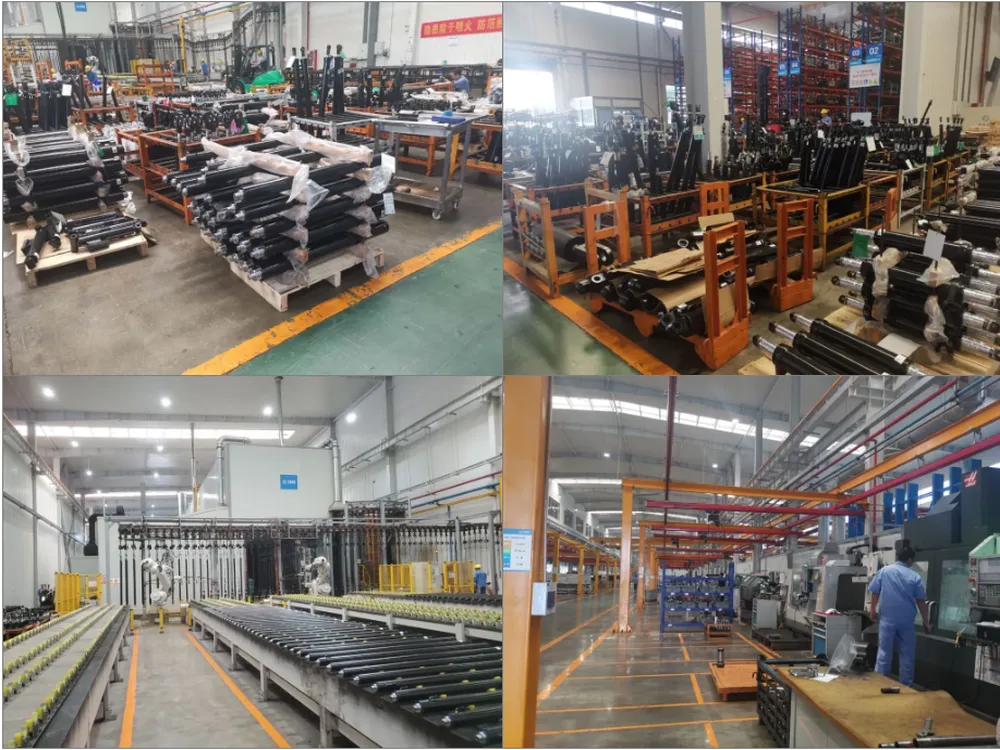
We are a specialist hydraulic cylinder manufacturer and international B2B exporter with an integrated production base covering forklift lift cylinders, tilt cylinders, aerial work vehicle cylinders, agricultural machinery cylinders, and construction equipment cylinders. Our manufacturing operations are ISO 9001:2015 certified and our quality management system also holds ISO 4001 and ISO 45003 accreditation — covering environmental management and occupational health and safety alongside production quality. Annual production capacity exceeds 1,200,000 cylinder assemblies, with a monthly throughput sufficient to fulfil both single replacement orders and large-volume fleet supply contracts to French and EU buyers for the forklift lift cylinder.
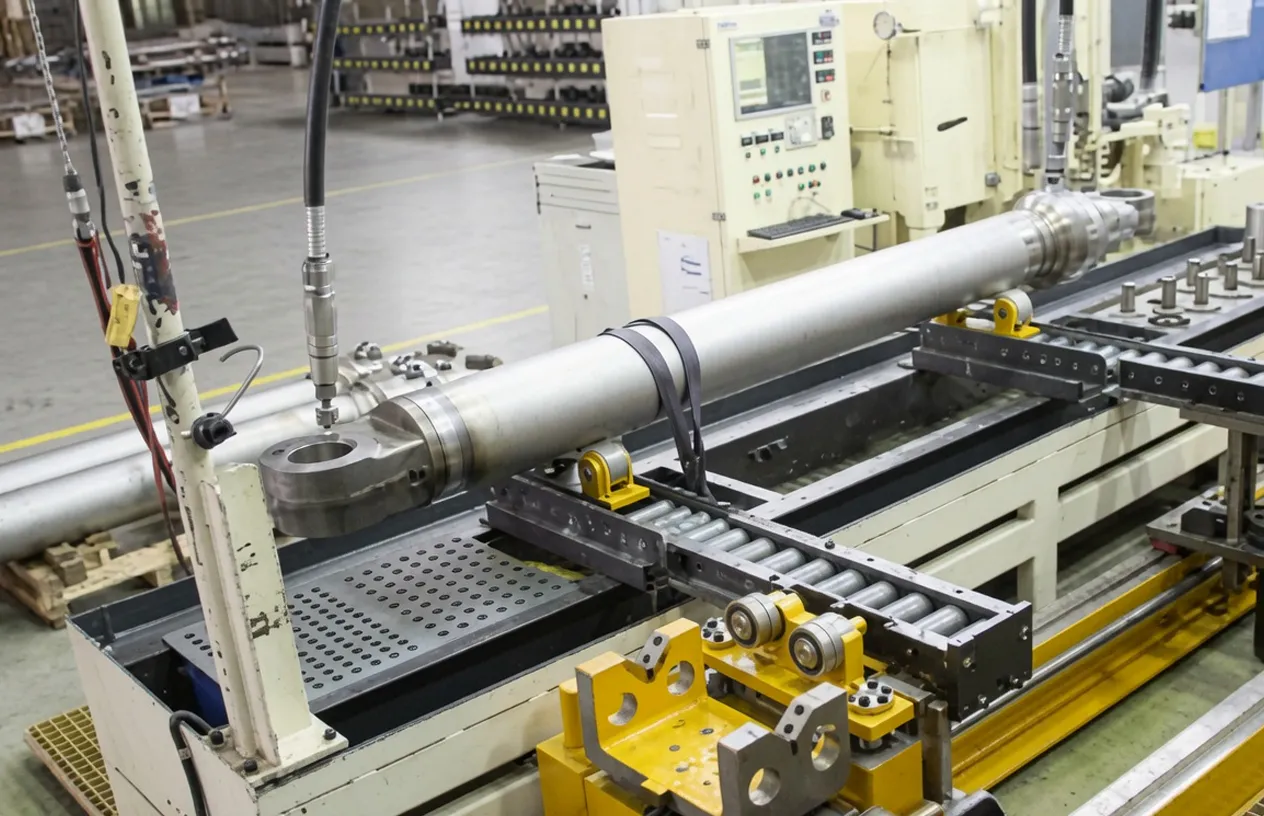
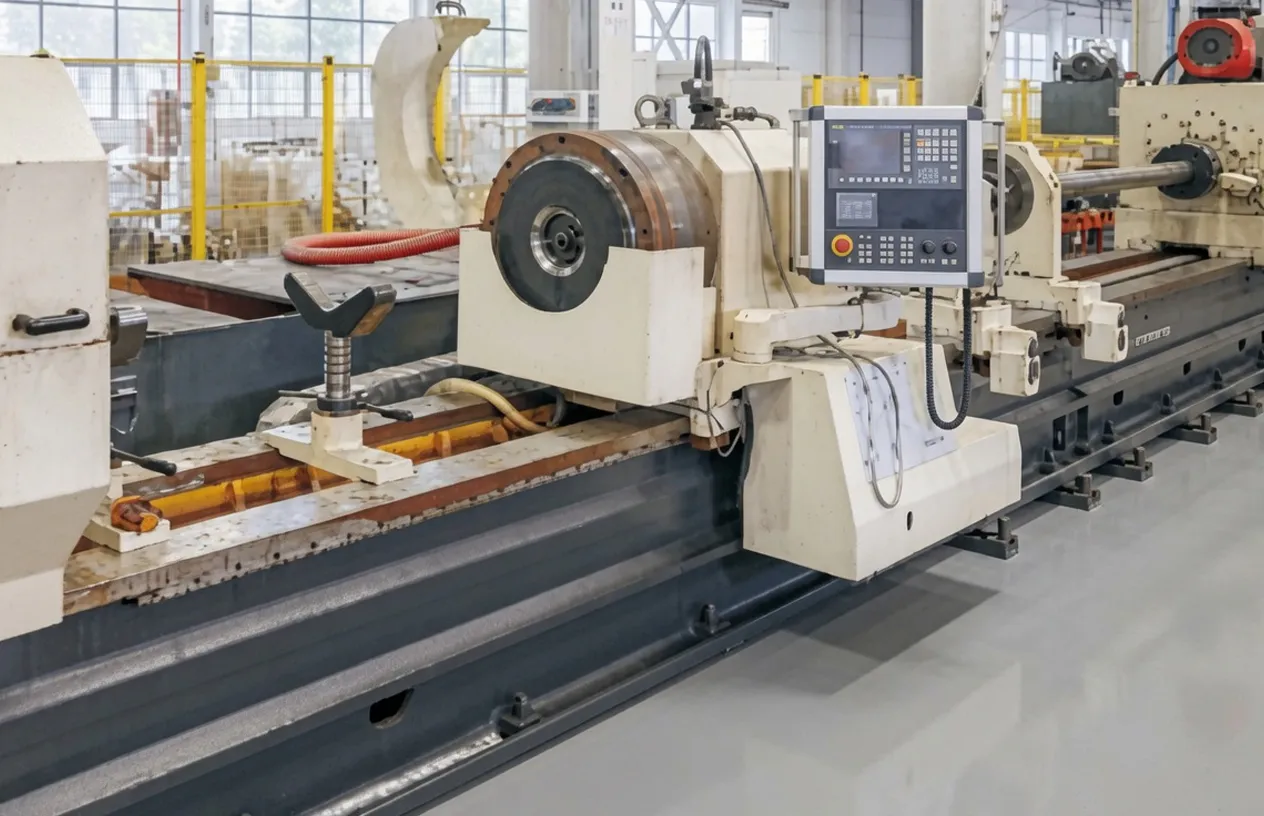
Our forklift lift cylinder production is supported by four semi-automatic lifting cylinder assembly lines and one fully automatic tilting cylinder assembly line, giving us the flexibility to serve both standard catalogue specifications and fully customised OEM/ODM orders with equal efficiency. CNC machining centres, high-speed honing machines, robot welding systems, and automated painting lines with robotic spray application are among the 300+ key equipment assets running across the production floor. Every forklift lift cylinder is 100% pressure-tested before packaging — full video documentation and test reports are provided with each shipment for French and EU customs and end-customer quality records.
WorkShop
11. Complete Forklift Hydraulic System — One-Stop Supply
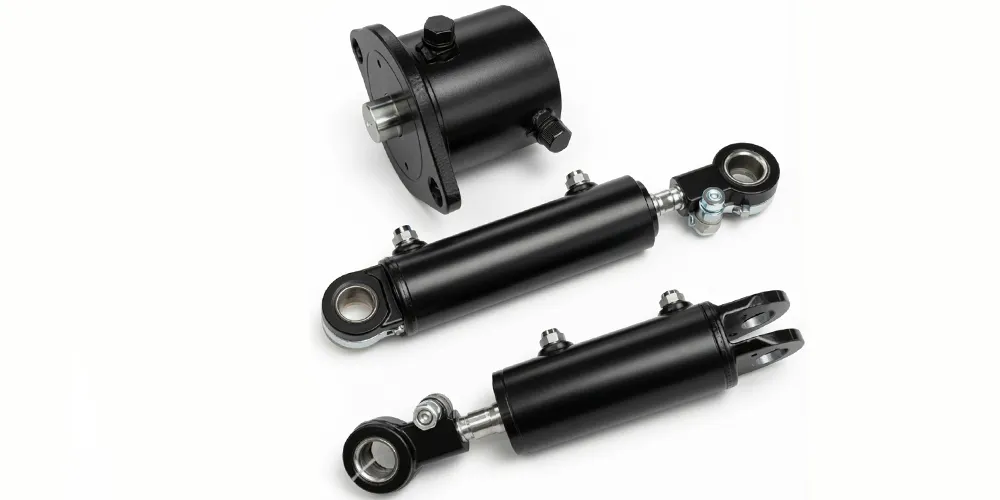
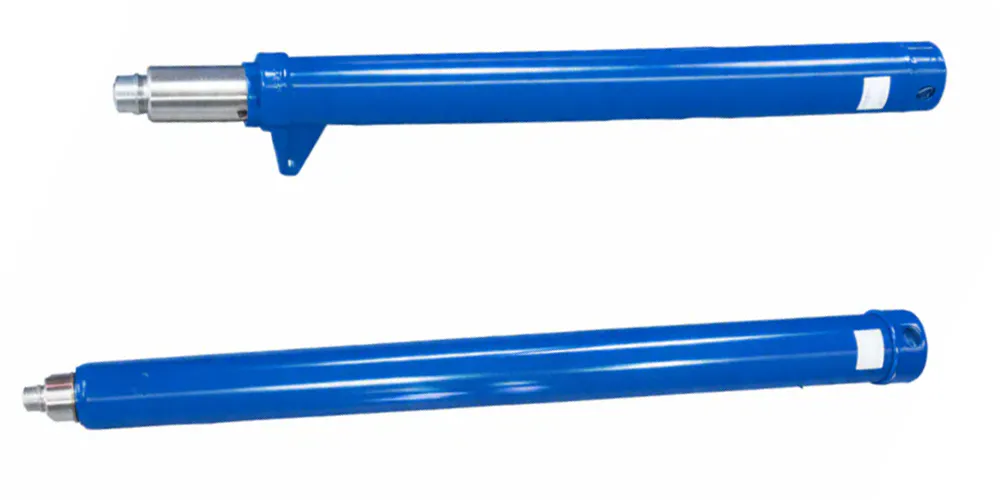
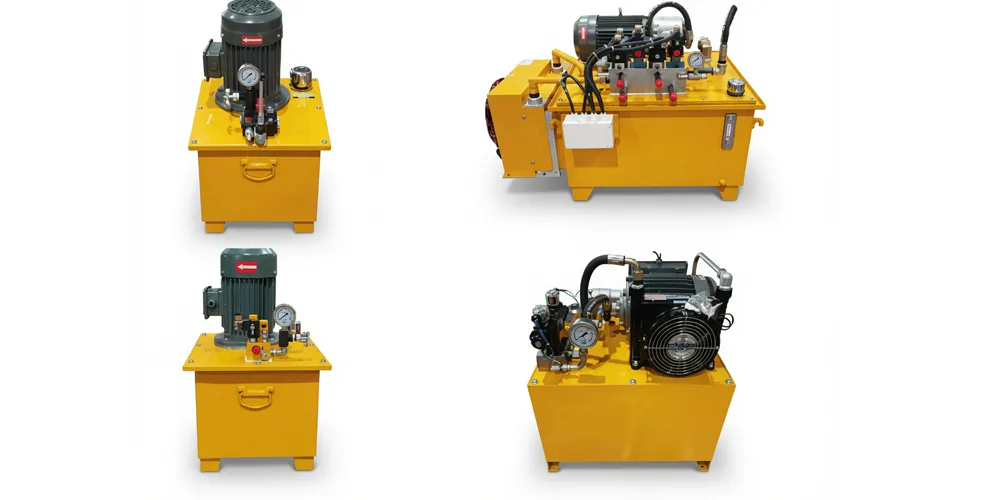
The EP forklift lift cylinder is one component within a complete forklift hydraulic system. We supply matched system components from a single source — tilt cylinders, forklift lift cylinders, and hydraulic pump stations — ensuring dimensional compatibility, unified quality documentation, and a single supplier contact for complete hydraulic system procurement across France and the EU.
Frequently Asked Questions — EP Forklift Lift Cylinder
Editor: PXY