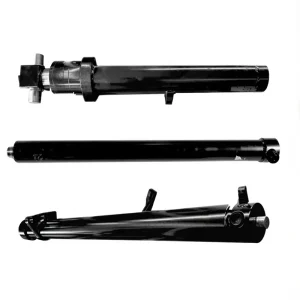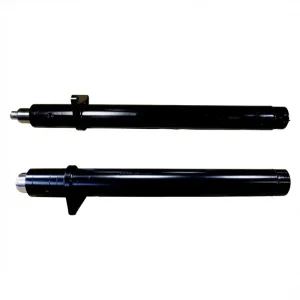
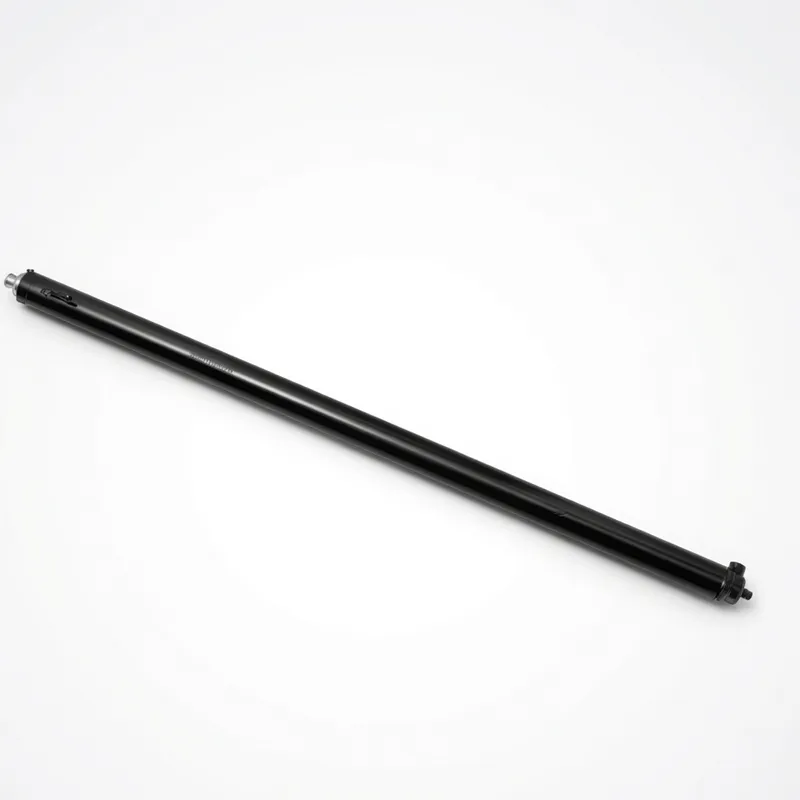
EP-Φ56×Φ45 Forklift Lifting Cylinder
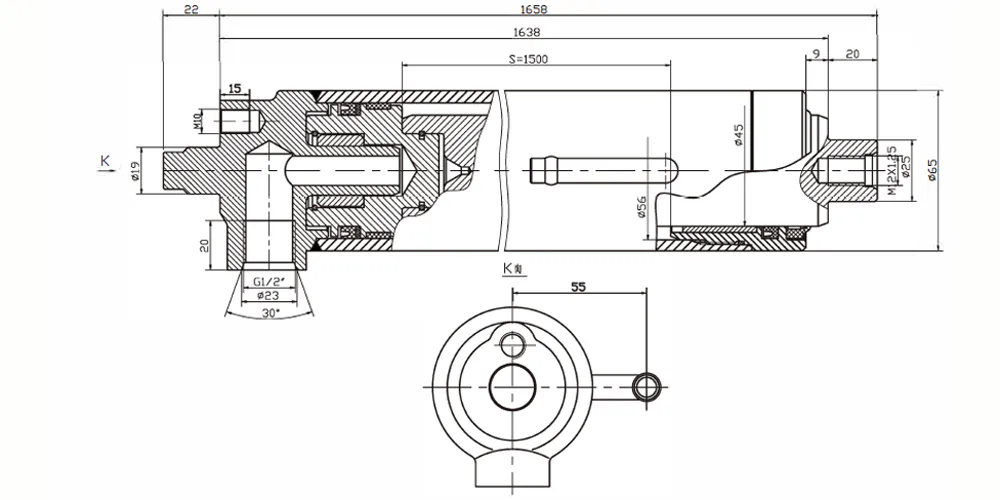
The EP-Φ56×Φ45 Forklift Lifting Cylinder is a robust hydraulic lifting cylinder engineered for heavy-duty forklift applications. Featuring precise dimensions of Φ56×Φ45×1500, this unit delivers reliable vertical force with a rated working pressure of 18.1 MPa and a maximum withstand pressure of 27.15 MPa, ensuring safety under high loads.
Designed for durability and efficiency, the cylinder has a stroke trip of 1500 mm and an installation distance of 1658 mm. Weighing 33 kg, it offers a solid balance of strength and manageable weight for industrial material handling equipment. This component is built to meet rigorous performance standards, providing stable lifting operations and long service life in demanding warehouse and logistics environments.
Forklift Cylinder Series
EP-Φ56×Φ45 Forklift Lifting Cylinder
Model HCYY11112000 | Φ56×Φ45×1500 mm | 18.1 MPa | 1500 mm Stroke | 33 kg — precision hydraulic forklift lifting cylinder engineered for French and European industrial material handling.
1. Technical Specifications — EP-Φ56×Φ45 Forklift Lifting Cylinder
The table below lists the verified dimensional and performance parameters for this forklift lifting cylinder as specified in the product series data sheet. Buyers evaluating aftermarket hydraulic cylinders for fleet replacement should confirm installation distance and port thread against their specific platform's service manual before ordering.
| Parameter | Value | Notes |
|---|---|---|
| Cylinder Model | HCYY11112000 | EP series forklift lifting cylinder |
| Specifications | Φ56 × Φ45 × 1500 mm | Bore × Rod diameter × Stroke |
| Working Pressure | 18.1 MPa | Rated operating pressure |
| Maximum Withstand Pressure | 27.15 MPa | Burst / proof pressure |
| Trip (Stroke) | 1500 mm | Full rod extension travel |
| Installation Distance | 1658 mm | Retracted centre-to-centre mounting length |
| Weight | 33 kg | Complete cylinder assembly |
| Cylinder Type | Single-acting hydraulic | Hydraulic extend, gravity return |
| Port Thread | G1/2 | Hydraulic connection port standard |
| Rod End | M30×1.5 thread | Mast chain anchor or carriage pin interface |
| Applicable Forklift Capacity | 1.5 – 3.5 tonne | Typical range for this bore size |
| Fluid Compatibility | Mineral hydraulic oil ISO VG 46/68 | FKM seals available for fire-resistant fluid |
| Operating Temperature | -20°C to +80°C | Standard NBR seal kit |
2. About Our Forklift Lifting Cylinder
The EP-Φ56×Φ45 forklift lifting cylinder is a single-acting hydraulic lift cylinder developed for the mast lifting mechanism of counterbalance and reach forklifts. Carrying model number HCYY11112000, this forklift lifting cylinder features an outer bore of Φ56 mm, a piston rod diameter of Φ45 mm, and a full working stroke of 1500 mm. With a rated working pressure of 18.1 MPa and a maximum withstand pressure of 27.15 MPa, the forklift lifting cylinder delivers the pressure capacity required for reliable mast elevation in 1.5–3.5 tonne forklift applications across French logistics centres, manufacturing sites, and port operations. The 1658 mm installation distance matches the mounting geometry of a wide range of European forklift platforms, making this forklift lifting cylinder a practical choice for both OEM specification and aftermarket hydraulic cylinder replacement. At 33 kg complete, the unit minimises dead weight in the mast assembly, preserving the forklift's net load capacity while maintaining the structural rigidity that sustained high-cycle operation demands. Whether you need a new forklift lifting cylinder for an OEM build or a direct replacement for an ageing unit in an existing fleet, the HCYY11112000 addresses the dimensional and performance requirements found most frequently across French and broader European forklift fleets operating today.
3. Five Key Performance Advantages
High Working Pressure Rating
At 18.1 MPa working pressure and 27.15 MPa proof pressure, this forklift lifting cylinder operates with a robust safety margin above the typical operating pressure of most standard counterbalance forklifts in the 1.5–3.5 tonne range. The pressure rating of this forklift lifting cylinder ensures the unit does not become the limiting component in the hydraulic circuit under sustained peak-load conditions common in French and European warehouse operations.
Precision-Machined Bore and Rod
The Φ56 mm bore and Φ45 mm piston rod on this forklift lifting cylinder are CNC-honed and ground to tight dimensional tolerances. Correct bore surface finish is essential for hydraulic cylinder seal performance: a well-finished bore extends seal life and eliminates internal bypass leakage that would cause forks to creep down under load — a safety-critical condition under French INRS forklift regulations and European EN ISO standards.
Full 1500 mm Stroke
The 1500 mm trip on this forklift lifting cylinder covers the vertical range of standard two- and three-stage duplex masts commonly deployed in European forklift fleets. This eliminates the need for multi-stage telescopic arrangements in many single-stage lift applications, reducing system complexity and maintenance points. For French distribution centres operating with high-bay racking systems, this lifting cylinder stroke range supports routine pallet placement at the heights required in most standard rack configurations.
Lightweight at 33 kg
The complete forklift lifting cylinder assembly weighs only 33 kg, contributing minimal dead weight to the mast structure. On a 2-tonne rated counterbalance forklift, each kilogram saved in the mast assembly is a kilogram of additional usable load capacity. For fleet operators in France who run tight load cycles, this weight economy from the forklift lifting cylinder translates into fewer journeys per shift and lower operational cost per tonne moved.
Direct Replacement Dimensional Fit
With a 1658 mm installation distance and standard G1/2 port threading, this forklift lifting cylinder fits directly into the mounting geometry of a wide range of European-market forklifts without frame modification. This dimensional compatibility makes the HCYY11112000 a convenient forklift lifting cylinder replacement for fleet maintenance operations, reducing workshop labour time and procurement complexity when servicing mixed-brand forklift fleets across French industrial and logistics facilities.
4. How This Forklift Lifting Cylinder Works
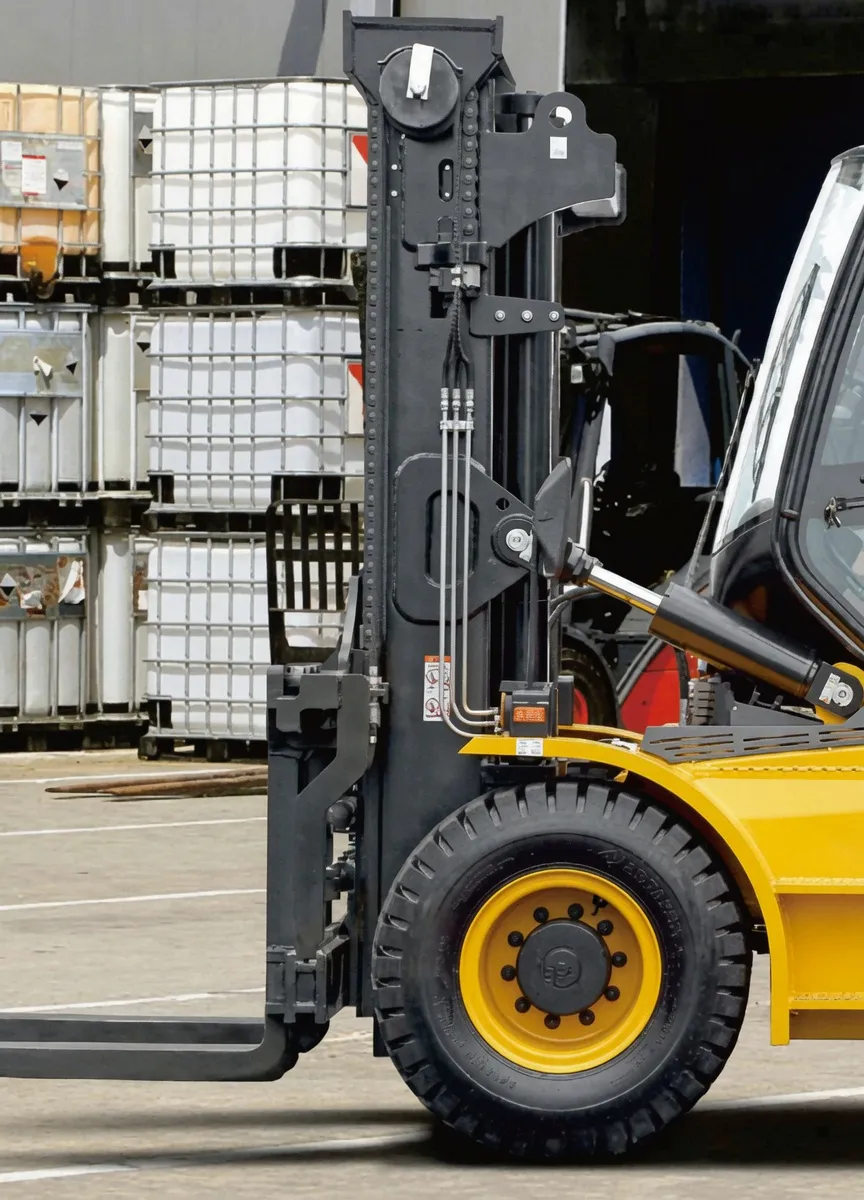
The EP-Φ56×Φ45 forklift lifting cylinder is a single-acting hydraulic cylinder: pressurised oil extends the piston rod during the lift stroke, while gravity and fork carriage weight return the rod during controlled lowering. This operating principle is standard across virtually all counterbalance forklift mast systems.
When the operator activates the lift control, the hydraulic pump station delivers pressurised fluid to the base port of the forklift lifting cylinder. Pressure acts against the Φ56 mm piston face, generating a thrust force (approximately 44.5 kN at 18.1 MPa) that extends the rod and raises the mast inner channel via the chain or direct-pin link. At 27.15 MPa, the maximum withstand pressure of this forklift lifting cylinder represents a 1.5× proof factor above rated working pressure, consistent with Pressure Equipment Directive requirements applicable in France. When the lift lever is released, the closed-centre control valve traps oil in the cylinder, holding fork height without pump energy. Lowering is achieved by metering oil back to tank through a flow control valve, with descent speed governed by the orifice size — a safety requirement under ISO 3691-1 that limits the maximum lowering rate on loaded forklifts. The hydraulic cylinder seal kit — wiper ring, rod seal, piston seal, and static O-rings — is the primary wear item in this forklift lifting cylinder and should be replaced at the first sign of rod weeping to prevent bore scoring from contaminated oil.
5. Materials and Construction
The long service life of this forklift lifting cylinder depends on material quality at each manufacturing stage. Every component is selected for strength, machinability, and compatibility with the hydraulic environment of forklift mast service cycles.
Cylinder Barrel
Cold-drawn seamless precision steel tube (EN 10305-1 equivalent), honed to Ra 0.4–0.8 μm. Seamless construction in this forklift lifting cylinder eliminates weld-seam stress concentrations that could initiate fatigue cracks under repeated pressurisation cycles. The honed bore surface ensures reliable seal contact and long hydraulic cylinder seal life.
Piston Rod
The Φ45 mm rod of this forklift lifting cylinder is machined from medium carbon or alloy steel, induction-hardened to 50–60 HRC surface hardness, and hard chrome plated to a minimum of 20 μm per side. This surface hardness resists scratching from abrasive particles in forklift operating environments, including French manufacturing and outdoor yard applications where contamination risk is higher.
Piston and End Caps
The piston in this forklift lifting cylinder is machined from ductile iron (QT600-3) for the combination of compressive strength and dimensional accuracy needed to maintain tight seal groove tolerances. End caps are structural steel or cast iron, threaded to the barrel and face-sealed with O-rings to prevent joint leakage under sustained pressure loading.
Hydraulic Cylinder Seal Kit
The standard forklift lifting cylinder seal kit includes a PU rod wiper seal, NBR lip rod seal, PTFE-backed piston seal, and static O-rings on all threaded joints. Seals are compatible with ISO VG 46/68 mineral hydraulic oil — standard in French forklift fleets. Optional FKM (Viton) seals are available for fire-resistant fluid applications in French facilities governed by ATEX or SEVESO zoning requirements.
6. Application Scenarios
This forklift lifting cylinder is deployed across a wide range of French and European industrial environments. Below are the primary application areas where the HCYY11112000 forklift lifting cylinder provides reliable hydraulic lift performance.
French Warehouse and Logistics Operations
High-cycle French logistics hubs and e-commerce fulfilment centres rely on counterbalance forklifts performing hundreds of pallet lifts per shift. The cylinder's 1500 mm stroke covers the 3300–4700 mm lift height range of standard duplex and triplex masts in this environment. The low internal leakage design ensures forks hold position precisely — a forklift lifting cylinder safety requirement under INRS guidelines for rack-storage operations.
Manufacturing and Assembly Facilities
Automotive and aerospace production sites in France use forklifts intensively for parts movement between production zones and loading docks. In these environments, the hydraulic cylinder is exposed to higher contamination risk from metallic swarf and cutting fluid mist. The hard-chrome rod surface and wiper seal of this forklift lifting cylinder specifically address contamination ingress resistance needed in such conditions.
Cold Storage and Food Processing
French food industry cold stores operating at temperatures as low as -25°C require forklift lifting cylinder seals rated for low-temperature flexibility. The EP-Φ56×Φ45 standard seal operating range extends to -20°C, covering most chilled and standard frozen applications. For deep-freeze environments, the optional low-temperature seal upgrade for this forklift lifting cylinder prevents the seal brittleness that degrades standard NBR below -20°C.
Port and Outdoor Yard Operations
Forklift operations at French ports including Le Havre, Marseille, and Nantes expose the forklift lifting cylinder rod to salt air and moisture. The hard chrome rod finish provides the corrosion resistance required for outdoor service. Regular visual inspection of the forklift lifting cylinder rod is recommended as part of routine maintenance under French port equipment inspection protocols.
Forklift Rebuild and Aftermarket Service
Independent forklift service workshops across France regularly rebuild older platforms using aftermarket hydraulic cylinders that match original OEM specifications. The EP-Φ56×Φ45 serves as a direct-fit forklift lifting cylinder for a wide range of machines in this segment. Paired with a fresh hydraulic cylinder seal kit, a rebuilt forklift lifting cylinder restores lifting performance to original specification at a fraction of full mast assembly replacement cost — a compelling option for fleet operators managing total cost of ownership in French operations.
7. Regulatory Compliance and Industry Standards
Procurement and operation of a forklift lifting cylinder in France and the EU involves compliance with a layered set of equipment safety, pressure system, and workplace regulations. The key frameworks applicable to this forklift lifting cylinder are summarised below.
| Region | Regulation / Standard | Relevance to Forklift Lifting Cylinder |
|---|---|---|
| European Union | Machinery Directive 2006/42/EC (→ Regulation 2023/1230) | Requires CE marking on industrial trucks. Forklift lifting cylinder and hydraulic system must satisfy load-holding and unintended movement prevention requirements. |
| European Union | Pressure Equipment Directive 2014/68/EU (PED) | The forklift lifting cylinder operating at 18.1 MPa falls within PED scope. Conformity assessment appropriate to the pressure-volume category of this hydraulic cylinder is required. |
| France | Code du Travail R4313-1 to R4313-116 | Requires lifting equipment including this hydraulic lift cylinder to be maintained in safe working order, with inspections at defined intervals covering seal condition, port connections, and load-holding verification. |
| France | INRS Recommendation R389 / ED 719 | INRS forklift safety guidelines specify fork-descent rate requirements. A leaking forklift lifting cylinder that allows load creep is a non-compliance condition and requires immediate maintenance action. |
| International | ISO 3691-1:2011 (Industrial Trucks Safety) | Specifies maximum lowering speeds and load-holding valve requirements that the hydraulic circuit must satisfy — 0.5 m/s maximum descent speed under rated load for counterbalance trucks. |
| Germany | DGUV Vorschrift 68 (Flurförderzeuge) | Annual inspection by a qualified engineer. Rod seal condition and load-holding performance of the forklift lifting cylinder are mandatory inspection items. |
| United Kingdom | LOLER 1998 | Thorough examination of lifting equipment at minimum 12-month intervals. Condition of the forklift lifting cylinder is part of any thorough examination of the mast assembly. |
| USA | OSHA 29 CFR 1910.178 | Requires pre-shift inspection; visible hydraulic leakage from the lift cylinder is grounds for immediate removal from service until repaired. |
8. Related Products — Complete Forklift Hydraulic System
A complete forklift hydraulic system requires more than just the forklift lifting cylinder. We supply the full range of hydraulic components for material handling equipment, offering a one-stop supply solution for parts compatibility and technical support.
Tilt Cylinder
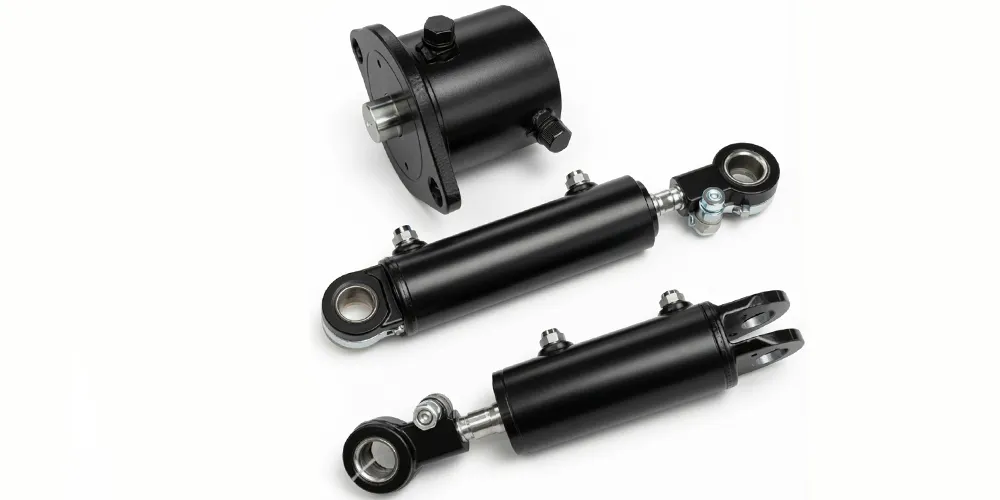
The forklift tilt cylinder controls mast forward and backward tilt, operating in tandem with the forklift lifting cylinder to give full load positioning control. Matching tilt and lift cylinders from the same product series ensures balanced hydraulic flow and consistent operator response across both mast movement axes. System compatibility between the tilt and the forklift lifting cylinder is important for stable operation under rated load across all operating conditions.
Forklift Lifting Cylinder Range
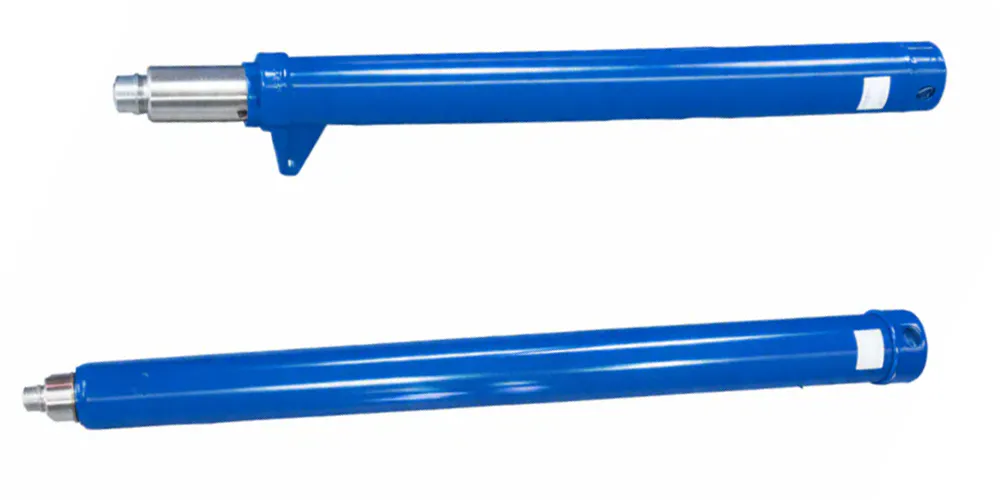
Our forklift lifting cylinder product range covers multiple bore sizes and stroke lengths for different forklift capacities and mast configurations. Whether you are specifying a new forklift lifting cylinder for an OEM build or a replacement for an existing fleet unit, our range provides the dimensional variety to match virtually any counterbalance or reach forklift operating in France and the wider European market. Consistent manufacturing standards across the lifting cylinder range ensure interchangeable seal kits and standardised maintenance procedures.
Hydraulic Pump Station Series
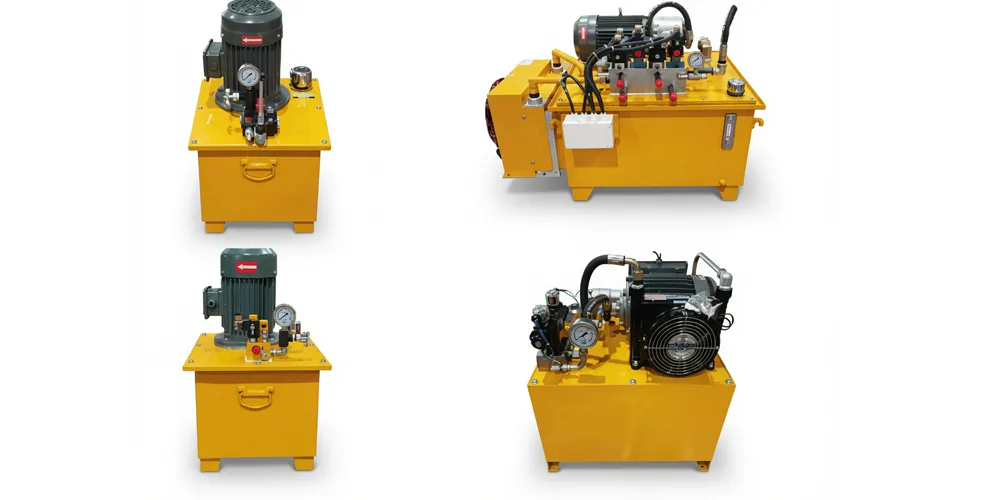
The hydraulic pump station generates and regulates flow and pressure that actuates the lift cylinder and tilt cylinder. A correctly matched pump station keeps system pressure within the 18.1 MPa working range of this cylinder under all load conditions while providing sufficient flow for acceptable lift speed. Our pump station series is engineered for compatibility with the EP lifting cylinder range, simplifying system design for OEM integrators and forklift rebuild workshops sourcing a complete hydraulic system from a single supplier.
9. About Us
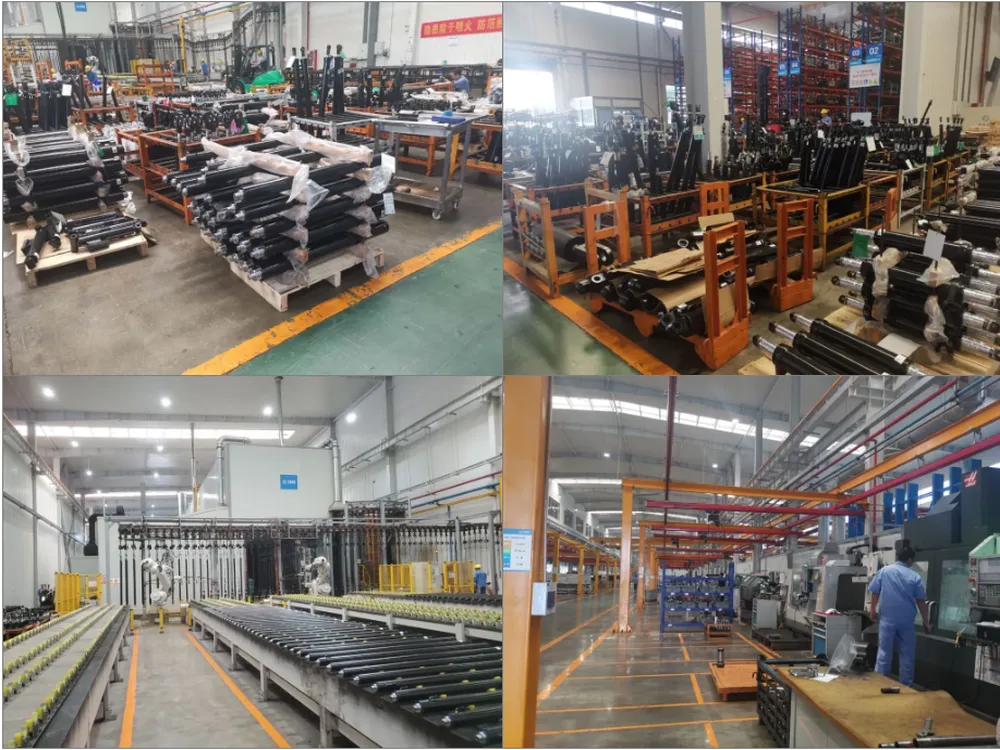
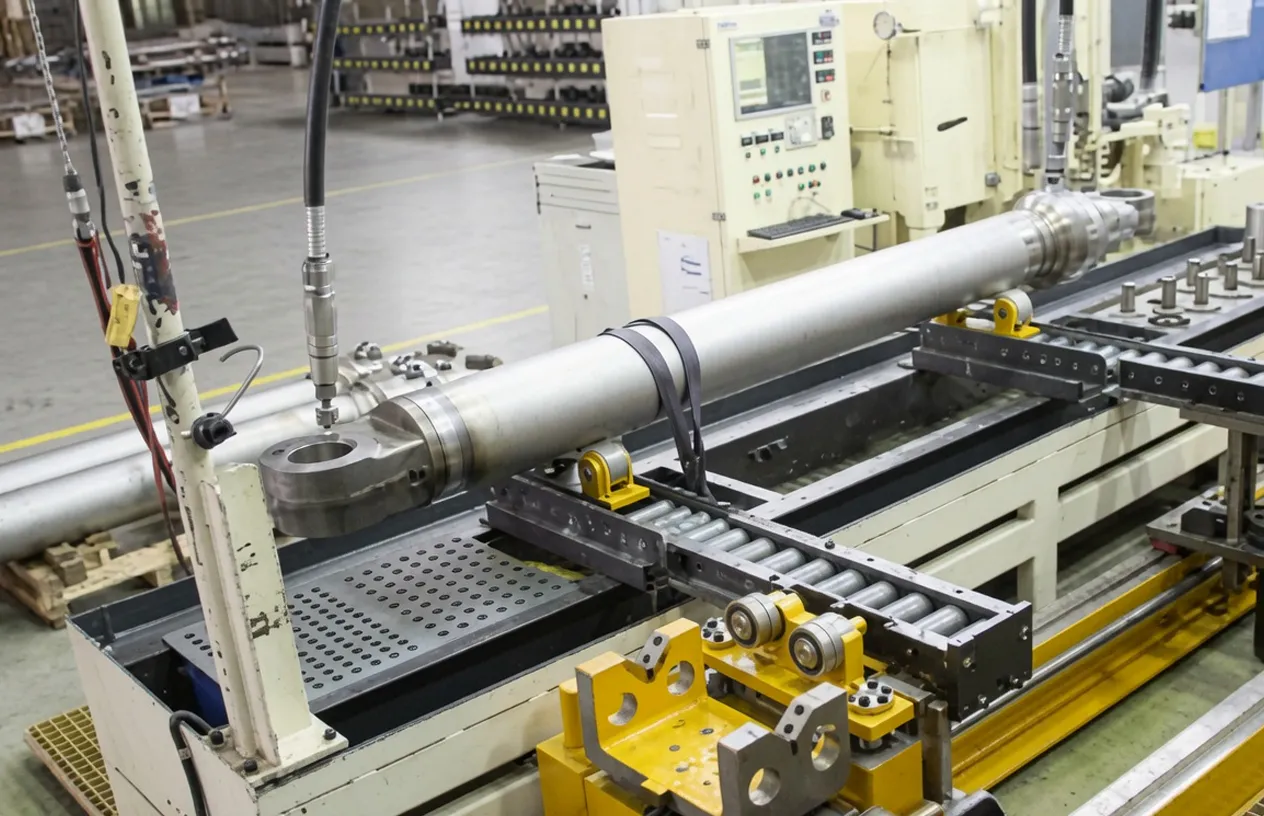
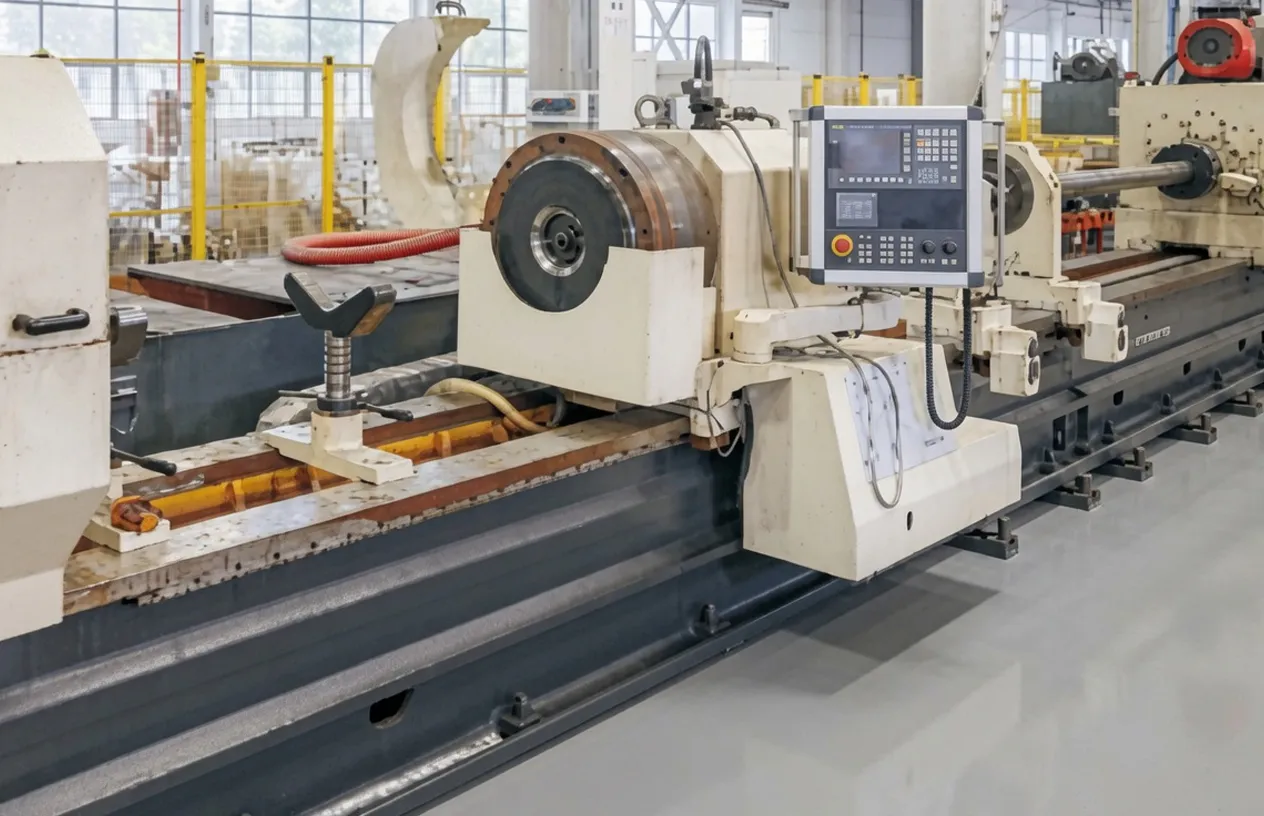
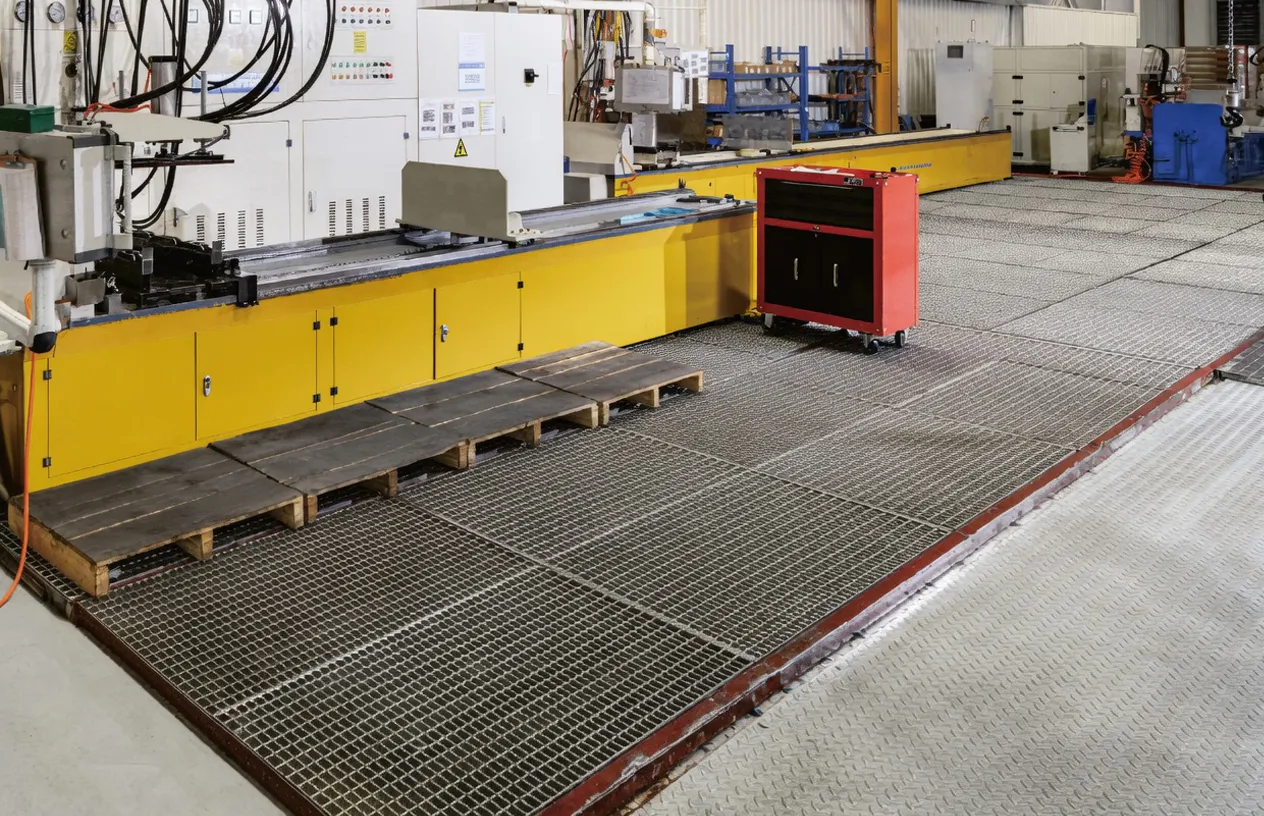
We are a professional hydraulic cylinder manufacturer specialising in the design, precision machining, and supply of forklift lifting cylinders and related forklift hydraulic components for material handling equipment. Our production facility is equipped with CNC turning centres, deep-hole boring machines, honing machines, and automated welding lines that maintain consistent dimensional quality across high-volume runs of the forklift lifting cylinder range. Every unit we produce undergoes individual hydraulic pressure testing at 1.5× working pressure before shipment to verify seal integrity and structural soundness.
Our quality management system is certified to ISO 9001, and our hydraulic cylinder products are manufactured in accordance with applicable EN and ISO hydraulic cylinder standards. We maintain relationships with forklift OEM customers, independent dealers, and aftermarket distributors across France, Germany, the Netherlands, Italy, Spain, and the wider European market. Our technical support team can advise on cylinder selection, seal kit specification, and installation requirements for specific forklift models. We understand that when a lifting cylinder fails in service, the production impact is immediate — our logistics processes are structured to support fast-turnaround aftermarket supply of replacement lifting cylinder units and parts across European destinations.
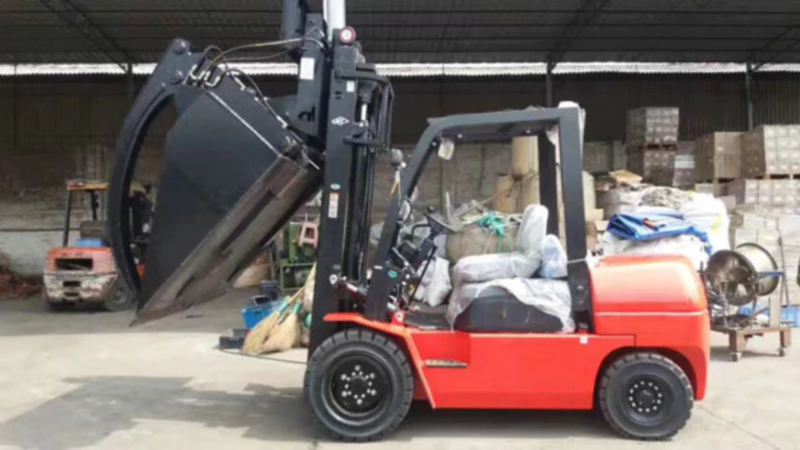
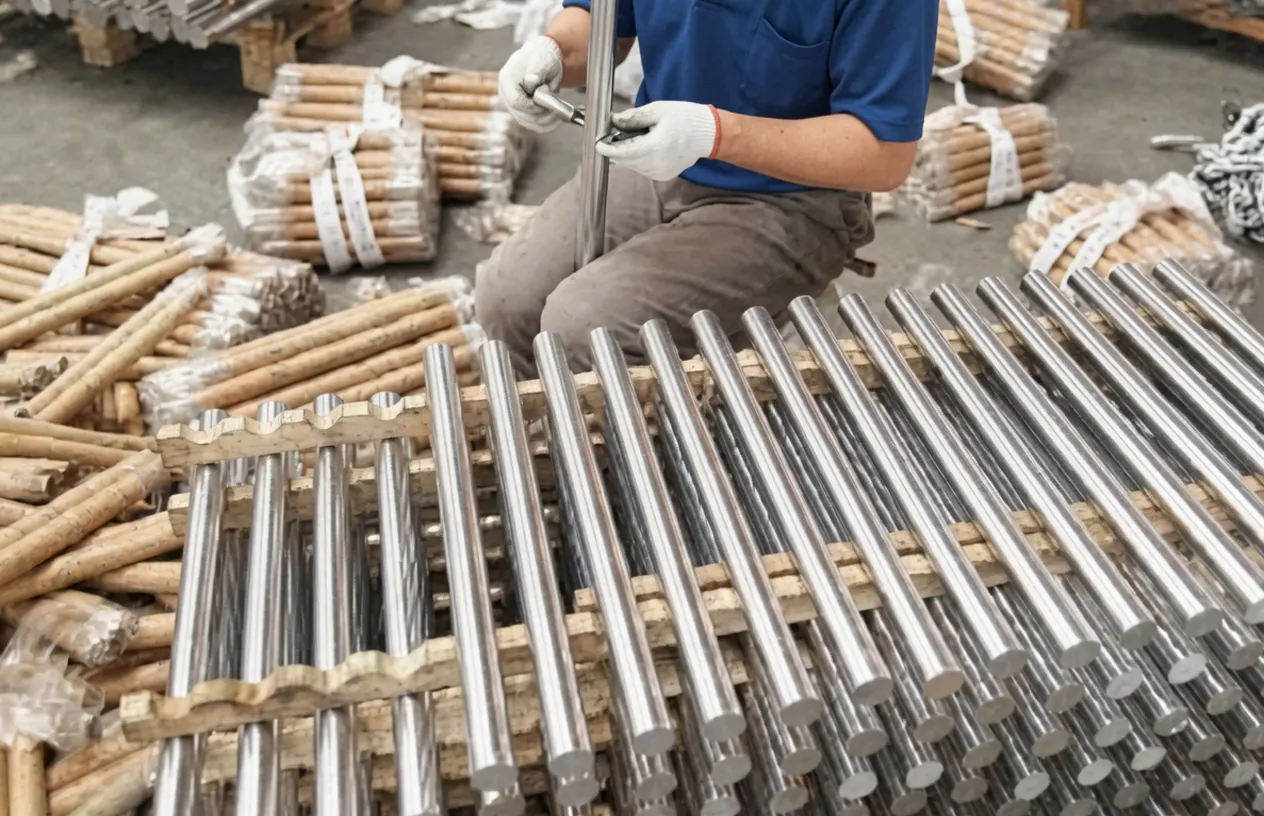
Workshop
Frequently Asked Questions
Q1. What is the correct replacement procedure for the EP-Φ56×Φ45 forklift lifting cylinder in a French warehouse operation?
When replacing this hydraulic cylinder, begin by lowering the forks completely and relieving all hydraulic pressure before disconnecting any line. Cap the hose and port immediately on removal to prevent contamination. Disconnect the rod end from the mast chain anchor, remove the base retaining pin, and slide the cylinder clear of the mast channel. Install in reverse order, torque all fasteners to specification, reconnect hydraulic lines, and bleed air from the circuit before returning the truck to service. Always follow the OEM service manual for your specific forklift model.
Q2. How do French INRS guidelines affect the maintenance interval for a hydraulic lift cylinder in a distribution centre?
INRS recommendation R389 and the French Code du Travail specify that lifting equipment must be maintained in safe operating condition with regular inspections. For this hydraulic cylinder, this means rod seal condition, port connections, and load-holding performance must be checked at least annually. Any sign of oil seepage from the cylinder rod or fork load creep requires immediate withdrawal from service and repair before the truck returns to duty.
Q3. Which seal kit components typically fail first in a high-cycle French warehouse forklift lifting cylinder application?
The polyurethane rod wiper seal and the NBR rod lip seal typically show wear before the piston seal in high-cycle forklift duty. The wiper seal is the first defence against external contamination entering the bore; once worn, it allows abrasive particles to reach the rod seal and accelerates bypass leakage. A complete hydraulic cylinder seal kit replacement — including wiper, rod seal, piston seal, and all static O-rings — is the recommended approach when servicing any hydraulic cylinder rather than replacing individual seals in isolation.
Q4. What hydraulic oil grade should French fleet operators use with this forklift lifting cylinder under EN standard seal compatibility requirements?
ISO VG 46 mineral hydraulic oil is the standard recommendation for this lifting cylinder operating in French indoor environments between 5°C and 35°C. For cold store or outdoor use below 5°C, ISO VG 32 or a low-viscosity low-temperature fluid is preferred. The standard NBR seals are compatible with mineral hydraulic oils. If the forklift system uses fire-resistant fluid — required in ATEX or SEVESO zone facilities — specify the FKM seal upgrade before ordering.
Q5. How does the 27.15 MPa maximum withstand pressure of this hydraulic cylinder align with EU Pressure Equipment Directive requirements?
The 27.15 MPa proof pressure represents a 1.5× safety factor above the 18.1 MPa working pressure — consistent with hydraulic cylinder industry standards and with PED 2014/68/EU conformity requirements in France. Every forklift lifting cylinder is tested at proof pressure before shipment, and the test record forms part of the technical documentation supplied with the forklift lifting cylinder.
Q6. Where can French maintenance teams source aftermarket hydraulic cylinders and cylinder parts with a short lead time for urgent repairs?
We supply forklift lifting cylinder units and associated cylinder parts — including complete seal kits — through a distributor network serving the French aftermarket. Standard stocked items are available for dispatch with typical delivery of 7–14 working days to French destinations. For urgent situations where machine downtime is critical, contact our customer service team for expedited freight options to your French facility or workshop.
Q7. Is this hydraulic cylinder compatible with both electric and IC engine forklifts operating in French indoor logistics environments?
Yes. The forklift lifting cylinder responds to hydraulic pressure from any pump source — electric motor or IC engine driven. For electric forklifts, verify pump motor flow rate against the cylinder bore area to confirm adequate lift speed. Many French warehouse operators are transitioning to electric platforms under EU emission reduction policy, and retaining the same lifting cylinder specification across the transition simplifies spare parts inventory and maintenance workflows.
Q8. What is the typical service life of the EP-Φ56×Φ45 lifting cylinder in a high-duty French port or outdoor yard operation?
Under normal conditions with clean hydraulic oil and regular maintenance, the barrel and rod are designed for over 10,000 service hours. In outdoor port environments with salt-air exposure, inspect the chrome rod surface and wiper seal at every 500-hour or quarterly service. Seal kit replacement is typically needed every 3,000–5,000 hours under normal duty; in high-contamination outdoor environments, plan for replacement every 2,000–2,500 hours as a cost-effective preventive maintenance measure.
Editor: PXY