Descripción del Producto
| Part number | Tube dia mm | Rod dia mm | Stroke mm |
| 205-63-57100 | 120 | 85 | 1285 |
| 206-63-57100 | 120 | 85 | 1285 |
| 205-63-57160 | 120 | 85 | 1285 |
| 205-63-57120 | 135 | 95 | 1490 |
| 203-63-57130 | 125 | 85 | 1120 |
| 203-63-57131 | 125 | 85 | 1120 |
| 205-63-57130 | 125 | 85 | 1120 |
Specifications
1.Supply to USA,Europe,and Australia, Russia.
2.Material:Stainless Steel
3.Professional performance excavator parts supplier
4. High quality and low price
FAQ
Q1: Are you Manufacture or Trade Company?
A1: We are manufacture,we have 20 years experience for supply Metal material and products in domestic.
Q2: How can we guarantee quality?
A2: Always a pre-production sample before mass production;Always final Inspection before shipment;
Q3: What is your terms of payment ?
A3: 1.T/T: 30% deposit in advance, the balance 70% paid before shipment
2.30% down payment, the balance 70% paid against L/C at sight
3.CHINAMFG negotiation
Q4: Can you provide Certificates for aluminum materials ?
A4:Yes,we can supply MTC-Material Test Certificate.
Q5: Can you provide sample?
A5: Yes, we can provide you sample, but you need to pay for the sample and freight firstly. We will return the sample fee after
you make an order.
/* 10 de marzo de 2571 17:59:20 */!function(){function s(e,r){var a,o={};try{e&&e.split(“,”).forEach(function(e,t){e&&(a=e.match(/(.*?):(.*)$/))&&1
| Proceso de dar un título: | GS, RoHS, CE, ISO9001 |
|---|---|
| Presión: | Presión media |
| Temperatura de trabajo: | Temperatura normal |
| Forma de actuar: | Doble acción |
| Método de trabajo: | Piston Cylinder |
| Formulario ajustado: | Switching Type |
| Personalización: | Disponible |
|
|---|
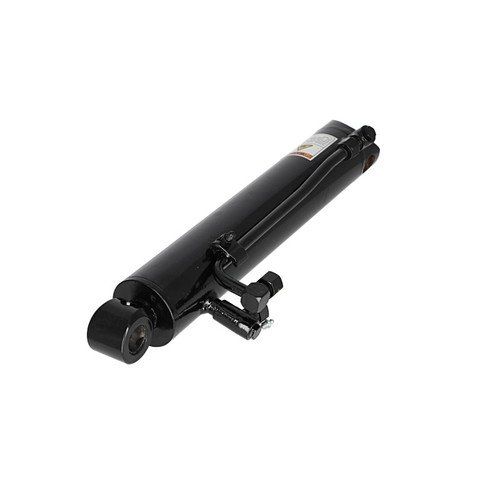
Can tilt cylinders be used in agricultural machinery for field work?
Yes, tilt cylinders can be used in agricultural machinery for field work. These cylinders play a valuable role in enhancing the functionality and productivity of agricultural equipment used for various tasks in the field. Here’s a detailed explanation:
- Implement Control: Tilt cylinders enable precise control of agricultural implements, such as blades, plows, cultivators, and harrows. By adjusting the tilt angle, operators can optimize the implement’s position and orientation for efficient soil preparation, leveling, seedbed creation, and other field work activities. Tilt cylinders provide the necessary force and control to achieve the desired implement tilt, enhancing operational efficiency and effectiveness.
- Contour Following: Tilt cylinders allow agricultural machinery to follow the contours of the field surface. By adjusting the tilt angle of the implement, the equipment can adapt to uneven terrain, ensuring consistent depth and contact with the ground. This contour following capability enhances seed placement accuracy, promotes uniform soil tillage, and reduces the risk of damaging crops or the machinery itself.
- Field Drainage: In field drainage operations, tilt cylinders can be used to adjust the angle of drainage implements, such as scrapers or ditchers. By controlling the tilt of these implements, operators can effectively shape and maintain proper field drainage patterns. Tilt cylinders enable precise and controlled adjustments, ensuring efficient water flow and preventing waterlogging in agricultural fields.
- Crop Residue Management: Tilt cylinders facilitate crop residue management by allowing operators to adjust the angle of implements used for residue incorporation, such as disc harrows or rotary tillers. By optimizing the implement tilt, residue incorporation can be performed effectively, promoting decomposition, weed control, and soil health. Tilt cylinders provide the necessary control to achieve the desired residue management results.
- Integration with Hydraulic Systems: Tilt cylinders are integrated with the hydraulic systems present in agricultural machinery. Hydraulic power is utilized to actuate the cylinders, providing the required force and control for implement adjustment. The hydraulic system allows for responsive and precise movement, enabling operators to adjust the tilt angle according to specific field conditions and requirements.
- Compatibility and Customization: Tilt cylinders are designed to be compatible with different types of agricultural machinery and implement systems. Manufacturers offer tilt cylinders with various specifications, such as different force capacities, stroke lengths, and mounting options, to ensure compatibility and optimal performance. This customization allows for seamless integration and enhances the overall functionality of agricultural machinery.
Therefore, tilt cylinders can be effectively utilized in agricultural machinery for field work. Whether it involves implement control, contour following, field drainage, crop residue management, or other field-related tasks, tilt cylinders provide the necessary force, control, and adaptability to enhance the performance and productivity of agricultural equipment in the field.
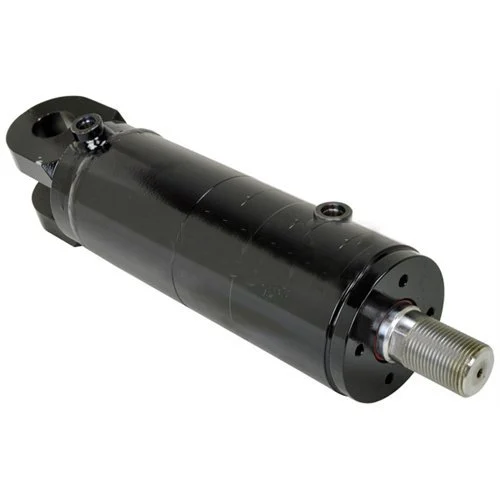
¿Se pueden reparar o sustituir los cilindros de inclinación cuando están dañados?
Sí, los cilindros de inclinación pueden repararse o reemplazarse cuando están dañados. Reparar o reemplazar los cilindros de inclinación dañados es una práctica común para restaurar su funcionalidad y garantizar el funcionamiento seguro de la maquinaria y los equipos. A continuación, se ofrece una explicación detallada:
- Reparación: En muchos casos, los cilindros de inclinación pueden repararse cuando sufren daños. La magnitud del daño y la disponibilidad de repuestos son factores que determinan la viabilidad de la reparación. Técnicos cualificados o especialistas en hidráulica pueden evaluar el daño y realizar las reparaciones, que pueden incluir el reemplazo de juntas, vástagos u otros componentes dañados. Reparar un cilindro de inclinación puede ser una solución rentable en comparación con reemplazarlo por completo.
- Sustitución: Si el cilindro de inclinación está gravemente dañado, desgastado sin posibilidad de reparación o si no se dispone de las piezas de repuesto necesarias, puede ser necesario sustituirlo. Los cilindros de inclinación suelen estar diseñados para facilitar su extracción y sustitución. El cilindro dañado se puede desconectar del equipo y sustituir por uno nuevo o reacondicionado. Los cilindros de repuesto deben ser compatibles con las especificaciones y los requisitos de funcionamiento del equipo.
- Asistencia profesional: La reparación o sustitución de cilindros de inclinación suele requerir conocimientos y habilidades especializados. Se recomienda acudir a técnicos hidráulicos o proveedores de servicio autorizados con experiencia en la reparación de sistemas hidráulicos. Ellos podrán diagnosticar con precisión el problema, recomendar la solución adecuada y garantizar que el cilindro de inclinación reparado o sustituido cumpla con las especificaciones y normas de seguridad necesarias.
- Prácticas de mantenimiento: Las prácticas de mantenimiento regulares, como las inspecciones, la limpieza y la lubricación rutinarias, ayudan a prevenir daños mayores en los cilindros de inclinación. La identificación y resolución oportunas de problemas menores prolongan la vida útil del cilindro y reducen la probabilidad de daños mayores. Seguir las instrucciones del fabricante para el mantenimiento y el uso contribuye a la durabilidad y fiabilidad de los cilindros de inclinación.
- Repuestos de calidad: Al reemplazar cilindros de inclinación dañados, es importante utilizar repuestos de alta calidad. Las piezas o componentes originales recomendados por el fabricante del equipo original (OEM) garantizan la compatibilidad y un rendimiento óptimo. El uso de piezas de baja calidad o incompatibles puede comprometer la funcionalidad y la seguridad del equipo.
Ya sea mediante reparación o sustitución, solucionar los daños en los cilindros de inclinación es fundamental para mantener la eficiencia, la seguridad y la vida útil de la maquinaria y los equipos. El mantenimiento regular y la intervención inmediata ante cualquier daño o desgaste pueden prolongar la vida útil de los cilindros de inclinación y garantizar el correcto funcionamiento de los sistemas hidráulicos.
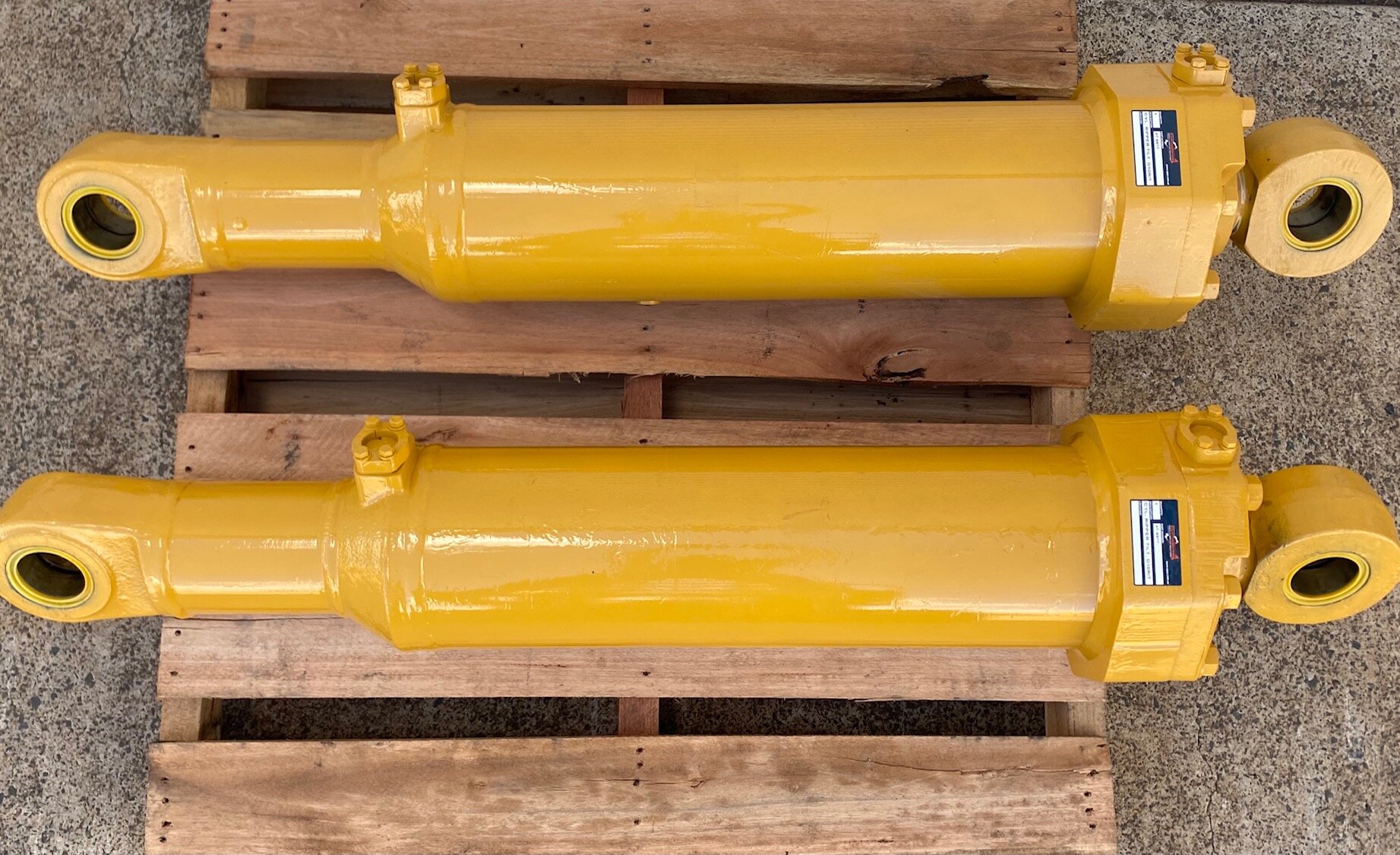
How does a tilt cylinder differ from other types of hydraulic cylinders?
A tilt cylinder has specific characteristics and functionalities that differentiate it from other types of hydraulic cylinders. While hydraulic cylinders serve various purposes in different applications, here are the key ways in which a tilt cylinder differs:
- Tilting Functionality: The primary distinction of a tilt cylinder is its ability to provide controlled tilting or angling of components. Unlike other hydraulic cylinders that primarily focus on linear motion, a tilt cylinder is specifically designed to enable angular movement. It allows for the adjustment of the working angle of attachments, such as buckets or blades, in heavy machinery.
- Mounting Orientation: Tilt cylinders are typically mounted in a horizontal or near-horizontal orientation, allowing for effective tilting movement. In contrast, other hydraulic cylinders may be mounted vertically, horizontally, or at various angles depending on their specific application requirements.
- Range of Motion: While other hydraulic cylinders may have a limited range of motion, typically in the form of extending or retracting the piston rod, a tilt cylinder offers a broader range of motion. It allows for continuous and controlled tilting action within a specific angular range, providing flexibility and adaptability in heavy machinery operations.
- Control Mechanisms: Tilt cylinders often require specialized control mechanisms to regulate the tilting movement accurately. Hydraulic systems controlling tilt cylinders incorporate valves, pressure regulators, and other components specifically designed for precise control of the angular motion. In contrast, other hydraulic cylinders may utilize different control mechanisms tailored to their particular linear motion requirements.
- Application-Specific Design: Tilt cylinders are engineered to meet the specific demands of heavy machinery applications that involve tilting or angling of components. They are designed to withstand high loads, provide precise control, and ensure reliable performance in challenging work environments. Other types of hydraulic cylinders, such as single-acting, double-acting, telescopic, or differential cylinders, are designed for different purposes and may have distinct structural and functional features.
While tilt cylinders share the fundamental principles of hydraulic cylinders, their specialization in tilting functionality sets them apart from other types of hydraulic cylinders. The unique design, mounting orientation, range of motion, control mechanisms, and application-specific characteristics make tilt cylinders suitable for tasks that require controlled angular movement in heavy machinery applications.
In conclusion, a tilt cylinder differs from other types of hydraulic cylinders through its dedicated focus on providing controlled tilting functionality, specialized design, and specific mounting orientation. These distinctions enable tilt cylinders to fulfill the unique requirements of heavy machinery applications involving angular adjustments and enhance the versatility and performance of the equipment.


editor by CX 2024-02-26