Produktbeschreibung
Produktbeschreibung
We provide quality replacement engine parts for all brands and makes, including hard-to-find ones. Our forklift engine parts are suitable for:
Atlet, Ausa, Balkancar, Baoli, BT, Cesab, Clark, Coventry Climax, Crown, Daewoo, DanTruck, Doosan, Fenwick, Fiat, Halla, Hangcha, Heli, Hyster, Hyundai, JCB, Jungheinrich, Kalmar, Komatsu, Lansing, Linde, LOC, Manitou, Mitsubishi, Montini, Nichiyu, Nissan, Nuova Detas, OMG, Rocla, Shinko, Sisu, Steinbock, Still, Stocklin, Tailift, TCM, Toyota, Unicarriers, Utilev, Yale.
Our quality control department makes sure we only include quality forklift engine parts in our range. They have strict standards:
Sourcing and rating suppliers: Our new and existing suppliers are constantly assessed on product quality, the packaging of the goods and their overall reliability.
Sample testing: All samples received from our suppliers are subjected to in-depth testing by our quality control department.
Whether you are looking for a forklift seat, mirror, joystick or other accessories, we’ve got you covered. Choose from our extensive range, according to your personal preferences
Specification
| Type of Cylinder | tilt cylinder or double-acting | Type of piston shaft | piston head-outer thread |
| Type of Base | type T | Type of thread Ta3 | M20 |
| Diameter (mm) | 17 | Length L5(mm) | 299 |
| Length (MM) | 20.5 | Type of tube | circlip |
Detaillierte Fotos
Main Products
Suitable for
Packaging & Shipping
Unternehmensprofil
FAQ
| After-sales Service: | Online Support |
|---|---|
| Warranty: | 3 Months |
| Material: | Carbon Steel, Stainless Steel |
| Proben: | US$ 25.69/Piece 1 Stück (Mindestbestellmenge) | Order Sample |
|---|
.shipping-cost-tm .tm-status-off{background: none;padding:0;color: #1470cc}
| Shipping Cost: Estimated freight per unit. | about shipping cost and estimated delivery time. |
|---|
| Payment Method: |
|
|---|---|
| Initial Payment Full Payment |
| Currency: | US$ |
|---|
| Return&refunds: | You can apply for a refund up to 30 days after receipt of the products. |
|---|
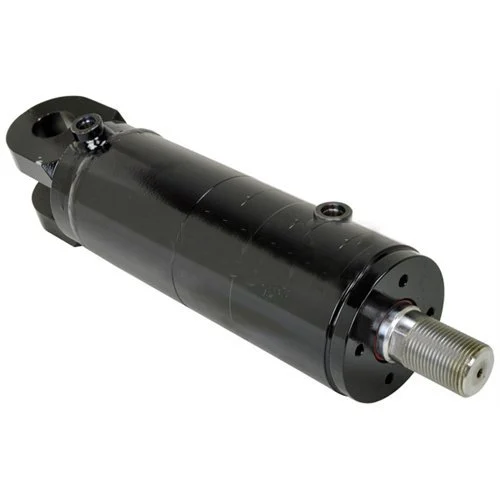
Can tilt cylinders be used in forestry equipment for tree handling?
Yes, tilt cylinders can be used in forestry equipment for tree handling. These cylinders play a vital role in enhancing the efficiency and safety of forestry machinery involved in tasks such as felling, delimbing, and loading trees. Here’s a detailed explanation:
- Tilt Angle Adjustment: Tilt cylinders allow operators to adjust the tilt angle of forestry equipment attachments, such as grapples or felling heads. By actuating the cylinders, operators can tilt the attachment to the desired angle, facilitating precise tree handling. The ability to control the tilt angle enables operators to align the attachment with the tree trunk or branches, improving cutting accuracy and minimizing the risk of damage to the machinery or surrounding environment.
- Tree Gripping and Manipulation: Tilt cylinders contribute to effective tree gripping and manipulation. When combined with grapples or clamps, these cylinders provide the necessary force and control to securely hold and maneuver trees. Operators can adjust the tilt angle of the attachment to ensure a firm grip on the tree during felling, delimbing, or loading operations. This capability enhances operational safety, prevents tree slippage, and improves overall productivity.
- Load Distribution: Precise tree handling requires proper load distribution. Tilt cylinders allow operators to adjust the tilt angle to distribute the tree’s weight evenly across the equipment. This optimization of load distribution is particularly important when handling large or heavy trees. By achieving balanced positioning through tilt cylinder control, operators can minimize stress on the equipment, maintain stability, and ensure safe tree handling.
- Integration with Control Systems: Tilt cylinders can be integrated with advanced control systems in modern forestry equipment. These control systems may include hydraulic or electronic controls that offer precise and automated tilt angle adjustments. By utilizing such systems, operators can achieve consistent and accurate tree handling, reducing operator fatigue and improving operational efficiency.
- Operator Safety and Ergonomics: Tilt cylinders contribute to operator safety and ergonomics during tree handling tasks. By allowing for precise tilt angle adjustments, these cylinders enable operators to maintain a comfortable and ergonomic working posture. This reduces the risk of strain or injury and enhances operator control and visibility, especially in challenging forestry environments.
- Attachment Versatility: Tilt cylinders provide versatility in forestry equipment attachments. They can be used in various configurations, such as single-acting or double-acting cylinders, depending on the specific application requirements. This versatility allows forestry machinery to handle different tree sizes, shapes, and conditions, adapting to the diverse needs of forestry operations.
Therefore, tilt cylinders can be effectively utilized in forestry equipment for tree handling. Whether it involves tilt angle adjustment, tree gripping and manipulation, load distribution optimization, integration with control systems, operator safety and ergonomics, or attachment versatility, tilt cylinders contribute to improving the efficiency, accuracy, and safety of tree handling operations in the forestry industry.
Können Kippzylinder repariert oder ausgetauscht werden, wenn sie beschädigt sind?
Ja, Kippzylinder können bei Beschädigung repariert oder ausgetauscht werden. Die Reparatur oder der Austausch beschädigter Kippzylinder ist gängige Praxis, um die Funktionsfähigkeit wiederherzustellen und den sicheren Betrieb von Maschinen und Anlagen zu gewährleisten. Hier eine detaillierte Erklärung:
- Reparatur: In vielen Fällen lassen sich beschädigte Kippzylinder reparieren. Ob eine Reparatur möglich ist, hängt vom Ausmaß des Schadens und der Verfügbarkeit von Ersatzteilen ab. Qualifizierte Techniker oder Hydraulikspezialisten können den Schaden beurteilen und die Reparatur durchführen. Dabei können Dichtungen, Kolbenstangen oder andere beschädigte Bauteile ausgetauscht werden. Die Reparatur eines Kippzylinders ist oft eine kostengünstige Alternative zum kompletten Austausch.
- Austausch: Ist der Kippzylinder stark beschädigt, irreparabel verschlissen oder sind die benötigten Ersatzteile nicht verfügbar, muss er ausgetauscht werden. Kippzylinder sind in der Regel so konstruiert, dass sie sich leicht aus- und einbauen lassen. Der beschädigte Zylinder kann vom Gerät getrennt und durch einen neuen oder überholten ersetzt werden. Ersatzzylinder müssen mit den Spezifikationen und Betriebsanforderungen des Geräts kompatibel sein.
- Professionelle Hilfe: Die Reparatur oder der Austausch von Kippzylindern erfordert oft Fachkenntnisse und Erfahrung. Es wird empfohlen, sich an Hydrauliktechniker oder autorisierte Servicepartner mit Expertise in der Reparatur von Hydrauliksystemen zu wenden. Diese können das Problem präzise diagnostizieren, die geeignete Vorgehensweise empfehlen und sicherstellen, dass der reparierte oder ausgetauschte Kippzylinder den erforderlichen Spezifikationen und Sicherheitsstandards entspricht.
- Wartungsmaßnahmen: Regelmäßige Wartungsarbeiten wie Inspektionen, Reinigung und Schmierung beugen größeren Schäden an Kippzylindern vor. Die rechtzeitige Erkennung und Behebung kleinerer Probleme verlängert die Lebensdauer des Zylinders und verringert das Risiko schwerwiegender Schäden. Die Einhaltung der Herstellerrichtlinien für Wartung und Verwendung trägt wesentlich zur Langlebigkeit und Zuverlässigkeit der Kippzylinder bei.
- Hochwertige Ersatzteile: Beim Austausch beschädigter Kippzylinder ist die Verwendung hochwertiger Ersatzteile unerlässlich. Originalteile oder vom Originalhersteller (OEM) empfohlene Komponenten gewährleisten Kompatibilität und optimale Leistung. Die Verwendung minderwertiger oder inkompatibler Teile kann die Funktionalität und Sicherheit der Anlage beeinträchtigen.
Ob Reparatur oder Austausch – die Instandsetzung beschädigter Kippzylinder ist entscheidend für die Effizienz, Sicherheit und Langlebigkeit von Maschinen und Anlagen. Regelmäßige Wartung und umgehendes Handeln bei Schäden oder Verschleiß verlängern die Lebensdauer der Kippzylinder und gewährleisten den reibungslosen Betrieb von Hydrauliksystemen.
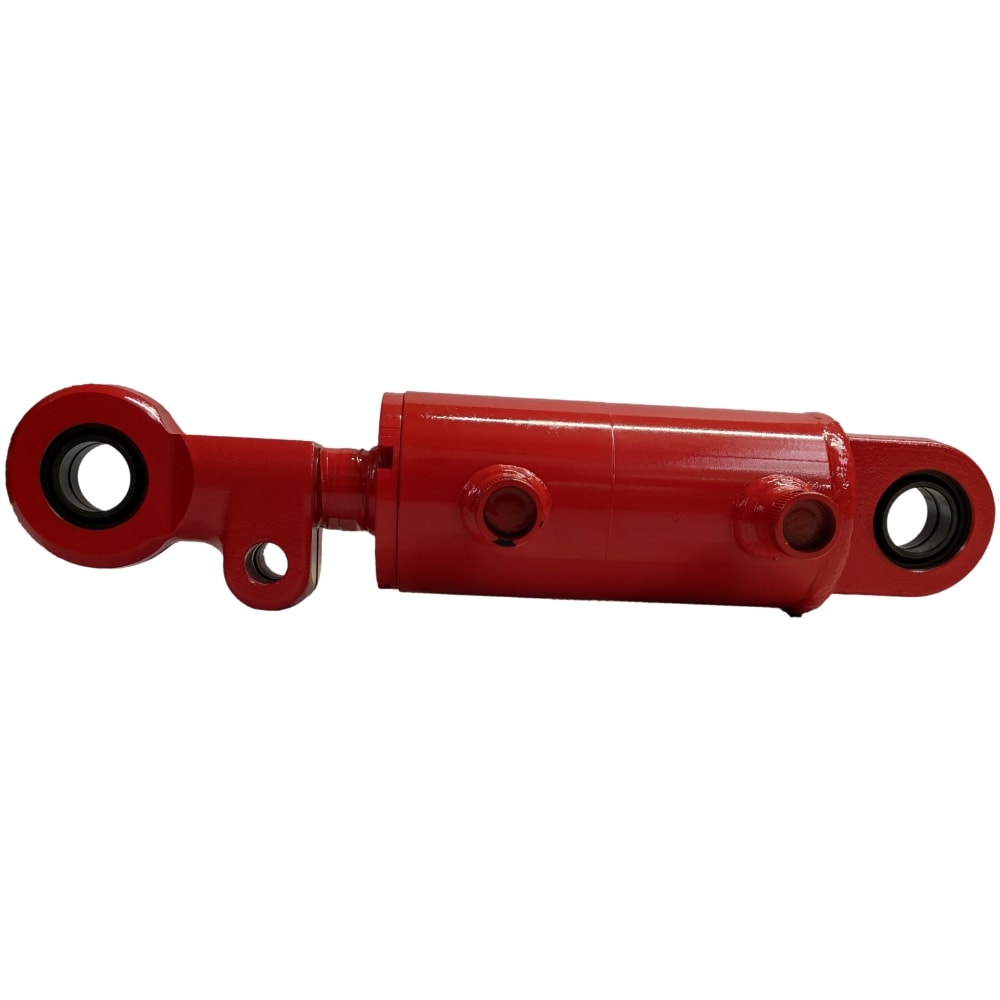
Can tilt cylinders be used for both tilting and leveling applications?
Yes, tilt cylinders can be used for both tilting and leveling applications. They are versatile hydraulic components that are designed to provide controlled tilting movements, as well as facilitate leveling operations. Here’s a detailed explanation:
Tilting Applications:
Tilt cylinders are commonly used for tilting applications in various industries. They allow for controlled tilting or angling of components attached to heavy machinery. For example:
- In construction equipment, tilt cylinders enable the adjustment of buckets, blades, or attachments, allowing for precise digging, grading, and leveling of surfaces.
- In mining machinery, tilt cylinders control the angles of buckets or blades, facilitating efficient material handling and excavation.
- In agricultural equipment, tilt cylinders enable the tilting of implements such as plows or buckets, allowing farmers to adjust the working angle for optimal soil tillage or material handling.
- In material handling machinery, tilt cylinders are used to control the tilting of forks, platforms, or attachments, facilitating efficient loading, unloading, and stacking of goods.
Leveling Applications:
In addition to tilting, tilt cylinders can also be used for leveling applications. Leveling involves adjusting the horizontal position or alignment of equipment to ensure even and stable surfaces. Tilt cylinders can assist in leveling operations by:
- Compensating for uneven terrain: Tilt cylinders can be used to adjust the tilt of equipment attachments, compensating for uneven surfaces and maintaining a level position.
- Aligning components: Tilt cylinders can be employed to align or level components such as blades, buckets, or platforms, ensuring consistent and accurate leveling across the working area.
- Providing fine adjustments: The control valves in tilt cylinders allow for precise control of the tilting movement. Operators can make small adjustments to achieve the desired level, ensuring precise leveling.
By utilizing the control capabilities and range of motion of tilt cylinders, operators can effectively perform both tilting and leveling tasks with the same hydraulic component.
In summary, tilt cylinders are versatile and can be used for both tilting and leveling applications. They enable controlled tilting of components in various industries and can also assist in precise leveling operations. The ability to perform both functions makes tilt cylinders valuable hydraulic components in equipment where tilting and leveling are required.


editor by CX 2023-11-21