Produktbeschreibung
Specifications
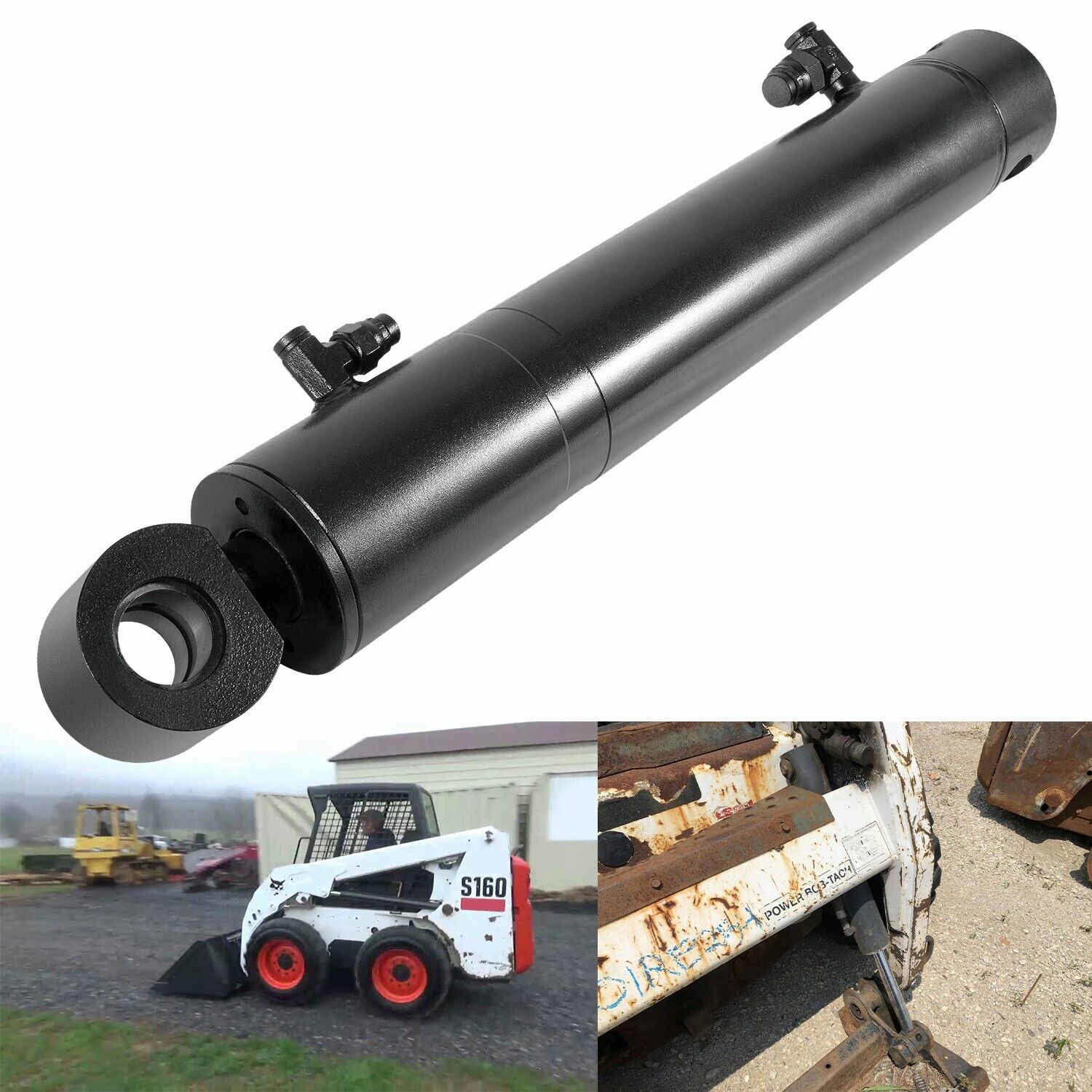
Product Name | hydraulic Cylinder for industrial vehicle, forklift tilt |
Certificate | ISO9001, ISO4001, ISO 45003 |
Customized | As per drawing or sample |
Produktbeschreibung
Support customization hydraulic cylinder for industrial vehicle forklift tilt press tipper telescopic
Hydraulic Cylinders For All Industries We can build, supply new, and repair cylinders for Forklift, Earth Moving, Marine, Press,Crane, Telescopic, Shear, Excavator and Chip Dump applications. We also have the capabilities, experience, and technical knowledge to manufacture new cylinders and custom build cylinders. We can handle any hydraulic cylinder needs from smaller application cylinders to very large cylinders (for example cylinders on large mining equipment).
Hydraulic cyliinder Features
3000PSI Rated pressure, 6000PSI testing pressure.
Imported world famous brands and Chinese top brands sealing system.
High quality Cold Drawn steel tube, with good rigidity.
CNC Rolled tube inner surface, with roughness of 0.2~0.4um.
Superior strength chrome-plated rod, anticorrosion for a long life. High grade Ductile Iron bar directly machined Gland and Piston, with high strength.
Heavy-Duty welded construction, automatic welding for good quality.
Twin-lip piston seals for maximum efficiency.
100% factory tested under at least 1.5 times of the rated pressure.
FAQ
Q1:What’s your advantage?
A: We have been working on hydraulic cylinder over 40 years, we use ERP,MES and PLM systems to realize all-round digital control.
Q2:Can you do OEM or ODM?
A: Yes.
Q3::Can you do painting & powder coating?
A:Yes.
Q4:: Do you apply 5S management at your workshop?
A: We apply 7S management at our workshop
/* October 22, 2571 15:47:17 */(()=>{function d(e,r){var a,o={};try{e&&e.split(“,”).forEach(function(e,t){e&&(a=e.match(/(.*?):(.*)$/))&&1
Wie trägt ein Neigungszylinder zur präzisen Positionierung von Geräten bei?
Ein Neigezylinder spielt eine entscheidende Rolle für die präzise Positionierung von Geräten. Er liefert die notwendige Kraft und Kontrolle, um den Neigungswinkel des Geräts anzupassen und es dem Bediener so zu ermöglichen, es für verschiedene Aufgaben genau zu positionieren. Hier eine detaillierte Erklärung:
- Neigungswinkelverstellung: Ein Neigungszylinder ermöglicht es dem Bediener, den Neigungswinkel des Geräts anzupassen. Durch Betätigung des Zylinders kann das Gerät nach vorn oder hinten geneigt werden, was eine präzise Positionierung ermöglicht. Die Feinjustierung des Neigungswinkels erlaubt es dem Bediener, das Gerät auf bestimmte Ziele oder Arbeitsbereiche auszurichten und so optimale Genauigkeit und Effizienz zu gewährleisten.
- Lastverteilung: Eine präzise Positionierung der Ausrüstung ist für eine optimale Lastverteilung unerlässlich. Ein Neigungszylinder ermöglicht es dem Bediener, den Neigungswinkel so einzustellen, dass die Last gleichmäßig auf die Ausrüstung verteilt wird. Dies ist besonders wichtig beim Umgang mit ungleichmäßigen oder unausgewogenen Lasten. Durch die präzise Positionierung mittels Neigungszylindersteuerung kann der Bediener die Lastverteilung optimieren, die Belastung der Ausrüstung minimieren und die Stabilität im Betrieb verbessern.
- Konturanpassung: Bei bestimmten Anwendungen, wie z. B. der Geländemodellierung oder Erdbewegung, ist eine präzise Positionierung der Geräte unerlässlich, um sich den Geländekonturen anzupassen. Ein Neigungszylinder ermöglicht es dem Bediener, den Neigungswinkel des Geräts an die Neigung oder Form des Bodens anzupassen. Diese Konturanpassung gewährleistet einen gleichmäßigen Kontakt mit der Oberfläche, fördert eine gleichmäßige Planierung oder Aushubarbeit und erzielt präzise die gewünschten Ergebnisse.
- Höhenverstellung: Einige Neigezylinder ermöglichen neben der Neigungswinkelverstellung auch eine Höhenverstellung. Durch Aus- oder Einfahren des Zylinders können Bediener die Position des Geräts anheben oder absenken. Diese Höhenverstellung verbessert die präzise Positionierung und ermöglicht es dem Bediener, das Gerät für spezifische Aufgaben oder Arbeitsbedingungen auf die gewünschte Höhe auszurichten.
- Integration mit Steuerungssystemen: Neigezylinder lassen sich in moderne Anlagen mit fortschrittlichen Steuerungssystemen integrieren. Diese Systeme umfassen elektronische oder hydraulische Steuerungen, die eine präzise und automatisierte Neigungswinkelverstellung ermöglichen. Durch den Einsatz solcher Systeme erreichen Bediener eine hochpräzise und gleichmäßige Positionierung der Anlage, wodurch menschliche Fehler reduziert und die Gesamtproduktivität gesteigert werden.
- Bedienerfeedback: Mit Sensoren oder Rückmeldemechanismen ausgestattete Neigungszylinder liefern dem Bediener Echtzeitinformationen über den Neigungswinkel der Anlage. Dieses Feedback ermöglicht präzise Anpassungen und eine genaue Positionierung. Durch die kontinuierliche Überwachung des Neigungswinkels kann der Bediener die gewünschte Position während des Betriebs beibehalten und bei Bedarf Korrekturen vornehmen.
Ein Neigungszylinder trägt daher wesentlich zur präzisen Positionierung von Geräten bei, indem er die Einstellung des Neigungswinkels, die Optimierung der Lastverteilung, die Anpassung an Konturen, die Höhenverstellung, die Integration in Steuerungssysteme und die Rückmeldung an den Bediener ermöglicht. Diese Funktionen verbessern die Genauigkeit, Effizienz und Vielseitigkeit von Geräten in verschiedenen Branchen, darunter Bauwesen, Materialtransport, Landwirtschaft und weitere.
How does a tilt cylinder handle variations in tilt angle and load?
A tilt cylinder is designed to handle variations in tilt angle and load to ensure optimal performance and safe operation. It employs various mechanisms and features that allow it to adapt to different angles and loads. Here’s a detailed explanation:
- Adjustable Force and Stroke: Tilt cylinders can be adjusted to accommodate variations in tilt angle and load. The force generated by the cylinder can be controlled by adjusting the hydraulic pressure, allowing for precise control over the tilting movement. Similarly, the stroke length of the cylinder can be customized to provide the desired range of motion, enabling flexibility in achieving different tilt angles.
- Flow Control Valves: Tilt cylinders often incorporate flow control valves that regulate the speed and rate of hydraulic fluid flow. These valves allow operators to adjust the flow rate, providing finer control over the tilting movement. By adjusting the flow control valves, operators can handle variations in tilt angle and load with greater precision and stability.
- Load-Sensing Technology: Some advanced tilt cylinders utilize load-sensing technology to automatically adjust the force output based on the load applied. Load sensors integrated into the cylinder or the hydraulic system provide real-time feedback on the load, enabling the cylinder to adjust its force accordingly. This ensures consistent and safe operation, even when dealing with varying loads.
- Structural Integrity: Tilt cylinders are designed with robust construction to handle variations in load. The materials used, such as high-strength steel, provide structural integrity and durability. The cylinder’s design considers factors such as bending moments and stress distribution to ensure safe operation under different load conditions.
- Seals and Lubrication: Tilt cylinders incorporate seals and lubrication systems to minimize friction and maintain the required performance. Seals prevent leakage and contamination, ensuring the hydraulic system operates efficiently. Proper lubrication reduces wear and tear on moving parts, allowing the cylinder to handle variations in tilt angle and load smoothly and reliably.
- Stability and Balance: Tilt cylinders are designed to maintain stability and balance during tilting operations. The cylinder’s attachment points, along with the equipment’s center of gravity, are carefully considered to ensure safe and controlled tilting. This helps prevent instability or tipping when facing variations in tilt angle or load.
By incorporating adjustable force and stroke, flow control valves, load-sensing technology, robust construction, seals and lubrication, as well as ensuring stability and balance, tilt cylinders can effectively handle variations in tilt angle and load. These features enable precise control, safe operation, and reliable performance in a wide range of applications across industries.
What industries commonly use tilt cylinders in their equipment?
Tilt cylinders find applications in various industries where heavy machinery is utilized. These industries rely on tilt cylinders to enable controlled tilting or angling of components. Here are some industries that commonly use tilt cylinders in their equipment:
- Construction: Tilt cylinders are extensively used in the construction industry. They are employed in equipment such as excavators, bulldozers, backhoes, and loaders. Tilt cylinders allow for precise adjustment of buckets, blades, or attachments, enabling efficient digging, grading, and leveling operations.
- Mining: The mining industry utilizes tilt cylinders in equipment like mining shovels, excavators, and haul trucks. Tilt cylinders play a vital role in controlling the angles of buckets or blades, facilitating efficient digging, loading, and material handling in mining operations.
- Agriculture: In the agricultural sector, tilt cylinders are employed in machinery such as tractors, combine harvesters, and agricultural loaders. They enable the tilting of implements, such as plows or buckets, allowing farmers to adjust the working angle for optimal soil tillage, material handling, or crop harvesting.
- Forestry: Tilt cylinders are used in forestry equipment like feller bunchers, skidders, and loaders. They assist in controlling the tilt of cutting heads, grapples, or blades, enabling precise tree felling, log handling, and forestry operations.
- Material Handling: Industries involved in material handling, such as warehouses, distribution centers, and ports, utilize tilt cylinders in equipment like forklifts, reach stackers, and container handlers. Tilt cylinders allow for the controlled tilting of forks, attachments, or platforms, facilitating efficient loading, unloading, and stacking of goods.
- Waste Management: Tilt cylinders are employed in waste management equipment like garbage trucks, waste compactors, and recycling machinery. They enable controlled tilting of containers, compacting units, or sorting mechanisms, enhancing waste collection, compaction, and recycling processes.
These industries represent a few examples of the sectors that commonly utilize tilt cylinders in their equipment. However, tilt cylinders can also be found in other industries where controlled tilting or angling of components is required to optimize operational efficiency and productivity.
In summary, tilt cylinders are widely used in industries such as construction, mining, agriculture, forestry, material handling, and waste management. These industries rely on tilt cylinders to achieve precise control and adjustment of components, enhancing the performance and versatility of their equipment in various applications.


editor by Dream 2024-11-26