Product Description
Company Profile
IATF16949 and ISO 9001 certified precision CNC machining service company, started in 2006, Infinity provides customers with more than 1 million sensor components every year, such as the sensor housing, processing connectors, adapters, mounting rods, and mounting plates for flow sensors, pressure sensors, and temperature sensors. Product materials include stainless steel, copper alloy, aluminum alloy, and special alloys. The complex, precise, reliable, and safe manufacturing process ensures the high-quality requirements of customers’ products.
With over 3000m2 production workshop, Infinity company provides whole processing from material cutting to inspection & packing and shipment service.
Workshop Overview
| Equipment List | |||||
| Name | No. of set | Model/Spec. | Origin | ||
| Infinity Precision Machining main Equipment | CNC Vertical Machining Center | 2 | VJ850,850X500X520/4-Axis | ZheJiang | |
| CNC Vertical Machining Center | 2 | Dooson DNM515,1571*540*510 | China | ||
| CNC Vertical Machining Center | 1 | MAZAK VCN530CL | China | ||
| Horizontal CNC Lathe | 8 | OKUMA L250-E | ZheJiang | ||
| Horizontal CNC Lathe | 1 | OKUMA L300-M/2.5-Axis | ZheJiang | ||
| Horizontal CNC Lathe | 1 | OKUMA L400-E | ZheJiang | ||
| Horizontal CNC Lathe | 3 | OKUMA L200EMY | ZheJiang | ||
| Ultrasonic Cleaning machine | 2 | KC-6000W | China | ||
| Automatic Metal Band Sawing machine | 4 | GHS4232 | China | ||
| Flat Grinder | 1 | M7132B | China | ||
| Wire Cutter | 1 | DK7740 | China | ||
| Pipe bending machine | 2 | China | |||
| Shape mill | 1 | China | |||
| Vibration Burnisher | 1 | N/A | China | ||
| Co2 gas-shielded welding | 4 | FN250 | China | ||
| Swiss-type CNC machine | 1 | CSBII 250 | ZheJiang | ||
| Drilling and tapping machine | 4 | ZS4116 | China | ||
Quality Control Process
Infinity Industries, Inc. provides customers with complete inspection services, from first article inspection, to process random inspection, and final inspection, all of which are implemented in strict accordance with the customer’s drawings.
| Name | No. of set | Model/Spec. | Origin | ||
| Inspection Instrument | 3D-Measuring System | 1 | Hexagon,06.08.06 | Switzerland | |
| Projector | 1 | 3D Family VME-300 | ZheJiang | ||
| Contour graph | 1 | Mitutoyo contracer CV-2100 | Japan | ||
| Surface rough meter | 1 | TR210 | China | ||
| Angle Measurement Instrument | 3 | 0~360° | China | ||
| Pin Gage | variety | φ25+/-0.05/φ25.3+/-0.05/φ35+/-0.05 | China | ||
| R-gage | 2 | R1~R6.5mm | China | ||
| Inside Micrometer | 5 | 0-30mm | China | ||
| Outside Micrometer | 5 | 25~50mm | China | ||
| Digital Height Guage | 20 | 0~300mm | China | ||
| Digital Inside Groove Capliers | 5 | 0~150mm | China | ||
| Digital Vernier Calipers | variety | 0~200mm/0~300mm | China | ||
| Mechanical Vernier Calipers | variety | 0~150mm | China | ||
| Thread Plug Guage | variety | 1/2-13UNC,3/4-16UNF,7/16-20UNF,1/4-20UNC-2B/NPSL1/8-27/1/2-14NPT/3/4NPT/M18,26,27X1.5-6h/M4-6h/1/2-14NPSM | China | ||
| Thread Ring Guage | variety | M12X0.5-6h/7/8-14UNF,3/4-16UNF,1/2-20UNF,5/8-18UNF,9/8-12UNF,5/8-24UNF,9/16-18UNF-2A/M18X1.5-6g/G1/2A/G1/4-2A/1/4-18NPT/M12X1-6g/M12X1-6h/1/2-14NPT | China | ||
Packaging & Logistics
In principle, all legal requirements must be complied with in our packaging and logistics process. These are in particular:
– dangerous goods regulation
– national/international regulations for the treatment of wooden pallets
– requirements of sea freight, if necessary
– requirements of air cargo, if necessary
– packaging directives from our customers
Further applies to:
– The transport safety always rests with the consignor. Regarding cargo securing the legal regulations apply according to StVO and HGB and the VDI Xihu (West Lake) Dis.line 2700.
– Infinity Company shall treat the goods during storage and shipping in such a way that the agreed-upon quality standard is preserved.
– The storage at our location shall be made according to the FIFO principle.
– All packaging materials must be free of attached silicone (e.g. silicone oil) and contain silicone.
Environmental Requirements / Occupational Safety
No danger to humans or the environment may occur through the delivery of the products. Hazardous materials (dangerous goods) must be labeled in such a way that the dangers are easily recognizable and visible from the outside.
– Individual packs / reusable packaging / refillable containers should not exceed an individual weight of 15 kg.
– The packing height of the loading unit must not exceed a maximum of 1600 mm.
– The maximum weight of the load unit must not exceed 1200 kg.
– The maximum dimension of pallets must not exceed 1200 mm x 1000 mm.
– Individual packs / reusable packaging / returnable containers/cargo units must not be damaged.
– Loading units must be accessible (at least 100 mm lower ride height).
| Certification: | RoHS, ISO9001, IATF16949 |
|---|---|
| Pressure: | Medium Pressure |
| Work Temperature: | Normal Temperature |
| Acting Way: | Double Acting |
| Working Method: | Straight Trip |
| Adjusted Form: | Regulated Type |
| Samples: | US$ 85/Piece 1 Piece(Min.Order) | |
|---|
| Customization: | Available |
|
|---|
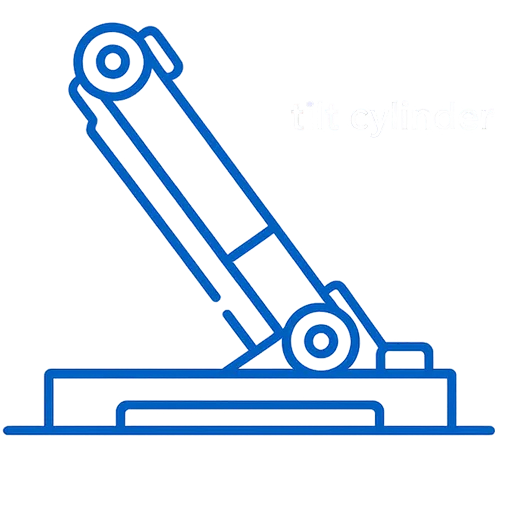
Can hydraulic cylinders be adapted for specialized applications like material handling?
Yes, hydraulic cylinders can be effectively adapted for specialized applications such as material handling. The versatility, power, and precise control offered by hydraulic cylinders make them well-suited for a wide range of material handling tasks. Hydraulic systems, including cylinders, are commonly used in industrial settings to lift, position, push, pull, and manipulate various types of materials. Here’s a detailed explanation of how hydraulic cylinders can be adapted for specialized material handling applications:
1. Lifting and Lowering:
– Hydraulic cylinders are commonly used for lifting and lowering heavy loads in material handling applications. By utilizing the force generated by hydraulic pressure, cylinders can provide the necessary power to lift and hold loads at different elevations. The precise control offered by hydraulic systems allows for accurate positioning of materials, ensuring efficient and safe lifting operations.
2. Pushing and Pulling:
– Hydraulic cylinders are capable of generating substantial pushing and pulling forces, making them ideal for applications that involve moving or manipulating materials. They can be used to push or pull heavy objects, control the movement of conveyors or rollers, or engage mechanisms for material transfer. The ability to exert high forces with precise control enables hydraulic cylinders to efficiently handle a variety of material handling tasks.
3. Tilting and Rotating:
– Hydraulic cylinders can be adapted to provide tilting and rotating functions in material handling equipment. By integrating cylinders into the design, equipment such as forklifts, cranes, or material handling arms can tilt or rotate to facilitate material placement or maneuvering. Hydraulic cylinders offer the required force and control to achieve smooth and controlled tilting or rotating motions, enhancing operational efficiency in material handling processes.
4. Gripping and Clamping:
– Hydraulic cylinders can be utilized to provide gripping and clamping functions for secure material handling. By incorporating specialized gripping or clamping mechanisms with hydraulic actuation, materials of various shapes and sizes can be securely held or clamped during transportation or processing. Hydraulic cylinders enable precise and adjustable gripping or clamping forces, ensuring the safe and reliable handling of materials.
5. Material Compaction and Forming:
– Hydraulic cylinders can be adapted for material compaction and forming applications. For example, in the production of bricks, hydraulic cylinders are used to apply high pressure and force to compact the raw materials into desired shapes. Similarly, in metal forming processes, hydraulic cylinders are employed to exert force on metal sheets or components, enabling precise shaping and forming operations.
6. Conveyor and Sorting Systems:
– Hydraulic cylinders can be integrated into conveyor and sorting systems to facilitate material movement and sorting. By incorporating hydraulic actuators, conveyor belts or sorting mechanisms can be efficiently controlled for optimal material flow and distribution. Hydraulic cylinders provide the necessary force and control to handle varying load capacities and adjust the speed and position of material transfer, improving the overall efficiency of handling and sorting operations.
7. Customized Designs:
– Hydraulic cylinders can be customized and adapted to meet specific requirements of specialized material handling applications. Engineers can design cylinders with unique dimensions, stroke lengths, mounting options, and sealing arrangements to fit into equipment or systems with specific space limitations or operating conditions. Customized hydraulic cylinders ensure optimal performance and compatibility for specialized material handling tasks.
In summary, hydraulic cylinders can be effectively adapted for specialized material handling applications, offering the necessary force, control, and versatility required in various material handling tasks. Whether it involves lifting and lowering, pushing and pulling, tilting and rotating, gripping and clamping, material compaction and forming, or integration into conveyor and sorting systems, hydraulic cylinders provide reliable and efficient solutions. Their adaptability, precise control, and ability to handle heavy loads make hydraulic cylinders a valuable component in optimizing material handling processes across different industries.
Customization of Hydraulic Cylinders for Marine and Offshore Applications
Yes, hydraulic cylinders can be customized for use in marine and offshore applications. These environments present unique challenges, such as exposure to corrosive saltwater, high humidity, and extreme operating conditions. Customization allows hydraulic cylinders to meet the specific requirements and withstand the harsh conditions encountered in marine and offshore settings. Let’s delve into the details of how hydraulic cylinders can be customized for marine and offshore applications:
- Corrosion Resistance: Marine and offshore environments expose hydraulic cylinders to corrosive elements, such as saltwater. To mitigate corrosion, hydraulic cylinders can be customized with materials and surface treatments that provide enhanced corrosion resistance. For example, cylinders can be constructed from stainless steel or coated with protective layers like chrome plating or specialized coatings to withstand the corrosive effects of saltwater.
- Sealing and Environmental Protection: Hydraulic cylinders for marine and offshore applications require robust sealing systems to prevent water ingress and protect internal components. Customized sealing solutions, such as high-quality seals, wipers, and gaskets, can be employed to ensure effective sealing and resistance to water, debris, and contaminants. Additionally, hydraulic cylinders can be designed with protective features like bellows or boots to shield vulnerable areas from environmental elements.
- High-Pressure and Shock Resistance: Marine and offshore operations may involve high-pressure hydraulic systems and encounters with dynamic loads or shocks. Customized hydraulic cylinders can be engineered to withstand these demanding conditions. They can be designed with reinforced construction, thicker walls, and specialized components to handle high-pressure applications and absorb shock loads, ensuring reliable performance and durability.
- Temperature and Fluid Compatibility: Marine and offshore applications can expose hydraulic cylinders to extreme temperature variations and specific fluid requirements. Customization allows the selection of materials, seals, and fluids compatible with the anticipated temperature range and the specific fluid being used. Hydraulic cylinders can be tailored to maintain optimal performance and reliability under challenging temperature conditions and with the designated fluid type.
- Mounting and Integration: Customized hydraulic cylinders can be designed to facilitate easy integration and mounting within marine and offshore machinery. Mounting options can be tailored to suit the available space and structural requirements of the equipment. Additionally, customized hydraulic cylinder designs can incorporate features for easy maintenance, accessibility, and connection to the hydraulic system, ensuring convenient installation and serviceability in marine and offshore applications.
In summary, hydraulic cylinders can be customized to meet the unique demands of marine and offshore applications. Customization enables the integration of corrosion-resistant materials, robust sealing systems, high-pressure and shock-resistant designs, temperature and fluid compatibility, as well as optimized mounting and integration features. By tailoring hydraulic cylinders to the specific requirements of marine and offshore environments, reliable performance, extended service life, and efficient operation can be achieved in these challenging operating conditions.
What is a hydraulic cylinder and how does it function in various applications?
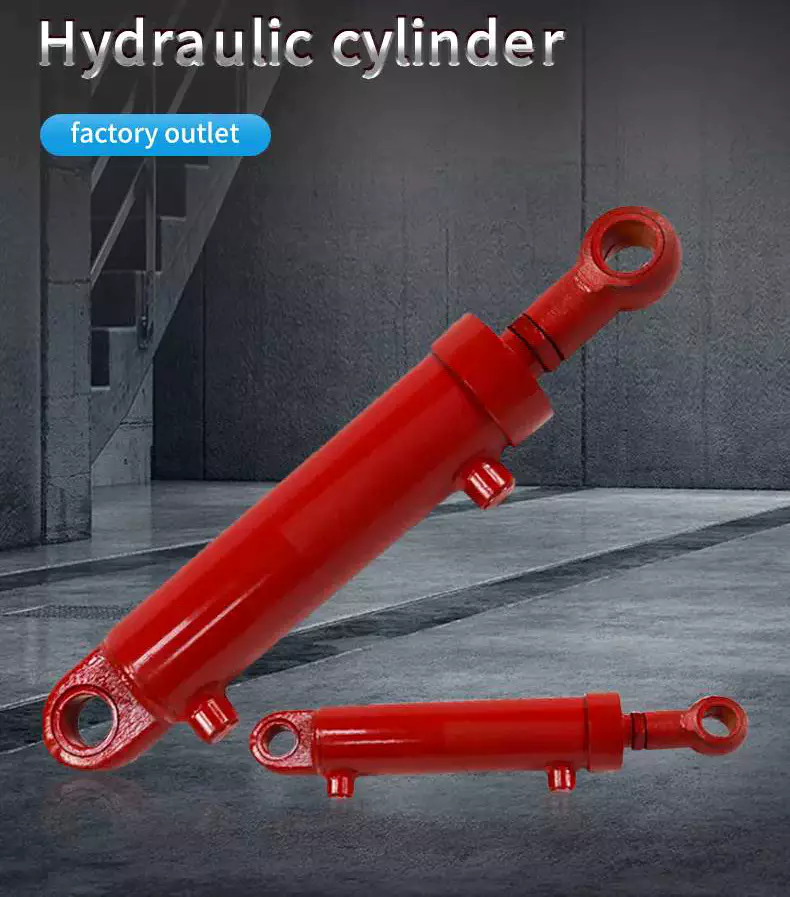
A hydraulic cylinder is a mechanical actuator that converts hydraulic energy into linear force and motion. It plays a critical role in various applications where controlled and powerful linear motion is required. Hydraulic cylinders are commonly used in industries such as construction, manufacturing, agriculture, and transportation. Here’s a detailed explanation of what a hydraulic cylinder is and how it functions:
Definition and Components:
– A hydraulic cylinder consists of a cylindrical barrel, a piston, a piston rod, and various seals. The barrel is a hollow tube that houses the piston and allows for fluid flow. The piston divides the cylinder into two chambers: the rod side and the cap side. The piston rod extends from the piston and provides a connection point for external loads. Seals are used to prevent fluid leakage and maintain hydraulic pressure within the cylinder.
Function:
– The function of a hydraulic cylinder is to convert the pressure and flow of hydraulic fluid into linear force and motion. The hydraulic fluid, typically oil, is pressurized and directed into one of the chambers of the cylinder. As the fluid enters the chamber, it applies pressure on the piston, causing it to move in a linear direction. This linear motion of the piston is transferred to the piston rod, creating a pushing or pulling force.
Working Principle:
– The working principle of a hydraulic cylinder is based on Pascal’s law, which states that pressure exerted on a fluid in a confined space is transmitted equally in all directions. In a hydraulic cylinder, when hydraulic fluid is pumped into one side of the cylinder, it creates pressure on the piston. The pressure is transmitted through the fluid to the other side of the piston, resulting in a balanced force across the piston and piston rod. This force generates linear motion in the direction determined by the fluid input.
Applications:
– Hydraulic cylinders find extensive use in a wide range of applications due to their ability to generate high forces and precise control of linear motion. Some common applications include:
1. Construction Equipment: Hydraulic cylinders are used in excavators, loaders, bulldozers, and cranes for lifting, pushing, and digging tasks.
2. Manufacturing Machinery: Hydraulic cylinders are employed in presses, machine tools, and material handling equipment for pressing, clamping, and lifting operations.
3. Agricultural Machinery: Hydraulic cylinders are used in tractors, harvesters, and irrigation systems for tasks like steering, lifting, and controlling attachments.
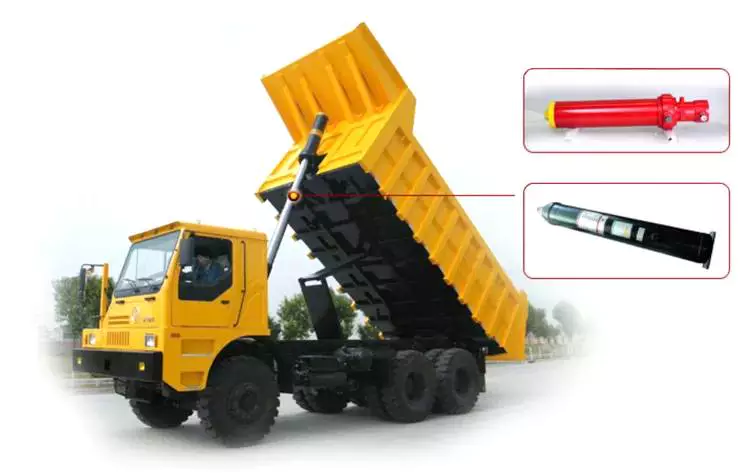
4. Transportation: Hydraulic cylinders are utilized in vehicles such as dump trucks, garbage trucks, and forklifts for tilting, lifting, and tipping operations.
5. Aerospace and Defense: Hydraulic cylinders are employed in aircraft landing gear, missile systems, and hydraulic actuators for control surfaces.
6. Marine and Offshore: Hydraulic cylinders are used in ship steering systems, cranes, and offshore drilling equipment for various lifting and positioning tasks.
In these applications, hydraulic cylinders offer advantages such as high force capability, precise control, compact size, and durability. They provide efficient and reliable linear motion, contributing to enhanced productivity and functionality in a wide range of industries.
Overall, hydraulic cylinders are integral components in various applications where controlled and powerful linear motion is required. Their ability to convert hydraulic energy into mechanical force makes them invaluable in numerous industries, enabling the operation of heavy machinery, precise positioning, and efficient load handling.


editor by CX 2023-11-24