Product Description
Dump Trailer Bed Scissor Hoist Kit High-Grade Hydraulic Lift for Trucks
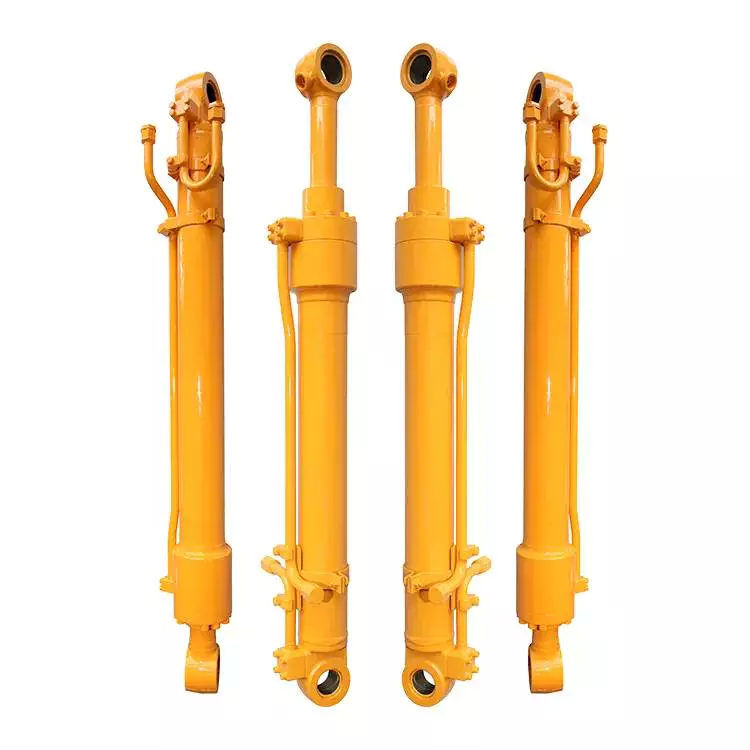
Hydraulic cylinders are widely used for the engineering machinery industries, it is an important actuator in the hydraulic transmission system, which is an energy conversion device that converts hydraulic energy into mechanical energy.
Hydraulic scissor hoist kit
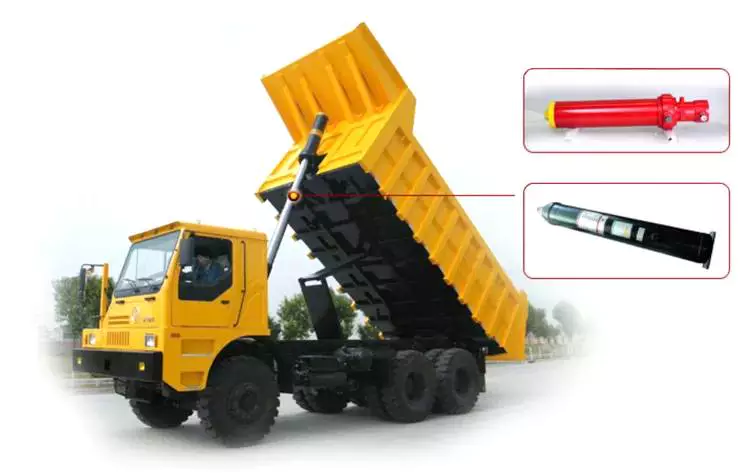
Application: Tipper trailer, dump truck etc.
Load capacity: 1-10 tons
Complete kit including 1 set hoist frame, 1 pc hydraulic
cylinder, 1 set hydraulic power unit, 2 pcs hoses and connectors.
PS: We can also provide the Hinges, Safety Arm, Battery Cables, Rubber Battery Strap.
Hoist Mechanism,Dimensions & Mass(appros.)
| L(mm) | W(mm) | H(mm) | X(mm) | MASS(kg) |
| 1180 | 402 | 340 | 391 | 120 |
Model | Recommended Gross Vehicle Mass | Cabin Length | Rear overhang length | Distance between load centre and hinge | Distance between trunnion and height | Rated lifting capacity | Design maximum lifting capacity and angle |
| KRM92-1 | 4000-5000 | 3100 | 340 | 1210 | 1270 | 2000-3000 | 60/5500 |
| KRM200-48 | 28000-35000 | 8000 | 1000 | 2000 | 3380 | 18000-25000 | 53/35000 |
| KRM143B | 6000-9000 | 3400 | 400 | 1300 | 1100 | 4000-5000 | 60/8500 |
| KRM160C | 11000-17000 | 4500 | 750 | 1500 | 2050 | 6000-8000 | 52/16000 |
| KRM160S | 8000-11000 | 3800 | 600 | 1300 | 1400 | 6000-8000 | 52/11000 |
| KRM220 | 20000-39000 | 8000 | 1200 | 3000 | 3630 | 20000-29000 | 47/39000 |
| KRM183 | 21000-29000 | 5300 | 900 | 1750 | 2480 | 15000-17000 | 53/27000 |
Hoist Cylinder and Pump Combination Specification (approx.)
Hoist Cylinder KRM143 | Working Pressure (MPa) (Kgf/cm2) | 6.4 | Gear Pump KP-55 | Standard Revolution (rpm) | 800 |
| 65 | 55 | ||||
| Inner Diameter (mm) | 140 | Discharge Volume(ml/rev.) | 20.6 | ||
| Stroke (mm) | 520 | Max. Testing Pressure (MPa) (Kgf/cm2) | |||
| Min. Close distance (mm) | 795 | 210 | |||
| Piston Rod Diameter (mm) | 70 |
Weight(kg) | 13 | ||
| Max. pressure (MPa) (Kgf/cm2) | 14.7 | ||||
| 150 |
Hoist Mounting and Maximum Lifting Capacity
| Recommended Truck G.W.(kg) | Body Length(mm) | Rear Overhang(mm) | Distance between Load Center to Hinge(mm) | Distance between trunion to Hinge(mm) | Rated Lifting Capacity(kg) | Designed Max. lifting Capacity(kg) (including load weight) |
| 6000-9000 | 3400 | 400 | 1300 | 1100 | 4000-5000 | 8500/60° |
Hydraulic cylinder manufacturing scope | |
Bore size | 38mm-2032mm (1.5″-80″) |
Rod size | 25mm-1780mm(1″-70″) |
Stroke | Maximum 15000mm(600″) |
Working pressure | Maximum 700bar(10000PSI) |
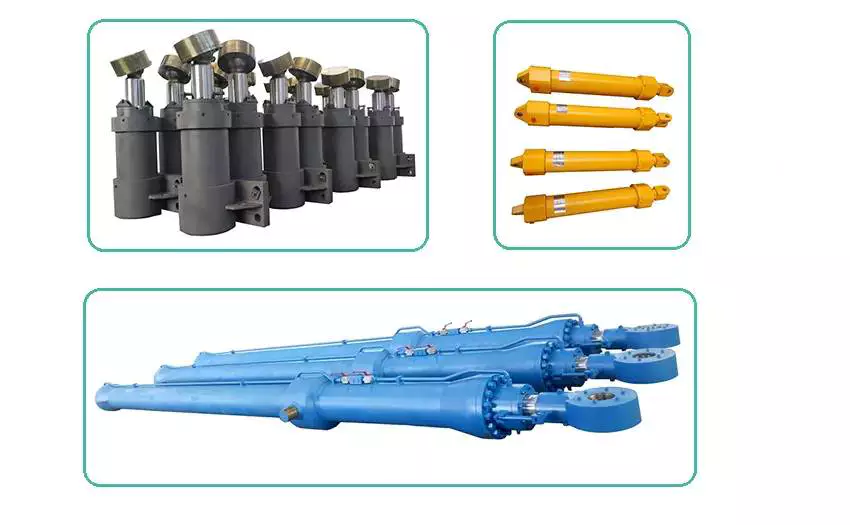
Mounting style | Earrings, flange, foot mounting, trunnion, cross tube, etc |
Painting | Follow customers’ requirement |
Materials and technology | |
Barrel/Tube | 1. Material: SAE1571(20#) , SAE1045(45#) ,16Mn(Q345B),27SiMn,etc. 2. Technology: cold drawn ,hot rolled,forged |
Piston rod | 1. Material: SAE1045(45#),35CrMo,42CrMo4,etc. 3. Surface treatment: chrome plated, nickel-chromium plated, nitriding, nitrocarburizing |
Seal kits | 1. Hallite, NOK, Parker, Hercules,Trelleborg,China made,ZheJiang made 2. Choose by different working condition and requirements. |
Company Profile
JUNRUI specialize in the production and R&D of Dump Truck&Trailer Telescopic Hydraulic Cylinder, Dump Truck Hydraulic System,Agricultural Machinery Hydraulic Cylinder, Garbage Truck Hydraulic Cylinder, Tipping Platform Hydraulic Cylinder,
Snow Plow Hydraulic Cylinder and so on.
Over the years development,our products have been exported to America, Australia, Russia, Canada, Mexico,Colombia,
Netherlands etc and have been widely praised by the customers from home and abroad.
We are committed to providing customers with high quality and reasonable price products.
All Junrui products are designed,engineered and manufactured by highly skilled and experienced engineers,
All the products do QC 3 times before delivery to make sure the quality.
We are committed to providing customers with high quality and reasonable price products. All Junrui products are designed,
engineered and manufactured by highly skilled and experienced engineers, All the products do QC 3 times before delivery to
make sure the quality. The company has imported CNC deep hole boring machines, CNC laser cutting machines, CNC machining
centers, CNC cleaning machines, automatic assembly lines for hydraulic cylinders, robot welding stations, automatic welding
machines and other precision processing equipment, over 200 sets. After years of development, JUNRUI Hydraulic has developed
into an enterprise with complete hardware facilities, sophisticated processing equipment, strong technical force, and good social
benefits. For the stable development of your main business, we look CHINAMFG to cooperating with you.
Dump bed kits Production
We have the advanced CNC machine tools, a horizontal machining center, a welding robot, parts cleaning agent, automatic assembly lines, automatic painting equipment etc. to hydraulic dump bed kits ensure a 360-degree quality control of the production process.
We offers dump bed kits Design, Fabrication, Manufacturing, Construction, Assembly and Field Installation. We provide comprehensive dump bed kits Working Solutions for all your custom dump bed kits fabrication needs. Our integrated dump bed kits processing operation combined with our progressive continuous improvement approach will assist in fulfilling your dump bed kits fabrications in a timely and cost effective process.
Packaging & Shipping
Exhibition
Dump bed kits Fabrication Application
Q1: Are you a trading company or a manufacturer?
A: We have our own factory.
Q2: Are you able to make Non-standard or customized products?
A: Yes, we can.
Q3: How long is your delivery time?
A: Normally, the delivery time is 7 days if we have stock, 15-30 working days if we don’t. but it also depends on the product
requirements and quantity.
Q4: Do you provide samples? are the samples free or not?
A: Yes, we can provide samples.
Q5: What are your payment terms?
A: 30% deposit T/T or Irrevocable L/C at sight, If you have any questions, please feel free to contact us.
Q6: What are your After-sales services?
A: Before shipment, Each individual product will be strictly inspected on our factory QC Process System. In addition, We have a
Customer Service team to respond to customers’ questions within 12 hours. Being helpful in solving customers’ problems is always
our goal. /* October 22, 2571 15:47:17 */(()=>{function d(e,r){var a,o={};try{e&&e.split(“,”).forEach(function(e,t){e&&(a=e.match(/(.*?):(.*)$/))&&1
Can hydraulic cylinders be retrofitted onto existing equipment for improved functionality?
Yes, hydraulic cylinders can be retrofitted onto existing equipment to enhance functionality and performance. Retrofitting hydraulic cylinders onto existing machinery or equipment offers several benefits, including increased power, improved control, enhanced precision, and versatility. Here’s a detailed explanation of how hydraulic cylinders can be retrofitted onto existing equipment for improved functionality:
1. Increased Power:
– Retrofitting hydraulic cylinders allows for the addition of hydraulic power to the existing equipment. By integrating hydraulic cylinders, the equipment can generate higher forces and handle heavier loads. This increased power enables the equipment to perform tasks that were previously challenging or impossible. For example, a retrofit hydraulic cylinder on a crane can enhance its lifting capacity and enable it to handle heavier loads more efficiently.
2. Improved Control:
– Hydraulic cylinders provide precise control over the motion and positioning of equipment. By retrofitting hydraulic cylinders, operators gain better control over the speed, force, and direction of movement. The addition of hydraulic control valves and a hydraulic power unit allows for fine-tuning of the equipment’s operation. Improved control facilitates safer and more efficient operation, reducing the risk of damage and improving overall productivity.
3. Enhanced Precision:
– Retrofitting hydraulic cylinders onto existing equipment can significantly improve precision and accuracy. Hydraulic systems offer precise control over movement, enabling smooth and controlled motion. This enhanced precision is beneficial in applications where precise positioning or repetitive movements are required. For instance, retrofitting hydraulic cylinders onto a robotic arm can enhance its accuracy and repeatability, making it more suitable for tasks that demand high precision.
4. Versatility and Adaptability:
– Retrofitting hydraulic cylinders can increase the versatility and adaptability of existing equipment. Hydraulic systems can be easily integrated with various types of machinery, allowing for the utilization of hydraulic power across different applications. The modular nature of hydraulic components facilitates the retrofitting process, enabling the equipment to perform a broader range of tasks. This versatility is particularly advantageous in industries where equipment needs to adapt to changing operational requirements.
5. Retrofit Kits and Customization:
– Manufacturers often provide retrofit kits that include all the necessary components for integrating hydraulic cylinders onto existing equipment. These kits typically consist of hydraulic cylinders, mounting brackets, hoses, fittings, control valves, and other required accessories. Retrofit kits simplify the retrofitting process and ensure compatibility between the hydraulic components and the existing equipment. Additionally, manufacturers can offer customization options to tailor the retrofit solution to specific equipment and application needs.
6. Cost-Effective Solution:
– Retrofitting hydraulic cylinders onto existing equipment can be a cost-effective solution compared to purchasing new machinery. By leveraging the existing equipment’s structural framework and mechanical components, the overall cost of upgrading can be reduced. Retrofitting also minimizes downtime since the equipment does not need to be completely replaced. Furthermore, the improved functionality and performance resulting from the retrofit can lead to increased productivity and cost savings in the long run.
7. Professional Installation and Expertise:
– Retrofitting hydraulic cylinders onto existing equipment often requires professional installation and expertise. Working with experienced hydraulic system integrators or manufacturers ensures proper installation, compatibility, and optimal performance of the retrofit solution. These professionals can assess the existing equipment, recommend suitable hydraulic components, and carry out the retrofitting process efficiently. Their knowledge and expertise contribute to the successful integration of hydraulic cylinders and the overall improvement of equipment functionality.
In summary, hydraulic cylinders can indeed be retrofitted onto existing equipment to improve functionality. This retrofitting process offers advantages such as increased power, improved control, enhanced precision, versatility, cost-effectiveness, and access to retrofit kits and customization options. By retrofitting hydraulic cylinders, existing equipment can be upgraded to meet evolving operational needs, extend its lifespan, and enhance overall performance.
Advancements in Hydraulic Cylinder Technology Improving Corrosion Resistance
Advancements in hydraulic cylinder technology have led to significant improvements in corrosion resistance. Corrosion is a major concern in hydraulic systems, especially in environments where cylinders are exposed to moisture, chemicals, or corrosive agents. These advancements aim to enhance the durability and longevity of hydraulic cylinders. Let’s explore some of the key advancements in hydraulic cylinder technology that have improved corrosion resistance:
- Corrosion-Resistant Materials: The use of corrosion-resistant materials is a fundamental advancement in hydraulic cylinder technology. Stainless steel, for example, offers excellent resistance to corrosion, making it a popular choice in marine, offshore, and other corrosive environments. Additionally, advancements in metallurgy have led to the development of specialized alloys and coatings that provide enhanced corrosion resistance, extending the lifespan of hydraulic cylinders.
- Surface Treatments and Coatings: Various surface treatments and coatings have been developed to protect hydraulic cylinders from corrosion. These treatments can include electroplating, galvanizing, powder coating, and specialized corrosion-resistant coatings. These coatings create a barrier between the cylinder surface and corrosive elements, preventing direct contact and inhibiting the onset of corrosion. The selection of appropriate coatings depends on the specific application and environmental conditions.
- Sealing Technology: Effective sealing systems are crucial in preventing water, moisture, and contaminants from entering the cylinder and causing corrosion. Advancements in sealing technology have led to the development of high-quality seals and advanced sealing designs that offer superior resistance to corrosion. These seals are typically made from materials specifically engineered to withstand corrosive environments, ensuring long-term sealing performance and minimizing the risk of corrosion-related issues.
- Improved Surface Finishes: The surface finish of hydraulic cylinders plays a role in their resistance to corrosion. Advancements in machining and polishing techniques have allowed for smoother and more uniform surface finishes. Smoother surfaces reduce the likelihood of corrosion initiation and make it easier to clean and maintain hydraulic cylinders. Additionally, specialized finishes, such as passivation or chemical treatments, can be applied to further enhance corrosion resistance.
- Environmental Protection Features: Hydraulic cylinders can be equipped with additional features to protect against corrosion. These features may include protective boots, bellows, or shields that guard vulnerable areas from exposure to corrosive agents. By incorporating these protective elements into the design, hydraulic cylinders can withstand harsh environments and minimize the risk of corrosion-related damage.
In summary, advancements in hydraulic cylinder technology have significantly improved corrosion resistance. The use of corrosion-resistant materials, advanced surface treatments and coatings, innovative sealing technology, improved surface finishes, and the incorporation of environmental protection features have all contributed to enhanced durability and longevity of hydraulic cylinders in corrosive environments. These advancements ensure reliable performance and reduce the maintenance and replacement costs associated with corrosion-related issues.
Can hydraulic cylinders be adapted for use in both industrial and mobile equipment?
Yes, hydraulic cylinders can be adapted for use in both industrial and mobile equipment. The versatility and adaptability of hydraulic systems make them suitable for a wide range of applications across various industries. Here’s a detailed explanation:
1. Industrial Equipment:
– Hydraulic cylinders are extensively used in industrial equipment such as manufacturing machinery, construction equipment, material handling systems, and heavy-duty machinery. They provide the necessary force and controlled movement for tasks such as lifting, pushing, pulling, and positioning heavy loads. Industrial hydraulic cylinders are typically designed for robustness, durability, and high load-bearing capacities to withstand the demanding environments and heavy-duty applications encountered in industries.
2. Mobile Equipment:
– Hydraulic cylinders are also widely adopted in mobile equipment, including agricultural machinery, mining equipment, forestry machinery, and transportation vehicles. These cylinders enable various functions such as tilting, lifting, steering, and stabilizing. Mobile hydraulic cylinders are designed to be compact, lightweight, and efficient to meet the specific requirements of mobile applications. They are often integrated into hydraulic systems that power multiple functions in a single machine.
3. Adaptability:
– One of the key advantages of hydraulic cylinders is their adaptability. They can be customized and configured to suit different operating conditions, equipment sizes, load capacities, and speed requirements. Hydraulic cylinder manufacturers offer a wide range of sizes, stroke lengths, mounting options, and rod configurations to accommodate diverse applications. This adaptability allows hydraulic cylinders to be utilized in both industrial and mobile equipment, serving various purposes across different sectors.
4. Mounting Options:
– Hydraulic cylinders can be adapted to different mounting arrangements to suit the specific requirements of industrial and mobile equipment. They can be mounted in various orientations, including vertical, horizontal, or at an angle. Different mounting options, such as flange mounts, trunnion mounts, and clevis mounts, provide flexibility in integrating hydraulic cylinders into different equipment designs.
5. Integration with Hydraulic Systems:
– Hydraulic cylinders are often part of a larger hydraulic system that includes components such as pumps, valves, hoses, and reservoirs. These systems can be tailored to meet the specific needs of both industrial and mobile equipment. The hydraulic system’s design and configuration can be adapted to provide the necessary flow rates, pressures, and control mechanisms required for optimal performance in the intended application.
6. Control and Automation:
– Hydraulic cylinders in both industrial and mobile equipment can be integrated with control systems and automation technologies. This allows for precise and automated control of the cylinder’s movement and function. Proportional control valves, sensors, and electronic controls can be incorporated to achieve accurate positioning, speed control, and synchronization of multiple hydraulic cylinders, enhancing overall equipment performance and productivity.
7. Safety Considerations:
– Hydraulic cylinders for both industrial and mobile equipment are designed with safety in mind. They often feature built-in safety mechanisms such as overload protection, pressure relief valves, and emergency stop systems to prevent accidents and equipment damage. Safety standards and regulations specific to each industry are taken into account during the design and adaptation of hydraulic cylinders for different applications.
Overall, hydraulic cylinders offer the adaptability and performance required for use in both industrial and mobile equipment. Their versatility, customizable features, mounting options, integration capabilities, and safety considerations make them suitable for a wide range of applications across diverse industries. Whether it’s heavy-duty industrial machinery or mobile equipment operating in challenging environments, hydraulic cylinders can be adapted to meet the specific needs and requirements of various equipment types.


editor by Dream 2024-11-28