Product Description
Product Description
(1) HangZhou Micro Precision Machinery Co., Ltd. design and manufacture heavy duty hydraulic cylinders that covering the following fields:
Ø Forklift Cylinder
Ø Derrick Cylinder
Ø Bulldozer Cylinder
Ø Port Crane Cylinder
Ø Two-head excavator Cylinder
Ø Small / Large Excavator Cylinder
Ø Injection Molding Machine Cylinder
(2) Not only we could manufacture all kinds of hydraulic cylinders according to the drawing from our
customers,but also we could make a design according to customer’s requirements.If you
require our engineer to make a design, please advise us the following specification:
1. Rated pressure
2. Working pressure
3. Test pressure
4. Working condition and environment ,for example ,temperature ,working frequency
5. Pulling force ,and return stroke force
6. Pulling and return speed
7. Assembly size
8. Seal ring requirements .For example , brand ,seal material etc .
9. Tube and piston rod raw material requirements
10. Piston rod surface treatment requirements, for example chromating film thickness ,
Surface hardness etc .
11. Painting and other spare parts requirements.
Product Parameters
Forklift Hydraulic Cylinder
| Excavator Hydraulic Cylinder | Bore Diameter(mm) | Rod Diameter(mm) | Stroke(mm) | Supporting models(T) |
| Minimum | 50 | 30 | 100 | 1.5 |
| Maximum | 230 | 150 | 2500 | 50 |
| D | d | Do | F | G | P |
| 90 | 60,65 | 108 | 148 | 143 | 108 |
| 95 | 65,70 | 114 | 148 | 146 | 108 |
| 100 | 65,70 | 120 | 163 | 149 | 112 |
| 105 | 65,70,75 | 125 | 165 | 152 | 112 |
| 110 | 70,75,80 | 130 | 176 | 152 | 118 |
| 115 | 70,75,80 | 136 | 176 | 152 | 118 |
| 120 | 75,80,85 | 144 | 186 | 152 | 124 |
| 125 | 80,85 | 149 | 186 | 154 | 127 |
| 130 | 85,90,95 | 155 | 193 | 166 | 133 |
| 135 | 90,95,100 | 160 | 208 | 166 | 133 |
| 140 | 90,95,100 | 166 | 208 | 171 | 133 |
| 145 | 95,100,105 | 172 | 226 | 171 | 133 |
| 150 | 100,105,110 | 178 | 237 | 178 | 138 |
| 155 | 105,110 | 184 | 240 | 178 | 138 |
| 160 | 110,115,120 | 192 | 244 | 178 | 141 |
| 170 | 115,120 | 202 | 265 | 185 | 144 |
| 175 | 115,120 | 210 | 269 | 185 | 150 |
| 180 | 120,130 | 216 | 280 | 195 | 160 |
| 190 | 130,140 | 226 | 295 | 205 | 160 |
| 200 | 130,140 | 243 | 317 | 212 | 187 |
| 210 | 140,150 | 249 | 335 | 234 | 187 |
Detailed Photos
Certifications
Company Profile
After Sales Service
Packaging & Shipping
FAQ
1. Why choose our cylinder advantages?
(1) Rod are chrome plated.
(2) Tubes are quenched and tempered.
(3) Tube inner hole goes through deep hole boring machine processing.Surface roughness is 0.4Ra and circular degree is 0.571.
(4) Good quality yet lower price.
2. Are you a manufacturer or trading company?
We are an integration of industry and trade, our factory has 18 years of manufacturing experience, we have a professional design and production team.
3. Do your products come with a warranty?
Yes, we have1 year warranty. In this year, if the quality problem we will free repair for you.
4. What about the quality feedback of your products?
We have never received even once quality complaint for many years. And we have established long-term friendly cooperative relationships with our customers.
5. Could you help me to install or recommend what kind of hydraulic cylinder or power pack should I use for specific machine?
Yes, we have an experienced engineer design team ready to assist you. If you don’t know which hydraulic cylinder should be used for your machine, please contact us and our engineers will design the exact product that meets your needs.
6. What is the delivery time?
Within 15 days for samples.
25-30 days for bulk production, which is depend on quality, production process and so on.
7. What is your main payment term?
T/T, L/C, either is available.
/* October 22, 2571 15:47:17 */(()=>{function d(e,r){var a,o={};try{e&&e.split(“,”).forEach(function(e,t){e&&(a=e.match(/(.*?):(.*)$/))&&1
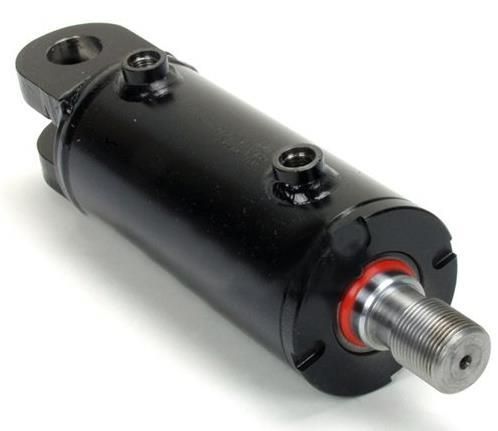
How does a tilt cylinder contribute to load distribution and control?
A tilt cylinder plays a significant role in load distribution and control in various applications. It helps ensure proper weight distribution and enables precise control over the tilting function. Here’s a detailed explanation:
- Load Distribution: Tilt cylinders assist in achieving optimal load distribution in mechanical systems. By adjusting the tilt angle, the cylinder allows for the redistribution of weight or force applied to the system. This is particularly useful in applications where uneven weight distribution may cause imbalance, stress, or instability. The ability to adjust the tilt angle enables operators to distribute the load more evenly, enhancing system performance, safety, and longevity.
- Controlled Tilting: Tilt cylinders provide precise control over the tilting motion. Whether it’s in equipment attachments, platforms, or other mechanical systems, the cylinder allows for controlled and gradual tilting. Operators can adjust the tilt angle according to specific requirements, ensuring smooth and accurate positioning. This control over the tilting function enhances operational efficiency, productivity, and safety.
- Positioning and Alignment: Tilt cylinders contribute to the precise positioning and alignment of loads or equipment. By tilting the system, operators can align the load or equipment with the desired orientation or target. This is particularly beneficial in applications such as material handling, construction, or manufacturing, where precise positioning is crucial for accurate assembly, installation, or processing.
- Stability and Safety: Tilt cylinders play a role in maintaining stability and safety during load distribution and tilting operations. They are designed to provide controlled movement and resist external forces, ensuring that the load or equipment remains stable during tilting. This stability prevents sudden shifts or imbalances that could potentially lead to accidents, damage, or injuries.
- Integration with Control Systems: Tilt cylinders can be integrated with control systems or hydraulic circuits, enabling automated and remote-controlled tilting operations. Integration with control systems allows for precise, repeatable, and synchronized tilting actions. This integration enhances load distribution accuracy, control, and adaptability to different operating conditions or requirements.
- Load Capacity and Durability: Tilt cylinders are engineered to handle heavy loads and withstand harsh operating conditions. They are designed with appropriate load ratings, materials, and construction to ensure reliable load distribution and control. The robustness and durability of tilt cylinders enable them to handle demanding applications, providing long-lasting performance.
Therefore, a tilt cylinder contributes to load distribution and control by enabling even weight distribution, facilitating controlled tilting, ensuring precise positioning and alignment, enhancing stability and safety, integrating with control systems, and offering sufficient load capacity and durability. These features make tilt cylinders essential components in various industries, including construction, material handling, agriculture, and manufacturing.
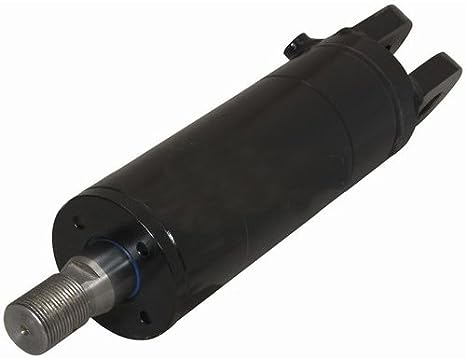
How does a tilt cylinder contribute to efficient and controlled tilting?
A tilt cylinder plays a crucial role in ensuring efficient and controlled tilting of heavy equipment. It incorporates several features and mechanisms that contribute to this functionality. Here’s a detailed explanation:
- Hydraulic Power: Tilt cylinders are typically powered by hydraulic systems, which provide the necessary force for tilting. Hydraulic power allows for smooth and controlled movement, enabling operators to precisely adjust the tilt angle of the equipment.
- Adjustable Force and Speed: Tilt cylinders offer adjustable force and speed, allowing operators to customize the tilting action based on the specific task or load requirements. By adjusting the hydraulic pressure or flow rate, operators can control the force exerted by the cylinder and the speed at which the tilting movement occurs. This flexibility ensures efficient and controlled tilting, regardless of the load or terrain conditions.
- Position Feedback: Many tilt cylinders incorporate position feedback mechanisms, such as position sensors or encoders, which provide real-time information about the cylinder’s tilt angle. This feedback enables precise positioning and control of the equipment, allowing operators to achieve the desired tilt angle accurately. It also ensures consistent and repeatable tilting performance, enhancing efficiency and productivity.
- Integrated Valves and Controls: Tilt cylinders often feature integrated valves and controls that enable operators to manipulate the tilting action conveniently. These valves regulate the flow of hydraulic fluid to the cylinder, allowing operators to control the direction and speed of the tilt. Integrated controls, such as joysticks or switches, provide intuitive operation and facilitate precise tilting adjustments.
- Stability and Load Management: Tilt cylinders are designed to maintain stability and manage loads during tilting operations. They are engineered to withstand the forces and stresses associated with heavy loads and dynamic movements. This ensures controlled tilting and minimizes the risk of instability or tipping, contributing to safe and efficient operation.
- Sealing and Lubrication: Tilt cylinders incorporate seals and lubrication systems to minimize friction and ensure smooth operation. Seals prevent leakage and contamination, maintaining the integrity of the hydraulic system. Proper lubrication of the cylinder’s moving parts reduces wear and tear, enabling efficient and controlled tilting over an extended period.
By leveraging hydraulic power, offering adjustable force and speed, providing position feedback, integrating valves and controls, ensuring stability and load management, and incorporating sealing and lubrication systems, tilt cylinders contribute to efficient and controlled tilting of heavy equipment. These features empower operators to perform tasks with precision, optimize productivity, and maintain safe working conditions.
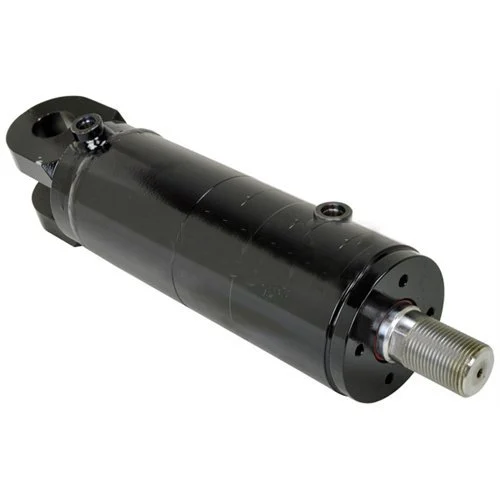
What is a tilt cylinder and how does it work in heavy machinery?
A tilt cylinder is a hydraulic cylinder used in heavy machinery to provide controlled tilting or angling of various components, such as buckets, blades, or attachments. It enables the adjustment of the working angle, allowing heavy machinery to perform tasks more effectively in various industries, including construction, mining, and agriculture.
Here’s how a tilt cylinder works in heavy machinery:
- Structure: A tilt cylinder consists of a cylindrical body, a piston, and a rod. The cylinder body houses the piston, which divides the cylinder into two chambers: the rod side and the head side. The rod is connected to the movable component, such as a bucket, while the cylinder body is attached to the main structure of the machinery.
- Hydraulic Fluid: The tilt cylinder is connected to a hydraulic system that supplies hydraulic fluid. The hydraulic fluid is pressurized and directed to one side of the piston, creating a force imbalance and causing the piston to move. As the piston moves, it extends or retracts the rod, resulting in the tilting action of the attached component.
- Controlled Movement: The flow of hydraulic fluid into and out of the cylinder is controlled by valves in the hydraulic system. By regulating the flow and pressure of the hydraulic fluid, the operator can precisely control the speed, direction, and extent of the tilting movement. This allows for accurate positioning and adjustment of the component according to the specific task requirements.
- Load Capacity: Tilt cylinders are designed to handle heavy loads encountered in heavy machinery. They are selected based on the load capacity requirements of the machinery and must be capable of generating sufficient force to tilt and hold the desired load securely.
- Safety Features: Tilt cylinders often incorporate safety features to prevent over-tilting or unintended movement. These features may include pressure relief valves, limit switches, or sensors that provide feedback on the position and angle of the tilted component. These safety measures help protect the machinery, operators, and surrounding environment.
The use of tilt cylinders in heavy machinery offers several advantages. They enable precise control over the tilting movement, allowing operators to adapt to different tasks and working conditions. The ability to adjust the working angle enhances the efficiency, versatility, and productivity of the machinery, as it can optimize the performance of various attachments and improve material handling capabilities.
In summary, a tilt cylinder is a hydraulic cylinder used in heavy machinery to provide controlled tilting of components. By utilizing hydraulic fluid and precise control mechanisms, tilt cylinders enable heavy machinery to perform tasks more effectively and efficiently, enhancing productivity and versatility in various industries.


editor by Dream 2024-11-28