EP-Цилиндр подъема для промышленного транспортного средства, вилочного погрузчика
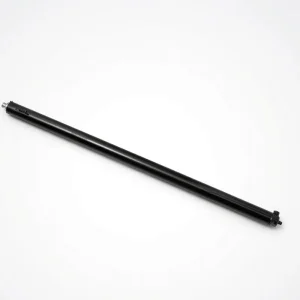
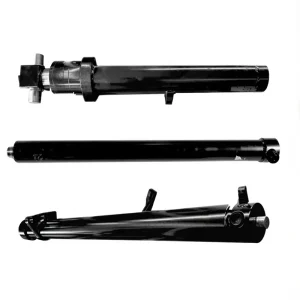
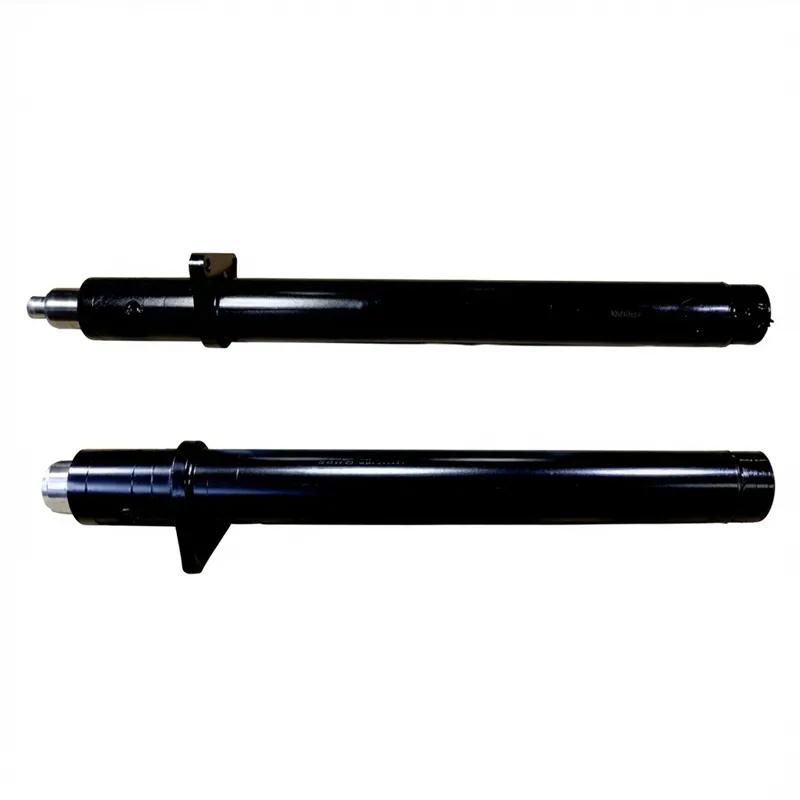
The EP-Industrial Vehicle Forklift Lift Cylinder is a high-performance hydraulic component engineered for vertical load handling in material transport equipment. Designed as a short-stroke piston cylinder, it is constructed from 20# / 45# cold-drawn steel tubing and features a robust sealing system utilizing premium brands such as Parker, NOK, Hallite, and BUSAK Shamban. This ensures compatibility with various hydraulic fluids, including mineral oils and fire-resistant fluids, under diverse operating conditions.
Rated for continuous operation at 3,000 PSI (207 bar), the cylinder undergoes a rigorous 6,000 PSI (414 bar) factory proof test, guaranteeing a 2:1 safety factor that complies with international standards including EN ISO 4413 and EN 1726-1. The piston rod features hard chrome plating for corrosion resistance, while the bore is CNC-rolled to a precise Ra 0.2 – 0.4 μm finish to maximize seal life and minimize friction. Available in both single-acting and double-acting configurations, this non-standard cylinder supports OEM and ODM services with a 1-year warranty on core components.
EP Series | Hydraulic Cylinder
EP-Industrial Vehicle
Forklift Lift Cylinder
Short-stroke piston forklift lift cylinder • 20# / 45# steel construction • Parker, NOK, Hallite seals • 3,000 PSI rated / 6,000 PSI tested • ISO 9001:2015 certified • B2B global supply including France and the EU
1. Technical Specifications — EP-Forklift Lift Cylinder
Full specification table for the EP-Industrial Vehicle Forklift Lift Cylinder. Custom bore diameters, stroke lengths, port positions, and end fittings available on request for OEM replacement and aftermarket applications.
| Parameter | Specification |
|---|---|
| Product Name | EP-Industrial Vehicle Forklift Lift Cylinder (Short Stroke) |
| Condition | New |
| Material | 20# / 45# Steel (cold-drawn tube) |
| Rated Working Pressure | 3,000 PSI (207 bar) |
| Test Pressure | 6,000 PSI (414 bar) — factory tested 100% |
| Acting Type | Single Acting / Double Acting |
| Structure | Piston Cylinder |
| Bore Surface Finish | Ra 0.2 – 0.4 μm (CNC rolled) |
| Chrome Plating (Rod) | Hard chrome, anti-corrosion, high-strength |
| Seal Brands | Parker, NOK, Hallite, BUSAK Shamban |
| Piston Seal Type | Twin-lip piston seals for maximum efficiency |
| Core Components | Piston rod, Piston |
| Gland and Piston Material | High-grade Ductile Iron, directly machined |
| Welding | Heavy-duty, automatic welding |
| Applicable Weight | Approx. 45 kg (standard unit) |
| Certificate | ISO 9001:2015, ISO 4001, ISO 45003 |
| Warranty | 1 Year (body and core components) |
| Warranty of Core Components | 1 Year |
| Standard / Nonstandard | Nonstandard (custom-built per order) |
| Service | OEM and ODM available |
| MOQ | 1 piece |
| Production Capacity | 1,200,000 pieces per year |
| Applicable Industries | Manufacturing plants, machinery repair shops, farms, logistics centers, warehousing |
| Inspection | Video outgoing inspection + machinery test report provided |
| Packaging | Crate, pallet, or as per customer requirement |
| Compatible Forklift Brands | KOMATSU, CATERPILLAR, KOBELCO, HYUNDAI, HITACHI, DOOSAN, VOLVO, KATO and others |
Non-standard bore diameters, stroke lengths, port configurations, and mounting end geometries for the forklift lift cylinder are manufactured per customer drawing or sample. Minimum order 1 piece for OEM replacement or prototype orders. Please send your drawing or dimensional specifications for quotation.
2. Component Parts — Forklift Short Lift Cylinder Assembly
The EP forklift lift cylinder is a multi-part assembly. The following table lists the principal components identified in the parts diagram, covering all 27 numbered items in the standard assembly:
| No. | Part Name | No. | Part Name | No. | Part Name |
|---|---|---|---|---|---|
| 1 | Cylinder Housing Assembly | 11 | Sprocket Seat | 21 | O-Ring |
| 2 | Piston | 12 | Sprocket Cover | 22 | Grease Nipple |
| 3 | Oil Pipe | 13 | Spring Washers | 23 | O-Ring |
| 4 | Check Valve | 14 | Hex Bolt | 24 | Washer |
| 5 | Circlips for Hole | 15 | Du Bush | 25 | Screws |
| 6 | O-Ring | 16 | Back-Ring | 26 | Piston Rod |
| 7 | Wear-Ring | 17 | Rod Seal | 27 | Plug |
| 8 | Hole Seal | 18 | Dust Wiper | ||
| 9 | Round Wire | 19 | Back-Ring | ||
| 10 | Guide Bush | 20 | O-Ring |
3. Compatible Forklift Brands and Models
The EP forklift lift cylinder range covers OEM replacement applications for the following major excavator and forklift brands. If your equipment model is not listed, a custom forklift lift cylinder can be manufactured from a sample or dimensional drawing.
| Brand | Compatible Model Numbers |
|---|---|
| KOMATSU (PC) | PC30, PC40, PC50, PC56, PC60, PC78, PC100, PC110, PC120, PC130, PC160, PC200-3/5/6/7/8/8MO, PC210, PC220-5/6/7/8/8MO, PC240, PC300/350/360-5/6/7/8/8MO, PC400/450-5/6/7/8/8MO, PC800, PC850 |
| CATERPILLAR (E) | E301.5, E302, E305.5, E306, E307 V1/V2/B/C/D/E/F, E308B/C, E120B, E312 V1/V2/B/C/D, E313D2, E312D2, E315D, E200B, E320 V1/V2/A/B/C/D, E324D, E325C/D, E329D, E330/336C/D, E345C, E349D, E365C, E374, E390 |
| KOBELCO (SK) | SK60-3/5/8, SK75-8/SR, SK100, SK120-3/5, SK135-8/SR, SK140-8, SK200-3/5/6/6E, SK210-3/5/6/6E, SK230/250-6E, SK250-8, SK260-8, SK350-8/S8, SK460/480-8 |
| HYUNDAI (R) | R55-5/7, R60-5/7, R80, R110, R130, R200-5, R210-5, R215-5/7, R220-5/7/9, R225-5/7/9, R250, R260, R265, R290, R305, R445, R485, R505 |
| HITACHI (EX/ZX) | EX60, EX100-1/2/3, EX120-1/3/5/6, EX200-1/3/5, EX230-5, EX300-1, EX400; ZAX60, ZAX70, ZAX120-6, ZAX200/210-1/3/5/5K, ZAX240, ZAX250, ZAX260, ZAX330-3/5/6, ZAX450/470, ZAX650/670, ZAX850/870 |
| DOOSAN (DH/DX) | DH55, DH60, DH80, DH150, DH215-5/7, DH220-5, DH225-5/7, DH258, DH300-5/7, DH370, DH420, DH500; DX55, DX60, DX75, DX130, DX225-9, DX300, DX380, DX420, DX500 |
| VOLVO (EC) | EC55, EC60, EC75, EC80, EC140, EC210B/D, EC220D, EC240, EC250, EC290, EC300, EC360, EC380, EC460, EC480, EC700, EC750, EC950 |
| KATO (HD) | HD307/308, HD450, HD512, HD700-5/7, HD820-1/2/3/5/R, HD1023-1/3, HD1430-1/3 |
| Other Brands | XCMG, LIUGONG, KUBOTA, CASE, YANMAR, SUNWARD, ZOOMLION, LISHIDE, LIEBHERR, and others — custom forklift lift cylinder manufacturing from drawing or sample |
4. What Is the EP-Forklift Lift Cylinder?
The EP-Industrial Vehicle Forklift Lift Cylinder is a hydraulic piston cylinder engineered specifically for the vertical lifting mechanism of industrial forklifts and material handling vehicles. Its role in the forklift system is fundamental: it raises and lowers the load-carrying carriage — the forks, attachment, and any load positioned on them — by converting hydraulic fluid pressure into linear mechanical force through the extension and retraction of the piston rod. Without a correctly specified and properly maintained forklift lift cylinder, no forklift can perform its primary function of vertical load positioning.
The EP forklift lift cylinder series is classified as a short-stroke design, meaning its total extension stroke is shorter than that of a standard full-lift cylinder. This compact geometry makes it appropriate for applications where lift height requirements are moderate and where the space envelope within the mast frame is constrained. Short-stroke forklift lift cylinders are widely used in low-headroom warehouse environments, loading docks, and distribution centers throughout France and across European Union member states where building clearances limit the maximum available lift height. Despite the shorter stroke, the rated force output, pressure rating, and seal system specification of the EP short-stroke forklift lift cylinder match those of full-stroke alternatives at the same bore diameter.
The forklift lift cylinder is available in both single-acting and double-acting configurations. A single-acting forklift hydraulic lift cylinder extends under pump pressure and retracts under gravity and load weight when the control valve is opened to return. A double-acting forklift lift cylinder extends and retracts under active hydraulic pressure in both directions, providing positive control of the descent rate independent of load weight — a feature increasingly specified by French logistics operators managing precision pallet positioning systems in automated warehousing facilities.
5. Five Key Product Advantages
The short-stroke forklift lift cylinder configuration reduces the extended cylinder length compared to full-stroke alternatives, allowing the forklift to operate effectively in low-headroom warehouses, mezzanine loading areas, and container interiors commonly encountered in French logistics and distribution operations. The reduced stowed height also lowers the forklift center of gravity when the mast is in the travel position, improving dynamic stability on ramps and uneven yard surfaces.
Every EP forklift lift cylinder is rated for continuous operation at 3,000 PSI (207 bar) working pressure and factory proof-tested at 6,000 PSI (414 bar) — a 2:1 safety factor that meets or exceeds the requirements of EN 13001-3-2 (design of crane hydraulic cylinders) and the hydraulic system design standards referenced in EN ISO 4413, which governs hydraulic fluid power systems in industrial machinery sold across the European Union, including France.
Rod seals, piston seals, and dust wipers for the EP forklift lift cylinder are sourced from Parker, NOK, Hallite, and Shamban — the leading seal manufacturers referenced in European maintenance specifications for industrial lift equipment. These seals are designed for compatibility with standard hydraulic mineral oils (ISO VG 46 and VG 68), HF fire-resistant fluids, and water-glycol solutions, covering the full range of hydraulic fluids used in French and European industrial forklift systems operating under diverse ambient temperature conditions.
The forklift lift cylinder bore is machined from cold-drawn steel tube using CNC-controlled rolling to achieve an inner surface roughness of 0.2 to 0.4 μm Ra. This precision surface finish is critical for two reasons: it maximizes seal life by eliminating the micro-scoring that causes premature seal wear, and it minimizes friction losses during piston travel, reducing the hydraulic pump power required to achieve the rated lift speed — a relevant operating cost factor for French logistics operators managing high-cycle forklift fleets with monthly six-figure pallet handling volumes.
The EP forklift lift cylinder is available in OEM configuration (manufactured to the original equipment specification for direct replacement) and ODM configuration (custom engineered to non-standard bore, stroke, port positions, and end fitting geometry). Both variants carry a 1-year warranty on cylinder body and core components, with video outgoing inspection and a machinery test report provided as standard documentation — meeting the traceability requirements of French and EU forklift lift cylinder maintenance regulations.
6. Working Principle — How the Forklift Lift Cylinder Operates
The forklift hydraulic lift cylinder converts hydraulic fluid energy into linear mechanical output through a straightforward pressure-area relationship. When the forklift operator activates the lift control, the hydraulic pump pressurizes fluid from the reservoir and directs it through the control valve to the forklift lift cylinder port. The pressurized fluid acts against the cross-sectional area of the piston inside the cylinder bore, generating a thrust force equal to the fluid pressure multiplied by the piston area. If the working pressure is 207 bar (3,000 PSI) and the piston bore diameter is, for example, 80 mm, the resulting thrust force is 207 bar × π/4 × (0.08 m)² ≅ 104 kN — sufficient to lift approximately 10 tonnes, accounting for mechanical efficiency and mast friction losses.
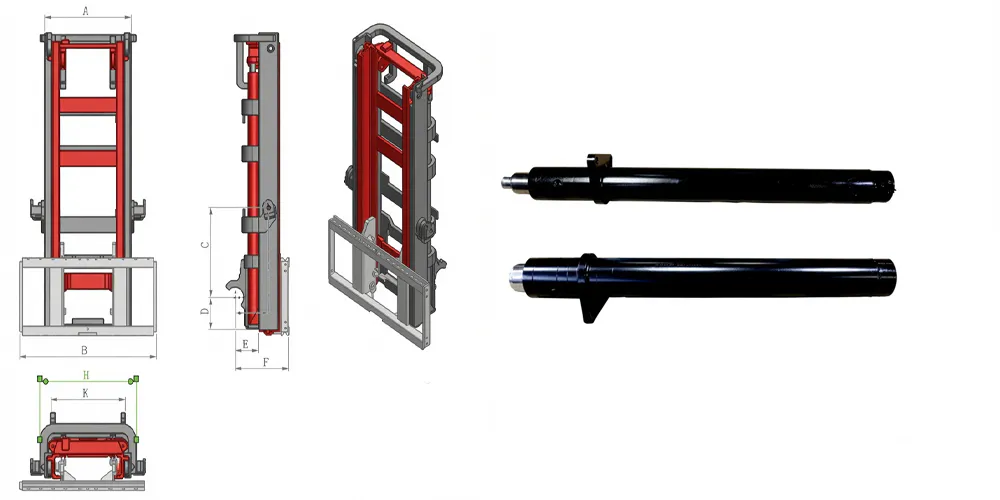
The piston rod, which is the extending member of the forklift lift cylinder, is connected at its upper end to the sprocket seat assembly. The sprocket carries the lift chain, which in turn raises the carriage and forks. This chain-and-sprocket multiplication means the actual carriage travel distance is twice the cylinder stroke in a simplex mast arrangement, or three times in a duplex free-lift configuration — which is why the short-stroke forklift lift cylinder can still produce useful lift heights despite its reduced stroke length. The cylinder bore and rod surface roughness directly affect the efficiency of this transmission: a smooth bore (Ra 0.2 to 0.4 μm) and a hard-chrome piston rod minimize friction and internal leakage, maintaining consistent lift speed and reducing the hydraulic circuit heat generation that shortens fluid and seal life.
The check valve integrated into the forklift lift cylinder assembly (item 4 in the parts list) prevents the carriage from lowering under load when the control valve is in the neutral position. This is a safety-critical function: without it, a leaking control valve or hose failure would allow the loaded carriage to descend uncontrolled. The cylinder also incorporates a guide bush at the rod exit aperture, a dust wiper to exclude contamination from entering the cylinder bore, and a rod seal assembly that prevents hydraulic fluid from leaking along the rod — all elements subject to the wear inspection criteria specified in EN 1726-1 (Safety of industrial trucks) and FEM (Federation Europeenne de la Manutention) maintenance standards applicable across France and EU member states.
The difference between a forklift lift cylinder and a tilt cylinder is a question frequently raised by maintenance teams. The forklift tilt cylinder is a separate, shorter double-acting cylinder mounted between the mast and the vehicle frame. It tilts the entire mast assembly forward or backward to adjust the load angle — improving stability during travel and enabling precise pallet engagement on racking. The forklift lift cylinder, by contrast, operates vertically within the mast and has no mast-tilting function. In a complete forklift hydraulic system, the forklift lift cylinder and the tilt cylinder are served by the same hydraulic power unit but are controlled independently through separate sections of the directional control valve.
7. Materials and Construction Quality
The durability and leak-free service life of the EP forklift hydraulic lift cylinder are determined by the quality of materials used at every stage of manufacture. The following material choices reflect industry-best-practice standards for industrial forklift lift cylinders in European market applications.
The forklift lift cylinder barrel is machined from cold-drawn seamless steel tube in either 20# (low-carbon steel, equivalent to SAE 1020) or 45# (medium-carbon steel, equivalent to SAE 1045). The cold-drawn process produces consistent wall thickness and microstructure, eliminating the porosity and segregation that can occur in hot-rolled tube and that cause premature failure under pressure cycling. After machining, the bore surface undergoes CNC rolling to Ra 0.2 to 0.4 microns — producing the mirror finish that maximizes dynamic seal life and minimizes hydraulic bypass leakage between piston and bore.
The piston rod is manufactured from high-strength alloy steel, heat-treated to achieve the yield strength required to resist buckling under the rated load, and chrome-plated to a minimum thickness of 25 microns of hard chrome (Rockwell C hardness approximately 65 to 70). The hard chrome layer provides corrosion resistance against the water, cleaning agents, and atmospheric humidity present in European warehouse and outdoor yard environments, and its high hardness resists surface damage from wiper seal contact and incidental mechanical contact during fork attachment changes on the forklift lift cylinder.
Both the gland (cylinder head) and piston are machined directly from high-grade ductile iron bar stock (GGG50 or equivalent). Ductile iron provides the combination of tensile strength, impact resistance, and machinability needed for these components, which carry the full hydraulic thrust load and must maintain seal groove dimensions precisely over millions of operating cycles. The direct-machined approach eliminates the dimensional variability that can result from casting-based production, ensuring consistent seal groove tolerances that maintain seal integrity throughout the service life of the forklift lift cylinder.
The dynamic sealing system of the forklift lift cylinder comprises the rod seal, piston seals (twin-lip configuration), O-rings at all static faces, back-rings that prevent seal extrusion under pressure, wear rings that center the piston in the bore, and a dust wiper at the rod entry that excludes particulate contamination. All dynamic seals are sourced from Parker, NOK, Hallite, or BUSAK Shamban — manufacturers whose compounds are tested and approved for compatibility with standard hydraulic mineral oils, fire-resistant hydraulic fluids, and the temperature range of -20 to +80 degrees Celsius encountered in French outdoor and refrigerated warehouse forklift operations.
8. Regulatory Compliance — France and International Markets
Hydraulic cylinders used in industrial forklift and material handling equipment are subject to a layered set of safety, design, and maintenance standards that vary by country and application sector. For procurement engineers and maintenance managers in France sourcing forklift lift cylinders, the following regulatory landscape is relevant.
France and European Union (Machinery Directive 2006/42/EC / EN 1726): Industrial forklift trucks sold or operated in France must comply with the EU Machinery Directive, which requires that power industrial trucks meet the essential health and safety requirements defined in the Directive. EN 1726-1 (Safety of powered industrial trucks — Self-propelled trucks up to and including 10,000 kg capacity) specifically addresses hydraulic system requirements including test pressure criteria (which the EP forklift lift cylinder exceeds at 6,000 PSI), seal performance requirements, and maintenance access provisions. The hydraulic cylinder as a component must be designed and tested to meet these criteria within the assembled truck system.
EN ISO 4413 (Hydraulic Fluid Power — General Rules): This European standard governs the design, construction, and maintenance of hydraulic systems in machinery sold in France and across EU member states. It mandates minimum pressure ratings for hydraulic components (satisfied by the EP forklift lift cylinder 3,000 PSI rating), requires proof pressure testing at 1.5 times working pressure (exceeded by the EP 2:1 test ratio), and specifies sealing material compatibility requirements that the Parker/NOK/Hallite seal system satisfies. EN ISO 4413 compliance is mandatory for CE-marked industrial machinery incorporating a forklift lift cylinder.
FEM (Federation Europeenne de la Manutention) Standards: FEM publishes technical recommendations for forklift hydraulic systems (including FEM 4.004 on hydraulic cylinders for industrial trucks) that are widely referenced by French fleet management organizations. These recommendations specify inspection intervals for forklift lift cylinder seals and chrome rod surfaces, acceptable leakage limits, and replacement criteria — guidelines that align with our 1-year warranty conditions and post-warranty maintenance documentation.
AGMA / ISO International Standards: ISO 9001:2015, ISO 4001, and ISO 45003 certifications cover our quality management, environmental management, and occupational health and safety management systems respectively. These certifications are required by many French and international OEM buyers when qualifying new forklift lift cylinder suppliers for their maintenance supply chains.
OSHA / US Markets: For forklift hydraulic cylinders exported to the United States, OSHA 29 CFR 1910.178 governs the maintenance and inspection of powered industrial trucks. The ANSI/ITSDF B56.1 standard specifies design and performance requirements for forklift hydraulic systems, including cylinder burst pressure and leakage limits that the EP forklift lift cylinder satisfies through its 6,000 PSI factory test protocol.
9. Application Scenarios
The EP forklift lift cylinder is designed for the vertical lift mechanism of industrial forklifts, but its application scope extends across a wide range of material handling equipment and industries. The following scenarios represent the primary use cases where this forklift lift cylinder delivers reliable, long-service performance.
The primary application for the EP forklift hydraulic lift cylinder is in counterbalance forklifts operating in warehousing, distribution, and logistics facilities across France and Europe. From multi-level pallet racking in hypermarket distribution centers near Lyon and Paris to cross-docking operations at French Channel port logistics hubs, counterbalance forklifts with correctly specified forklift lift cylinders handle millions of pallet movements per year. The short-stroke configuration suits simplex masts with lift heights up to 3.5 metres, covering the majority of single-level and double-level racking systems used in French standard-height warehouses.
Reach stackers and heavy counterbalance forklifts at French port facilities — Le Havre, Marseille, Dunkerque — use high-capacity forklift lift cylinders in their mast assemblies for container positioning and intermodal transfer operations. The EP forklift lift cylinder in the larger bore diameter and higher strength configurations handles the sustained pressure cycles and shock loads characteristic of container handling, where loads may be lifted and lowered hundreds of times per shift under heavy weather conditions.
French food and beverage production facilities — from champagne producers in Reims to agricultural processing cooperatives throughout the Normandy and Pays de la Loire regions — use forklifts equipped with forklift free lift cylinders for pallet stacking in production areas where clearance to overhead equipment is limited. The forklift free lift cylinder variant extends the forks before extending the mast, keeping the mast height below the obstruction while still achieving the required lift height — a configuration specifically served by the short-stroke inner forklift lift cylinder design.
Telescopic handlers and rough-terrain forklifts used on French agricultural operations — grain storage facilities, hay bale stacking, and horticultural wholesale depots — use forklift lift cylinders in challenging environments that include crop dust, fertilizer contamination, outdoor temperature extremes, and operation on uneven terrain. The EP forklift lift cylinder chrome rod surface and premium seal system provide the corrosion and contamination resistance needed for reliable performance throughout the French agricultural cycle.
Assembly plant forklifts in French automotive, aerospace, and heavy manufacturing facilities handle sub-assembly components, raw material coils, and finished product loads. These operations often require precise positioning at assembly stations — which is where the consistent speed control of a high-quality forklift lift cylinder with accurate seal clearances becomes operationally significant. A forklift lift cylinder with worn seals will creep under static load, causing the load to descend unpredictably during assembly procedures.
A substantial portion of demand for forklift lift cylinder units comes from the aftermarket — forklift dealers, workshop mechanics, and fleet operators replacing worn or leaking cylinders on existing trucks. The EP forklift lift cylinder OEM replacement program covers the major forklift and excavator brands listed in the compatibility table, allowing workshops in French cities like Paris, Lyon, Toulouse, and Bordeaux to source replacement hydraulic lift cylinder units with confidence in dimensional fit and seal specification compatibility.
10. Compatible Products — Complete Forklift Hydraulic System Supply
The EP forklift lift cylinder is one component in a complete forklift hydraulic system. Sourcing the forklift lift cylinder, tilt cylinder, and associated accessories from a coordinated supplier range reduces installation risk and simplifies maintenance documentation for French fleet management organizations.
The forklift tilt cylinder controls the forward and backward tilt of the mast assembly, enabling precise load angle adjustment for stable travel and accurate pallet engagement. Using a matched tilt cylinder from the same technical supply program as the EP forklift lift cylinder ensures that hydraulic port sizes, operating pressure ratings, and seal specifications are compatible with the existing mast and hydraulic circuit.
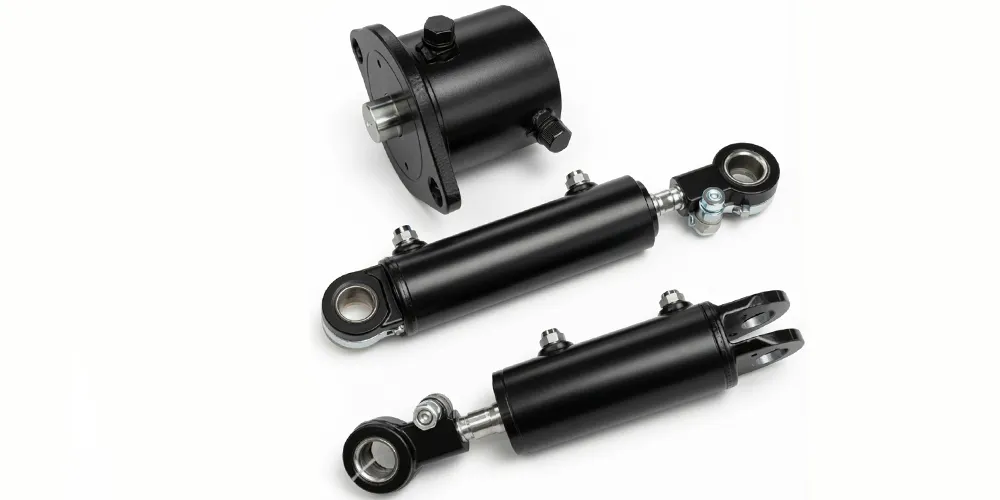
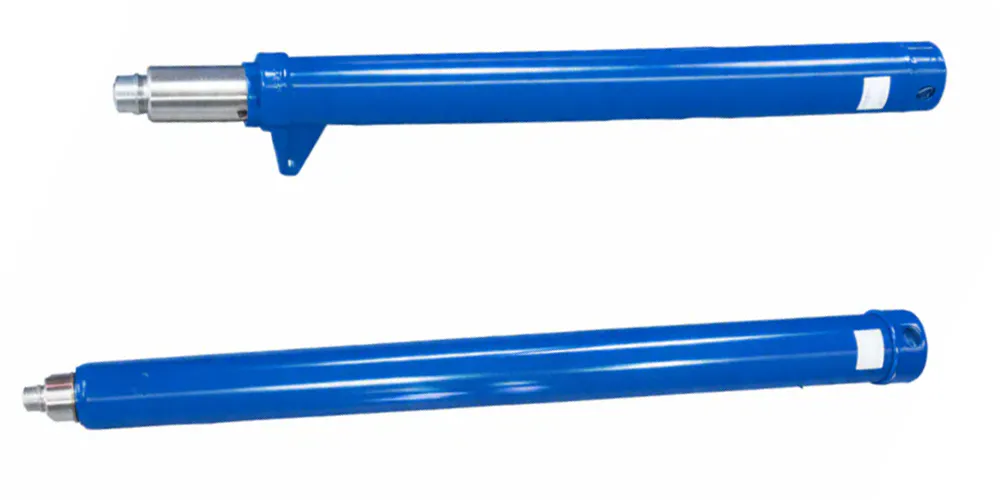
The forklift lifting cylinder range covers additional mast configurations beyond the short-stroke forklift lift cylinder covered on this page, including full free-lift inner cylinders, duplex mast outer cylinders, triplex mast stage cylinders, and side-shift cylinders. For French fleet operators managing diverse forklift types, having access to the full lifting cylinder range from a single supplier alongside the forklift lift cylinder simplifies procurement and reduces the number of approved vendor qualification submissions required.
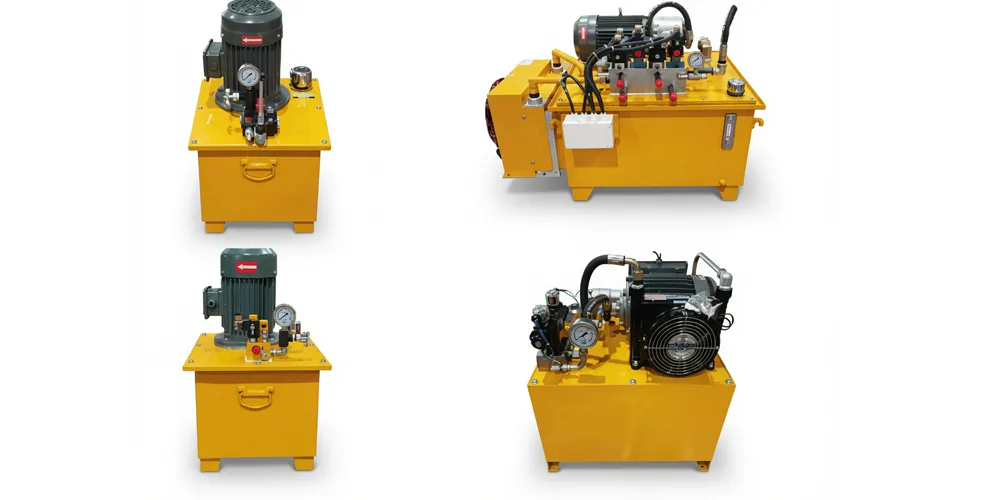
The hydraulic pump station provides the pressurized fluid supply that powers the forklift lift cylinder and tilt cylinder. A correctly specified pump station — matched to the forklift lift cylinder bore areas, rated system pressure, and required lift speed — is essential for consistent forklift performance. Mismatched pump flow rates cause either sluggish lifting or excessive pressure relief valve cycling, both of which increase fuel consumption and heat generation in the hydraulic circuit.
11. About Us
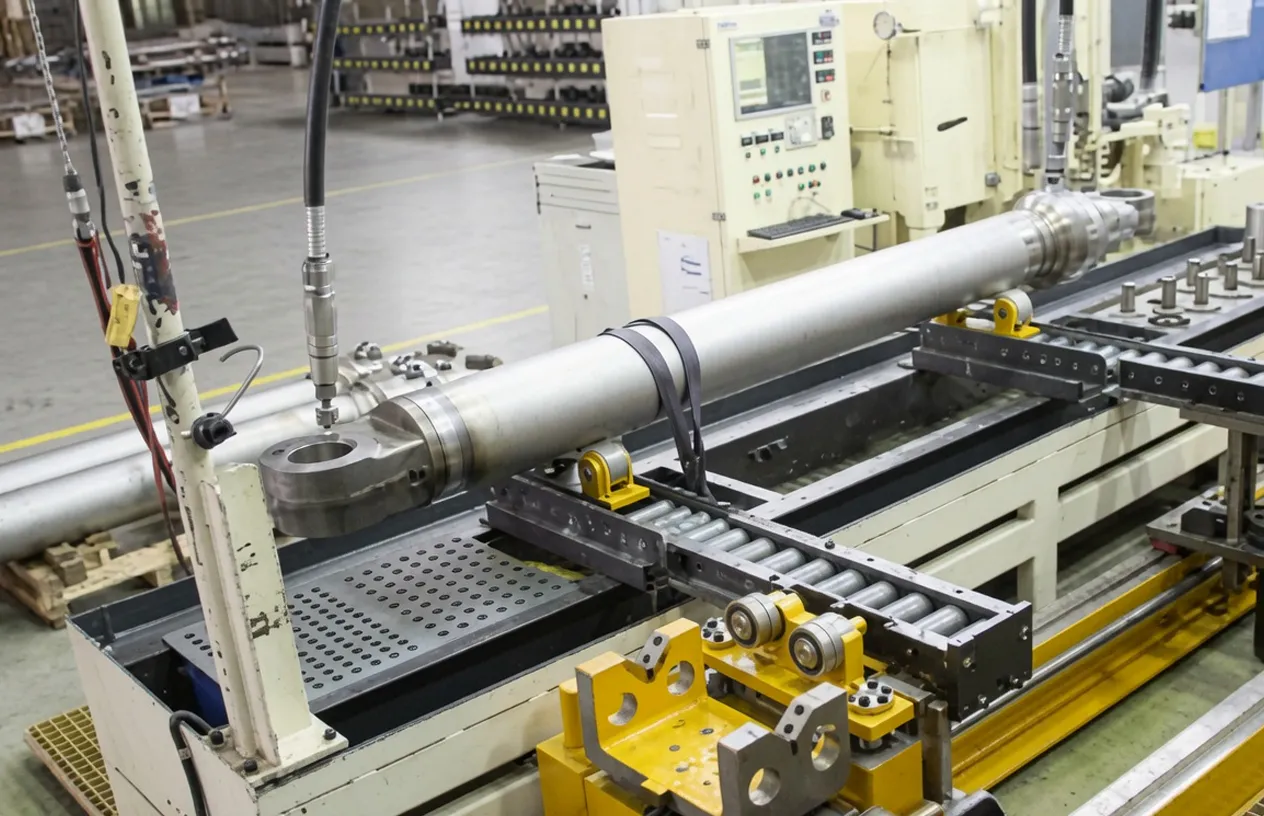
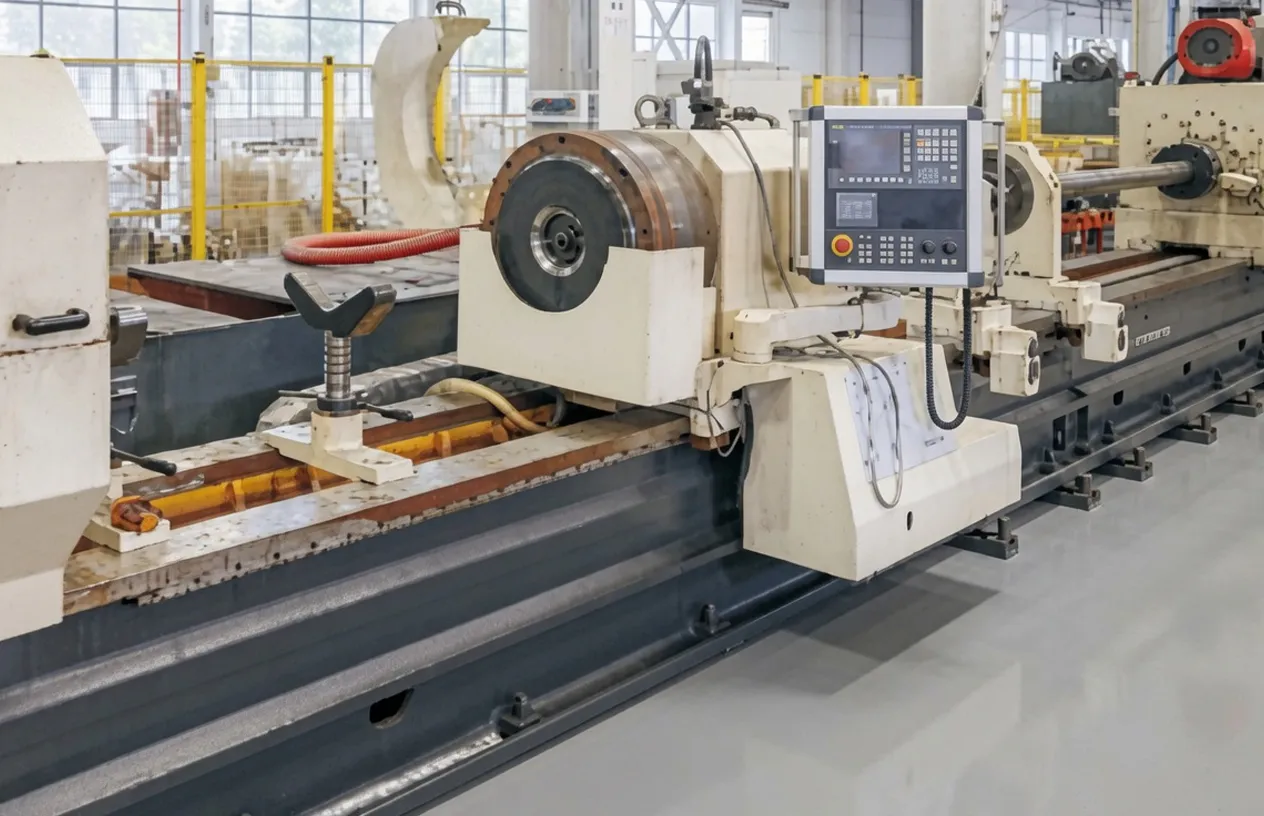
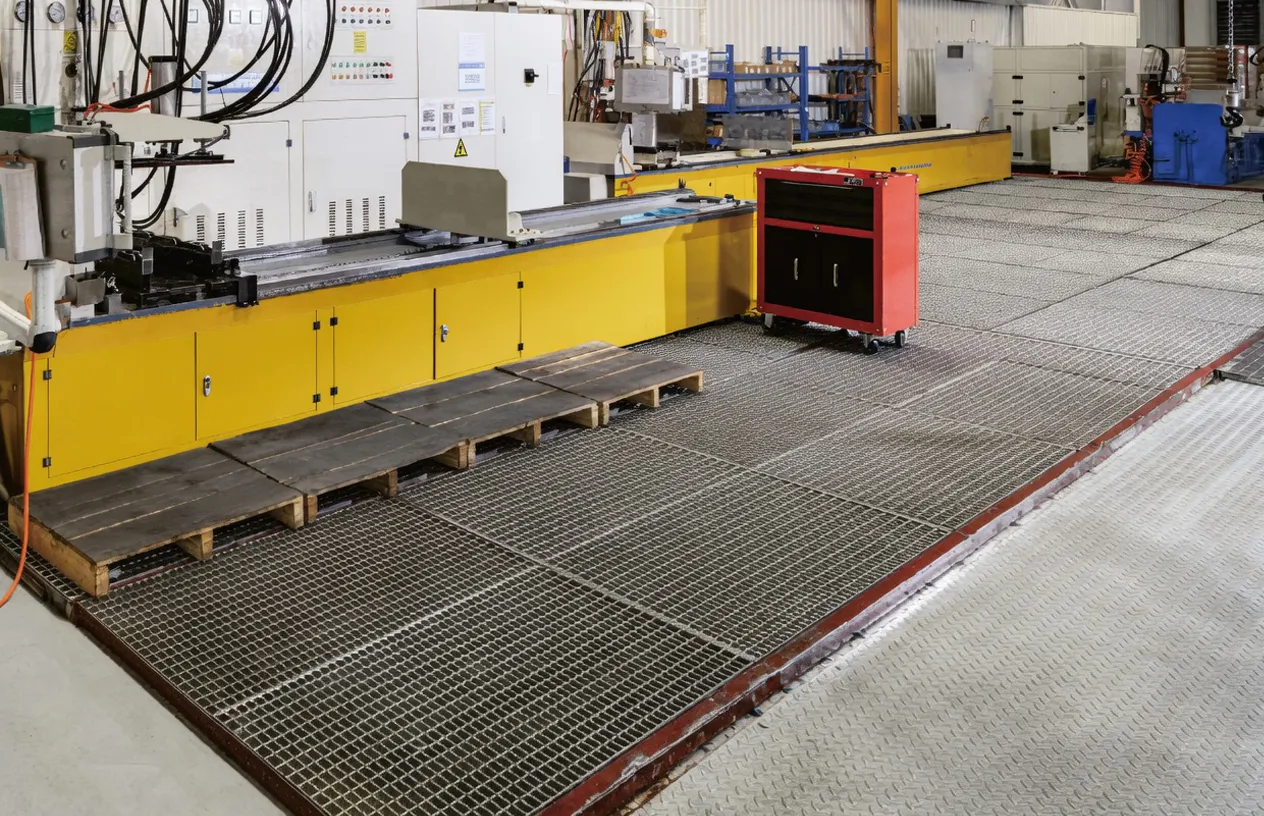
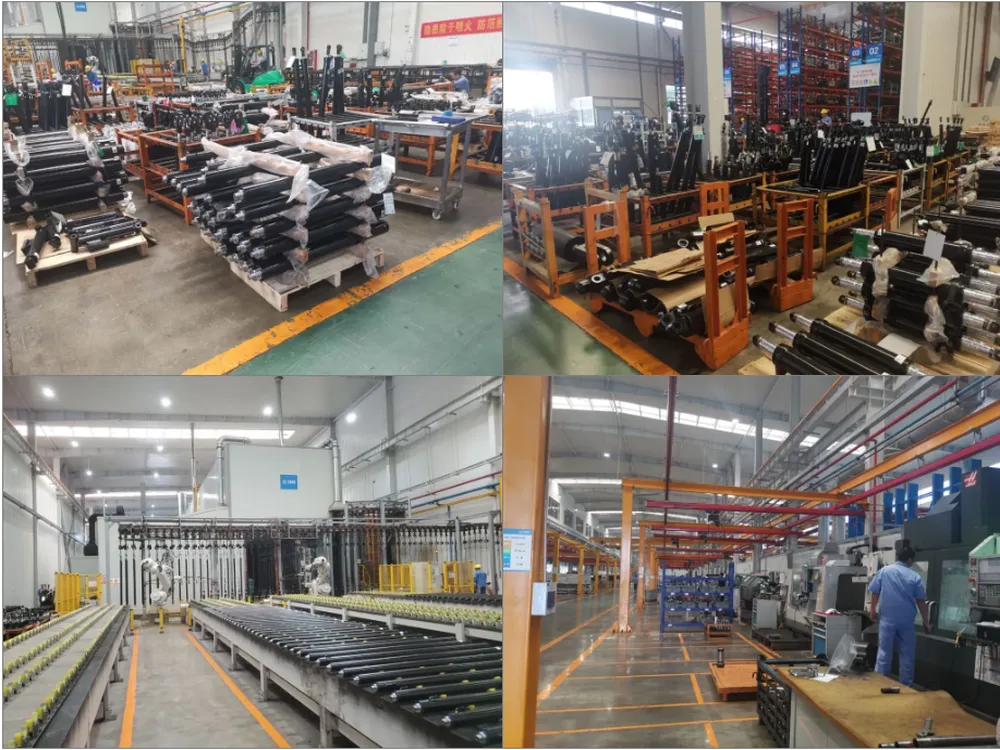
We are a specialist manufacturer and global supplier of industrial hydraulic cylinders, with ISO 9001:2015, ISO 4001, and ISO 45003 certified production facilities. Our product range covers forklift lift cylinders, forklift tilt cylinders, aerial work platform cylinders, agricultural machinery cylinders, construction machinery cylinders, crane cylinders, and sanitation vehicle cylinders. Annual production capacity exceeds 1.2 million pieces, supported by four semi-automatic forklift lift cylinder assembly lines and one fully automatic tilt cylinder assembly line, plus special-purpose cylinder workshops for non-standard configurations.
We supply B2B customers across France, Germany, Italy, Spain, Belgium, Netherlands, and the broader European market, as well as to North America, the Middle East, and Southeast Asia. For French procurement teams and forklift distributors, we provide full export documentation for French customs clearance under the relevant HS codes, with CE-compatible quality certification documentation, material traceability records, and inspection reports meeting the requirements of EN 1726 and EN ISO 4413 technical standards for the forklift lift cylinder.
Technical support — including forklift lift cylinder sizing calculations, seal compatibility verification, and OEM fitment confirmation — is available from our engineering team in English and French for European customers. Minimum order quantity is 1 piece, and prototype or sample orders for new equipment applications can be processed within the sample lead time based on actual cylinder type complexity.
WorkShop
Frequently Asked Questions
Q1. Is there a lift cylinder on every forklift and how does it differ from the mast cylinder used in a French warehousing counterbalance truck?
Q2. What is the lifting part of a forklift called and how does the forklift lift cylinder connect to the fork carriage?
Q3. How does a forklift cylinder work when lowering a heavy load in a cold-store warehouse in France with hydraulic fluid at low temperature?
Q4. How do I remove a lift cylinder from a forklift safely when performing a cylinder replacement at our workshop in Lyon?
Q5. What are the key forklift lifting cylinder parts that typically wear first and what are the replacement intervals in heavy-use French distribution operations?
Q6. Which hydraulic cylinder seal brand is best for a forklift operating in a humid outdoor environment in Bordeaux or Marseille port facilities?
Q7. What is the difference between a forklift free lift cylinder and a standard forklift lift cylinder for low-clearance applications in French manufacturing plants?
Q8. What is the cost impact of specifying a short-stroke forklift lift cylinder versus a full-stroke alternative for a new automated warehouse project in France?
Editor: PXY