
Описание продукта
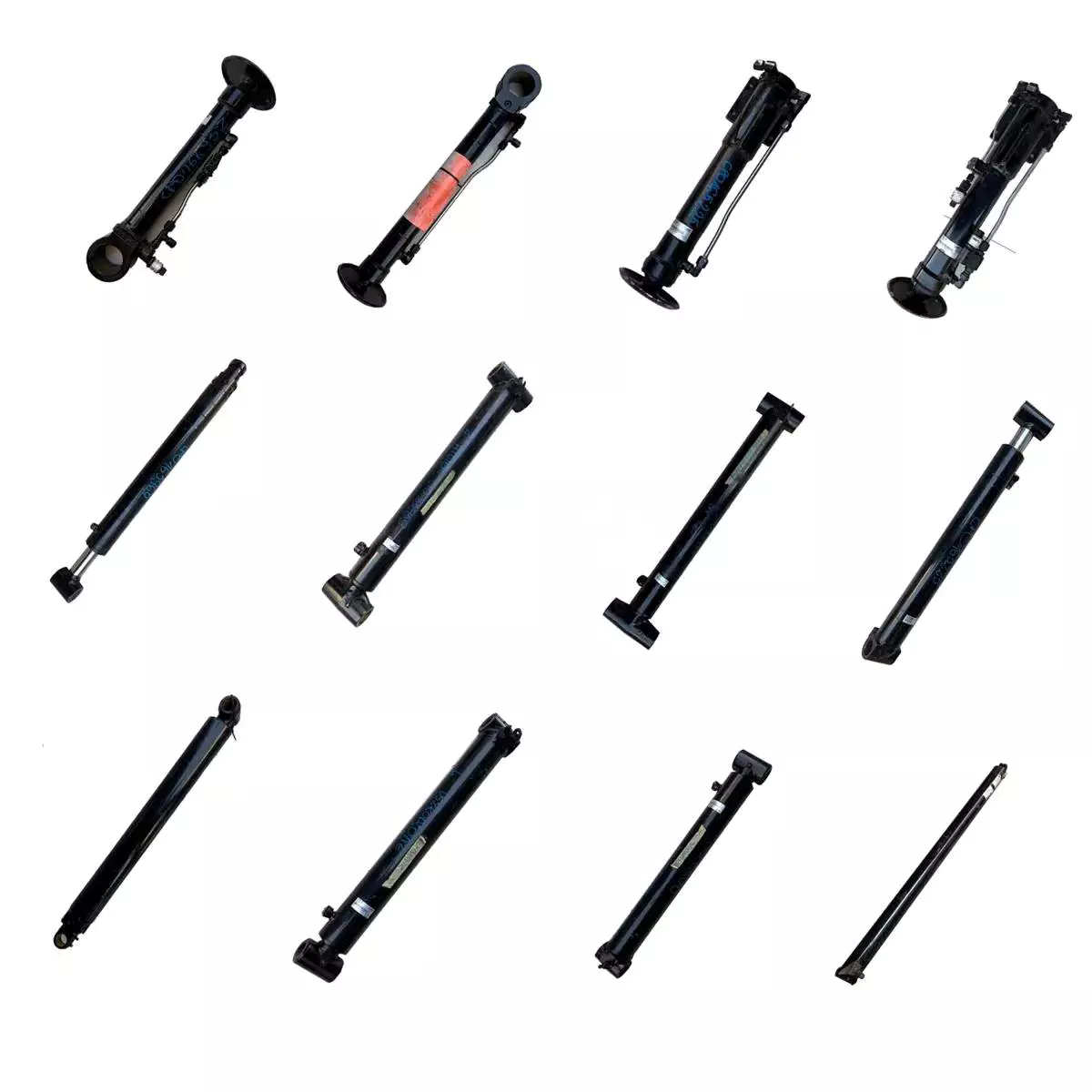
Welded Cross Tube Mouted Agricultural Hydraulic Cylinder
Overview
Quick Details
Condition:
New
Warranty:
1.5 years
Applicable Industries:
Building Material Shops, Manufacturing Plant, Machinery Repair Shops, Food & Beverage Factory, Farms, Energy & Mining
After Warranty Service:
Video technical support, Online support
Local Service Location:
None
Showroom Location:
None
Video outgoing-inspection:
Provided
Machinery Test Report:
Provided
Marketing Type:
Ordinary Product
Warranty of core components:
1 Year
Core Components:
seals
Standard or Nonstandard:
Nonstandard
Structure:
Piston Cylinder
Power:
Hydraulic
Body Material:
Steel
Place of Origin:
China
Brand Name:
CHINAMFG
Color::
Customer Requirement
Seal kits::
Hallite,Parker,NOK, BUSAK SHAMBAN or as customer’s requirement
Tube:
High tensile cold drawn tube, precision honed for extended seal life
Certificate::
ISO9001:2015; CE
Mounting Style::
Customer Requirement
Application::
Farm Machinery
Working Pressure::
10-35Mpa
Hydraulic Cylinde Coating::
Sandblasting, primer paint, middle paint, finish paint
Piston Rod:
Chrome or nickel plated,ground & polished piston rod
Supply Ability
Supply Ability
5000 Piece/Pieces per Month
Packaging & Delivery
Packaging Details
Best Hydraulic oil cylinder Manufacturer:
Carton, Wooden Box, Steel Tower (or according to customers’ requirements) for small hydraulic cylinder
Port
HangZhou or as per customer’s request
Lead Time:
| Quantity(Pieces) | 1 – 50 | >50 |
| Est. Time(days) | 30 | To be negotiated |
/* March 10, 2571 17:59:20 */!function(){function s(e,r){var a,o={};try{e&&e.split(“,”).forEach(function(e,t){e&&(a=e.match(/(.*?):(.*)$/))&&1
| Сертификация: | GS, CE, ISO9001 |
|---|---|
| Давление: | Medium Pressure |
| Рабочая температура: | Нормальная температура |
| Acting Way: | Double Acting |
| Working Method: | Straight Trip |
| Adjusted Form: | Switching Type |
| Customization: | Available |
|
|---|
How do hydraulic cylinders handle the challenges of precise positioning and control?
Hydraulic cylinders are designed to handle the challenges of precise positioning and control with a combination of engineering principles and advanced control systems. These challenges often arise in applications where accurate and controlled movements are required, such as in industrial automation, construction, and material handling. Here’s a detailed explanation of how hydraulic cylinders overcome these challenges:
1. Fluid Power Control:
– Hydraulic cylinders utilize fluid power control to achieve precise positioning and control. The hydraulic system consists of a hydraulic pump, control valves, and hydraulic fluid. By regulating the flow of hydraulic fluid into and out of the cylinder, operators can control the speed, direction, and force exerted by the cylinder. The fluid power control allows for smooth and accurate movements, enabling precise positioning of the hydraulic cylinder and the attached load.
2. Control Valves:
– Control valves play a crucial role in handling the challenges of precise positioning and control. These valves are responsible for directing the flow of hydraulic fluid within the system. They can be manually operated or electronically controlled. Control valves allow operators to adjust the flow rate of the hydraulic fluid, controlling the speed of the cylinder’s movement. By modulating the flow, operators can achieve fine control over the positioning of the hydraulic cylinder, enabling precise and accurate movements.
3. Proportional Control:
– Hydraulic cylinders can be equipped with proportional control systems, which offer enhanced precision in positioning and control. Proportional control systems utilize electronic feedback and control algorithms to precisely regulate the flow and pressure of the hydraulic fluid. These systems provide accurate and proportional control over the movement of the hydraulic cylinder, allowing for precise positioning at various points along its stroke length. Proportional control enhances the cylinder’s ability to handle complex tasks that require precise movements and control.
4. Position Feedback Sensors:
– To achieve precise positioning, hydraulic cylinders often incorporate position feedback sensors. These sensors provide real-time information about the position of the cylinder’s piston rod. Common types of position feedback sensors include potentiometers, linear variable differential transformers (LVDTs), and magnetostrictive sensors. By continuously monitoring the position, the feedback sensors enable closed-loop control, allowing for accurate positioning and control of the hydraulic cylinder. The feedback information is used to adjust the flow of hydraulic fluid to achieve the desired position accurately.
5. Servo Control Systems:
– Advanced hydraulic systems employ servo control systems to handle the challenges of precise positioning and control. Servo control systems combine electronic control, position feedback sensors, and proportional control valves to achieve high levels of accuracy and responsiveness. The servo control system continuously compares the desired position with the actual position of the hydraulic cylinder and adjusts the flow of hydraulic fluid to minimize any positional error. This closed-loop control mechanism enables the hydraulic cylinder to maintain precise positioning and control, even under varying loads or external disturbances.
6. Integrated Automation:
– Hydraulic cylinders can be integrated into automated systems to achieve precise positioning and control. In such setups, the hydraulic cylinders are controlled by programmable logic controllers (PLCs) or other automation controllers. These controllers receive input signals from various sensors and use pre-programmed logic to command the hydraulic cylinder’s movements. The integration of hydraulic cylinders into automated systems allows for precise and repeatable positioning and control, enabling complex sequences of movements to be executed with high accuracy.
7. Advanced Control Algorithms:
– Advancements in control algorithms have also contributed to the precise positioning and control of hydraulic cylinders. These algorithms, such as PID (Proportional-Integral-Derivative) control, adaptive control, and model-based control, enable sophisticated control strategies to be implemented. These algorithms consider factors such as load variations, system dynamics, and environmental conditions to optimize the control of hydraulic cylinders. By employing advanced control algorithms, hydraulic cylinders can compensate for disturbances and achieve precise positioning and control over a wide range of operating conditions.
In summary, hydraulic cylinders overcome the challenges of precise positioning and control through the use of fluid power control, control valves, proportional control, position feedback sensors, servo control systems, integrated automation, and advanced control algorithms. By combining these elements, hydraulic cylinders can achieve accurate and controlled movements, enabling precise positioning and control in various applications. These capabilities are essential for industries that require high precision and repeatability in their operations, such as industrial automation, robotics, and material handling.
Достижения в технологии гидроцилиндров, повышающие коррозионную стойкость
Достижения в области технологий гидроцилиндров привели к значительному повышению коррозионной стойкости. Коррозия является серьёзной проблемой для гидравлических систем, особенно в условиях, когда цилиндры подвергаются воздействию влаги, химикатов или едких веществ. Эти достижения направлены на повышение прочности и долговечности гидроцилиндров. Давайте рассмотрим некоторые ключевые достижения в области технологий гидроцилиндров, которые повысили коррозионную стойкость:
- Коррозионностойкие материалы: Использование коррозионно-стойких материалов — фундаментальное достижение в технологии гидроцилиндров. Например, нержавеющая сталь обладает превосходной стойкостью к коррозии, что делает её популярным материалом для использования в морской, шельфовой и других коррозионных средах. Кроме того, достижения в металлургии привели к разработке специализированных сплавов и покрытий, обеспечивающих повышенную коррозионную стойкость и продлевающих срок службы гидроцилиндров.
- Обработка поверхности и покрытия: Для защиты гидроцилиндров от коррозии разработаны различные методы обработки поверхности и покрытия. К таким методам относятся гальванизация, цинкование, порошковая окраска и специальные антикоррозионные покрытия. Эти покрытия создают барьер между поверхностью цилиндра и коррозионными агентами, предотвращая прямой контакт и замедляя развитие коррозии. Выбор подходящего покрытия зависит от конкретной области применения и условий окружающей среды.
- Технология герметизации: Эффективные системы герметизации играют решающую роль в предотвращении попадания воды, влаги и загрязнений в цилиндр и возникновения коррозии. Развитие технологий герметизации привело к созданию высококачественных уплотнений и усовершенствованных конструкций, обеспечивающих превосходную коррозионную стойкость. Эти уплотнения, как правило, изготавливаются из материалов, специально разработанных для работы в агрессивных средах, что обеспечивает их долговечность и минимизирует риск возникновения проблем, связанных с коррозией.
- Улучшенная отделка поверхности: Отделка поверхности гидравлических цилиндров играет важную роль в их коррозионной стойкости. Развитие технологий механической обработки и полировки позволило добиться более гладкой и однородной поверхности. Более гладкие поверхности снижают вероятность возникновения коррозии и облегчают очистку и обслуживание гидравлических цилиндров. Кроме того, для дальнейшего повышения коррозионной стойкости могут применяться специальные методы обработки, такие как пассивация или химическая обработка.
- Особенности защиты окружающей среды: Гидроцилиндры могут быть оснащены дополнительными элементами защиты от коррозии. К ним относятся защитные чехлы, сильфоны или щитки, защищающие уязвимые участки от воздействия коррозионных веществ. Благодаря включению этих защитных элементов в конструкцию гидроцилиндры могут выдерживать суровые условия и минимизировать риск коррозионных повреждений.
Подводя итог, можно сказать, что достижения в области технологий гидроцилиндров значительно повысили коррозионную стойкость. Использование коррозионно-стойких материалов, современных методов обработки поверхности и покрытий, инновационных технологий герметизации, улучшенной отделки поверхностей и внедрение защитных функций от воздействия окружающей среды способствовали повышению прочности и долговечности гидроцилиндров в коррозионных средах. Эти достижения обеспечивают надежную работу и снижают затраты на техническое обслуживание и замену, связанные с коррозией.
How do hydraulic cylinders handle variations in load, pressure, and speed?
Hydraulic cylinders are designed to handle variations in load, pressure, and speed effectively. They incorporate features and components that allow them to adapt to changing operating conditions and maintain optimal performance. Here’s a detailed explanation of how hydraulic cylinders handle variations in load, pressure, and speed:
Variations in Load:
– Hydraulic cylinders are capable of handling variations in load by adjusting the force they exert. The force output of a hydraulic cylinder is determined by the hydraulic pressure and the surface area of the piston. When the load increases, the pressure in the hydraulic system can be adjusted to generate a higher force. This adjustment can be achieved by regulating the flow of hydraulic fluid into the cylinder using control valves. By controlling the pressure and flow, hydraulic cylinders can adapt to different load requirements, ensuring that the force applied is sufficient to handle the load while preventing excessive force that could cause damage.
Variations in Pressure:
– Hydraulic cylinders are designed to handle variations in pressure within the hydraulic system. They are equipped with seals and other components that can withstand high-pressure conditions. When the pressure within the hydraulic system fluctuates, the hydraulic cylinder adjusts accordingly to maintain its performance. The seals prevent fluid leakage and ensure that the hydraulic pressure is effectively transmitted to the piston, allowing the cylinder to generate the required force. Additionally, hydraulic systems often incorporate pressure relief valves and other safety mechanisms to protect the cylinder and the entire system from overpressure conditions.
Variations in Speed:
– Hydraulic cylinders can handle variations in speed through the control of hydraulic fluid flow. The speed of a hydraulic cylinder’s extension or retraction is determined by the rate at which hydraulic fluid enters or exits the cylinder. By adjusting the flow rate using flow control valves, the speed of the cylinder’s movement can be regulated. This allows for precise control over the speed, enabling operators to adapt to varying speed requirements based on the specific task or load. Furthermore, hydraulic systems can incorporate flow control valves with adjustable orifice sizes to fine-tune the speed of the cylinder’s movement.
Load-Sensing Technology:
– Advanced hydraulic systems may incorporate load-sensing technology to further enhance the ability of hydraulic cylinders to handle variations in load, pressure, and speed. Load-sensing systems monitor the load demand and adjust the hydraulic pressure and flow accordingly to meet that demand. This technology ensures that the hydraulic cylinder provides the necessary force while optimizing energy efficiency. Load-sensing systems are particularly beneficial in applications where the load requirements can vary significantly, allowing hydraulic cylinders to adapt in real-time and maintain precise control over force and speed.
Accumulators:
– Hydraulic systems can also utilize accumulators to assist in handling variations in load, pressure, and speed. Accumulators store hydraulic fluid under pressure, which can be released when needed to supplement the flow and pressure in the system. When there are sudden increases in load or pressure demands, accumulators can provide additional fluid to the hydraulic cylinder, ensuring smooth operation and preventing pressure drops. Similarly, accumulators can assist in maintaining consistent speed by compensating for fluctuations in flow rate. They act as a supplemental energy source, helping hydraulic cylinders respond effectively to variations in operating conditions.
In summary, hydraulic cylinders handle variations in load, pressure, and speed through various mechanisms and components. They can adjust the force output to accommodate different load requirements by regulating hydraulic pressure. The seals and components within hydraulic cylinders allow them to withstand variations in pressure within the hydraulic system. By controlling the flow of hydraulic fluid, hydraulic cylinders can regulate the speed of their movement. Advanced technologies such as load-sensing systems and the use of accumulators further enhance the adaptability of hydraulic cylinders to changing operating conditions. These features and mechanisms enable hydraulic cylinders to maintain optimal performance and provide reliable force and motion control in a wide range of applications.


editor by CX 2024-01-30