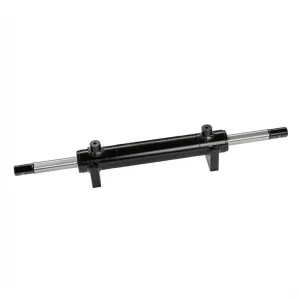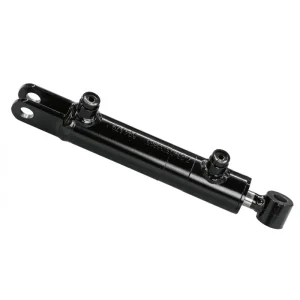
EP-Φ63×Φ35×320 스티어링 실린더
The EP-Φ63×Φ35×320 Steering Cylinder is a high-performance steering cylinder designed for aerial work vehicles. It features a 63 mm bore, 35 mm rod diameter, and a 320 mm stroke, with an installation distance of 540 mm and a weight of 13 kg. Rated for a working pressure of 21 MPa and capable of withstanding up to 32 MPa, this cylinder ensures reliable operation under demanding conditions. Its robust construction and precise engineering make it ideal for applications requiring accurate steering control in elevated platforms. This product adheres to industry standards, offering durability and efficiency for heavy-duty use.
Heavy-Duty Hydraulic Cylinder Range
EP-Φ63×Φ35×320 스티어링 실린더
Model: HCYY11112012 · Single-Rod Clevis-Mount Hydraulic Steering Cylinder · 21MPa Rated Pressure · ISO 6020 / CE Documentation Available
Rod Φ35mm
320mm Stroke
13 kg
1. Technical Specifications & Performance Parameters
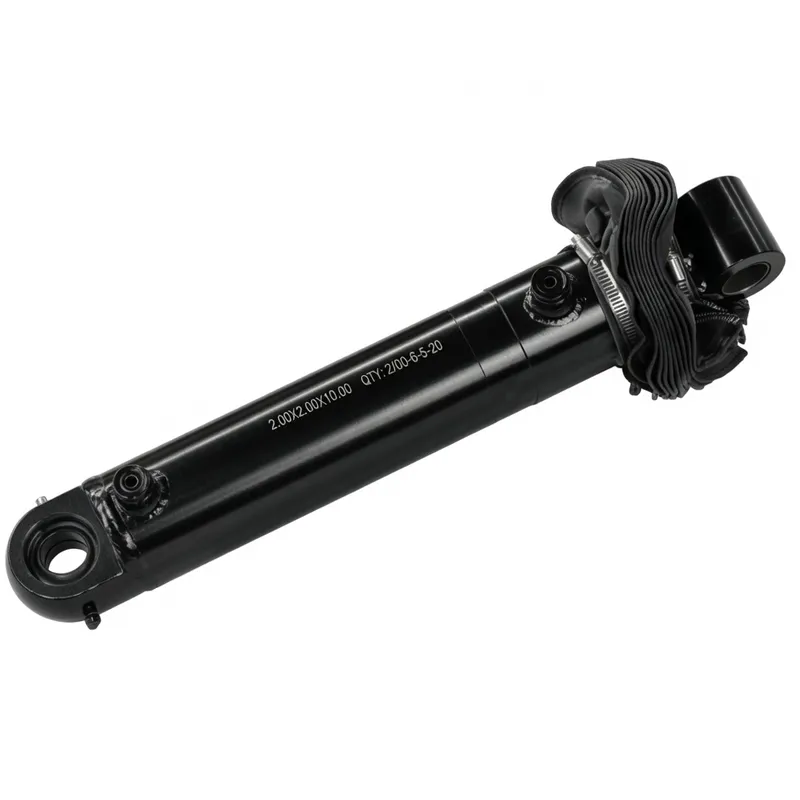
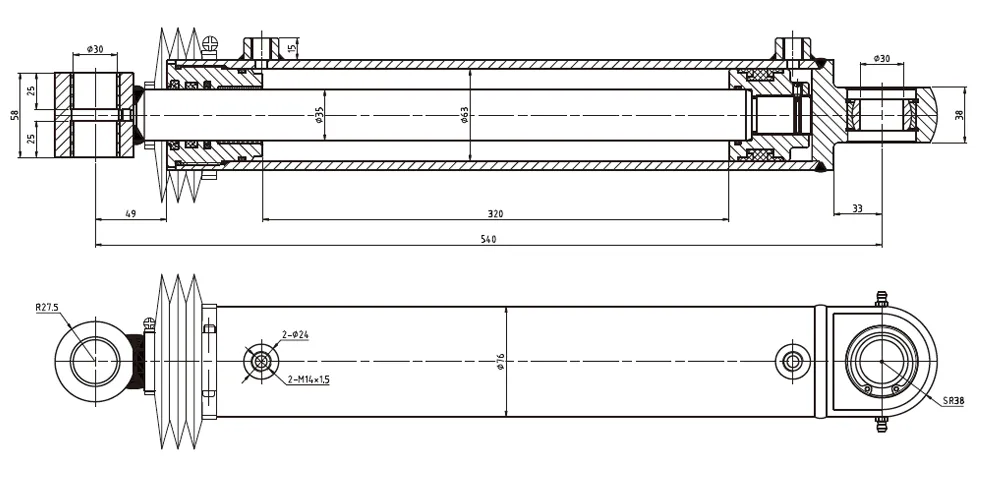
The dimensional and pressure data below reflects the HCYY11112012 specification sheet. The clevis rod-eye and base-eye mounting configuration, combined with the bellows dust boot, suits exposed installation positions on heavy mobile equipment.
| Parameter | Value / Specification | Notes |
|---|---|---|
| Cylinder Model | HCYY11112012 | OEM part reference |
| Specification | Φ63×Φ35×320 | Bore Φ63mm · Rod Φ35mm · Stroke 320mm |
| Cylinder Type | Single-Rod Double-Acting Hydraulic Steering Cylinder | Clevis rod-eye and base-eye mount |
| Working Pressure | 21 MPa (210 bar) | Rated continuous operating pressure |
| Maximum Withstand Pressure | 32 MPa (320 bar) | Hydrostatic burst-test pressure |
| Trip (Stroke) | 320 mm | Full single-direction piston travel |
| Installation Distance | 540 mm | Fully retracted eye-to-eye distance |
| Weight | 13 kg | Approximate dry mass |
| Bore Diameter | Φ63 mm | Internal cylinder bore |
| Rod Diameter | Φ35 mm | Hard-chrome plated piston rod |
| Mount Type | Clevis Eye (Rod End & Base End) | Pin-mounted swivel connection |
| Rod Protection | Rubber Bellows Dust Boot | Shields rod and seal area from contamination |
| Theoretical Push Force (at 21MPa) | ≈ 65.4 kN | Calculated from bore area × working pressure |
| Theoretical Pull Force (at 21MPa) | ≈ 45.2 kN | Calculated from annulus area × working pressure |
| Overall Body Length (Retracted) | ~540 mm | Clevis pin centre to clevis pin centre |
2. About Our High-Pressure Steering Cylinder for Heavy Mobile Equipment
The EP-Φ63×Φ35×320 is a heavy-duty steering cylinder built for off-highway and industrial vehicles that require substantially more steering force than the compact actuators used on light aerial platforms. As a single-rod clevis-mount hydraulic steering cylinder, this unit features a generous 320mm stroke length and a 63mm bore that together deliver the linear travel and force margin needed for larger steering axles, articulated frame joints, and heavy-load wheeled machinery. French and broader European equipment distributors specifying a steering cylinder for sale in the medium-to-heavy equipment segment will find this model addresses a clear gap between compact aerial-platform actuators and very large construction-grade cylinders.
Rated for 21MPa continuous working pressure with a 32MPa maximum withstand rating, the HCYY11112012 steering cylinder offers more than 50% greater pressure capacity than lighter-duty aerial work platform actuators, reflecting its intended use on articulated loaders, agricultural machinery, telehandlers, and industrial material handling vehicles. The 540mm installation distance and 13kg mass place this unit firmly in the medium-bore category of hydraulic cylinder components, balancing manageable installation weight against the higher load capacity that 21MPa-rated equipment demands.
This steering cylinder is built to ISO 6020-2 mounting dimension standards and ISO 10766 seal groove geometry, with CE technical documentation available to support EU Machinery Directive 2006/42/EC compliance assessments. The bellows-type protective boot fitted over the rod end shields the chrome-plated piston rod from dust, mud, and abrasive debris — a feature particularly relevant for agricultural and construction equipment operating in the variable field and site conditions found across France and neighbouring European countries.
3. Five Key Advantages of This Steering Cylinder
A 320mm stroke gives this steering cylinder significantly more angular travel than compact units used on small platforms, allowing it to manage the wider lock-to-lock range required by larger steering knuckles and articulated frame joints. This makes the unit suitable as a steering cylinder assembly on telehandlers, wheel loaders, and agricultural tractors where tight-radius manoeuvring depends on adequate rod travel.
At 21MPa rated working pressure and 32MPa maximum withstand capacity, this hydraulic steering cylinder handles the higher hydraulic system pressures typical of medium and heavy off-highway equipment. This pressure class allows the steering cylinder to deliver strong steering force from a relatively compact 63mm bore, keeping the overall steering cylinder assembly weight manageable while still meeting the load demands of articulated machinery.
The rubber bellows dust boot fitted over the rod end is a deliberate design choice for a steering cylinder intended for exposed outdoor service. It shields the hard-chrome rod surface and primary seal from mud, dust, gravel chips, and agricultural debris, substantially reducing the rate of seal and rod wear compared to an unprotected steering ram cylinder operating in the same field or worksite conditions.
The clevis eye mount at both rod and base ends allows this power steering cylinder to pivot freely as the steering linkage geometry changes through its full range of motion — a requirement for articulated-frame loaders and tractors where the cylinder mounting points are not fixed in a single plane. This pin-and-eye configuration is standard practice across European heavy equipment manufacturing and simplifies field replacement.
Manufactured to ISO 6020-2 mounting dimension standards with seal groove geometry per ISO 10766, this steering cylinder is dimensionally interchangeable with comparable units from other ISO-compliant manufacturers. Full hydrostatic test certificates and material traceability documentation accompany every unit, supporting CE technical file preparation for French and EU equipment manufacturers and importers.
4. Working Principle of the Steering Cylinder
The HCYY11112012 steering cylinder functions as a single-rod, double-acting hydraulic steering cylinder. Hydraulic fluid supplied by the vehicle's steering control valve enters the cap-end port to drive the piston and rod outward in the extending stroke, displacing fluid from the rod-end chamber back to the reservoir or directional control valve. When the control valve reverses flow direction, pressurised fluid enters the rod-end port and the larger cap-end chamber becomes the return path, drawing the rod back in the retracting stroke. Because the cap-end area is larger than the rod-end annulus, this steering hydraulic cylinder produces greater force on the extend stroke than the retract stroke for a given supply pressure — a standard characteristic of single-rod cylinder design that steering system engineers account for when sizing the hydraulic pump and control valve.
In a typical articulated-frame application, this same steering cylinder connects between the front and rear chassis sections of the vehicle, with the base-end clevis pinned to one chassis half and the rod-end clevis pinned to the other. As the operator commands a turn, the control valve directs flow to extend the cylinder on one side of the articulation joint while a second cylinder (or the same unit acting in reverse, depending on configuration) retracts on the opposite side, rotating the front chassis section relative to the rear about the central articulation pivot. This is the same fundamental principle used in wheel loaders, articulated dump trucks, and many telehandlers, where the steering ram cylinder pair effectively steers the entire machine by bending it at the centre joint rather than turning individual wheels.
On this steering cylinder, the bellows dust boot moves concertina-style with the rod as it extends and retracts, maintaining a continuous physical barrier between the external environment and the rod surface at every point in the stroke. This is particularly important at full extension, when the maximum length of chrome rod surface is exposed and therefore most vulnerable to contamination ingress. By preventing abrasive particles from reaching the rod seal interface, the bellows boot extends the practical service interval of this steering cylinder well beyond what an unprotected design would achieve in similar operating conditions.
5. Material Composition & Construction Quality
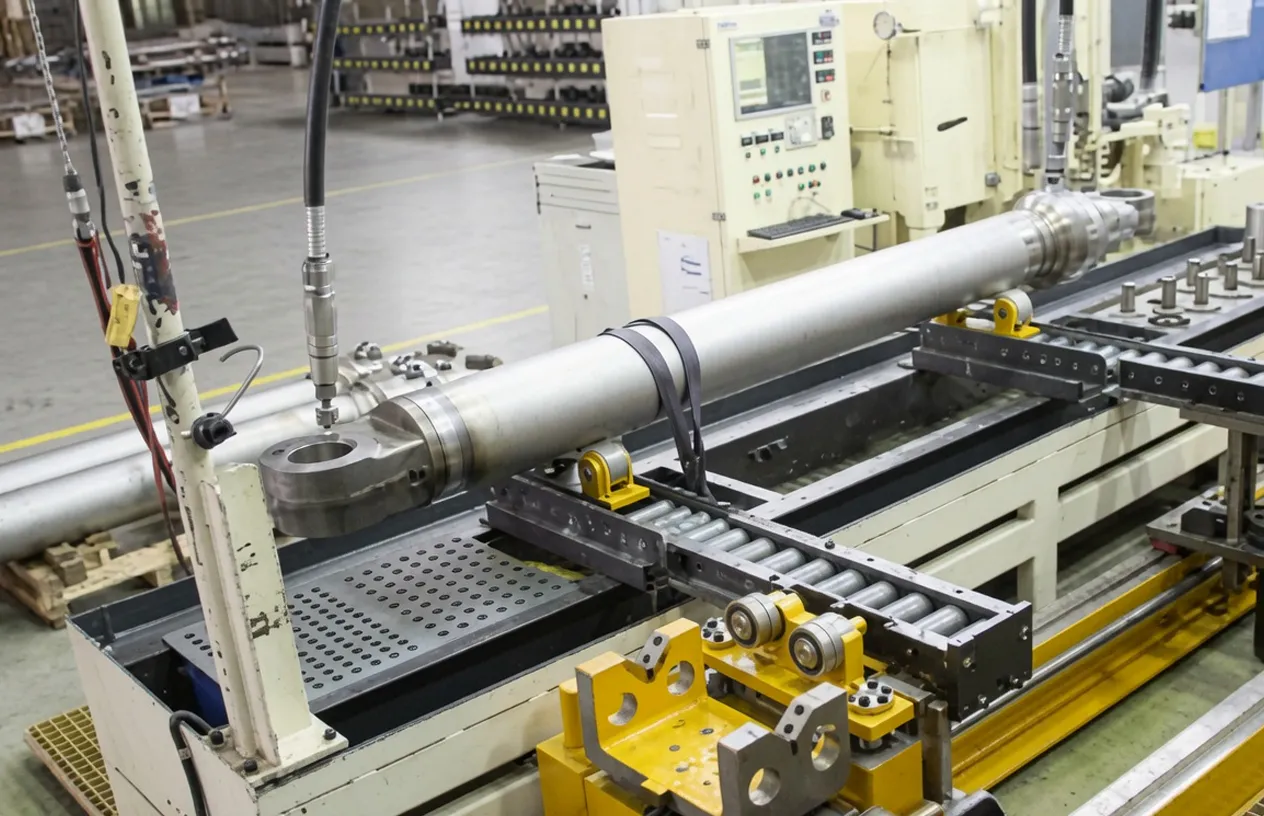
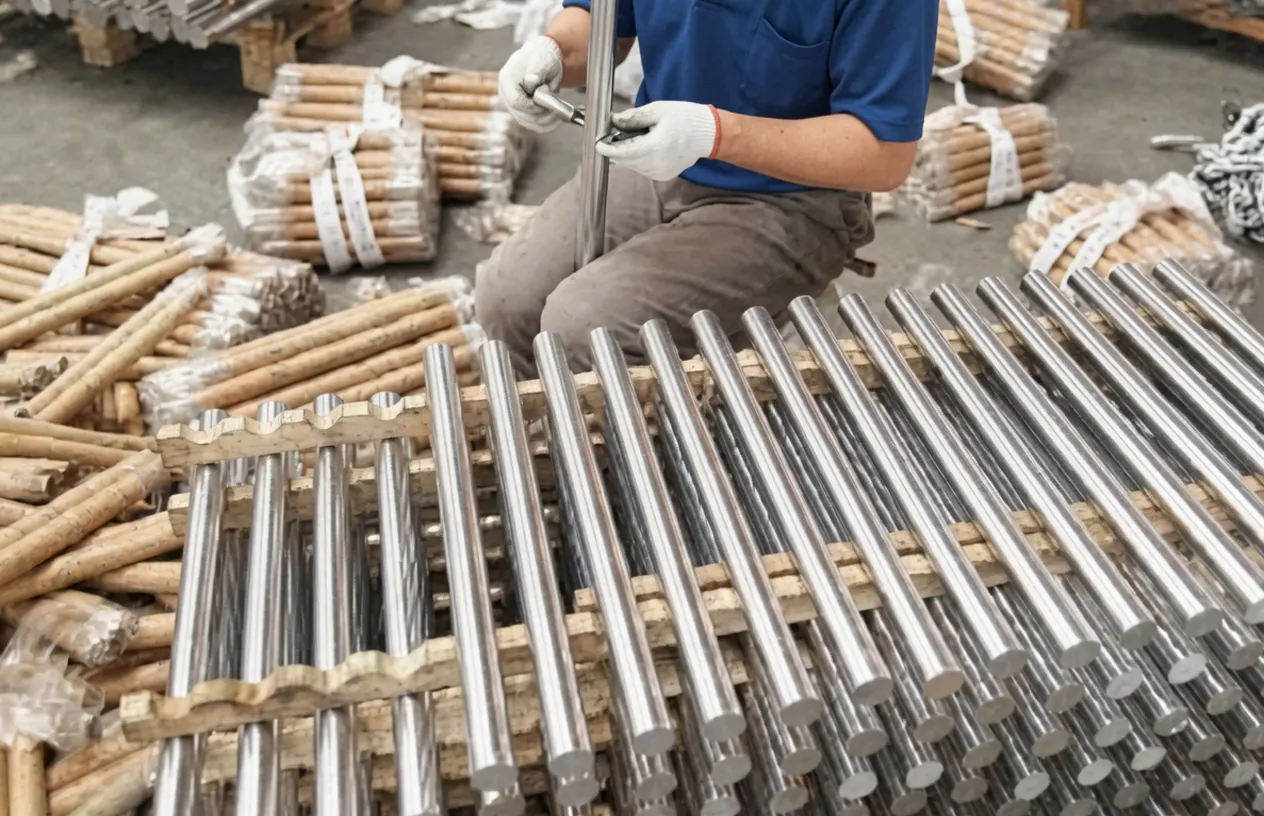
The cylinder tube of this steering cylinder steering cylinder is manufactured from seamless cold-drawn precision steel tubing, internally honed to a controlled cross-hatch surface finish that supports long-term seal performance and minimises internal leakage past the piston. The piston rod is forged from 40Cr alloy steel, quenched and tempered to a core hardness suited to the bending and compressive loads typical of steering applications, then ground and hard-chrome plated to a minimum 25μm thickness for corrosion resistance and wear protection at the dynamic seal interface.
On this steering cylinder, the clevis mounting eyes at both rod and base ends are forged or precision-cast from medium-carbon steel and bored to accept hardened steel mounting pins with bronze or self-lubricating composite bushings, reducing pin wear and play over the service life of the steering cylinder assembly. Seal selection includes a polyurethane piston seal, PTFE-based rod seal, and a buffer seal positioned ahead of the primary rod seal to manage pressure spikes — a configuration well suited to the higher 21MPa pressure class of this unit compared to lighter aerial-platform actuators.
On this steering cylinder, external surfaces receive a phosphate pre-treatment followed by a baked enamel or powder-coat finish, providing a corrosion barrier appropriate for outdoor agricultural and construction equipment exposed to rain, mud, and seasonal temperature variation across France and Northern Europe. On this steering cylinder, the rubber bellows boot is moulded from oil-resistant synthetic rubber compound rated for continuous service from −30°C to +90°C, ensuring the protective function is maintained through the full range of European seasonal operating temperatures encountered by tractors, loaders, and other heavy mobile equipment fitted with this hydraulic steering cylinder.
6. Application Scenarios
The HCYY11112012 steering cylinder is designed for medium-to-heavy mobile equipment where steering force, stroke length, and pressure rating exceed what compact aerial-platform actuators can provide. Typical deployment scenarios are described below.
Articulated Wheel Loaders
Compact and mid-size wheel loaders use a pair of articulation cylinders mounted between the front and rear chassis halves to steer the entire machine by bending at the central pivot. The 320mm stroke and 21MPa pressure rating of this steering cylinder match the force and travel requirements of wheel loaders commonly used in French agricultural cooperatives, municipal works departments, and quarry operations.
Telehandlers & Rough-Terrain Forklifts
Telehandlers operating on French construction sites and farms frequently use rear-wheel or all-wheel steering systems where a forklift steering cylinder of this bore and stroke class provides the lock angle needed for crab-steer and coordinated-steer modes. The bellows-protected rod is particularly valuable on telehandlers, which routinely operate in muddy or dusty conditions where rod contamination is a leading cause of premature seal failure.
Agricultural Tractors & Implements
Larger agricultural tractors and self-propelled sprayers used throughout French farming regions rely on a robust steering hydraulic cylinder to manage front-axle steering under varying ground conditions and implement loads. The 13kg unit weight and 540mm installation distance correspond closely to the steering axle geometry found on mid-horsepower tractor platforms, making this a practical replacement steering cylinder option for agricultural equipment dealers and repair workshops.
Skid-Steer & Compact Track Loaders
While many skid-steer loaders steer through differential wheel speed rather than a dedicated cylinder, certain compact track loader and articulated mini-loader designs in the European market incorporate a centrally mounted steering assist cylinder to reduce operator effort and improve directional stability at higher travel speeds. This Φ63 bore unit fits the mid-range force requirements of that equipment category.
Industrial & Port Material Handling Equipment
Heavy-duty reach stackers, container handlers, and port yard tractors operating at French logistics hubs require steering cylinder parts rated for sustained high-cycle use under significant axle loads. The 21MPa working pressure and reinforced clevis mounting of this unit are well suited to the demanding duty cycles found in continuous port and terminal operations.
Aftermarket Replacement & Fleet Maintenance
As a dimensionally matched replacement steering cylinder for the HCYY11112012 reference, this unit supports French and European aftermarket repair networks servicing wheel loaders, telehandlers, and tractors. A complete steering cylinder seal kit is available separately for workshops that prefer to rebuild an existing unit rather than replace the full steering cylinder assembly, reducing repair cost where the cylinder tube and rod remain in serviceable condition.
7. Regulatory Compliance — France & International Standards
European Union — Machinery Directive 2006/42/EC: Heavy mobile equipment such as wheel loaders, telehandlers, and agricultural tractors sold within France and the EU must carry CE marking under the Machinery Directive, with the steering system treated as a safety-relevant function under the Directive's essential health and safety requirements. As a critical component of the steering circuit, this steering cylinder is supplied with hydrostatic test certification and dimensional inspection records that support the technical documentation file required for CE conformity assessment.
France — Agricultural Machinery Regulations: French agricultural equipment is additionally subject to type-approval and roadworthiness requirements administered through the Direction Générale de la Concurrence, de la Consommation et de la Répression des Fraudes (DGCCRF) for equipment used on public roads, alongside general machinery safety obligations under the Code du Travail. Steering system components, including this steering hydraulic cylinder, fall within the scope of periodic inspection requirements for agricultural tractors that travel on French public highways between fields.
ISO Standards — Cylinder Dimensions & Performance: The HCYY11112012 conforms to ISO 6020-2 (hydraulic fluid power — mounting dimensions for single rod cylinders, 25MPa series) for the medium-pressure mounting interface, and ISO 10766 for seal groove dimensions. ISO 4413 governs general safety requirements for hydraulic systems integrated into mobile machinery, and compliance with this standard at the system level depends partly on selecting hydraulic cylinder components with verified pressure ratings, such as this unit's certified 32MPa burst rating.
EN 1553 — Agricultural Machinery Safety: For tractors and self-propelled agricultural machinery, EN 1553 specifies general safety requirements including steering system reliability under foreseeable fault conditions. Manufacturers integrating this steering cylinder into agricultural equipment destined for the French market should reference EN 1553 alongside the Machinery Directive when compiling risk assessment documentation for the complete steering circuit.
RoHS & REACH Compliance: Materials used in this cylinder, including seals, coatings, and surface treatments, comply with EU RoHS Directive 2011/65/EU and REACH Regulation (EC) 1907/2006 restrictions on substances of very high concern. Declarations of compliance are available on request, supporting environmental and supply-chain due diligence requirements increasingly required by French equipment OEMs and public-sector procurement frameworks.
8. Related Products — Complete Hydraulic System Supply
Alongside this steering cylinder, we manufacture a full range of complementary hydraulic actuators and power units, allowing French and European equipment manufacturers and aftermarket distributors to source a complete hydraulic system from a single supplier.
틸트 실린더
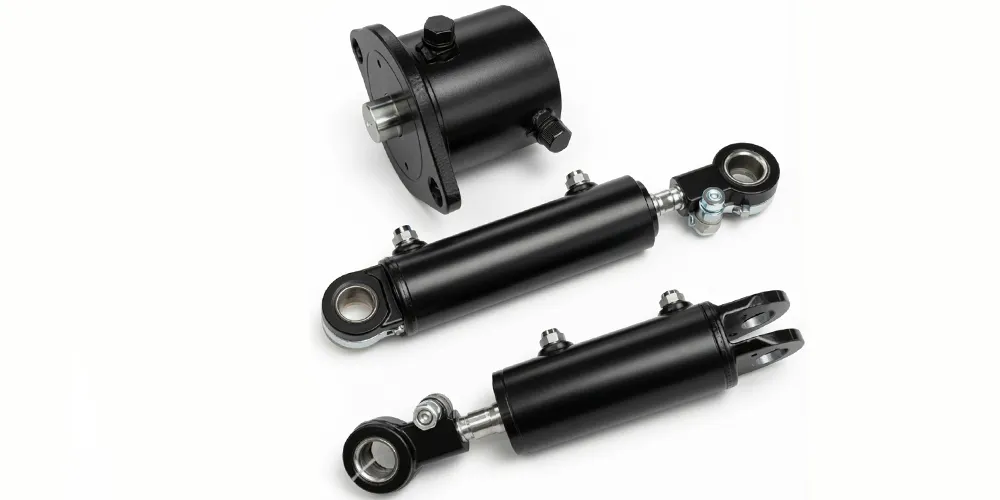
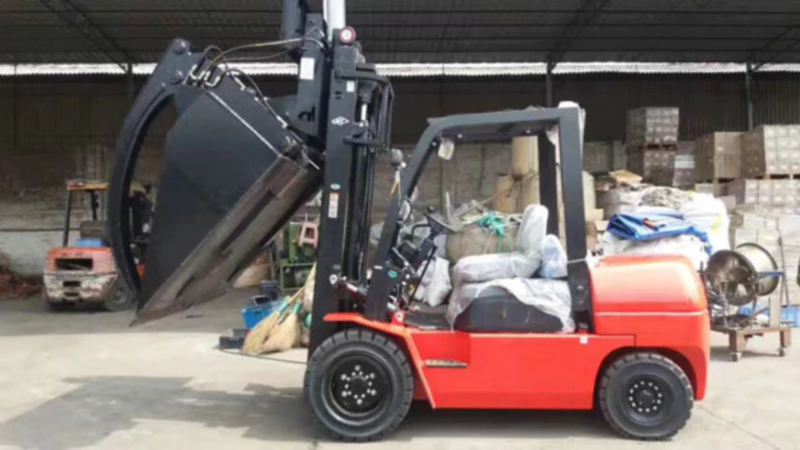
Heavy-duty tilt cylinders engineered for mast and bucket tilt functions on loaders and telehandlers, available in bore sizes compatible with this steering cylinder's pressure class for unified hydraulic circuit design across the complete machine.
지게차 리프팅 실린더
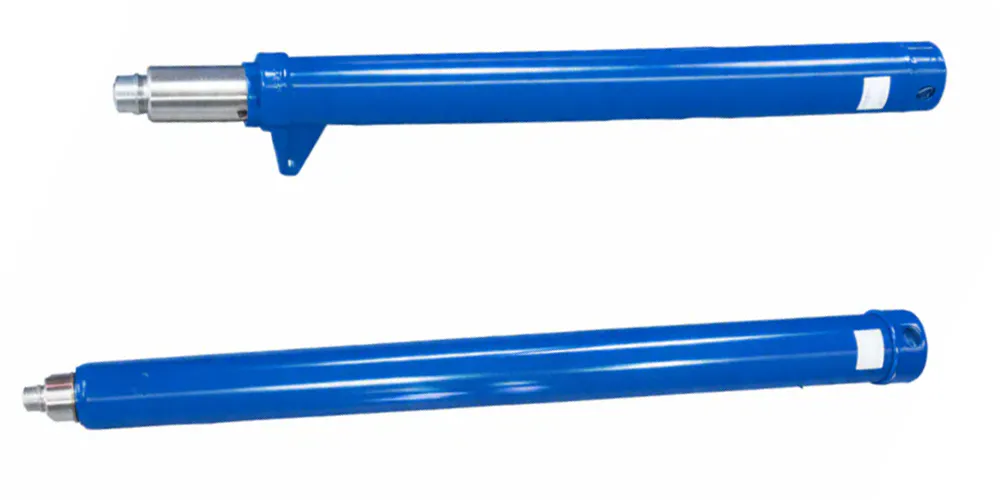
High-pressure lifting cylinders for mast stage actuation on forklifts and telehandlers, manufactured with the same hard-chrome rod and seal technology used in this steering cylinder range, supporting consistent quality across an entire machine's hydraulic system.
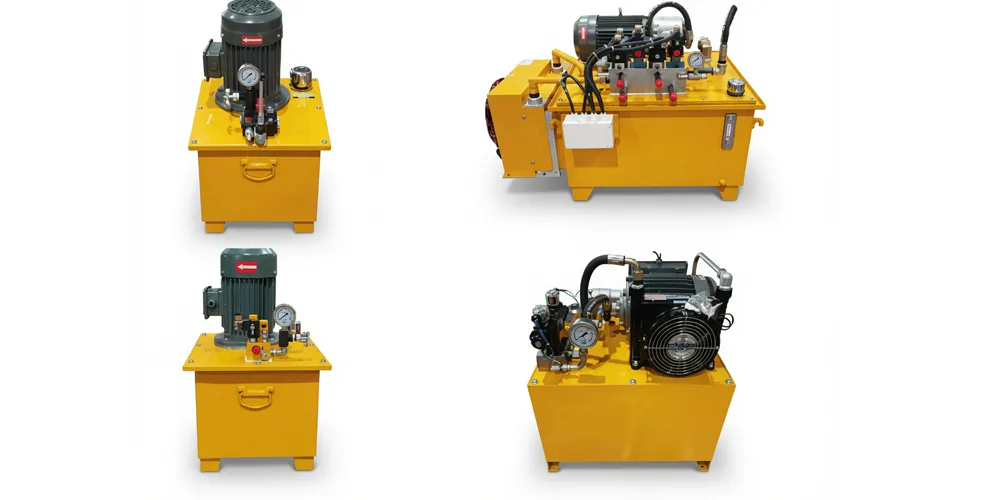
Hydraulic Pump Station Series
Complete hydraulic power units sized to deliver the 21MPa working pressure and flow rate required by this steering cylinder, with gear or piston pump options and integrated directional control valve manifolds for streamlined machine integration.
9. About Our Hydraulic Cylinder Manufacturing Programme
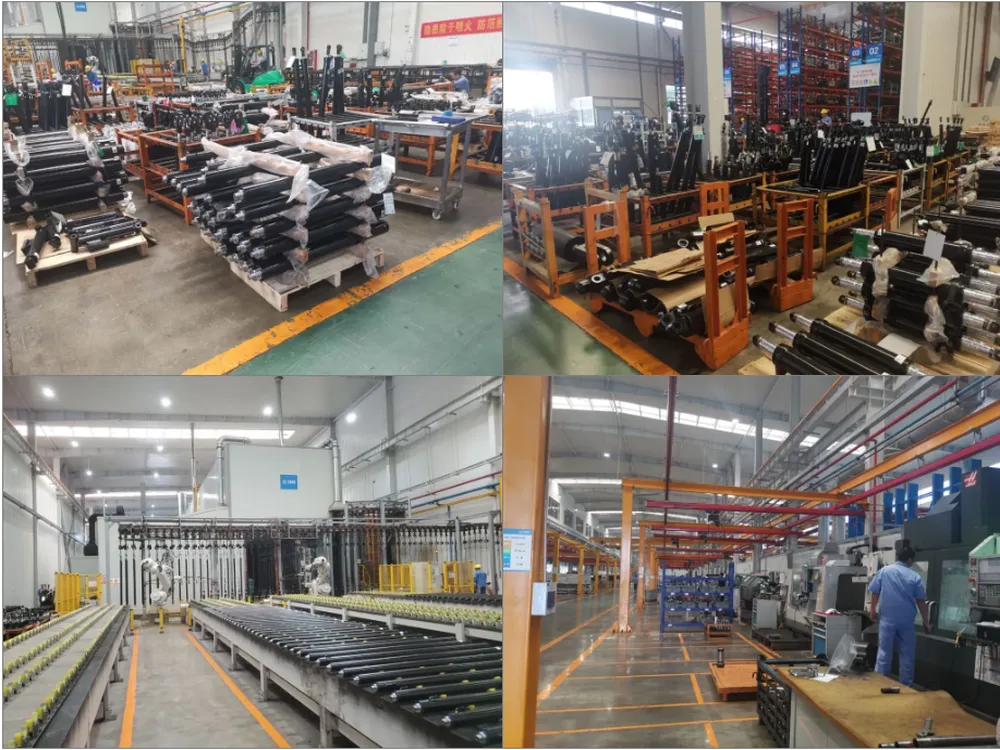
We specialise in the design and production of precision hydraulic actuators for heavy mobile equipment, agricultural machinery, material handling vehicles, and aerial work platforms. Our product range spans the full spectrum of hydraulic cylinder parts — from mini hydraulic cylinders and small hydraulic cylinders for compact equipment through to high-pressure telescopic hydraulic cylinders and large-bore double acting hydraulic cylinders for construction and material handling applications, all manufactured under an ISO 9001-certified quality management framework with complete material traceability.
Our steering cylinder programme works directly with OEM manufacturers, distributors, and aftermarket repair networks across France, the wider EU, and international markets to supply both catalogue-standard actuators and application-engineered solutions. Whether a customer requires this standard hydraulic steering cylinder, a custom-stroke steering cylinder assembly, or a complete steering cylinder kit with matched hose sets and fittings, our engineering and production teams maintain the flexibility to deliver consistent quality at the volumes required by French equipment manufacturers and fleet maintenance operations.
Every steering cylinder leaving our facility undergoes dimensional verification, surface finish inspection, and hydrostatic pressure testing before despatch, ensuring that what arrives at the customer site is ready for immediate installation without rework. Export documentation — including CE declarations, EN 10204 3.1 material certificates, and hydrostatic test reports — is prepared as standard for shipments to France and across the European Union, supporting the compliance and traceability expectations of European equipment buyers.
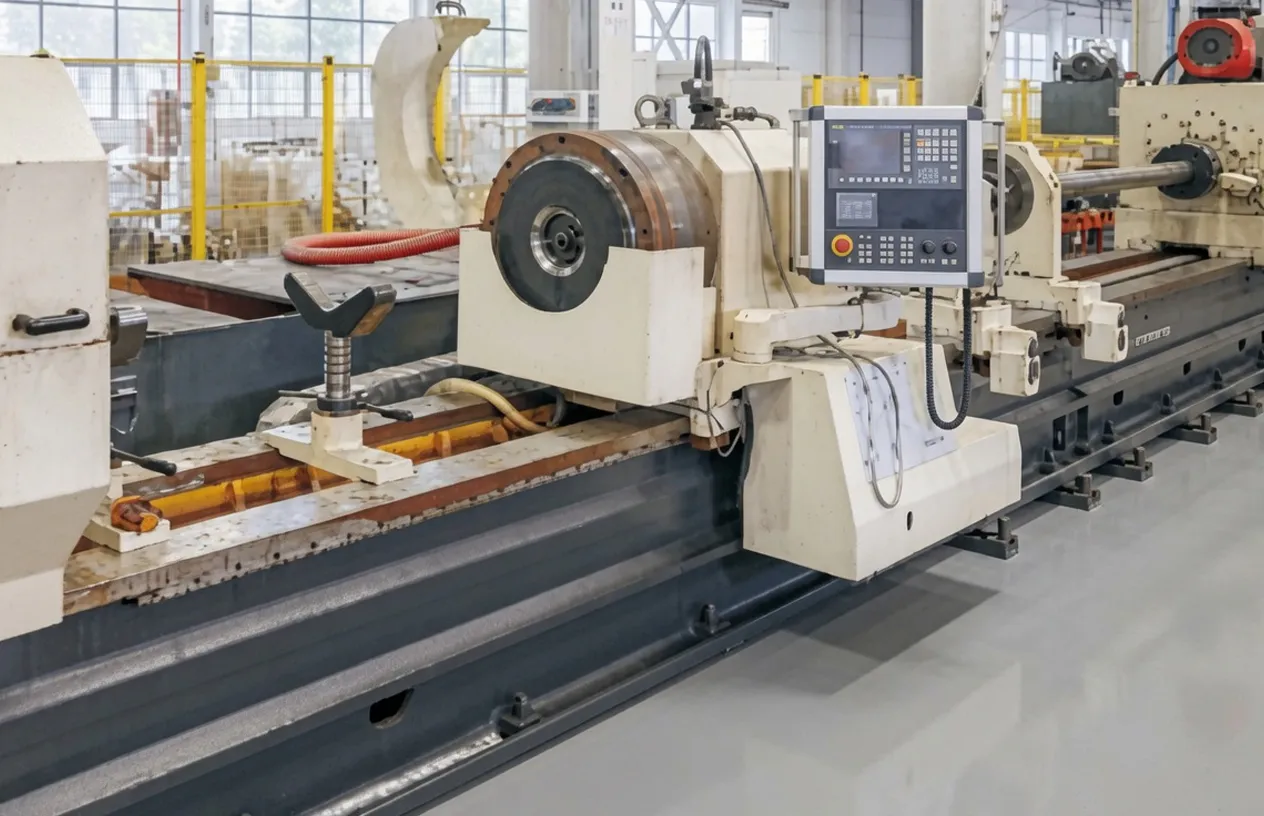
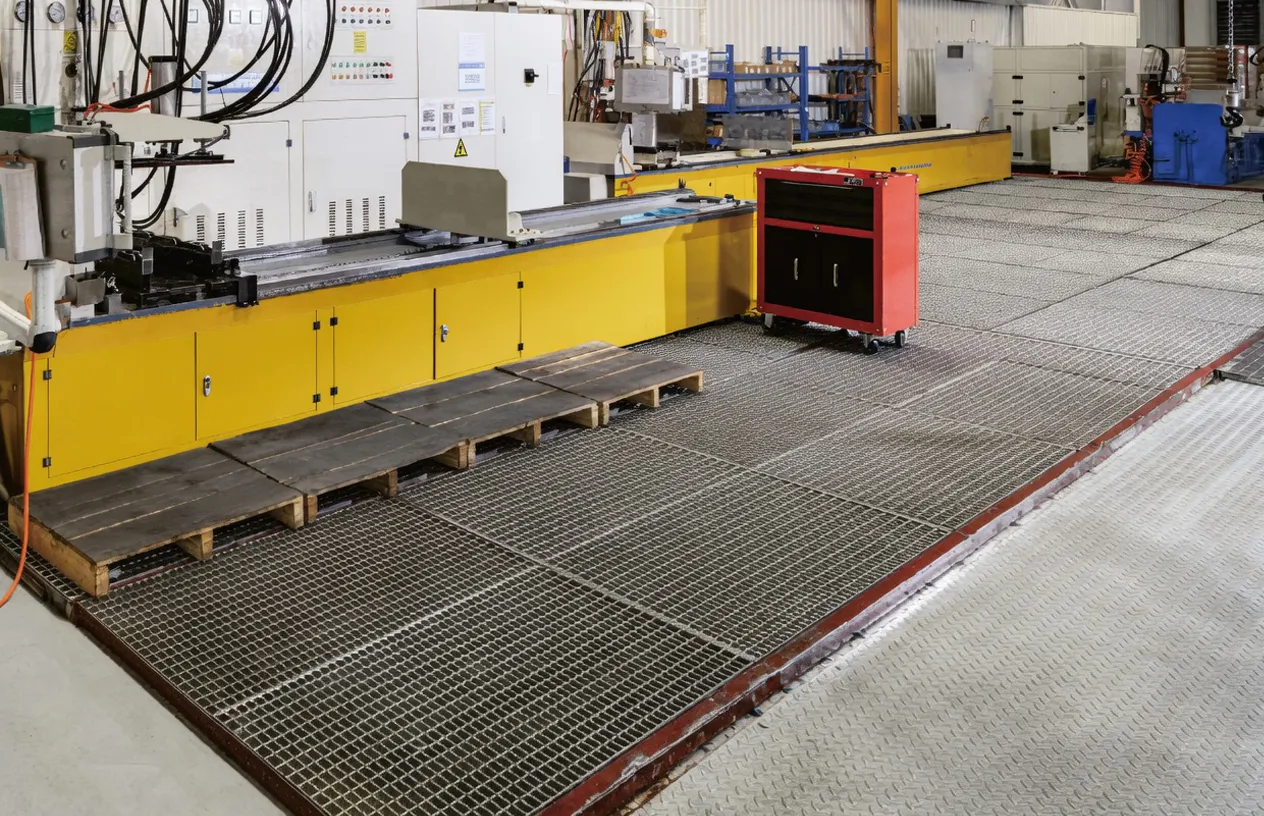
WorkShop
Frequently Asked Questions
Request a Quote for Steering Cylinder HCYY11112012
For a single replacement unit or a full fleet maintenance supply programme across France and the EU, our team can provide prompt quotations, CE documentation, and technical cross-reference support.
Editor: PXY