제품 설명
제품 설명
structural carbon steel :45# with details in under sheet :
| Standard No. | Alloy No. | Chemical compositions(%) | ||||||
| C | Cr | Mn | Ni | P | S | Si | ||
| GB/T699-1999 | 45# | 0.42~0.50 | ≤0.25 | 0.50~0.80 | ≤0.25 | ≤0.035 | ≤0.035 | 0.17~0.37 |
| Mechanical Property | Tensile Strength(Mpa) | Yeild Strength(Mpa) | Elongation(%) | Contraction of area Z(%) | ||||
| ≥600 | ≥355 | ≥16 | ≥40 | |||||
The correlation between properties and parameters-S45C (JIS)-SAE1045(Aisi)-SM45 of No. 45 steel(45 steel) was studied:
No. 45 steel is a carbon structural steel with 0.45% carboncontent. It is characterized by low price, good cutting performance, high hardness after quenching, good strength, toughness and wear resistance after quenching and temperingtreatment, is widely used in manufacturing structural partsand low-grade plastic mold. “45 steel” is a popular name, thesymbol is generally recorded as”45 #”. In fact GB standardsteel number is”45″, it is not a sequential number, read as”45steel” is not very accurate. Ingredient code 45 steels of similar designation are S45C (JIS) and 1045(Aisi) . In addition, ourcountry metallurgical technology standard has SM45 brandnumber to express the plastic mold use specially. Comparedwith 45 steel, SM45 has lower phosphorus and sulfur contentand better steel purity.
| Standards | YB/T 094 | AISI | JIS G4051 |
| Alloy No. | SM45 | 1045 | S45C |
| C | 0.42-0.48 | 0.43-0.50 | 0.42-0.48 |
| Si | 0.17-0.37 | 0.15-0.35 | |
| Mn | 0.50-0.80 | 0.60-0.90 | 0.60-0.90 |
| P | <0.030 | <0.030 | <0.030 |
| S | <0.035 | <0.035 | <0.035 |
Recommended process specification for heat treatment andhardness: quenching temperature 820 – 860″ C, water-oroil-cooled, hardness 250 HRC. Recommended tempering pro-cess specifcation: tempering temperature is 500 – 560″ C, aircooling, hardness is 25 – 33HRC. Tempering in this temperature range is the tempering treatment, Quenching and tempering make the strength, plasticity and toughness of 45 steelget a good balance, the comprehensive performance is good,can adapt to the alternating load environment. After quench-ing and tempering, the surface hardness of 45 steel is low anddoes not wear well. So commonly used quenching and tempering + surface quenching to improve the surface hardnessof parts.
| Tempering temperature | After quenching | Unit centigrade | |||||
| 200 | 300 | 400 | 500 | 550 | 600 | ||
| Hardness HRC | 57 | 55 | 50 | 41 | 33 | 26 | 22 |
| Mechanical properties (GB/T 699-1999) | |||
| Sample size | mm | 25 | |
| Heat treatments recommended | Normalizing | ºC | 850 |
| Quenching | ºC | 840 | |
| Tempering | ºC | 600 | |
| Mechanical properties | Tensile strongth | Mpa | ≥600 |
| Strong yield | Mpa | ≥355 | |
| Elongation | Mpa | ≥16 | |
| Section shrinkago | Mpa | ≥40 | |
| Impact | Mpa | ≥39 | |
| Hardness of delivery | HB | ≤229 | |
| HB | ≤197 | ||
Company Profile
ZheJiang Xihu (West Lake) Dis. Equipment Manufacturing Co, Ltd., located in HangZhou City, ZheJiang Province, is a steel forging manufacturing enterprise specializing in the production of forged round steel, square steel, shaft forgings, ring forgings, cylinder forgings, and forging processing, heat treatment, mechanical processing, and finished parts processing. 0.75 tons to 30 tons of ingot steel can also be supplied. The company has a strong special steel supply channel as support, especially in the special steel forgings more resource advantages, products include “chromium-nick- el-molybdenum steel, bonded steel, carbon steel, stainless steel, spring steel, bearing steel, rolls and other series.”Our company can also ensure flaw detection at all levels according to customer requirements and provide quality certification documents.
Forging Equipment
The main equipment is 2000 tons of hydraulic press, ring rolling machine, 3 tons of forging hammer, 2 tons of forging hammer, 1 ton forging hammer, 750KG forging hammer, 30T heat treatment and temper- ing furnace, lathe, sawing machine and other more than 30 sets of equipment, which can produce
forgings weighing 20Kg-20000Kg. Products are not only widely used in domestic large locomotives, coal machines, petroleum machinery, shipbuilding and other industries, but also exported to Europe, South- east Asia, and other countries and regions, forging products using advanced production technology
“high-power electric CHINAMFG (EF)furnace external refining (LF) vacuum degassing (VD) fast forging annealing (or normalizing) turning, Ensure chemical composition and mechanical property require-ments.
자주 묻는 질문
What is the difference between forging and casting?
Forging: It is the process of transforming a CHINAMFG from 1 shape to another. Casting: It is the process of transforming a shapeless liquid metal into a CHINAMFG with a shape. The so-called casting is the process of casting molten metal into a model to obtain a casting. The casting profession focuses on the metal melting process and the control of processes during the casting process. Forging is a plastic forming process in the CHINAMFG state, which can be divided into hot processing and cold processing. Forgings include extrusion, drawing, roughening, punching, and so on. Casting is a CHINAMFG liquid CHINAMFG process, while forging is a CHINAMFG to CHINAMFG process where a CHINAMFG can change its shape into another shape at high temperatures. There are still differences in the shape process and process of the two.
How to choose high-quality forgings?
In the quality inspection of forgings, there are mainly external observation methods and internal inspection methods. The appearance method, as the name suggests, is to observe the appearance of the product, such as the shape, geometric dimensions, surface condition, etc. of the forging, in order to understand whether it meets the standards and whether there are external defects. Specifically, it is to check whether the external dimensions of the forging meet the specifications and whether there are defects on the surface, such as cracks, wrinkles, bubbles, indentations, pits, impurities, scratches, etc. on the surface of the forging. Internal testing mainly involves analyzing the chemical composition, macroscopic and microscopic structures, and mechanical properties of forgings. This inspection process requires the use of specialized instruments for high magnification inspection, with the aim of checking for any phenomena such as fractures and shrinkage within the forging, as well as defects such as dendrites and white spots, disordered flow lines, and throughflow. It also includes the tensile strength, ductility, hardness, plasticity, and heat resistance temperature of the forging.
What are the characteristics of the forging process for blank forgings?
The forging process of circular forgings mainly consists of the following processes: pier roughening, elongation, punching, and expanding. The difference between free forging and ring rolling processes is mainly in the process of expanding holes. In the production of ring forgings, free forging is usually used to expand the hole with a horse screw, while ring rolling is mainly used to expand the hole with rolling.
/* May 10, 2571 16:49:51 */!function(){function d(e,r){var a,o={};try{e&&e.split(“,”).forEach(function(e,t){e&&(a=e.match(/(.*?):(.*)$/))&&1

유압 실린더는 중장비에서 어떻게 부드럽고 일관된 움직임을 보장합니까?
유압 실린더는 중장비의 원활하고 일관된 움직임을 보장하는 데 필수적인 역할을 합니다. 유압 실린더의 설계와 작동 방식은 무거운 하중의 움직임을 정밀하게 제어할 수 있도록 하여 효율적이고 안정적인 성능을 제공합니다. 다음은 유압 실린더가 중장비의 원활하고 일관된 움직임에 어떻게 기여하는지에 대한 자세한 설명입니다.
1. 유압유 및 압력:
유압 실린더는 유압유(일반적으로 오일)를 이용하여 힘과 운동을 전달합니다. 유압 펌프가 유압유에 압력을 가하면 실린더 내부의 피스톤에 작용하는 힘이 발생합니다. 유압유의 압력은 정밀하게 제어할 수 있어 중장비를 부드럽고 점진적으로 움직일 수 있습니다. 유압유의 비압축성 덕분에 힘이 고르게 분산되어 일관되고 예측 가능한 움직임을 구현할 수 있습니다.
2. 피스톤 및 실린더 설계:
유압 실린더는 부드러운 움직임을 보장하기 위해 정밀하게 설계되었습니다. 피스톤과 실린더 내부는 엄격한 공차로 가공되어 마찰을 줄이고 내부 누출을 최소화합니다. 피스톤과 실린더 벽 사이의 정밀한 결합은 급격한 속도 변화나 흔들림 없이 일관된 움직임을 유지하는 데 도움이 됩니다. 또한, 고품질 밀봉재와 윤활유를 사용하여 실린더의 원활한 작동을 더욱 향상시킵니다.
3. 제어 밸브 및 유량 제어:
유압 시스템에는 실린더 내부로 유입 및 유출되는 유압 유체의 흐름을 조절하는 제어 밸브가 포함되어 있습니다. 이 밸브를 통해 실린더의 움직임 속도와 방향을 정밀하게 제어할 수 있습니다. 유량 조절을 통해 작업자는 급정거를 방지하고 중장비를 부드럽고 안정적으로 작동시킬 수 있습니다. 또한 유량 제어 밸브는 속도 조절을 가능하게 하여 다양한 부하 또는 작동 조건에서도 일관된 움직임을 보장합니다.
4. 쿠션 및 감쇠:
유압 실린더에는 중장비 이동 중 발생하는 충격을 흡수하고 최소화하기 위한 완충 장치가 장착될 수 있습니다. 완충은 실린더 내부에 특수 밸브 또는 조절 가능한 오리피스를 설치하여 스트로크 끝부분에서 유압 유체의 흐름을 제한함으로써 이루어집니다. 이러한 점진적인 감속은 갑작스러운 충격이나 진동을 방지하여 부드럽고 일관된 움직임을 유지하는 동시에 기계 및 구성 요소에 가해지는 스트레스를 줄여줍니다.
5. 부하 분산:
유압 실린더는 하중 균형을 맞추고 힘을 고르게 분산시키도록 시스템을 설계하고 배열할 수 있습니다. 여러 개의 실린더를 병렬 또는 직렬로 구성하여 사용하면 중장비가 균형 잡힌 움직임을 구현하고, 불균형적인 응력을 방지하며 원활한 작동을 보장할 수 있습니다. 하중 균형은 또한 부품 고장 위험을 최소화하고 기계의 전반적인 안정성과 수명을 향상시키는 데 도움이 됩니다.
6. 피드백 및 제어 시스템:
첨단 유압 시스템은 피드백 센서와 제어 시스템을 통합하여 중장비의 움직임을 모니터링하고 조정합니다. 이 센서들은 유압 실린더의 위치, 속도 및 작동력에 대한 실시간 정보를 제공합니다. 제어 시스템은 이 데이터를 처리하고 유압 유체의 흐름을 그에 따라 조정하여 부드럽고 일관된 움직임을 유지합니다. 실린더 작동을 지속적으로 모니터링하고 조절함으로써 피드백 및 제어 시스템은 정밀하고 신뢰할 수 있는 동작 제어에 기여합니다.
7. 유지보수 및 서비스:
유압 실린더의 정기적인 유지보수 및 점검은 중장비에서 원활하고 일관된 작동을 보장하는 데 필수적입니다. 적절한 윤활, 씰 검사 및 마모된 부품 교체는 최적의 성능을 유지하는 데 도움이 됩니다. 필터 교체 및 유체 분석과 같은 예방 정비 작업 또한 유압 시스템의 수명과 신뢰성을 높여 시간이 지남에 따라 일관된 작동을 보장합니다.
요약하자면, 유압 실린더는 유압 유체와 압력, 정밀한 피스톤 및 실린더 설계, 제어 밸브 및 유량 제어, 완충 및 감쇠 메커니즘, 하중 균형, 피드백 및 제어 시스템, 그리고 정기적인 유지보수 및 서비스를 통해 중장비의 부드럽고 일관된 움직임을 보장합니다. 이러한 특징들을 활용하여 유압 실린더는 무거운 하중을 처리하는 데 필요한 힘과 제어력을 제공하는 동시에 정밀하고 안정적인 동작을 유지함으로써 다양한 산업 분야에서 중장비의 전반적인 성능과 생산성을 향상시킵니다.
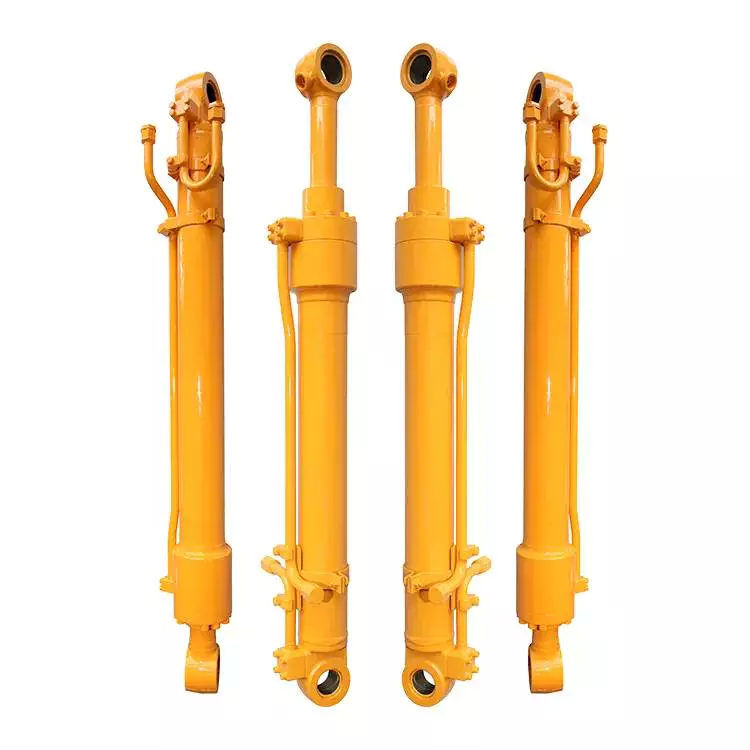
Utilizing Hydraulic Cylinders in Conjunction with Alternative Energy Sources
Hydraulic cylinders can indeed be used in conjunction with alternative energy sources. The versatile nature of hydraulic systems allows them to be integrated with various alternative energy technologies to enhance efficiency, control, and power generation. Let’s explore some examples of how hydraulic cylinders can be utilized alongside alternative energy sources:
- Hydraulic Energy Storage: Hydraulic cylinders can be employed in energy storage systems that utilize alternative energy sources such as renewable sources (e.g., solar or wind) or waste energy recovery. These systems convert excess energy into hydraulic potential energy by pumping fluid into a high-pressure accumulator. When the energy is needed, the pressurized fluid is released, driving the hydraulic cylinder and generating mechanical power.
- Wave and Tidal Energy Conversion: Hydraulic cylinders can be utilized in wave and tidal energy conversion systems. These systems harness the power of ocean waves or tidal currents and convert it into usable energy. Hydraulic cylinders, along with associated pumps and valves, can be used to capture and control the energy from the waves or tides, driving the cylinders and generating mechanical power or producing electricity.
- Hydroelectric Power Generation: Hydraulic cylinders play a crucial role in traditional hydroelectric power generation. However, alternative approaches such as small-scale or micro-hydropower systems can also benefit from hydraulic cylinders. These systems utilize natural or man-made water flows to drive turbines connected to hydraulic cylinders, which then convert the hydraulic energy into mechanical power or electricity.
- Hydraulic Actuation in Wind Turbines: Hydraulic cylinders can be employed in wind turbines to enhance performance and control. For example, hydraulic pitch control systems use hydraulic cylinders to adjust the pitch angle of wind turbine blades, optimizing their aerodynamic performance based on wind conditions. This allows for efficient power generation and protection against excessive wind loads.
- Geothermal Energy Extraction: Geothermal energy extraction involves utilizing the natural heat from the Earth’s interior to generate power. Hydraulic cylinders can be utilized in geothermal systems to control and regulate fluid flow, allowing for efficient extraction and utilization of geothermal energy. They can also be used in geothermal heat pumps for heating and cooling applications.
In summary, hydraulic cylinders can be effectively utilized in conjunction with alternative energy sources to enhance energy storage, power generation, and control. Whether it’s through hydraulic energy storage systems, wave and tidal energy conversion, hydroelectric power generation, hydraulic actuation in wind turbines, or geothermal energy extraction, hydraulic cylinders offer versatile and efficient solutions for harnessing and utilizing alternative energy sources.
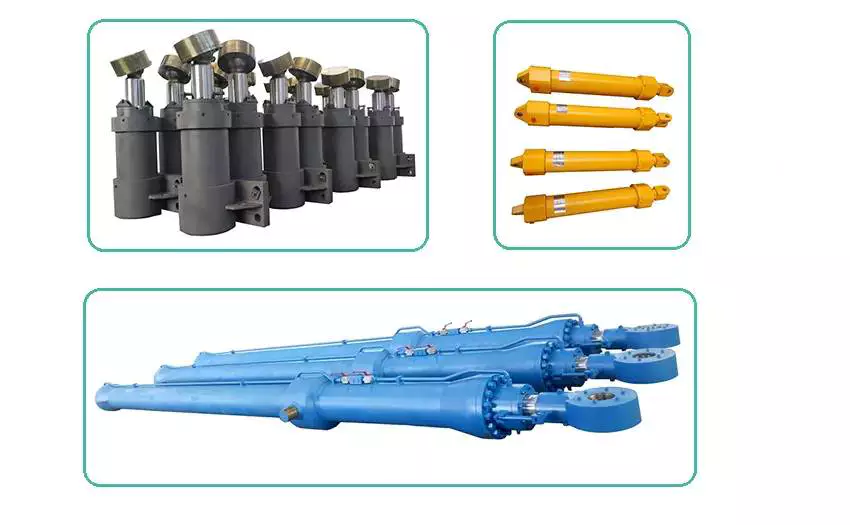
Can hydraulic cylinders be adapted for use in both industrial and mobile equipment?
Yes, hydraulic cylinders can be adapted for use in both industrial and mobile equipment. The versatility and adaptability of hydraulic systems make them suitable for a wide range of applications across various industries. Here’s a detailed explanation:
1. Industrial Equipment:
– Hydraulic cylinders are extensively used in industrial equipment such as manufacturing machinery, construction equipment, material handling systems, and heavy-duty machinery. They provide the necessary force and controlled movement for tasks such as lifting, pushing, pulling, and positioning heavy loads. Industrial hydraulic cylinders are typically designed for robustness, durability, and high load-bearing capacities to withstand the demanding environments and heavy-duty applications encountered in industries.
2. Mobile Equipment:
– Hydraulic cylinders are also widely adopted in mobile equipment, including agricultural machinery, mining equipment, forestry machinery, and transportation vehicles. These cylinders enable various functions such as tilting, lifting, steering, and stabilizing. Mobile hydraulic cylinders are designed to be compact, lightweight, and efficient to meet the specific requirements of mobile applications. They are often integrated into hydraulic systems that power multiple functions in a single machine.
3. Adaptability:
– One of the key advantages of hydraulic cylinders is their adaptability. They can be customized and configured to suit different operating conditions, equipment sizes, load capacities, and speed requirements. Hydraulic cylinder manufacturers offer a wide range of sizes, stroke lengths, mounting options, and rod configurations to accommodate diverse applications. This adaptability allows hydraulic cylinders to be utilized in both industrial and mobile equipment, serving various purposes across different sectors.
4. Mounting Options:
– Hydraulic cylinders can be adapted to different mounting arrangements to suit the specific requirements of industrial and mobile equipment. They can be mounted in various orientations, including vertical, horizontal, or at an angle. Different mounting options, such as flange mounts, trunnion mounts, and clevis mounts, provide flexibility in integrating hydraulic cylinders into different equipment designs.
5. Integration with Hydraulic Systems:
– Hydraulic cylinders are often part of a larger hydraulic system that includes components such as pumps, valves, hoses, and reservoirs. These systems can be tailored to meet the specific needs of both industrial and mobile equipment. The hydraulic system’s design and configuration can be adapted to provide the necessary flow rates, pressures, and control mechanisms required for optimal performance in the intended application.
6. Control and Automation:
– Hydraulic cylinders in both industrial and mobile equipment can be integrated with control systems and automation technologies. This allows for precise and automated control of the cylinder’s movement and function. Proportional control valves, sensors, and electronic controls can be incorporated to achieve accurate positioning, speed control, and synchronization of multiple hydraulic cylinders, enhancing overall equipment performance and productivity.
7. 안전 고려 사항:
– Hydraulic cylinders for both industrial and mobile equipment are designed with safety in mind. They often feature built-in safety mechanisms such as overload protection, pressure relief valves, and emergency stop systems to prevent accidents and equipment damage. Safety standards and regulations specific to each industry are taken into account during the design and adaptation of hydraulic cylinders for different applications.
Overall, hydraulic cylinders offer the adaptability and performance required for use in both industrial and mobile equipment. Their versatility, customizable features, mounting options, integration capabilities, and safety considerations make them suitable for a wide range of applications across diverse industries. Whether it’s heavy-duty industrial machinery or mobile equipment operating in challenging environments, hydraulic cylinders can be adapted to meet the specific needs and requirements of various equipment types.
<img src="https://img.jiansujichilun.com/img/hydrauliccylinders/hydrauliccylinders-l1.webp" alt="China Good quality High-Quality Factory Custom Forged Hydraulic Cylinder with Best Sales “><img src="https://img.jiansujichilun.com/img/hydrauliccylinders/hydrauliccylinders-l2.webp" alt="China Good quality High-Quality Factory Custom Forged Hydraulic Cylinder with Best Sales “>
editor by Dream 2024-10-10