제품 설명
BALE WRAPPER
Bale wrapper is a machine that is used to wrap bales of hay or straw. It is typically uses a hydraulic cylinder to lift and rotate the bale. The hydraulic cylinder is a crucial component of the bale wrapper as it provides the necessary force to move and manipulate the bale. It also allows for precise control over the position and rotation of the bale during the wrapping process. The hydraulic cylinder is connected to the lifting mechanism of the bale wrapper, which lifts the bale from the ground and rotates it into the wrapping position. Once the bale is wrapped, the hydraulic cylinder lowers it back down to the ground.
TRACTOR
The tractor is a crucial piece of agricultural machinery, revolutionizing farming operations through its powerful capabilities. Designed for versatility, it can perform a range of tasks, from tilling fields to planting and harvesting crops. The hydraulic cylinder is an integral part of the tractor, connected to the hydraulic system. It converts the tractor’s mechanical energy into hydraulic power, essential for manipulating various implements and attachments. The cylinder enables farmers to control these implements with precision and ease, ensuring effective and efficient completion of agricultural operations.
CULTIVATOR
The cultivator is an agricultural equipment which designed to till and cultivate the soil, making it ready for planting. The cultivator breaks up and mixes the soil, removing weeds and rocks, and generally prepares the ground for optimal plant growth. At the heart of the cultivator lies the hydraulic cylinder. This cylinder is connected to the tractor’s hydraulic system and converts the tractor’s mechanical energy into hydraulic power. The hydraulic cylinder powers the cultivator’s various moving parts, such as the tines or blades that till the soil. It allows farmers to control the depth and intensity of tillage, ensuring that the soil is properly prepared for planting.
SPRAYER
The sprayer is used to spray liquid fertilizers, pesticides, or herbicides CHINAMFG crops in agricultural. The sprayer has a large tank that holds the liquid to be sprayed, and a set of spray nozzles that atomize the liquid and distribute it over the crops. At the heart of the sprayer lies the hydraulic cylinder which is connected to the tractor’s hydraulic system and converts the tractor’s mechanical energy into hydraulic power. The hydraulic cylinder powers the various moving parts of the sprayer, such as the boom that extends outwards from the tractor and carries the spray nozzles. It allows farmers to control the height and width of spraying, ensuring that the liquid is applied uniformly across the field.
About Us
Established in 1988, HangZhou LD Machinery Co, LTD. (hereinafter referred to “LD”) is a leading manufacturer specializing in the design, research, development, manufacture and marketing in the hydraulic industry. Being one of major suppliers of customized components and cylinders for manufacturers spreaded all over the world, the company is committed to offer high quality products with competitive prices and excellent service worldwide.
Headquartered in HangZhou City, ZHangZhoug Province, the company wholly owns a subsidiary production factory named “HangZhou YUEWEI Hydraulic Technology Co., Ltd”, which covers an area of more than 380,000 square meters, possesses abundant technical strength and sound production management system, superior machining production equipment, strict and effective quality control system, advanced and excellent inspection instruments.
More than 35 years experience in machining industry, with over 10 experienced technical engineers and 150 skilled workers, LD has a senior engineering technical team with special skills and rich experience in product design, casting, forging, and CNC machining, can handle special material, structure, defect and processing, meet the evolving needs, and provide optimal solution and real one-stop service to customers.
Hydraulic Cylinder Producing Process
Step1: Quality Control on Raw Material
We have our own lab in factory, inspect the raw material and do the test. For every batch of material we received, we will ask supplier provide their certificate, and then cut them to do the test again to see if the results match the certification. Also, every batch we received, we will cut them into pieces to check the air bubbles. Once they are all qualified, we will accept it, and all detail information will be recording in our ERP system. We will also pay lot of attention on the salt spray test for chrome rod. Every month, we will cut the material, put them into test machine to see if it reach the requirement. All the result will be recorded at our QC department. If customer need, we can provide it.
Step2: Quality Control on Machining
we start doing components machining from 1988 with 36 years experience now and insist doing 100% inspection. We spend lots of money, invest on auto robots and machines. Now half of the producing line is by robot so that we can ensure our quality be stable good. For every part of the cylinder, we do 3 times inspecting. Firstly, workers will do self inspection. Secondly, we have tour-hour inspection checking the products, 2 times in the morning and 2 times in the afternoon, make sure that every step is good. After the products are all completed, we will do 100% inspection. For thread, for the tolerance, everything, we need double check. Also, we have specific warehouse just for the measuring tools. Every inspector have their own measuring tool and we will check the measuring tools regularly to make sure they are all in good condition, so that the measuring results will be convincing.
Step3: Quality Control on Welding
We are qualified to AWS certification, which is very popular in North American market. First, for the visual test, we will make sure that every components are welded good, look beautiful. And the second, we need to check the penetration. We have more than 15 years experience, we do know what kind of designing angle can make the cylinder welding strong. Once we finish the first article, we will cut it and analyse the welding to see if it is fulfill the groove. And then do the radiographic testing to make sure there is no gap inside. What’s more, we will do the ultrasonic test to check the program for the robot. Now 80% of welding is doing by robot. Once the program confirmed, no 1 can change it unless the welding manager, and they only have 5% right.
Step4: Quality Control on Assembling
For assembling, we have some difference with others. The brand we uses for seals are all those famous brand like Aston, Parker, Hallite. The cylinder we give to our customer has 2 years warranty. For our company, we engrave our part number and manufacturing date for the quality warranty. So no matter for seals or any others, as long as they are parts of cylinder, if it is under 2 years, we will take responsibility for them. And we will do the test for every cylinder like for pressure after we finish assembling.
Step5: Quality Control on Painting
We have our half auto painting line. Right now, we can paint about 1500 cylinders per day, which is about 1 container. Before we do the painting, we will do the wash first and for every cylinder, we will test for hardness, thickness and adhesion to make sure the painting are all good, which will be recorded into OQC report, print out and stick on the box, ship to you with your products.
Step6: Hydraulic Cylinder Packing
For every cylinder, we have the stick to show the detail information like bore size, stroke and working pressure. And we will use individual plastic bag packing. If customer need, we can also use individual carton box packing. We will fasten 1 floor after 1 floor with plat, so customer can only cut what they need and other layer will still be fasten. Moreover, there will be plywood pallet or plywood box for customer choosing. We will also send the loading picture to customer after we ship them to make sure everything is well loaded in China.
Packing Reference
Order Process
Enterprise Features
자주 묻는 질문
Q1. What is LD product’s quality assurance?
100% inspection for each product before shipping with inspection rereport for tracking.
Q2: How long is the warranty on LD products?
The warranty is 2 years for general products since the date of shipment.
Q3: How LD deal with the quality problem during warranty period?
1. LD will take the corresponding cost caused by customer local reparing.
2. LD will provide the product by free if the repair cost is higher than the product value, but the freight involved shall be borne by customer side.
Q4: How to ensure the order can be shipped on time?
LD will send the “production schedule” every week after receiving customers’ orders. If any delays, LD will inform customers 3 weeks in advance, so as to facilitate the customer to arrange the schedule.
Q5: Does LD offer delivery service?
Yes. LD has deep cooperation with logistics companies all over the world to provide customers with quick and convenient “Door-to-Door services”,including sea, air and express.
Q6: How LD control the product quality?
1. Raw materials: We will test the material of each batch of raw materials we receive, and the piston rod will be tested with salt spray. This is to ensure that the material of our products meets the requirements at the beginning.
2. Processing: We have the leading machining equipment, and obtained ISO9001 certification.
3. Welding: Our factory is equipped with welding robots, and has obtained the AWS certification.
4. Assembly pressure test: 100% testing with OQC report for cHangZhou. The seals we use are: Hallite, Aston and Gapi
/* 2571년 3월 10일 17:59:20 */!function(){function s(e,r){var a,o={};try{e&&e.split(“,”).forEach(function(e,t){e&&(a=e.match(/(.*?):(.*)$/))&&1
| 보증: | 2 Years Warranty |
|---|---|
| Seals: | Packer/Hallite/Gapi |
| Structure: | Piston Type |
| Surface Treatment: | Hard Chrome, Zinc, Copper |
| Oil Port: | NPT/SAE/BSPP |
| Material: | 20#Steel/45#Steel |
| Samples: | US$ 75/Piece 1 Piece(Min.Order) | |
|---|
| 맞춤 설정: | 사용 가능 |
|
|---|
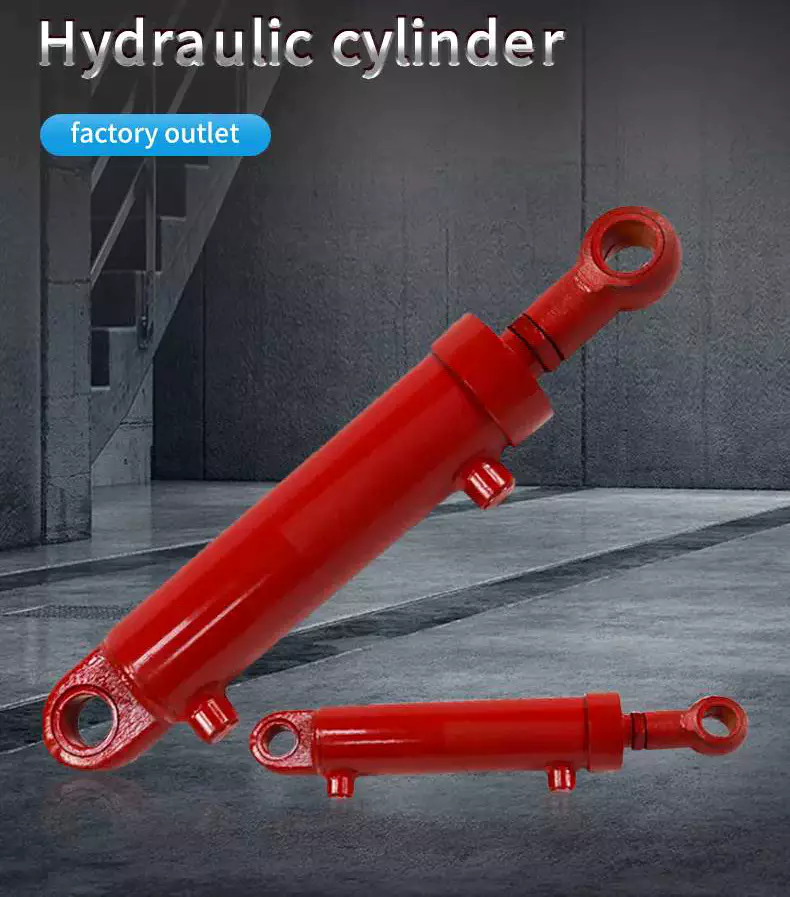
유압 실린더는 중장비에서 어떻게 부드럽고 일관된 움직임을 보장합니까?
유압 실린더는 중장비의 원활하고 일관된 움직임을 보장하는 데 필수적인 역할을 합니다. 유압 실린더의 설계와 작동 방식은 무거운 하중의 움직임을 정밀하게 제어할 수 있도록 하여 효율적이고 안정적인 성능을 제공합니다. 다음은 유압 실린더가 중장비의 원활하고 일관된 움직임에 어떻게 기여하는지에 대한 자세한 설명입니다.
1. 유압유 및 압력:
유압 실린더는 유압유(일반적으로 오일)를 이용하여 힘과 운동을 전달합니다. 유압 펌프가 유압유에 압력을 가하면 실린더 내부의 피스톤에 작용하는 힘이 발생합니다. 유압유의 압력은 정밀하게 제어할 수 있어 중장비를 부드럽고 점진적으로 움직일 수 있습니다. 유압유의 비압축성 덕분에 힘이 고르게 분산되어 일관되고 예측 가능한 움직임을 구현할 수 있습니다.
2. 피스톤 및 실린더 설계:
유압 실린더는 부드러운 움직임을 보장하기 위해 정밀하게 설계되었습니다. 피스톤과 실린더 내부는 엄격한 공차로 가공되어 마찰을 줄이고 내부 누출을 최소화합니다. 피스톤과 실린더 벽 사이의 정밀한 결합은 급격한 속도 변화나 흔들림 없이 일관된 움직임을 유지하는 데 도움이 됩니다. 또한, 고품질 밀봉재와 윤활유를 사용하여 실린더의 원활한 작동을 더욱 향상시킵니다.
3. 제어 밸브 및 유량 제어:
유압 시스템에는 실린더 내부로 유입 및 유출되는 유압 유체의 흐름을 조절하는 제어 밸브가 포함되어 있습니다. 이 밸브를 통해 실린더의 움직임 속도와 방향을 정밀하게 제어할 수 있습니다. 유량 조절을 통해 작업자는 급정거를 방지하고 중장비를 부드럽고 안정적으로 작동시킬 수 있습니다. 또한 유량 제어 밸브는 속도 조절을 가능하게 하여 다양한 부하 또는 작동 조건에서도 일관된 움직임을 보장합니다.
4. 쿠션 및 감쇠:
유압 실린더에는 중장비 이동 중 발생하는 충격을 흡수하고 최소화하기 위한 완충 장치가 장착될 수 있습니다. 완충은 실린더 내부에 특수 밸브 또는 조절 가능한 오리피스를 설치하여 스트로크 끝부분에서 유압 유체의 흐름을 제한함으로써 이루어집니다. 이러한 점진적인 감속은 갑작스러운 충격이나 진동을 방지하여 부드럽고 일관된 움직임을 유지하는 동시에 기계 및 구성 요소에 가해지는 스트레스를 줄여줍니다.
5. 부하 분산:
유압 실린더는 하중 균형을 맞추고 힘을 고르게 분산시키도록 시스템을 설계하고 배열할 수 있습니다. 여러 개의 실린더를 병렬 또는 직렬로 구성하여 사용하면 중장비가 균형 잡힌 움직임을 구현하고, 불균형적인 응력을 방지하며 원활한 작동을 보장할 수 있습니다. 하중 균형은 또한 부품 고장 위험을 최소화하고 기계의 전반적인 안정성과 수명을 향상시키는 데 도움이 됩니다.
6. 피드백 및 제어 시스템:
첨단 유압 시스템은 피드백 센서와 제어 시스템을 통합하여 중장비의 움직임을 모니터링하고 조정합니다. 이 센서들은 유압 실린더의 위치, 속도 및 작동력에 대한 실시간 정보를 제공합니다. 제어 시스템은 이 데이터를 처리하고 유압 유체의 흐름을 그에 따라 조정하여 부드럽고 일관된 움직임을 유지합니다. 실린더 작동을 지속적으로 모니터링하고 조절함으로써 피드백 및 제어 시스템은 정밀하고 신뢰할 수 있는 동작 제어에 기여합니다.
7. 유지보수 및 서비스:
유압 실린더의 정기적인 유지보수 및 점검은 중장비에서 원활하고 일관된 작동을 보장하는 데 필수적입니다. 적절한 윤활, 씰 검사 및 마모된 부품 교체는 최적의 성능을 유지하는 데 도움이 됩니다. 필터 교체 및 유체 분석과 같은 예방 정비 작업 또한 유압 시스템의 수명과 신뢰성을 높여 시간이 지남에 따라 일관된 작동을 보장합니다.
요약하자면, 유압 실린더는 유압 유체와 압력, 정밀한 피스톤 및 실린더 설계, 제어 밸브 및 유량 제어, 완충 및 감쇠 메커니즘, 하중 균형, 피드백 및 제어 시스템, 그리고 정기적인 유지보수 및 서비스를 통해 중장비의 부드럽고 일관된 움직임을 보장합니다. 이러한 특징들을 활용하여 유압 실린더는 무거운 하중을 처리하는 데 필요한 힘과 제어력을 제공하는 동시에 정밀하고 안정적인 동작을 유지함으로써 다양한 산업 분야에서 중장비의 전반적인 성능과 생산성을 향상시킵니다.
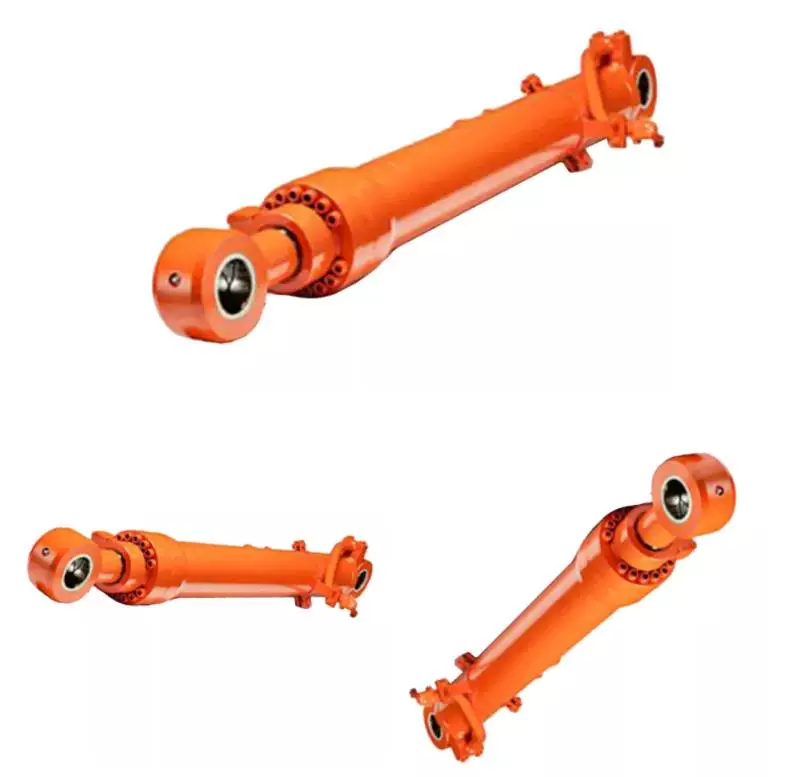
Handling the Challenges of Minimizing Fluid Leaks and Contamination in Hydraulic Cylinders
Hydraulic cylinders face challenges when it comes to minimizing fluid leaks and contamination, as these issues can impact the performance, reliability, and lifespan of the system. However, there are several measures and design considerations that help address these challenges effectively. Let’s explore how hydraulic cylinders handle the challenges of minimizing fluid leaks and contamination:
- Sealing Systems: Hydraulic cylinders employ advanced sealing systems to prevent fluid leaks. These systems typically include various types of seals, such as piston seals, rod seals, and wiper seals. The seals are designed to create a tight and reliable barrier between the moving components of the cylinder and the external environment, minimizing the risk of fluid leakage.
- Seal Material Selection: The choice of seal materials is crucial in minimizing fluid leaks and contamination. Hydraulic cylinder manufacturers carefully select seal materials that are compatible with the hydraulic fluid used and resistant to wear, abrasion, and chemical degradation. This ensures the longevity and effectiveness of the seals, reducing the likelihood of leaks or premature seal failure.
- Proper Installation and Maintenance: Ensuring proper installation and regular maintenance of hydraulic cylinders is essential for minimizing fluid leaks and contamination. During installation, attention should be given to proper alignment, torqueing of bolts, and adherence to recommended procedures. Regular maintenance includes inspecting seals, replacing worn-out components, and addressing any signs of leakage promptly. Proper maintenance practices help identify and rectify issues before they escalate and cause significant problems.
- Contamination Control: Hydraulic cylinders incorporate measures to control contamination and maintain fluid cleanliness. This includes the use of filtration systems, such as in-line filters, to remove particles and contaminants from the hydraulic fluid. Additionally, hydraulic reservoirs often have breathers and desiccant filters to prevent moisture and airborne contaminants from entering the system. By controlling contamination, hydraulic cylinders minimize the risk of damage to internal components and maintain optimal system performance.
- Environmental Protection: Hydraulic cylinders may be equipped with protective features to safeguard against external contaminants. For example, bellows or protective boots can be installed to shield the rod and seals from debris, dirt, or moisture present in the operating environment. These protective measures help extend the life of the seals and enhance the overall reliability of the hydraulic cylinder.
In summary, hydraulic cylinders employ sealing systems, appropriate seal materials, proper installation and maintenance practices, contamination control measures, and environmental protection features to handle the challenges of minimizing fluid leaks and contamination. By implementing these measures, manufacturers can ensure reliable and long-lasting hydraulic cylinder performance, minimize the risk of fluid leakage, and maintain the cleanliness of the hydraulic system.
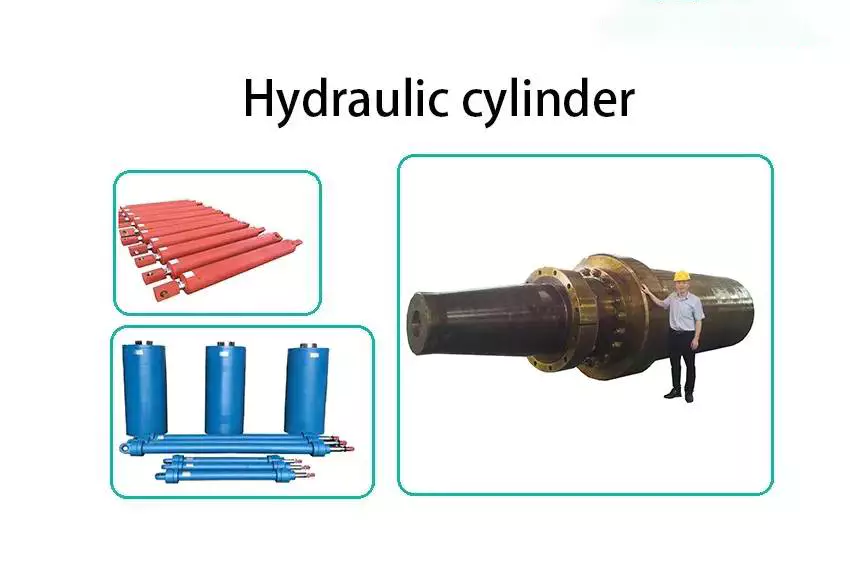
How do hydraulic cylinders handle variations in load and pressure during operation?
Hydraulic cylinders are designed to handle variations in load and pressure during operation, making them versatile and efficient in various applications. Hydraulic systems use the principle of transmitting force through incompressible fluid to generate linear motion. Here’s a detailed explanation of how hydraulic cylinders handle variations in load and pressure:
1. Load Handling:
– Hydraulic cylinders are capable of handling different loads by utilizing the principle of Pascal’s law. According to Pascal’s law, when pressure is applied to a fluid in a confined space, the pressure is transmitted equally in all directions. In a hydraulic cylinder, the force applied to the piston results in an equal force output at the rod end of the cylinder. The size of the piston and the pressure exerted determine the force generated by the cylinder. Therefore, hydraulic cylinders can handle a wide range of loads by adjusting the pressure applied to the fluid.
2. Pressure Compensation:
– Hydraulic systems incorporate pressure compensation mechanisms to handle variations in pressure during operation. Pressure compensating valves or regulators are often used to maintain a consistent pressure in the hydraulic system, regardless of load changes. These valves automatically adjust the flow rate or pressure to ensure stable and controlled operation of the hydraulic cylinder. By compensating for pressure variations, hydraulic cylinders can maintain a consistent force output and prevent damage or instability due to excessive pressure.
3. Control Valves:
– Control valves play a crucial role in managing variations in pressure and load during hydraulic cylinder operation. Directional control valves, such as spool valves or poppet valves, control the flow of hydraulic fluid into and out of the cylinder, enabling precise control of the cylinder’s extension and retraction. By adjusting the position of the control valve, the speed and force exerted by the hydraulic cylinder can be regulated to match the load and pressure requirements of the application. Control valves allow for efficient handling of variations in load and pressure by providing fine-tuned control over the hydraulic system.
4. Accumulators:
– Hydraulic accumulators are often used to handle fluctuations in pressure and load. Accumulators store hydraulic fluid under pressure, which can be released or absorbed as needed to compensate for sudden changes in load or pressure. When the load on the hydraulic cylinder decreases, the accumulator releases stored fluid to maintain pressure and prevent pressure spikes. Conversely, when the load on the cylinder increases, the accumulator absorbs excess fluid to maintain system stability. By utilizing accumulators, hydraulic cylinders can effectively handle variations in load and pressure, ensuring smooth and controlled operation.
5. Feedback and Control Systems:
– Advanced hydraulic systems may incorporate feedback and control systems to monitor and adjust the operation of hydraulic cylinders in real-time. Position sensors or pressure sensors provide feedback on the cylinder’s position, force, and pressure, allowing the control system to make continuous adjustments to optimize performance. These systems can automatically adapt to variations in load and pressure, ensuring precise control and efficient operation of the hydraulic cylinder.
6. Design Considerations:
– Proper design considerations, such as selecting the appropriate cylinder size, piston diameter, and rod diameter, are essential for handling variations in load and pressure. The design should account for the maximum anticipated load and pressure conditions to ensure the hydraulic cylinder operates within its specified range. Additionally, the selection of suitable seals, materials, and components that can withstand the anticipated load and pressure variations is crucial for maintaining the reliability and longevity of the hydraulic cylinder.
By utilizing the principles of hydraulic systems, incorporating pressure compensation mechanisms, employing control valves and accumulators, and implementing feedback and control systems, hydraulic cylinders can effectively handle variations in load and pressure during operation. These features and design considerations allow hydraulic cylinders to adapt and perform optimally in a wide range of applications and operating conditions.


editor by CX 2024-01-19