
Descrizione del prodotto
FE/FC/FEE/FSE Telescopic Hydraulic Cylinder For Dump Truck/Trailer
| Articolo | Dump Truck Telescopic Hydraulic Cylinder |
| Type | FC/FE/FEE/FSE/Pin to Pin Mounting/Pin to Trunnion Mounting |
| HS Code | 8412210090 |
| Each Stage Diameter(mm) | 221/196/172/150/129/110/91/75/60; 214/191/169/149/129/110/91/75/60; 202/179/157/137/118/99/80/63; |
| Max.Stroke(mm) | 12000mm |
| Raw Materials | 27SiMn,16Mn,45#,20# seamless steel pipe with quenched&tempered |
| Seal Kits | Kaden,Hallite,Merkel,Guarnitec etc |
| Max.Pressure | 25MPa/250Bar |
| Chrome Plating | Hard chrome plated |
| Chrome Thickness | 0.015-0.571mm |
| Color | According to your needs,you can choose your favorite color (Black/Blue/Red/Yellow/Gray/White etc) |
| Quality Check | All the parts and the finished hydraulic cylinders will be tested before delivery |
| Warranty | 14 Months |
| Lead Time | 30-35 working days after deposit payment |
| Package | Plywood pallet or steel box suitable for export |
| Customers | USA,Canada,Mexico,Russia,Australia,New Zealand,Netherlands,Poland,Italy,South Korea, South America,South Africa etc |
| OEM/ODM | Yes |
FE Telescopic Hydraulic Cylinder List
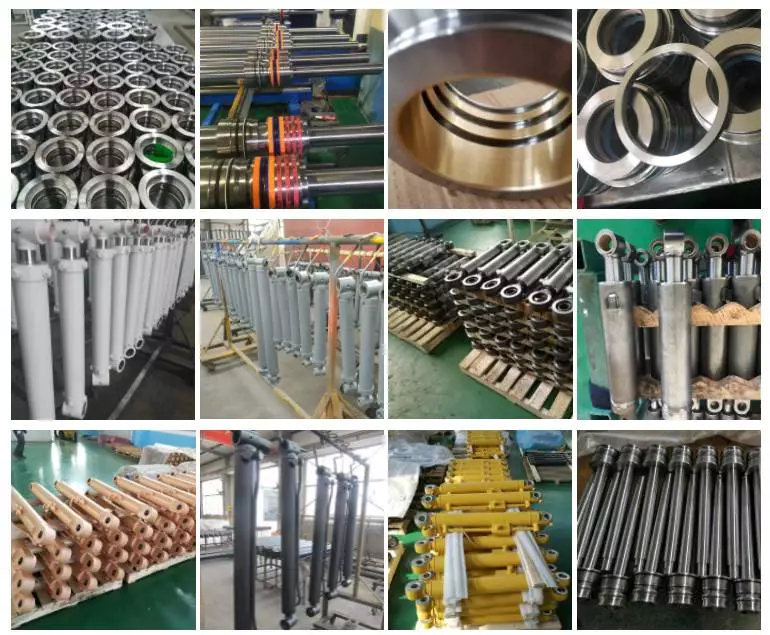
Hydraulic Cylinder Production Process
Hydraulic Cylinder Test
Each hydraulic cylinder is strictly tested before delivery.
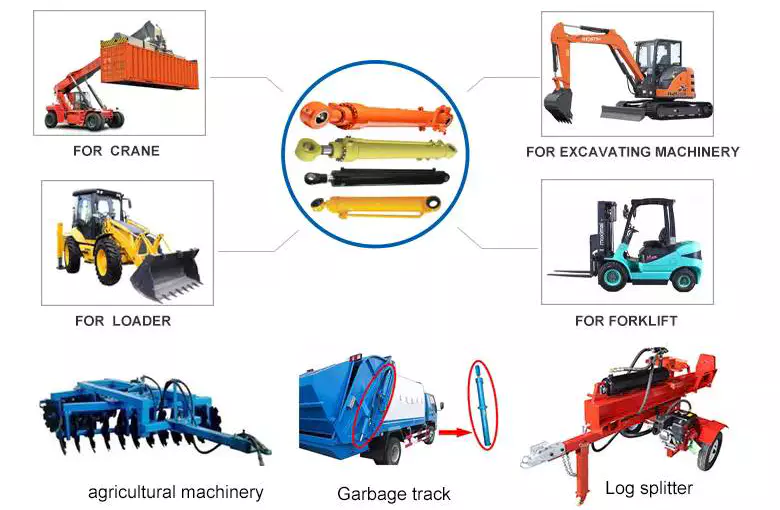
Hydraulic Cylinder Application
Other Hot Selling Hydraulic Cylinders
Package&Shipping
Our Overseas Customers
FAQ
A. Compared with CHINAMFG cylinder, what are your cylinder advantages?
1. Rod are chrome plated.
2. Tubes are quenched and tempered.
3.Tube inner hole goes through deep hole boring machine processing. Surface roughness is 0.4Ra
and circular degree is 0.571.
4. Good quality yet lower price.
B: Are you a manufacture or a trade company?
Manufacture, we are the leader manufacturer of hydraulic industry in China with 14 years’ experience and technology accumulation.
With strong technical team we could solve any annoyance of you.
C: How can I get a booklet and buy a cylinder from you?
Just leave me a message or email or call me directly, let me know you are interesting in our products. I will talk with you for the details soon!
1. Please advice the drawing with technical requirement.
2. Please advice the model No. after you check our booklet.
3. Please advice the tipping capacity, number of stages, closed length, mounting type and size.
4. Please also help advice the quantities, this is very important.
D: Do your products come with a warranty?
Yes, we have 14 months warranty. In this year, if the quality problem we will free repair for you.
E: What about the quality feedback of your products?
We have never received even once quality complaint for many years of international business.
F: Can you help me to install or recommend what kind of hydraulic cylinder or power pack should I use for specific machine?
Yes, we have 6 experienced engineers who are always ready to help you. If you do not know what kind of hydraulic cylinders should be used in your machine, please just contact us, our engineers will design the exact products match your need.
G: What is the delivery time?
Within 15 days for samples.
25-30 days for bulk production, which is depend on quality, production process and so on.
H: What is your main payment term?
T/T, L/C, either is available.
| Certificazione: | CE, ISO9001 |
|---|---|
| Pressione: | Alta pressione |
| Temperatura di lavoro: | Temperatura normale |
| Modo di agire: | Single Acting |
| Metodo di lavoro: | Straight Trip |
| Modulo modificato: | Regulated Type |
| Samples: | US$ 280/Piece 1 Piece(Min.Order) | |
|---|
| Personalizzazione: | Disponibile |
|
|---|
Quali progressi nella tecnologia dei cilindri idraulici hanno migliorato l'efficienza energetica?
I progressi nella tecnologia dei cilindri idraulici hanno portato a significativi miglioramenti nell'efficienza energetica, consentendo ai sistemi idraulici di funzionare in modo più efficiente e di ridurre il consumo di energia. Questi progressi mirano a minimizzare le perdite di energia, ottimizzare le prestazioni del sistema e migliorare l'efficienza complessiva. Ecco una spiegazione dettagliata di alcuni dei principali progressi nella tecnologia dei cilindri idraulici che hanno migliorato l'efficienza energetica:
1. Progettazione efficiente del circuito idraulico:
– La progettazione dei circuiti idraulici si è evoluta per migliorare l'efficienza energetica. I progressi nelle tecniche di progettazione dei circuiti, come il rilevamento del carico, i sistemi a compensazione di pressione o le pompe a cilindrata variabile, contribuiscono ad adattare la potenza idraulica erogata alle effettive esigenze di carico. Queste soluzioni riducono il consumo energetico superfluo regolando i livelli di portata e pressione in base alle richieste del sistema, anziché operare a una pressione elevata fissa.
2. Fluidi idraulici ad alta efficienza:
– Lo sviluppo di fluidi idraulici ad alta efficienza, come quelli a bassa viscosità o sintetici, ha contribuito a migliorare l'efficienza energetica. Questi fluidi offrono un minore attrito interno e una ridotta resistenza al flusso, con conseguente diminuzione delle perdite di energia all'interno del sistema. Inoltre, additivi e formulazioni avanzate migliorano le proprietà lubrificanti, riducendo l'attrito e ottimizzando l'efficienza complessiva dei cilindri idraulici.
3. Tecnologie di sigillatura avanzate:
La tecnologia delle guarnizioni ha compiuto progressi significativi, portando a una maggiore efficienza energetica nei cilindri idraulici. Le guarnizioni ad alte prestazioni, come quelle a basso attrito o a bassa perdita, riducono al minimo le perdite interne e l'attrito. La riduzione delle perdite interne contribuisce a mantenere la pressione del sistema in modo più efficace, con conseguente minore spreco di energia. Inoltre, materiali e design innovativi per le guarnizioni ne migliorano la durata e ne prolungano la vita utile, riducendo la necessità di frequenti interventi di manutenzione e sostituzione.
4. Sistemi di controllo elettroidraulici:
L'integrazione di sistemi di controllo elettroidraulici avanzati ha contribuito notevolmente al miglioramento dell'efficienza energetica. Combinando il controllo elettronico con la potenza idraulica, questi sistemi consentono un controllo preciso del funzionamento dei cilindri, ottimizzando il consumo energetico. Valvole proporzionali o servovalvole, insieme a sensori di posizione o di forza, permettono un controllo accurato e reattivo, garantendo che i cilindri idraulici funzionino al livello di prestazioni richiesto, riducendo al minimo gli sprechi di energia.
5. Sistemi di recupero energetico:
– I sistemi di recupero energetico, come gli accumulatori idraulici, sono sempre più utilizzati per migliorare l'efficienza energetica nelle applicazioni con cilindri idraulici. Gli accumulatori immagazzinano l'energia in eccesso durante i periodi di bassa richiesta e la rilasciano quando si verifica un picco di domanda, riducendo la necessità per la pompa idraulica di fornire continuamente la massima potenza. Utilizzando l'energia immagazzinata, questi sistemi possono ridurre significativamente il consumo energetico e migliorare l'efficienza complessiva del sistema.
6. Monitoraggio e controllo intelligenti:
I progressi nelle tecnologie di monitoraggio e controllo intelligenti hanno reso possibile il monitoraggio in tempo reale dei sistemi idraulici, consentendo un utilizzo ottimizzato dell'energia. Sensori integrati, analisi dei dati e algoritmi di controllo forniscono informazioni dettagliate sulle prestazioni del sistema e sul consumo energetico, permettendo agli operatori di prendere decisioni e apportare modifiche consapevoli. Identificando inefficienze o condizioni operative non ottimali, è possibile ridurre al minimo il consumo energetico, con conseguente miglioramento dell'efficienza energetica.
7. Integrazione e ottimizzazione del sistema:
L'integrazione e l'ottimizzazione dei sistemi idraulici nel loro complesso hanno svolto un ruolo significativo nel miglioramento dell'efficienza energetica. Considerando l'intera configurazione del sistema, il dimensionamento dei componenti e l'interazione tra i diversi elementi, gli ingegneri possono progettare sistemi idraulici che funzionano nel modo più efficiente dal punto di vista energetico. Il corretto dimensionamento dei componenti, la minimizzazione delle perdite di carico e la riduzione di tubazioni o valvole non necessarie contribuiscono a migliorare l'efficienza energetica dei cilindri idraulici.
8. Ricerca e sviluppo:
– Le continue attività di ricerca e sviluppo nel campo della tecnologia dei cilindri idraulici continuano a promuovere progressi in termini di efficienza energetica. Le innovazioni nei materiali, nella progettazione dei componenti, nella modellazione dei sistemi e nelle tecniche di simulazione aiutano a individuare le aree di miglioramento e a ottimizzare il consumo energetico. Inoltre, la collaborazione tra le parti interessate del settore, gli istituti di ricerca e gli enti normativi favorisce lo sviluppo di tecnologie per cilindri idraulici ad alta efficienza energetica.
In sintesi, i progressi nella tecnologia dei cilindri idraulici hanno portato a notevoli miglioramenti nell'efficienza energetica. Progettazione efficiente dei circuiti idraulici, fluidi idraulici ad alta efficienza, tecnologie di tenuta avanzate, sistemi di controllo elettroidraulici, sistemi di recupero energetico, monitoraggio e controllo intelligenti, integrazione e ottimizzazione dei sistemi, nonché le continue attività di ricerca e sviluppo, contribuiscono tutti a ridurre il consumo energetico e a migliorare l'efficienza energetica complessiva dei cilindri idraulici. Questi progressi non solo apportano benefici all'ambiente, ma offrono anche risparmi sui costi e prestazioni migliori in diverse applicazioni idrauliche.
Integration of Hydraulic Cylinders with Equipment Requiring Rapid and Dynamic Movements
Hydraulic cylinders can indeed be integrated with equipment that requires rapid and dynamic movements. While hydraulic systems are generally known for their ability to provide high force and precise control, they can also be designed and optimized for applications that demand fast and dynamic motion. Let’s explore how hydraulic cylinders can be integrated with such equipment:
- High-Speed Hydraulic Systems: Hydraulic cylinders can be part of high-speed hydraulic systems designed specifically for rapid and dynamic movements. These systems incorporate features such as high-flow valves, optimized hydraulic circuitry, and responsive control systems. By carefully engineering the system components and hydraulic parameters, it is possible to achieve the desired speed and responsiveness, enabling the equipment to perform rapid movements.
- Valve Control: The control of hydraulic cylinders plays a crucial role in achieving rapid and dynamic movements. Proportional or servo valves can be used to precisely control the flow of hydraulic fluid into and out of the cylinder. These valves offer fast response times and precise flow control, allowing for rapid acceleration and deceleration of the cylinder’s piston. By adjusting the valve settings and optimizing the control algorithms, equipment can be designed to execute dynamic movements with high speed and accuracy.
- Optimized Cylinder Design: The design of hydraulic cylinders can be optimized to facilitate rapid and dynamic movements. Lightweight materials, such as aluminum alloys or composite materials, can be used to reduce the moving mass of the cylinder, enabling faster acceleration and deceleration. Additionally, the cylinder’s internal components, such as the piston and seals, can be designed for low friction to minimize energy losses and enhance responsiveness. These design optimizations contribute to the overall speed and dynamic performance of the equipment.
- Accumulator Integration: Hydraulic accumulators can be integrated into the system to enhance the dynamic capabilities of hydraulic cylinders. Accumulators store pressurized hydraulic fluid, which can be rapidly released to supplement the flow from the pump during high-demand situations. This stored energy can provide an extra boost of power, allowing for faster and more dynamic movements. By strategically sizing and configuring the accumulator, the system can be optimized for the specific rapid and dynamic requirements of the equipment.
- System Feedback and Control: To achieve precise and dynamic movements, hydraulic systems can incorporate feedback sensors and advanced control algorithms. Position sensors, such as linear potentiometers or magnetostrictive sensors, provide real-time position feedback of the hydraulic cylinder. This information can be used in closed-loop control systems to maintain precise positioning and execute rapid movements. Advanced control algorithms can optimize the control signals sent to the valves, ensuring smooth and dynamic motion while minimizing overshooting or oscillations.
In summary, hydraulic cylinders can be integrated with equipment that requires rapid and dynamic movements by utilizing high-speed hydraulic systems, employing responsive valve control, optimizing cylinder design, integrating accumulators, and incorporating feedback sensors and advanced control algorithms. These measures enable hydraulic systems to deliver the speed, responsiveness, and precision necessary for equipment operating in dynamic environments. By leveraging the capabilities of hydraulic cylinders, manufacturers can design and integrate systems that meet the requirements of applications demanding rapid and dynamic movements.

How do hydraulic cylinders generate force and motion using hydraulic fluid?
Hydraulic cylinders generate force and motion by utilizing the principles of fluid mechanics, specifically Pascal’s law, in conjunction with the properties of hydraulic fluid. The process involves the conversion of hydraulic energy into mechanical force and linear motion. Here’s a detailed explanation of how hydraulic cylinders achieve this:
1. Pascal’s Law:
– Hydraulic cylinders operate based on Pascal’s law, which states that when pressure is applied to a fluid in a confined space, it is transmitted equally in all directions. In the context of hydraulic cylinders, this means that when hydraulic fluid is pressurized, the force is evenly distributed throughout the fluid and transmitted to all surfaces in contact with the fluid.
2. Hydraulic Fluid and Pressure:
– Hydraulic systems use a specialized fluid, typically hydraulic oil, as the working medium. This fluid is stored in a reservoir and circulated through the system by a hydraulic pump. The pump pressurizes the fluid, creating hydraulic pressure that can be controlled and directed to various components, including hydraulic cylinders.
3. Cylinder Design and Components:
– Hydraulic cylinders consist of several key components, including a cylindrical barrel, a piston, a piston rod, and various seals. The barrel is a hollow tube that houses the piston and allows for fluid flow. The piston divides the cylinder into two chambers: the rod side and the cap side. The piston rod extends from the piston and provides a connection point for external loads. Seals are used to prevent fluid leakage and maintain hydraulic pressure within the cylinder.
4. Fluid Input and Motion:
– To generate force and motion, hydraulic fluid is directed into one side of the cylinder, creating pressure on the corresponding surface of the piston. This pressure is transmitted through the fluid to the other side of the piston.
5. Force Generation:
– The force generated by a hydraulic cylinder is a result of the pressure applied to a specific surface area of the piston. The force exerted by the hydraulic cylinder can be calculated using the formula: Force = Pressure × Area. The area is determined by the diameter of the piston or the piston rod, depending on which side of the cylinder the fluid is acting upon.
6. Linear Motion:
– As the pressurized hydraulic fluid acts on the piston, it generates a force that moves the piston in a linear direction within the cylinder. This linear motion is transferred to the piston rod, which extends or retracts accordingly. The piston rod can be connected to external components or machinery, allowing the generated force to perform various tasks, such as lifting, pushing, pulling, or controlling mechanisms.
7. Control and Regulation:
– The force and motion generated by hydraulic cylinders can be controlled and regulated by adjusting the flow of hydraulic fluid into the cylinder. By regulating the flow rate, pressure, and direction of the fluid, the speed, force, and direction of the cylinder’s movement can be precisely controlled. This control allows for accurate positioning, smooth operation, and synchronization of multiple cylinders in complex machinery.
8. Return and Recirculation of Fluid:
– After the hydraulic cylinder completes its stroke, the hydraulic fluid on the opposite side of the piston needs to be returned to the reservoir. This is typically achieved through hydraulic valves that control the flow direction, allowing the fluid to return and be recirculated in the system for further use.
In summary, hydraulic cylinders generate force and motion by utilizing the principles of Pascal’s law. Pressurized hydraulic fluid acts on the piston, creating force that moves the piston in a linear direction. This linear motion is transferred to the piston rod, allowing the generated force to perform various tasks. By controlling the flow of hydraulic fluid, the force and motion of hydraulic cylinders can be precisely regulated, contributing to their versatility and wide range of applications in machinery.


editor by CX 2023-11-21