
Descrizione del prodotto
Products Description
Product Name | HSG Series Hydraulic Cylinder | |||
Work Press | 7/14/16/21/31.5MPa 37.5/63MPa Can be Customized | |||
Material | Aluminum,Cast Iron,45mnb Steel,Stainless Steel | |||
Bore Size | 40mm–320mm,Customizable | |||
Shaft Diameter | 20mm–220mm,Customizable | |||
Stroke Length | 30mm–14100mm,Customizable | |||
Rod Surface Hardness | HRC48-54 | |||
Paint Color | Black,Yellow,Blue,Brown,Customizable | |||
Montaggio | Earring,Flange,Clevis.Foot,Trunnion,Customizable | |||
Warrenty | 1 Year | |||
MOQ | 1 Piece | |||
Delivery Time | 7-15 Days,Also depands on specific demands | |||
Certification | ISO9001,CE | |||
Company Profile
QIANGLIN HYDRAULIC MACHINERY CO., LTD
| QiangLin is a professional hydraulic equipment manufacturer, mainly engaged in hydraulic system design, manufacture, installation, transformation, sales, and technical services. Our manufacturing facilities are certified to the ISO 9001 standard. We are an approved supplier to many equipment manufacturers in China. We are also partners with many customers from America, Canada, Australia, Germany, England, and other European Countries. Product quality, shorter delivery time, and customer satisfaction are our long-term commitments to our CHINAMFG customers. Hope to be your partner. |
FAQ:
Q1: Are you a trading company or a manufacturer?
A: We have our own factory.
Q2: Are you able to make Non-standard or customized products?
A: Yes, we can.
Q3: How long is your delivery time?
A: Normally, the delivery time is 7 days if we have stock, 15-30 working days if we don’t. but it
also depends on the product
requirements and quantity.
Q4: Do you provide samples? are the samples free or not?
A: Yes, we can provide samples, but they are not free of charge.
Q5: What are your payment terms?
A: 30% deposit T/T or Irrevocable L/C at sight, If you have any questions, please feel free to
contact us.
Q6: What are your After-sales services?
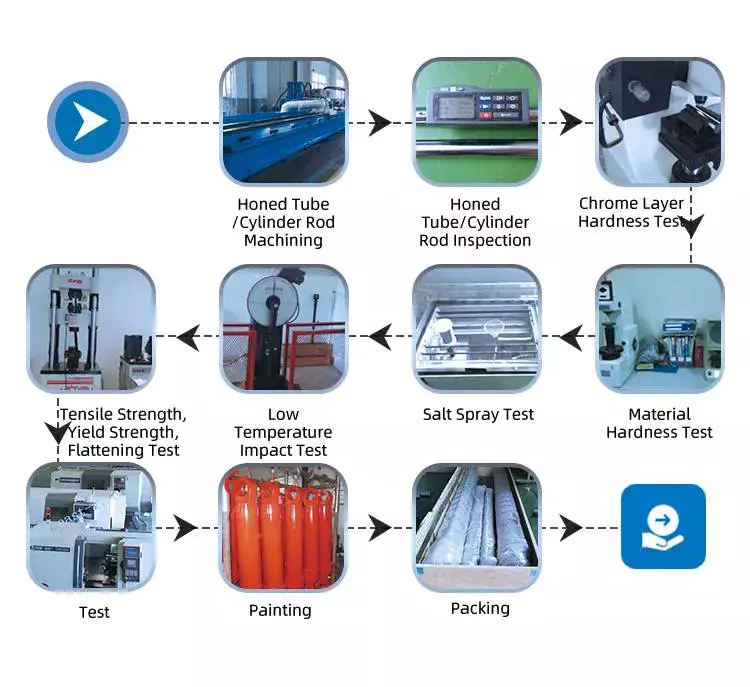
A: Before shipment, Each individual product will be strictly inspected on our factory QC Process
System. In addition, We have a
Customer Service team to respond to customers’ questions within 12 hours. Being helpful in
solving customers’ problems is always our goal.
| Certificazione: | CE, ISO9001 |
|---|---|
| Pressione: | Alta pressione |
| Temperatura di lavoro: | Temperatura normale |
| Customization: | Available |
|
|---|
.shipping-cost-tm .tm-status-off{background: none;padding:0;color: #1470cc}
| Shipping Cost: Estimated freight per unit. | about shipping cost and estimated delivery time. |
|---|
| Payment Method: |
|
|---|---|
| Initial Payment Full Payment |
| Currency: | US$ |
|---|
| Return&refunds: | You can apply for a refund up to 30 days after receipt of the products. |
|---|
How do hydraulic cylinders handle variations in temperature and harsh operating environments?
Hydraulic cylinders are designed to handle variations in temperature and harsh operating environments by incorporating specific features and materials that ensure their durability, reliability, and performance. The ability of hydraulic cylinders to withstand extreme temperatures, corrosive environments, and other harsh conditions is crucial for their successful operation in a wide range of applications. Here’s a detailed explanation of how hydraulic cylinders handle variations in temperature and harsh operating environments:
1. Temperature Range:
– Hydraulic cylinders are designed to operate within a specified temperature range. The materials used in their construction, such as cylinder barrels, pistons, seals, and lubricants, are selected to withstand the anticipated temperature variations. Specialized seals and O-rings made from materials like nitrile, Viton, or polyurethane are used to maintain their sealing properties over a wide temperature range. Heat-resistant coatings or thermal insulation may be applied to certain components to protect them from high temperatures.
2. Thermal Expansion:
– Hydraulic cylinders are designed to accommodate thermal expansion and contraction that occurs with temperature changes. The materials used in their construction have different coefficients of thermal expansion, allowing the cylinder components to expand or contract at a similar rate. This design consideration prevents excessive stress, binding, or leakage that could result from thermal expansion or contraction.
3. Heat Dissipation:
– In applications where hydraulic cylinders are subjected to high temperatures, heat dissipation mechanisms are employed to prevent overheating. Cooling fins or heat sinks may be incorporated into the cylinder design to increase the surface area for heat transfer. In some cases, external cooling methods such as air or liquid cooling systems can be used to maintain optimal operating temperatures.
4. Corrosion Resistance:
– Hydraulic cylinders used in harsh operating environments are constructed from materials that exhibit excellent corrosion resistance. Stainless steel, chrome-plated steel, or other corrosion-resistant alloys are commonly used for cylinder components exposed to corrosive substances or environments. Additionally, surface treatments such as coatings, plating, or specialized paints can provide an extra layer of protection against corrosion.
5. Sealing Systems:
– Hydraulic cylinders employ sealing systems that are specifically designed to withstand harsh operating environments. The seals used in hydraulic cylinders are selected based on their resistance to temperature extremes, chemicals, abrasion, and other environmental factors. Specialized seal designs, such as wiper seals, rod seals, or high-temperature seals, are utilized to maintain effective sealing and prevent contamination of the hydraulic fluid.
6. Lubrication:
– Proper lubrication is essential for the smooth operation and longevity of hydraulic cylinders, particularly in harsh operating environments. Lubricants are selected based on their ability to withstand high temperatures, resist oxidation, and provide effective lubrication under extreme conditions. Regular maintenance and lubrication practices ensure that the cylinder components continue to operate smoothly and reduce the effects of wear and friction.
7. Robust Construction:
– Hydraulic cylinders designed for harsh operating environments are built with robust construction techniques to withstand the rigors of such conditions. The cylinder barrels, rods, and other components are manufactured to meet strict quality and durability standards. Welded or bolted construction methods are employed to ensure the structural integrity of the cylinders. Reinforcements, such as flanges or tie rods, may be added to enhance the cylinder’s strength and resistance to external forces.
8. Environmental Protection:
– Hydraulic cylinders can be equipped with additional protective features to shield them from harsh operating environments. Protective covers, boots, or bellows can be used to prevent contaminants, debris, or moisture from entering the cylinder and compromising its performance. These protective measures help extend the service life of hydraulic cylinders in demanding conditions.
9. Compliance with Standards:
– Hydraulic cylinders manufactured for specific industries or applications often comply with industry standards or regulations related to operating temperature ranges, environmental conditions, or safety requirements. Compliance with these standards ensures that hydraulic cylinders are designed and tested to meet the specific demands of their intended operating environments.
In summary, hydraulic cylinders are designed to handle variations in temperature and harsh operating environments by incorporating suitable materials, thermal expansion considerations, heat dissipation mechanisms, corrosion-resistant components, specialized sealing systems, proper lubrication, robust construction techniques, protective features, and compliance with industry standards. These design considerations and features enable hydraulic cylinders to operate reliably and effectively in a wide range of demanding applications and environmental conditions.
Adaptation of Hydraulic Cylinders for Medical Equipment and Aerospace Applications
Hydraulic cylinders have the potential to be adapted for use in medical equipment and aerospace applications, offering unique advantages in these industries. Let’s explore how hydraulic cylinders can be adapted for these specialized fields:
- Medical Equipment: Hydraulic cylinders can be adapted for various medical equipment applications, including hospital beds, patient lifts, surgical tables, and rehabilitation devices. Here’s how hydraulic cylinders are beneficial in medical equipment:
- Positioning and Adjustability: Hydraulic cylinders provide precise and smooth movement, allowing for accurate positioning and adjustments of medical equipment. This is crucial for ensuring patient comfort, proper alignment, and ease of use.
- Load Handling: Hydraulic cylinders offer high force capabilities, enabling the safe handling of heavy loads in medical equipment. They can support the weight of patients, facilitate smooth transitions, and provide stability during procedures.
- Controlled Motion: Hydraulic cylinders provide controlled and stable motion, which is essential for delicate medical procedures. The ability to adjust speed, position, and force allows for precise and controlled movements, minimizing patient discomfort and ensuring accurate treatment.
- Durability and Reliability: Hydraulic cylinders are designed to withstand rigorous use and demanding environments, making them suitable for medical equipment applications. Their durability and reliability contribute to the long-term performance and safety of medical devices.
- Aerospace Applications: Hydraulic cylinders can also be adapted for aerospace applications, where lightweight yet robust systems are essential. Here’s how hydraulic cylinders are advantageous in aerospace:
- Flight Control Systems: Hydraulic cylinders play a critical role in aircraft flight control systems, including ailerons, elevators, rudders, and landing gear. They provide precise and reliable actuation, allowing pilots to control the aircraft’s movements with accuracy and responsiveness.
- Weight Optimization: Hydraulic cylinders can be designed using lightweight materials, such as aluminum alloys or composite materials, to reduce overall weight. This weight optimization is crucial in aerospace applications to enhance fuel efficiency, payload capacity, and aircraft performance.
- Shock and Vibration Resistance: Aerospace environments involve significant shock and vibration forces. Hydraulic cylinders can be engineered to withstand these dynamic loads while maintaining performance and reliability, ensuring consistent operation even under extreme conditions.
- Space Constraints: Hydraulic cylinders can be designed to fit within the space constraints of aircraft or spacecraft. Their compact size and flexible mounting options allow for efficient integration into the limited available space.
In summary, hydraulic cylinders can be adapted for use in medical equipment and aerospace applications, leveraging their precise positioning, load handling capabilities, controlled motion, durability, and reliability. In medical equipment, hydraulic cylinders enable comfortable patient positioning, smooth transitions, and controlled movements during procedures. In aerospace, hydraulic cylinders provide precise actuation, weight optimization, shock and vibration resistance, and space-efficient solutions. By adapting hydraulic cylinders to these specialized fields, manufacturers can meet the unique requirements and enhance the performance of medical equipment and aerospace systems.
Puoi spiegare il ruolo e l'importanza dei cilindri idraulici nei macchinari?
I cilindri idraulici svolgono un ruolo cruciale nei macchinari di diversi settori industriali. Sono componenti essenziali che forniscono un movimento lineare controllato e potente, consentendo il funzionamento di attrezzature pesanti e facilitando numerose attività. Il ruolo e l'importanza dei cilindri idraulici nei macchinari possono essere spiegati in dettaglio come segue:
Ruolo dei cilindri idraulici:
– Conversione dell'energia idraulica: i cilindri idraulici convertono l'energia idraulica, solitamente sotto forma di fluido idraulico pressurizzato, in forza lineare e movimento. Questa conversione consente ai macchinari di svolgere compiti come sollevamento, spinta, trazione, serraggio, inclinazione e controllo di vari meccanismi.
– Generazione di moto lineare: i cilindri idraulici generano moto lineare sfruttando i principi della legge di Pascal. Quando il fluido idraulico viene indirizzato verso un lato del cilindro, esercita una pressione sul pistone, determinando un movimento lineare del pistone e dello stelo collegato. Questo movimento lineare può essere utilizzato per azionare altri componenti all'interno del macchinario o per eseguire direttamente l'operazione richiesta.
– Generazione di forza: i cilindri idraulici sono in grado di generare forze elevate grazie alla pressione idraulica applicata al pistone. La forza erogata da un cilindro idraulico dipende dalla superficie del pistone e dalla pressione del fluido idraulico. Questa forza consente ai macchinari di esercitare una potenza significativa per sollevare carichi pesanti, applicare pressione o superare la resistenza.
– Controllo preciso: i cilindri idraulici offrono un controllo preciso sul movimento lineare e sulla forza esercitata. Regolando il flusso del fluido idraulico, è possibile regolare con precisione la velocità e la direzione del movimento del cilindro. Questo livello di controllo è fondamentale nei macchinari che richiedono un posizionamento preciso, movimenti delicati o la sincronizzazione di più cilindri.
– Integrazione con i sistemi idraulici: i cilindri idraulici sono parte integrante dei sistemi idraulici utilizzati nei macchinari. Lavorano insieme a pompe idrauliche, valvole e attuatori per creare un circuito idraulico completo. Questa integrazione consente un'efficiente trasmissione di potenza, controllo e coordinamento delle varie funzioni della macchina.
Significato dei cilindri idraulici:
– Azionamento di macchinari pesanti: i cilindri idraulici sono essenziali nei macchinari pesanti utilizzati nell'edilizia, nell'industria mineraria, in agricoltura, nella movimentazione dei materiali e in altri settori. Consentono il sollevamento e lo spostamento di carichi pesanti, l'azionamento di attrezzature e l'esecuzione di attività che richiedono elevata forza e precisione.
– Versatilità e adattabilità: i cilindri idraulici sono componenti versatili che possono essere progettati e personalizzati per soddisfare i requisiti specifici dei macchinari. Possono essere integrati in vari tipi di apparecchiature e personalizzati in base a fattori quali capacità di forza, lunghezza della corsa, velocità e opzioni di montaggio. Questa adattabilità rende i cilindri idraulici adatti a diverse applicazioni.
– Durata e affidabilità: i cilindri idraulici sono costruiti per resistere a condizioni operative rigorose, tra cui alte pressioni, carichi pesanti e uso continuo. Sono progettati con materiali robusti, lavorazioni di precisione ed efficaci sistemi di tenuta per garantire durata e affidabilità per lunghi periodi di funzionamento.
– Sicurezza e controllo del carico: i cilindri idraulici garantiscono un funzionamento sicuro e controllato dei macchinari. Offrono meccanismi di protezione da sovraccarico, come le valvole di sicurezza, per prevenire danni causati da forza o pressione eccessive. Inoltre, i cilindri idraulici consentono un controllo preciso del carico, riducendo al minimo il rischio di incidenti durante il sollevamento, l'abbassamento o il posizionamento di carichi pesanti.
– Design compatto: i cilindri idraulici offrono un elevato rapporto potenza/dimensioni, consentendo la progettazione di macchinari compatti. Le loro dimensioni relativamente ridotte rispetto alle forze che possono generare li rendono adatti ad applicazioni in cui lo spazio è limitato o il peso è limitato.
– Efficienza energetica: i cilindri idraulici contribuiscono all'efficienza energetica dei macchinari. L'utilizzo di sistemi idraulici consente il trasferimento di potenza su lunghe distanze senza perdite di potenza significative. Inoltre, i cilindri idraulici possono integrare funzionalità di risparmio energetico come la tecnologia load-sensing e i circuiti rigenerativi, riducendo il consumo energetico.
Nel complesso, i cilindri idraulici svolgono un ruolo fondamentale nei macchinari, garantendo un movimento lineare controllato e potente. La loro importanza risiede nella capacità di convertire l'energia idraulica, generare forze elevate, offrire un controllo preciso, integrarsi con i sistemi idraulici e facilitare il funzionamento di attrezzature pesanti in diversi settori industriali. I cilindri idraulici contribuiscono ad aumentare la produttività, la sicurezza e l'efficienza nelle applicazioni meccaniche, rendendoli componenti indispensabili nell'ingegneria moderna.


editor by CX 2023-11-18