
Descrizione del prodotto
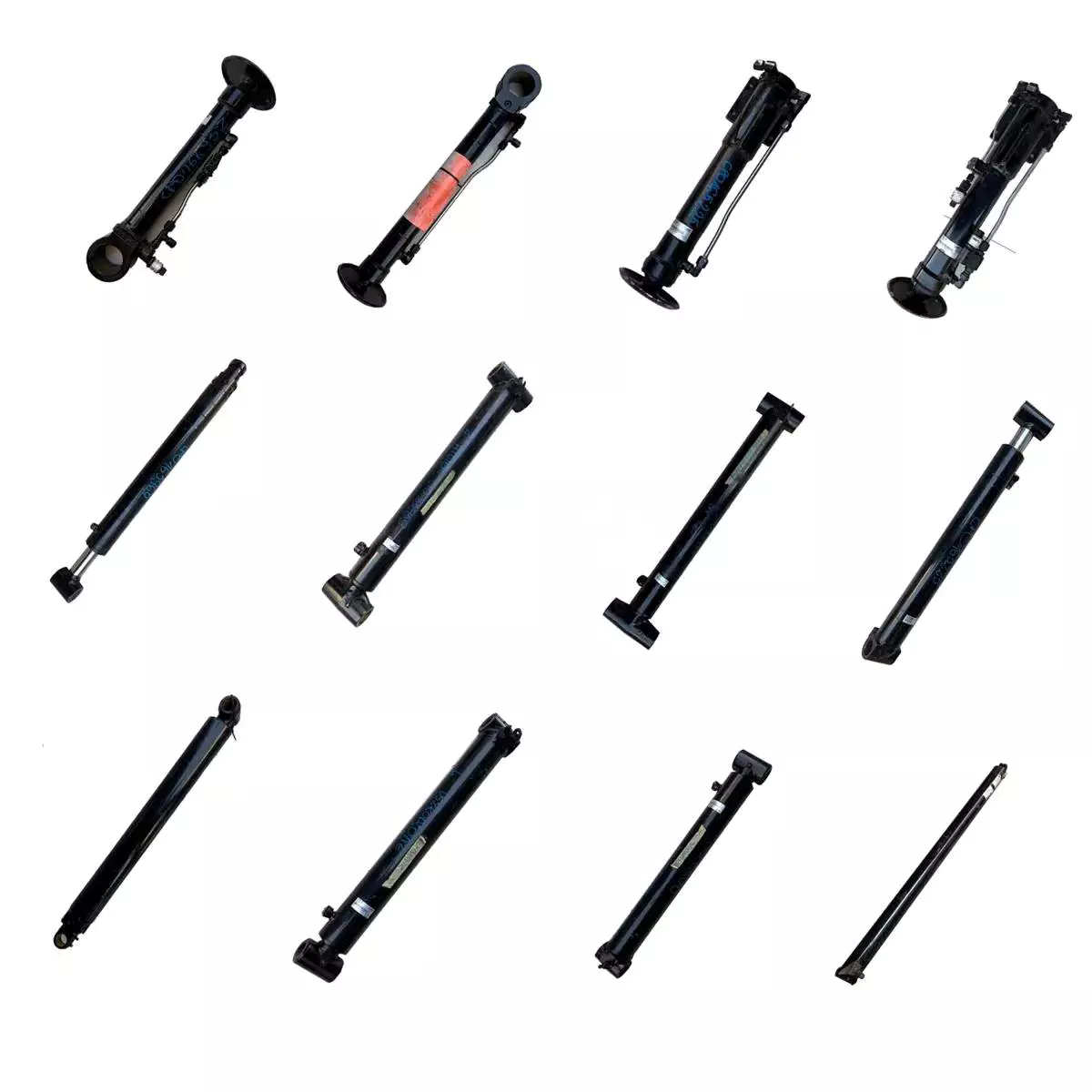
Loader Accessories of Hydraulic Steering Cylinder for Lingong933
About us
HangZhou CHINAMFG Machinery Co., Ltd.
is a professional manufacturer who can supply including Forklift & Construction Machinery Attachments, Wheel Excavator & Excavator Attachments, Hydraulic Cylinder, Automotive Alternator, Full Vehicle Wiring Harness. We extend our warmest welcome to the domestic & international customers to visit and consult with our corporation.
Our philosophy is:
Efficient management
Continuous innovation
Passion for our country and the world
Workshop
Verified Certificate
FAQ
Q: What kind of terms of payment can be accepted?
A: For terms of payment, L/C, T/T, D/A, D/P, Western Union can be accepted.
Q: What certificates are available in Machinery?
A: For the certificate, we have CE, ISO.
Q: What about the delivery time?
A: 30 days after receiving the deposit.
Q: What about the warranty time?
A: 12 months after shipment or 2000 working hours, whichever occurs first.
Q: What about the Minimum Order Quantity?
A: The MOQ is 1 pc.
| Certificazione: | CE, ISO9001, SGS |
|---|---|
| Pressione: | Medium Pressure |
| Temperatura di lavoro: | Temperatura normale |
| Acting Way: | Double Acting |
| Working Method: | Straight Trip |
| Adjusted Form: | Regulated Type |
| Samples: | US$ 75/Piece 1 Piece(Min.Order) | |
|---|
| Customization: | Available |
|
|---|
How do hydraulic cylinders handle the challenges of precise positioning and control?
Hydraulic cylinders are designed to handle the challenges of precise positioning and control with a combination of engineering principles and advanced control systems. These challenges often arise in applications where accurate and controlled movements are required, such as in industrial automation, construction, and material handling. Here’s a detailed explanation of how hydraulic cylinders overcome these challenges:
1. Fluid Power Control:
– Hydraulic cylinders utilize fluid power control to achieve precise positioning and control. The hydraulic system consists of a hydraulic pump, control valves, and hydraulic fluid. By regulating the flow of hydraulic fluid into and out of the cylinder, operators can control the speed, direction, and force exerted by the cylinder. The fluid power control allows for smooth and accurate movements, enabling precise positioning of the hydraulic cylinder and the attached load.
2. Control Valves:
– Control valves play a crucial role in handling the challenges of precise positioning and control. These valves are responsible for directing the flow of hydraulic fluid within the system. They can be manually operated or electronically controlled. Control valves allow operators to adjust the flow rate of the hydraulic fluid, controlling the speed of the cylinder’s movement. By modulating the flow, operators can achieve fine control over the positioning of the hydraulic cylinder, enabling precise and accurate movements.
3. Proportional Control:
– Hydraulic cylinders can be equipped with proportional control systems, which offer enhanced precision in positioning and control. Proportional control systems utilize electronic feedback and control algorithms to precisely regulate the flow and pressure of the hydraulic fluid. These systems provide accurate and proportional control over the movement of the hydraulic cylinder, allowing for precise positioning at various points along its stroke length. Proportional control enhances the cylinder’s ability to handle complex tasks that require precise movements and control.
4. Position Feedback Sensors:
– To achieve precise positioning, hydraulic cylinders often incorporate position feedback sensors. These sensors provide real-time information about the position of the cylinder’s piston rod. Common types of position feedback sensors include potentiometers, linear variable differential transformers (LVDTs), and magnetostrictive sensors. By continuously monitoring the position, the feedback sensors enable closed-loop control, allowing for accurate positioning and control of the hydraulic cylinder. The feedback information is used to adjust the flow of hydraulic fluid to achieve the desired position accurately.
5. Servo Control Systems:
– Advanced hydraulic systems employ servo control systems to handle the challenges of precise positioning and control. Servo control systems combine electronic control, position feedback sensors, and proportional control valves to achieve high levels of accuracy and responsiveness. The servo control system continuously compares the desired position with the actual position of the hydraulic cylinder and adjusts the flow of hydraulic fluid to minimize any positional error. This closed-loop control mechanism enables the hydraulic cylinder to maintain precise positioning and control, even under varying loads or external disturbances.
6. Integrated Automation:
– Hydraulic cylinders can be integrated into automated systems to achieve precise positioning and control. In such setups, the hydraulic cylinders are controlled by programmable logic controllers (PLCs) or other automation controllers. These controllers receive input signals from various sensors and use pre-programmed logic to command the hydraulic cylinder’s movements. The integration of hydraulic cylinders into automated systems allows for precise and repeatable positioning and control, enabling complex sequences of movements to be executed with high accuracy.
7. Advanced Control Algorithms:
– Advancements in control algorithms have also contributed to the precise positioning and control of hydraulic cylinders. These algorithms, such as PID (Proportional-Integral-Derivative) control, adaptive control, and model-based control, enable sophisticated control strategies to be implemented. These algorithms consider factors such as load variations, system dynamics, and environmental conditions to optimize the control of hydraulic cylinders. By employing advanced control algorithms, hydraulic cylinders can compensate for disturbances and achieve precise positioning and control over a wide range of operating conditions.
In summary, hydraulic cylinders overcome the challenges of precise positioning and control through the use of fluid power control, control valves, proportional control, position feedback sensors, servo control systems, integrated automation, and advanced control algorithms. By combining these elements, hydraulic cylinders can achieve accurate and controlled movements, enabling precise positioning and control in various applications. These capabilities are essential for industries that require high precision and repeatability in their operations, such as industrial automation, robotics, and material handling.
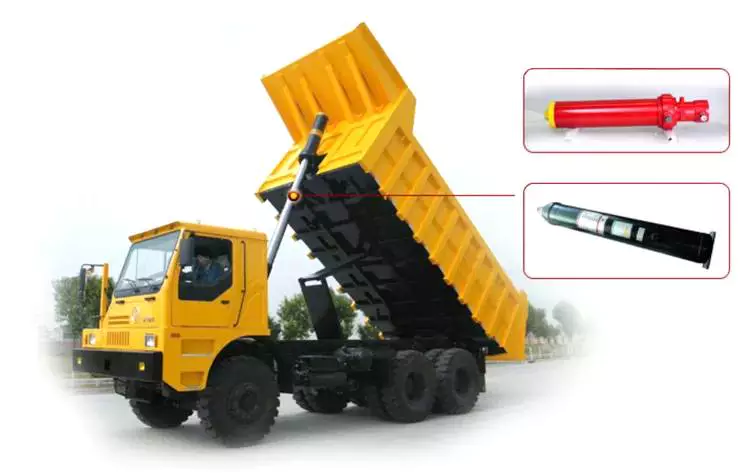
Progressi nella tecnologia dei cilindri idraulici che migliorano la resistenza alla corrosione
I progressi nella tecnologia dei cilindri idraulici hanno portato a significativi miglioramenti nella resistenza alla corrosione. La corrosione è un problema importante nei sistemi idraulici, soprattutto in ambienti in cui i cilindri sono esposti a umidità, sostanze chimiche o agenti corrosivi. Questi progressi mirano a migliorare la durata e la longevità dei cilindri idraulici. Esploriamo alcuni dei principali progressi nella tecnologia dei cilindri idraulici che hanno migliorato la resistenza alla corrosione:
- Materiali resistenti alla corrosione: L'utilizzo di materiali resistenti alla corrosione rappresenta un progresso fondamentale nella tecnologia dei cilindri idraulici. L'acciaio inossidabile, ad esempio, offre un'eccellente resistenza alla corrosione, rendendolo una scelta popolare in ambito marittimo, offshore e in altri ambienti corrosivi. Inoltre, i progressi nella metallurgia hanno portato allo sviluppo di leghe e rivestimenti specializzati che offrono una maggiore resistenza alla corrosione, prolungando la durata dei cilindri idraulici.
- Trattamenti e rivestimenti superficiali: Sono stati sviluppati diversi trattamenti superficiali e rivestimenti per proteggere i cilindri idraulici dalla corrosione. Questi trattamenti possono includere la galvanizzazione, la zincatura, la verniciatura a polvere e rivestimenti specifici anticorrosione. Questi rivestimenti creano una barriera tra la superficie del cilindro e gli elementi corrosivi, impedendo il contatto diretto e inibendo l'insorgenza della corrosione. La scelta del rivestimento appropriato dipende dall'applicazione specifica e dalle condizioni ambientali.
- Tecnologia di sigillatura: Sistemi di tenuta efficaci sono fondamentali per impedire che acqua, umidità e contaminanti entrino nel cilindro e ne causino corrosione. I progressi nella tecnologia di tenuta hanno portato allo sviluppo di guarnizioni di alta qualità e di design avanzati che offrono una resistenza superiore alla corrosione. Queste guarnizioni sono in genere realizzate con materiali specificamente progettati per resistere ad ambienti corrosivi, garantendo prestazioni di tenuta a lungo termine e riducendo al minimo il rischio di problemi legati alla corrosione.
- Finiture superficiali migliorate: La finitura superficiale dei cilindri idraulici gioca un ruolo importante nella loro resistenza alla corrosione. I progressi nelle tecniche di lavorazione e lucidatura hanno permesso di ottenere finiture superficiali più lisce e uniformi. Superfici più lisce riducono la probabilità di innesco della corrosione e facilitano la pulizia e la manutenzione dei cilindri idraulici. Inoltre, finiture speciali, come la passivazione o i trattamenti chimici, possono essere applicate per migliorare ulteriormente la resistenza alla corrosione.
- Caratteristiche di protezione ambientale: I cilindri idraulici possono essere dotati di caratteristiche aggiuntive per la protezione dalla corrosione. Queste caratteristiche possono includere soffietti protettivi, soffietti o schermi che proteggono le aree vulnerabili dall'esposizione ad agenti corrosivi. Incorporando questi elementi protettivi nella progettazione, i cilindri idraulici possono resistere ad ambienti difficili e ridurre al minimo il rischio di danni dovuti alla corrosione.
In sintesi, i progressi nella tecnologia dei cilindri idraulici hanno migliorato significativamente la resistenza alla corrosione. L'utilizzo di materiali resistenti alla corrosione, trattamenti e rivestimenti superficiali avanzati, tecnologie di tenuta innovative, finiture superficiali migliorate e l'integrazione di funzionalità di protezione ambientale hanno contribuito a migliorare la durata e la longevità dei cilindri idraulici in ambienti corrosivi. Questi progressi garantiscono prestazioni affidabili e riducono i costi di manutenzione e sostituzione associati ai problemi legati alla corrosione.
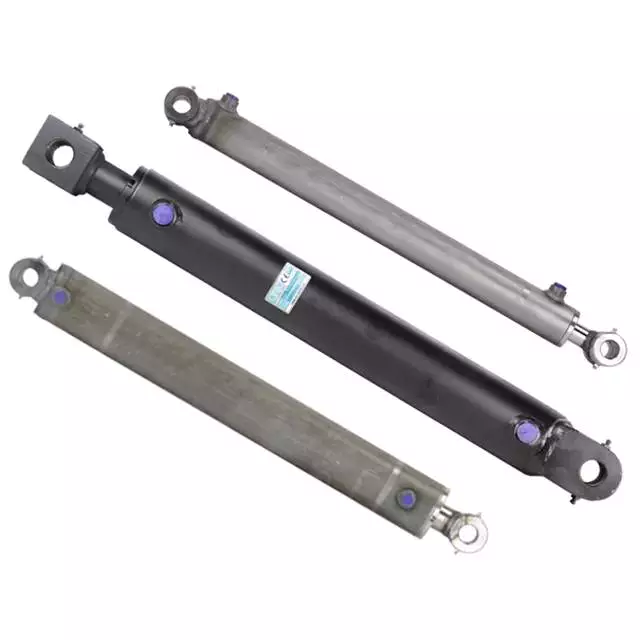
What factors should be considered when selecting the right hydraulic cylinder for an application?
When selecting the right hydraulic cylinder for an application, several important factors need to be considered. These factors help ensure that the chosen hydraulic cylinder is suitable for the specific requirements of the application and will perform reliably. Here are the key factors to consider:
1. Load Requirements:
– One of the crucial factors to consider is the load requirement of the application. Determine the maximum load that the hydraulic cylinder needs to handle. Consider both the static load (when the cylinder is stationary) and the dynamic load (when the cylinder is in motion). The load requirement will impact the cylinder’s bore size, rod diameter, and overall strength. Choose a hydraulic cylinder with a load capacity that exceeds the application’s maximum load to ensure safety and longevity.
2. Stroke Length:
– The stroke length refers to the distance the hydraulic cylinder needs to extend and retract to perform the desired motion. Measure the required stroke length based on the application’s operational requirements. It is essential to choose a hydraulic cylinder with a stroke length that matches or exceeds the required distance. Consider any potential variations or adjustments in the stroke length that may be needed in the future.
3. Operating Pressure:
– Consider the operating pressure required for the application. The hydraulic cylinder must be capable of withstanding the maximum pressure within the hydraulic system. Ensure that the selected cylinder has a pressure rating that exceeds the application’s maximum operating pressure. This ensures safety and prevents premature failure.
4. Speed Requirements:
– Determine the required speed of the hydraulic cylinder’s movement for the application. Consider both the extension and retraction speeds. Select a cylinder that can achieve the desired speed while maintaining precise control and stability. It is important to choose a cylinder that can handle the required speed without compromising performance or safety.
5. Mounting:
– Evaluate the available space and mounting requirements for the hydraulic cylinder. Consider the mounting type (such as flange, foot, trunnion, or clevis), the available mounting points, and any specific mounting constraints. Ensure that the selected cylinder can be easily and securely mounted in the desired location.
6. Environmental Factors:
– Assess the environmental conditions in which the hydraulic cylinder will operate. Consider factors such as temperature extremes, humidity, exposure to chemicals, dust, or corrosive substances. Choose a cylinder that is designed to withstand the specific environmental conditions of the application. This may involve selecting appropriate materials, coatings, or seals to ensure the longevity and performance of the cylinder.
7. Cylinder Configuration:
– Determine the appropriate cylinder configuration based on the application’s requirements. Consider factors such as single-acting or double-acting cylinders, telescopic cylinders for limited space, or custom configurations for unique applications. Evaluate the specific needs of the application to select the most suitable cylinder configuration.
8. Maintenance and Serviceability:
– Consider the maintenance and service requirements of the hydraulic cylinder. Evaluate factors such as ease of access for maintenance, availability of spare parts, and the reputation of the manufacturer or supplier in terms of customer support and after-sales service. Choosing a reliable and reputable brand can ensure ongoing support and availability of spare parts when needed.
9. Compliance and Standards:
– Depending on the industry and application, certain compliance standards may need to be met. Consider any industry-specific regulations, safety standards, or certifications that the hydraulic cylinder should comply with. Ensure that the selected cylinder meets the required standards and certifications for the application.
10. Cost and Budget:
– Finally, consider the cost and budget for the hydraulic cylinder. While it is important to select a cylinder that meets the application’s requirements, it is also necessary to consider the overall cost-effectiveness. Evaluate the initial purchase cost, long-term maintenance costs, and the expected lifespan of the cylinder. Balancing the cost and quality will help in selecting a hydraulic cylinder that provides the best value for the application.
By considering these factors in the selection process, it becomes possible to choose the right hydraulic cylinder that meets the specific requirements of the application in terms of load capacity, stroke length, operating pressure, speed, mounting, environmental conditions, maintenance needs, compliance, and cost-effectiveness. Proper selection ensures optimal performance, reliability, and longevity of the hydraulic cylinder in the intended application.


editor by CX 2023-11-27