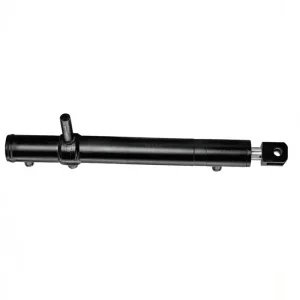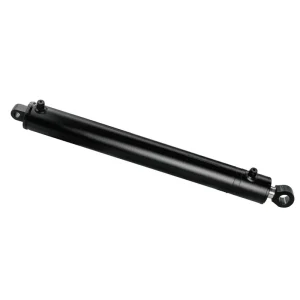
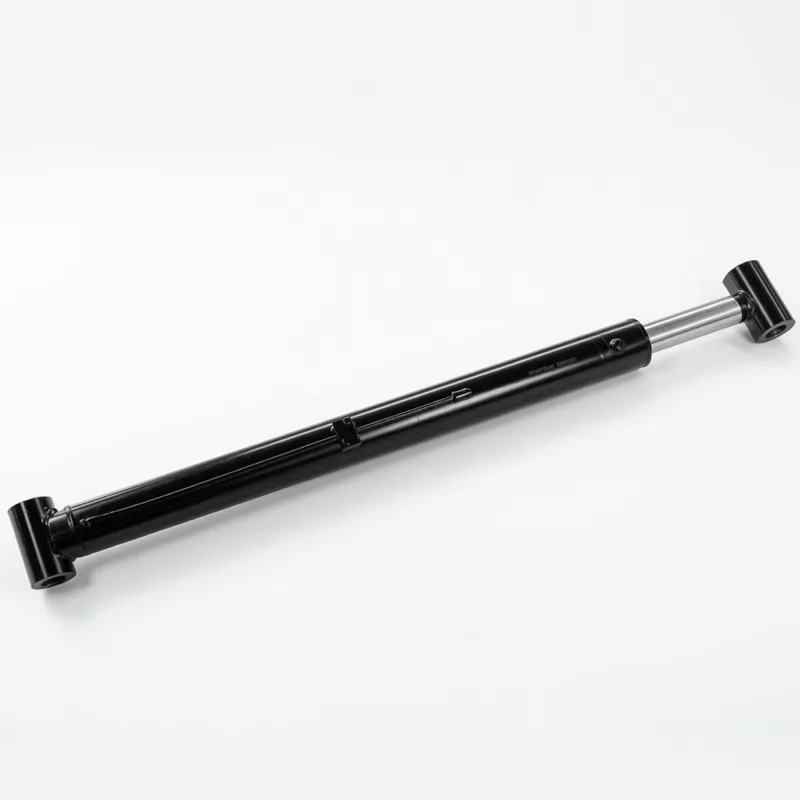
Vérin de levage pour nacelle élévatrice EP-Φ65xΦ45
The EP-Φ65xΦ45 Aerial Work Vehicle Lifting Cylinder designed with a compact 1,075 mm installation distance and an 840 mm stroke, it delivers a rated working pressure of 18 MPa and a maximum withstand pressure of 27 MPa, ensuring a 1.5:1 safety margin compliant with EN 280 standards. Weighing 27 kg, this cylinder features a Φ56 mm trunnion mount and G1/4 hydraulic ports, providing a direct fit for scissor lifts, articulated booms, and vertical mast platforms. Built for reliability, it includes precision-ground components and robust sealing systems to resist abrasion and corrosion in demanding construction environments.
Vérin de levage pour nacelle élévatrice EP-Φ65xΦ45
Model HCYY11112003 | Φ65×Φ45×840 | Working Pressure 18 MPa | Trip 840 mm | Weight 27 kg
Engineered specifically for aerial work platforms and elevated access equipment, this lifting cylinder delivers a rated working pressure of 18 MPa, an 840 mm stroke, and a maximum withstand pressure of 27 MPa within a compact and lightweight 27 kg package. Designed for French and European B2B buyers requiring a precision lifting cylinder that meets the demanding safety and performance standards of the aerial work vehicle industry.
Aerial Work Platform Lifting Cylinder
The EP-Φ65xΦ45 lifting cylinder is purpose-built for the main lift arm of aerial work vehicles — scissor lifts, articulated boom lifts, and vertical mast platforms — where the lifting cylinder must raise and hold a loaded work platform at height under controlled hydraulic pressure. The 840 mm stroke matches the geometric requirements of mid-range aerial work vehicle arm assemblies common in French construction, utilities maintenance, and building facade access applications. The 1,075 mm installation distance accommodates the pin-to-pin mounting geometry of standard aerial platform arm brackets, and the 27 MPa burst rating provides a safety margin well above the 18 MPa working pressure that ensures compliance with European MEWP safety standards.
Quick Reference
| Cylinder Model | HCYY11112003 |
| Specifications | Φ65×Φ45×840 mm |
| Working Pressure | 18 MPa |
| Max. Withstand Pressure | 27 MPa |
| Trip (Stroke) | 840 mm |
| Installation Distance | 1,075 mm |
| Weight | 27 kg |
| Port Thread | G1/4 |
| Mount Bolt | 4–M8 |
| Application | Aerial Work Vehicle / MEWP |
1. Technical Parameters — Lifting Cylinder HCYY11112003
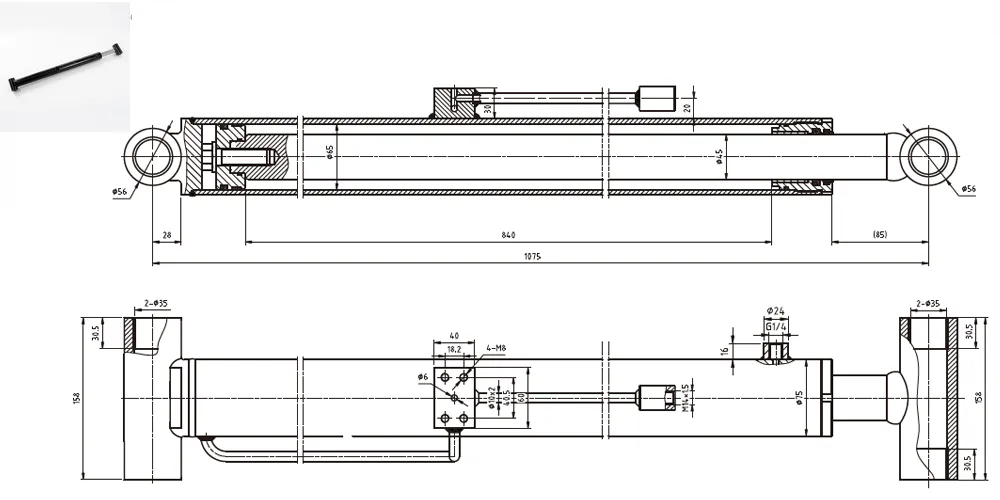
The following table presents the complete technical specification of the EP-Φ65xΦ45 lifting cylinder as extracted from the product design documentation. All dimensional data is in millimetres (mm) unless otherwise noted. The port thread G1/4 follows ISO 228-1 pipe thread standard for external thread; internal threads for mounting bolts follow M8 coarse thread per ISO 724. For dimensional drawings with full toleranced dimensions, contact our technical team.
| Parameter | Value | Notes |
|---|---|---|
| Cylinder Model | HCYY11112003 | Aerial work vehicle lifting series |
| Specifications | Φ65×Φ45×840 mm | Bore × Rod × Stroke |
| Working Pressure | 18 MPa | Rated continuous operating pressure |
| Maximum Withstand Pressure | 27 MPa | Burst / proof pressure rating |
| Trip (Stroke) | 840 mm | Full extension travel of piston rod |
| Installation Distance | 1,075 mm | Pin-to-pin length in retracted position |
| Weight | 27 kg | Dry weight without hydraulic fluid |
| Trunnion Diameter (both ends) | Φ56 mm | Mounting pin bore diameter |
| Hydraulic Port Thread | G1/4 | ISO 228-1 BSP parallel thread |
| Port Bore Diameter | Φ24 mm | At rod-end hydraulic port area |
| Flange Bolt Pattern | 4–M8 | 60 mm bolt circle; holes on 40 mm × 18.2 mm pattern |
| Flange Bolt Hole | Φ6 mm clearance, Φ9 counterbore | For M8 socket head cap screws |
| Rod End Clevis Width (2–Φ35) | 35 mm × 2 ears | Rod end and barrel end clevis |
| Overall Flange Height | 58 mm | Including mounting clevis ears |
| Cylinder Type | Double-Acting Hydraulic Lifting Cylinder | Extend and retract under pressure |
2. About Our Φ65xΦ45 Lifting Cylinder for Aerial Work Vehicles
The EP-Φ65xΦ45 is a lifting cylinder designed and manufactured specifically for aerial work vehicles (AWV), mobile elevating work platforms (MEWP), and related elevated access equipment. Within this class of equipment, the lifting cylinder is the primary actuator responsible for raising the work platform, boom arm, or scissor mechanism to the working height. Its mechanical integrity directly determines the safety of the operators and any personnel or equipment on the platform at height, which is why the specification of this lifting cylinder — rated bore diameter Φ65 mm, rod diameter Φ45 mm, and stroke 840 mm — has been validated against the real-world geometric and load requirements of standard mid-range aerial work platforms used across France and the broader European market.
At 18 MPa working pressure and a maximum withstand pressure of 27 MPa, this hydraulic lift cylinder operates well within the pressure bands specified by European aerial work vehicle designers for primary lift actuators. The 50% margin between working and burst pressure (18 MPa to 27 MPa) provides the engineering safety factor required by EN 280 (Mobile Elevating Work Platforms — Design Calculations, Stability Criteria, Construction, Safety, Examinations and Tests), which is the governing European standard for MEWP equipment. French construction companies, utilities contractors, and hire fleet operators purchasing aerial work vehicles for use on French construction sites — where aerial platform access above 3 metres triggers Travaux en hauteur safety regulations — will find that this lifting cylinder specification aligns with the requirements of both the European and French national regulatory frameworks for elevated work equipment.
The 840 mm stroke and 1,075 mm installation distance are the dimensional parameters most critical to the correct fitment of this lifting cylinder in an aerial work vehicle arm assembly. The installation distance (pin-to-pin distance in the retracted position) of 1,075 mm determines the positional relationship between the lifting cylinder mounting bracket and the arm pivot point in the machine frame, while the 840 mm stroke determines the maximum arm travel angle and, consequently, the maximum platform height achievable at a given arm length. French and European aerial work vehicle OEM builders and aftermarket replacement buyers should verify both the installation distance and the stroke against their specific machine model specification before ordering, as incorrect stroke or installation distance will prevent the machine from reaching its rated working height or may cause mechanical interference at the end of travel.
3. Five Key Advantages of the EP-Φ65xΦ45 Lifting Cylinder
1. Certified Pressure Safety Margin Compliant with EN 280
The 18 MPa working pressure and 27 MPa maximum withstand pressure specification of this lifting cylinder provides a 1.5:1 pressure safety ratio that aligns with the design requirements of EN 280 for mobile elevating work platforms. French MEWP operators and French aerial work vehicle importers can specify this lifting cylinder with confidence that the burst-to-working pressure ratio meets European type-approval calculation requirements, reducing the risk of certification queries during Veritas or DEKRA inspections of newly assembled or maintained machines.
2. Precision-Matched Dimensional Specification for Standard Aerial Platforms
With a bore of Φ65 mm, rod of Φ45 mm, stroke of 840 mm, and installation distance of 1,075 mm, this cherry picker hydraulic cylinder matches the dimensional envelopes of multiple common aerial work vehicle models. The Φ56 mm trunnion diameter at both ends, combined with the 4–M8 flange bolt pattern and G1/4 hydraulic port thread, ensures direct fitment compatibility with standard European aerial platform mounting brackets without the custom machining that non-standard replacement lifting cylinders often require.
3. Compact Weight-to-Force Ratio for Elevated Machine Performance
At 27 kg, this heavy duty hydraulic lift cylinder achieves a weight-to-rated-force ratio that preserves the payload capacity of the aerial work platform. Aerial work vehicles have strict overall weight constraints because platform payload and vehicle stability calculations must account for the weight of every mechanical component at height. A lighter lifting cylinder directly contributes to a higher available platform payload — a commercially significant parameter for French hire fleet operators who specify machines on net payload capacity.
4. Precision-Ground Rod Surface for Seal Longevity
The Φ45 mm piston rod is precision-ground and hard chrome plated to a surface finish specification compatible with the seal system used in aerial work vehicle lifting cylinder applications. The consistent surface finish maintains the hydraulic cylinder seal integrity through the full 840 mm stroke in both directions, resisting the abrasive and chemical exposure common on French construction sites where aerial platforms operate in concrete dust, chemical splatter, and weather conditions. Long seal life reduces the frequency of hydraulic cylinder seal replacement and minimises unplanned downtime for hire fleet operators.
5. OEM-Grade Production Quality with Full Documentation
Each EP-Φ65xΦ45 lifting cylinder is manufactured to OEM aerial work vehicle standards with documented pressure testing and dimensional verification. Material test certificates, dimensional inspection records, and pressure test reports are available as part of the standard documentation package for French and European buyers requiring traceability records for maintenance file documentation, insurance purposes, or EN 280 periodic inspection compliance.
4. Working Principle of the Aerial Work Vehicle Lifting Cylinder
The EP-Φ65xΦ45 is a double-acting lifting cylinder, meaning hydraulic fluid pressure can be applied to either side of the piston to produce controlled extension or retraction of the piston rod. In an aerial work vehicle application, extension of the lifting cylinder rod raises the platform arm against the weight of the platform, work basket, and any personnel and tools it carries. Retraction under controlled back-pressure allows the platform to be lowered in a controlled manner. The hydraulic supply comes from the vehicle's on-board hydraulic power unit — typically a gear pump driven by the engine or an electric motor in battery-powered machines — and is directed to the lifting cylinder by a directional control valve that the operator commands from the ground controls or the platform controls.
The relationship between hydraulic pressure and lift force is straightforward: lift force equals the product of working pressure and the effective piston area. At 18 MPa working pressure acting on a Φ65 mm bore (effective area approximately 3,318 mm²), the theoretical extension force is approximately 59.7 kN — roughly 6.1 tonnes of force — which provides ample margin above the typical 300 to 500 kg platform payload capacity of mid-range aerial work vehicles. This surplus force is available for starting the extension under load, maintaining platform position against external forces such as wind loading, and overcoming internal friction in the arm pivot bearings and the lifting cylinder seals themselves. The 27 MPa maximum withstand pressure means that even in a hydraulic system pressure spike caused by a suddenly blocked load-holding valve or a pump overpressure event, the lifting cylinder barrel and rod will remain structurally intact and not rupture or deform.
The load-holding function of this lifting cylinder relies on the hydraulic lock provided by a counterbalance valve (also called a load-holding valve) installed in the hydraulic circuit between the directional control valve and the lifting cylinder port. This counterbalance valve prevents the platform from drifting downward under gravity load when the operator releases the control. It is a separate hydraulic component installed in the machine circuit, not part of the lifting cylinder body itself. French and European aerial work vehicle maintenance engineers should be aware that any complaint of platform drift or slow lowering without operator command is more likely attributable to a faulty counterbalance valve or worn directional control valve spool than to internal leakage across the lifting cylinder piston seals, which are typically the most durable sealing interface in the hydraulic circuit.
5. Materials and Construction Quality
The material specification of the EP-Φ65xΦ45 lifting cylinder reflects the dual demands of high-cycle fatigue resistance and corrosion protection that aerial work vehicle applications impose. Aerial platforms may perform hundreds of lift-lower cycles per working day across the entire machine service life, which can extend to ten or more years in French hire fleet service. The lifting cylinder barrel must resist the internal pressure cycling without fatigue crack initiation at stress concentration points, and the external surfaces must resist the corrosive environments of construction sites, including concrete splash, chloride-containing cleaning solutions, and the variable weather conditions of French northern and coastal regions.
The lifting cylinder barrel is manufactured from seamless cold-drawn steel tube with a honed bore finish. Cold-drawn tube provides a consistent microstructure and tighter dimensional tolerances than hot-rolled alternatives, and the honed bore achieves the surface roughness specification (Ra 0.2 to 0.4 μm) needed for compatible operation with the piston seal system without accelerating seal wear. The piston rod is solid alloy steel, precision-ground on the outer diameter to achieve a surface finish of Ra 0.2 μm or better, and hard chrome plated to a minimum deposit thickness of 0.015 mm. Hard chrome plating provides both the corrosion resistance needed for outdoor aerial work vehicle service and the hardness (typically 800–1,000 HV) that resists abrasion from particles on the surface of construction site work platforms. The end caps and gland assemblies are machined from medium-carbon steel and fitted with composite piston seals and rod seal assemblies selected for hydraulic fluid compatibility and temperature range appropriate for European outdoor service (−20°C to +80°C).
The external surfaces of the lifting cylinder barrel and end caps receive a protective coating system consisting of a zinc phosphate conversion coat followed by a two-component epoxy primer and a polyurethane topcoat. This coating system is selected to meet the C3 corrosivity class of ISO 12944 for industrial and urban construction environments, which is appropriate for French urban construction sites and the mixed outdoor environments where aerial work vehicles typically operate. Trunnion bores and mating clevis surfaces are machined to H7/h6 tolerance fits to maintain the alignment accuracy needed for correct load transfer between the lifting cylinder and the machine arm structure throughout the service life of the machine.
6. Regulatory and Standards Compliance: France and International
Aerial work vehicles incorporating this lifting cylinder for sale or use in France and the European Union must comply with a specific regulatory framework that governs both the design and ongoing inspection of mobile elevating work platforms. Understanding this framework is essential for French B2B buyers — whether OEM assemblers, aftermarket replacement parts suppliers, or aerial platform hire operators — who need to ensure that replacement lifting cylinders in their machines maintain regulatory compliance.
The primary European standard governing the design of mobile elevating work platforms is EN 280 (EN ISO 16368 from 2022 revision onwards), which specifies design calculation methods, stability criteria, construction requirements, and test methods for MEWPs. EN 280 requires that hydraulic cylinders used as primary lift actuators be rated for a minimum proof pressure of 1.5 times the maximum working pressure — a requirement that this lifting cylinder meets with its 27 MPa withstand pressure against 18 MPa working pressure (ratio 1.5:1). The CE marking of a MEWP under the Machinery Directive 2006/42/EC (now being superseded by Machinery Regulation EU 2023/1230, which will become mandatory in 2027) requires the machine builder to demonstrate conformity with EN 280, and any replacement lifting cylinder must be specified to at least the same pressure ratings as the original component. In France specifically, the periodic inspection of aerial work platforms is governed by Arrêté du 1er mars 2004 (as amended), which requires annual technical inspection of MEWPs by a qualified inspection body such as APAVE, Bureau Veritas, or SOCOTEC. Inspection engineers check hydraulic system integrity including cylinder seal condition and pressure test records. Documentary evidence that the replacement lifting cylinder meets the original pressure specification is typically requested at these inspections.
Beyond France, other European markets impose additional requirements. In Germany, the BetrSichV (Betriebssicherheitsverordnung) industrial safety regulation and the associated DGUV rules for aerial work platforms specify inspection intervals and documentation requirements for work equipment. In the United Kingdom, PUWER 1998 (Provision and Use of Work Equipment Regulations) requires that work equipment, including aerial platforms and their hydraulic components, be maintained in efficient working order, with records of inspections and maintenance kept accessible. In the United States, ANSI A92.20 governs the design of mobile elevating work platforms and specifies hydraulic system requirements including proof pressure ratios. For French buyers exporting aerial work vehicles or supplying replacement parts to non-EU markets, the applicable local standard in the destination country must be verified against the lifting cylinder specifications before supply.
7. Application Scenarios of the Lifting Cylinder
The EP-Φ65xΦ45 lifting cylinder covers the primary lift actuator role in a range of aerial work vehicle types. The 840 mm stroke and 18 MPa working pressure specification positions this lifting cylinder in the mid-range of the aerial work platform market, covering the most common machine classes deployed by French construction contractors and hire fleet operators.
Articulated Boom Lift Primary Arm Cylinder
In articulated boom lifts with working heights of 10 to 14 metres — the most common range in French urban construction and maintenance hire fleets — the primary lift arm typically requires an 840 mm stroke lifting cylinder operating at 18 MPa to achieve the required arm angle at full extension. French telecoms, electrical utilities, and municipal maintenance contractors operating articulated boom machines in this height class will find that this cherry picker hydraulic cylinder specification covers the primary lift arm actuator in multiple common machine models.
Scissor Lift Elevation Cylinder
Scissors lift platforms — widely used in French industrial facilities, warehouses, and building maintenance applications — use a lifting cylinder to drive the scissor mechanism from the fully collapsed position to full working height. The compact installation distance of 1,075 mm and the 840 mm stroke suit the geometric constraints of mid-size electric scissor lifts with platform heights of 6 to 10 metres, a class that dominates the French indoor aerial access market, particularly in automotive, logistics, and food processing plant maintenance.
Vertical Mast Lift Actuator
Vertical mast platforms — single-person aerial platforms used for narrow aisle and interior access — require a primary lifting cylinder that is both compact and capable of the full stroke in a constrained mast housing. The Φ65 mm bore and Φ45 mm rod provide high force-to-diameter ratio that allows the lifting cylinder to fit within the mast tube cross-section while delivering the required platform lift force. French retail, library, and archive management sectors regularly deploy vertical mast platforms for shelf access, making this a commercially significant application in the French aerial access equipment market.
Telescopic Boom Secondary Lift Stage
In larger telescopic boom lifts, the primary boom elevation is typically achieved by a larger cylinder, but the secondary jib or knuckle arm elevation uses a lifting cylinder in the dimensional range of this EP-Φ65xΦ45 unit. French construction and civil engineering companies operating telescopic boom lifts for bridge inspection, high-voltage power line maintenance, and tall building facade work frequently require replacement jib lifting cylinders matching this specification as part of routine machine maintenance or after accidental collision damage to the secondary arm.
Aerial Work Platform Levelling Cylinder
Many aerial work vehicles incorporate a separate levelling lifting cylinder that maintains the platform or basket horizontal as the boom arm angle changes. In machines where this levelling cylinder is hydraulically actuated rather than mechanically linked, a lifting cylinder of similar specification to the EP-Φ65xΦ45 — though often with a shorter stroke — is used. French buyers maintaining multi-function boom lift machines in hire fleets should consult dimensional drawings to confirm stroke compatibility when replacing levelling lifting cylinders with this specification.
8. Hydraulic Cylinder Seal Maintenance and Service Guidelines
The service life of the EP-Φ65xΦ45 lifting cylinder depends as much on correct installation, correct hydraulic fluid specification, and timely seal maintenance as it does on the initial manufacturing quality. For French aerial work vehicle maintenance engineers and hire fleet maintenance teams, the following guidance covers the most common service topics for this type of lifting cylinder.
The correct hydraulic fluid specification is ISO VG 46 mineral hydraulic oil for year-round service in French ambient temperatures, or ISO VG 32 in machines that regularly operate in sub-zero temperatures in French alpine or northeastern regions. Contaminated hydraulic fluid is the most common cause of premature hydraulic cylinder seal wear in aerial work vehicles — abrasive particles in the oil score the hard-chrome rod surface, creating a leak path past the rod seal on every stroke. French aerial platform maintenance engineers should follow the machine manufacturer's fluid specification and change interval, typically every 2,000 hours or every two years, whichever comes first. Lifting cylinder seal replacement should be performed whenever internal or external leakage is detected. The hydraulic lift cylinder seal kit for the HCYY11112003 includes the piston seals (a composite wiper-seal set and a hydraulic seal set) and the rod seal assembly (wiper ring, rod seal, and buffer seal). Replacement of the hydraulic cylinder seal should be performed by a trained hydraulic technician in a clean environment to prevent contamination of the replacement seals before installation.
French aerial work vehicle maintenance teams should perform the following checks at each periodic inspection: check for oil weeping around the rod seal gland and any sign of oil film on the extended rod surface; check the lifting cylinder barrel exterior for corrosion or mechanical damage to the protective coating; verify that the trunnion pin bores are within the wear tolerance specified in the machine maintenance manual; and confirm that the lifting cylinder pressure rating documentation is on file and legible for the APAVE, Bureau Veritas, or SOCOTEC annual inspection engineer. If the machine has been involved in a collision or a fall, the lifting cylinder should be pressure-tested before the machine is returned to service, as impact loads may have caused microcrack initiation in the barrel wall that is not detectable by visual inspection alone.
9. About Us - Lifting Cylinder Manufacturer
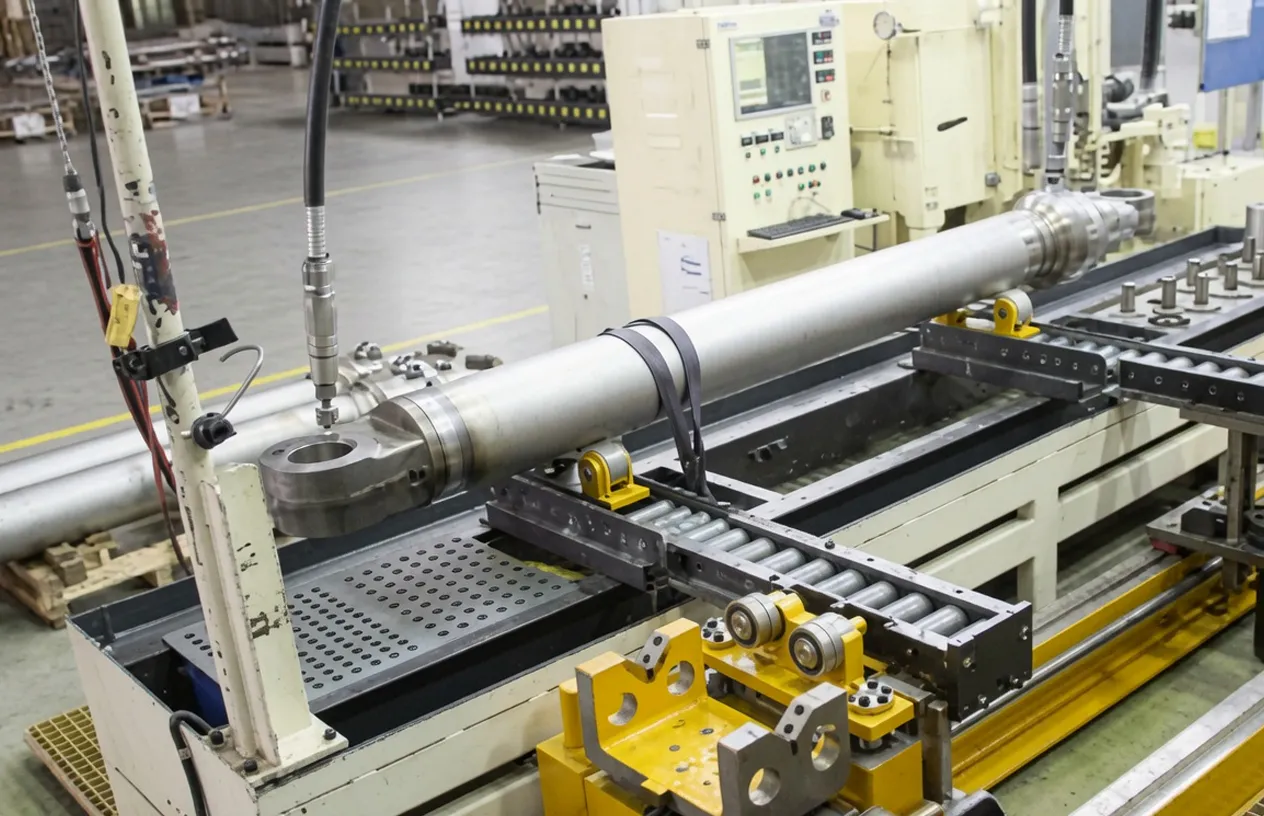
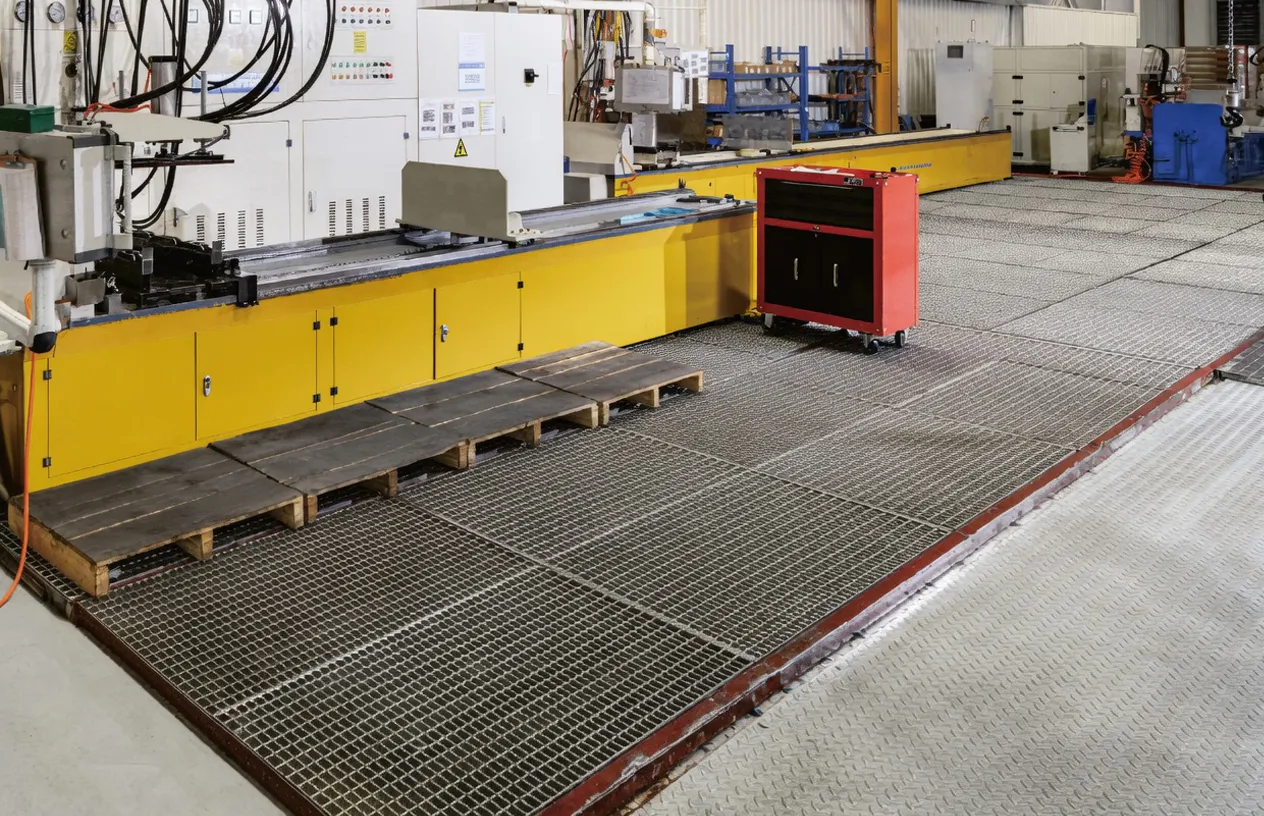
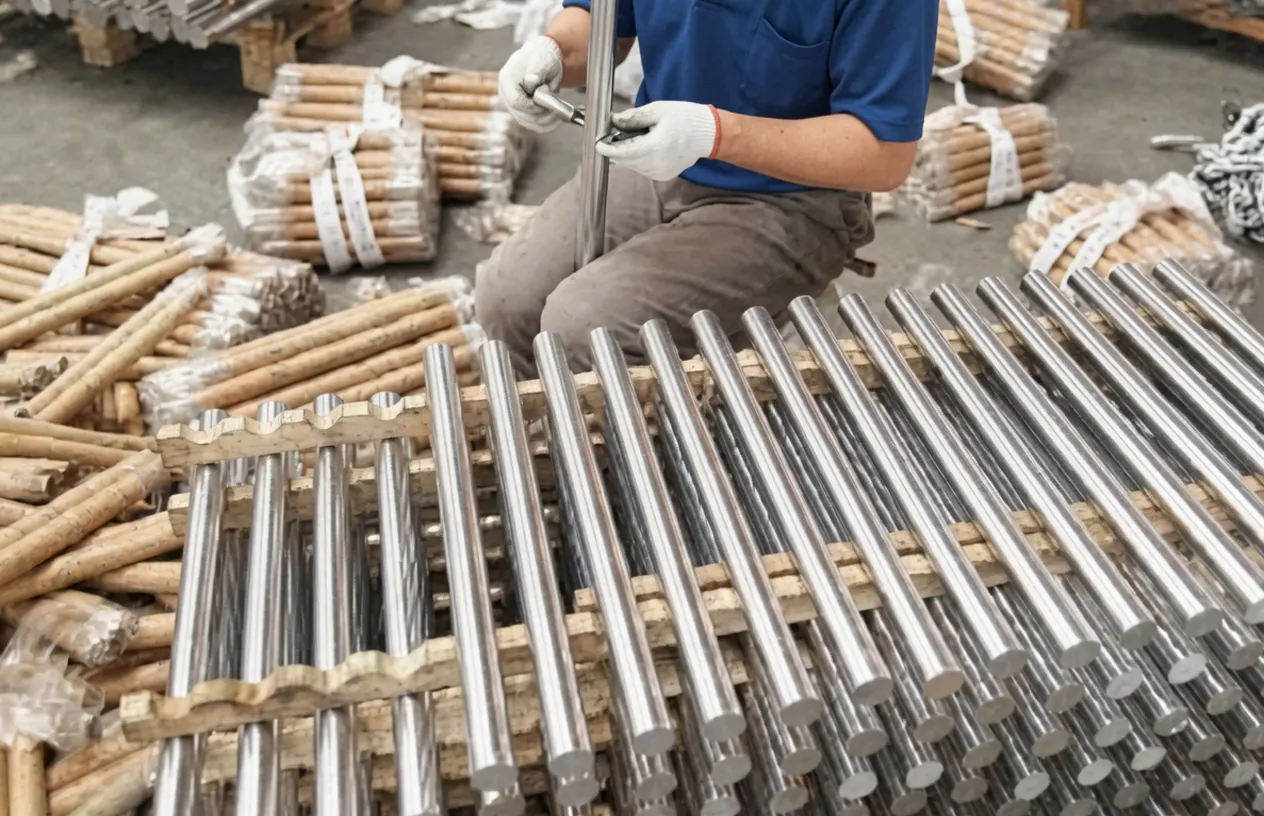
Our manufacturing group specialises in the design and production of lifting cylinders, tilt cylinders, and related hydraulic actuators for aerial work vehicles, forklifts, construction machinery, and industrial equipment. The production facility operates under ISO 9001:2015 quality management certification with CNC turning centres, deep-hole drilling, precision honing, chrome plating lines, and automated pressure testing equipment. We supply OEM aerial work vehicle assemblers, aftermarket replacement parts distributors, and industrial equipment maintenance suppliers across France, Europe, and global B2B markets with our full range of lifting cylinders. Technical documentation including dimensional drawings, pressure test certificates, material test certificates, and compliance declarations is standard with every lifting cylinder order. Samples for dimensional verification and compatibility testing are available on request with short lead times. French-language technical support is available for our European customers navigating EN 280 and European Machinery Directive compliance requirements.
WorkShop
10. Related Products — Complete Hydraulic System Supply
The lifting cylinder is one component in a complete aerial work vehicle hydraulic system. We manufacture and supply complementary hydraulic components that integrate with this lifting cylinder to form a complete, matched hydraulic drive assembly, giving French and European B2B buyers single-supplier convenience and verified interface compatibility across all hydraulic actuator components in their machines.
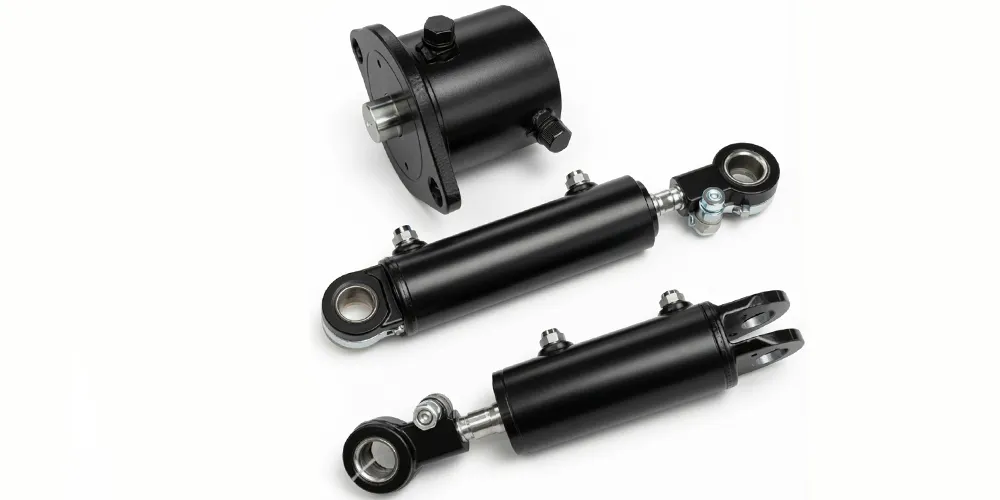
Cylindre d'inclinaison
Our vérin d'inclinaison series complements the lifting cylinder in forklift mast and aerial work vehicle applications where both vertical lift and forward/backward tilt are required. Specifying the tilt cylinder from the same supplier as the lifting cylinder ensures dimensional compatibility at the shared hydraulic port specifications and simplifies the spare-parts management for French maintenance workshops managing mixed machine fleets.
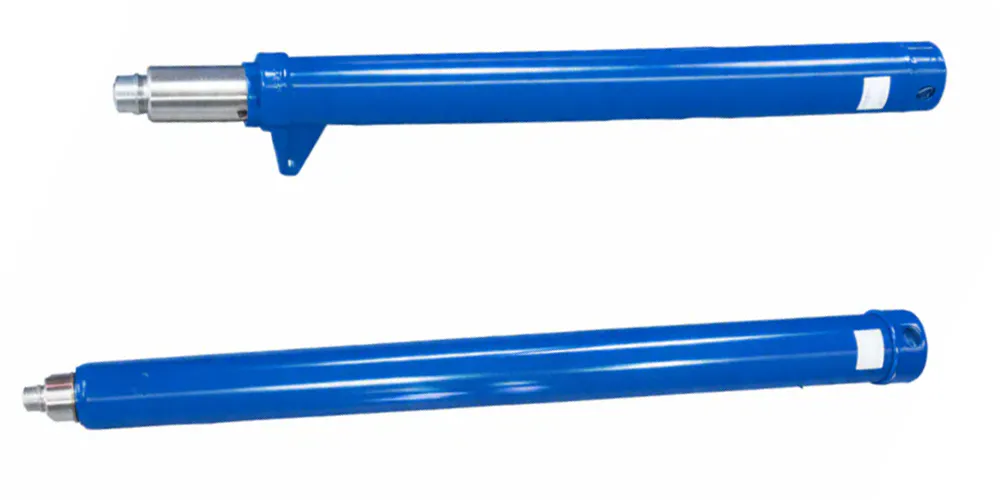
vérin de levage pour chariot élévateur
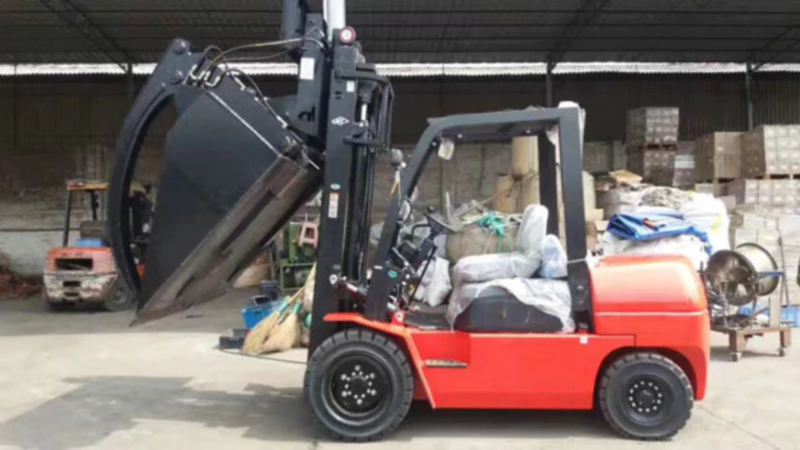
Our forklift lifting cylinder range extends the lifting cylinder product family into forklift mast applications, where the vertical lift actuator operates in a guided channel rather than as a pin-mounted arm actuator. French logistics, warehouse, and manufacturing B2B buyers maintaining mixed fleets of forklifts and aerial platforms can source both lifting cylinder types from our product range with consistent quality standards and documentation.
Hydraulic Pump Station
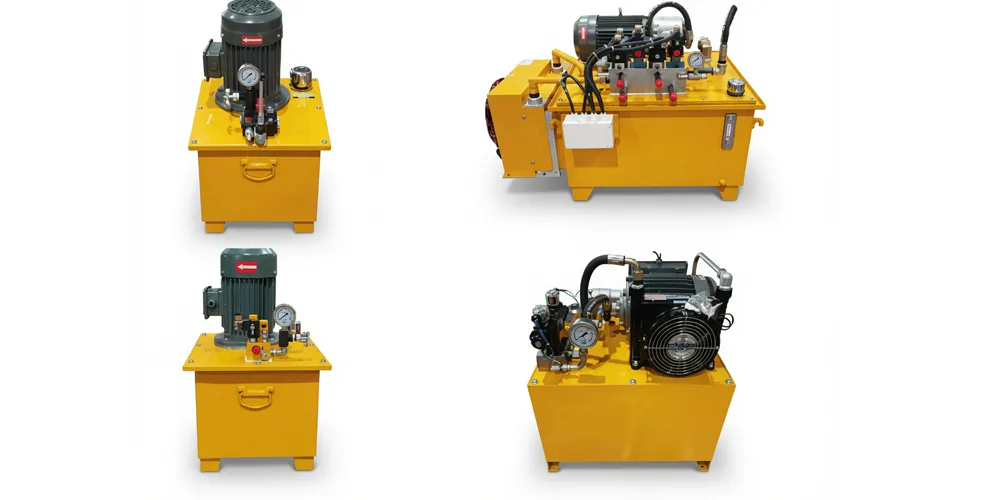
The hydraulic power unit that feeds the lifting cylinder must be matched to the cylinder flow and pressure requirements to ensure correct extension speed and holding performance. Our hydraulic pump station series provides flow rates and pressure settings appropriate for the 18 MPa operating pressure of this aerial hydraulic lifting cylinder, with electric motor drive options for battery-powered aerial work platforms common in the French indoor MEWP market.
Frequently Asked Questions
Editor: PXY