Description du produit
Description du produit
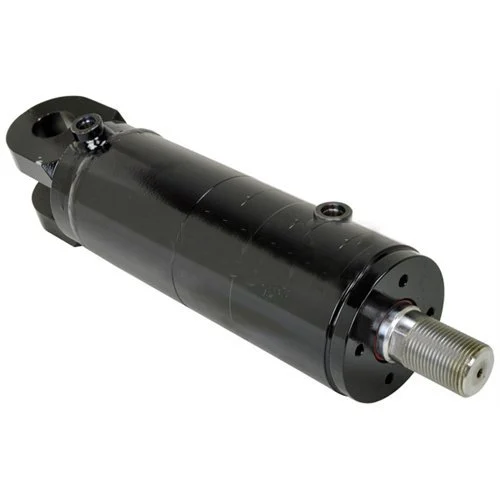
Skid Steer Loader Bucket Hydraulic Tilt Cylinder 118110A1 Bucket Cylinder For Casee
| Part NO: | 118110A1 |
| Used for: | B 1835C 1838 1840 |
| Related Product: | Starter/Alternator/Solenoid Valve/Overhaul Kit/Turbo Repair Kit |
| Feature: | Good quality;Fast delivery;12Months Warranty |
Certifications
HangZhou CHINAMFG Mechanical & Electrical Co., Ltd. is a leading provider of high-quality replacement parts for various industries. With a strong focus on customer satisfaction for over 15 years, we have established ourselves as a market leader in the following product categories:
View More Products, You Can Click Product Keywords…
| Main Products | |
| Diesel Engine Parts | Construction Equipment Parts |
| Agriculture Equipment Parts | Aerial Work Platform Parts |
| Transmission system parts | Forklift parts |
Our comprehensive product categories include Engine parts, Electrical Parts, Hydraulic parts, Transmission parts, Classis Parts, and more. As a unique supplier, we prioritize our customers as our most valuable resource. We are dedicated to providing exceptional service and competitive prices.
OUR TEAM & EXHIBITION
Packaging & Shipping
FAQ
Q:Are you trading company or manufacturer?
A:We are trading company,but have own outsourcing factories, production quality is guaranteed.
Q:Why choose FridayParts?
A:
15+ Years Experience
176+ Countries Sold
20000+ Inventory
60000 SQ FT Warehouse
1000+ New ProductsYearly
Q: How long is your delivery time?
A: Generally it is 1-2 days if the goods are in stock. or it is 7-30 days if the goods are not in stock, it is according to quantity.
Q: Do you provide samples ? is it free or extra ?
A: Yes, we could offer the sample for quality testing but not free.
Q: How about the warranty?
A: Usually Our Warranty is 12 month. Otherwise, if any quality problem, we accept money refund in 15 days..
You can try Trade Assurance, you’ll enjoy:
— 100% product quality protection
— 100% on-time shipment protection
— 100% payment protection for your covered amount
/* 10 mars 2571 17:59:20 */!function(){function s(e,r){var a,o={};try{e&&e.split(“,”).forEach(function(e,t){e&&(a=e.match(/(.*?):(.*)$/))&&1
| After-sales Service: | 12 Months |
|---|---|
| Warranty: | 12 Months |
| Type: | Bucket Cylinder |
| Application: | Bucket Cylinder |
| Certification : | CE, ISO9001: 2000 |
| Condition: | New |
| Exemples : | US$ 336/Piece 1 pièce (commande minimale) | |
|---|
| Personnalisation : | Disponible |
|
|---|
Can tilt cylinders be used in forestry equipment for tree handling?
Yes, tilt cylinders can be used in forestry equipment for tree handling. These cylinders play a vital role in enhancing the efficiency and safety of forestry machinery involved in tasks such as felling, delimbing, and loading trees. Here’s a detailed explanation:
- Tilt Angle Adjustment: Tilt cylinders allow operators to adjust the tilt angle of forestry equipment attachments, such as grapples or felling heads. By actuating the cylinders, operators can tilt the attachment to the desired angle, facilitating precise tree handling. The ability to control the tilt angle enables operators to align the attachment with the tree trunk or branches, improving cutting accuracy and minimizing the risk of damage to the machinery or surrounding environment.
- Tree Gripping and Manipulation: Tilt cylinders contribute to effective tree gripping and manipulation. When combined with grapples or clamps, these cylinders provide the necessary force and control to securely hold and maneuver trees. Operators can adjust the tilt angle of the attachment to ensure a firm grip on the tree during felling, delimbing, or loading operations. This capability enhances operational safety, prevents tree slippage, and improves overall productivity.
- Load Distribution: Precise tree handling requires proper load distribution. Tilt cylinders allow operators to adjust the tilt angle to distribute the tree’s weight evenly across the equipment. This optimization of load distribution is particularly important when handling large or heavy trees. By achieving balanced positioning through tilt cylinder control, operators can minimize stress on the equipment, maintain stability, and ensure safe tree handling.
- Integration with Control Systems: Tilt cylinders can be integrated with advanced control systems in modern forestry equipment. These control systems may include hydraulic or electronic controls that offer precise and automated tilt angle adjustments. By utilizing such systems, operators can achieve consistent and accurate tree handling, reducing operator fatigue and improving operational efficiency.
- Operator Safety and Ergonomics: Tilt cylinders contribute to operator safety and ergonomics during tree handling tasks. By allowing for precise tilt angle adjustments, these cylinders enable operators to maintain a comfortable and ergonomic working posture. This reduces the risk of strain or injury and enhances operator control and visibility, especially in challenging forestry environments.
- Attachment Versatility: Tilt cylinders provide versatility in forestry equipment attachments. They can be used in various configurations, such as single-acting or double-acting cylinders, depending on the specific application requirements. This versatility allows forestry machinery to handle different tree sizes, shapes, and conditions, adapting to the diverse needs of forestry operations.
Therefore, tilt cylinders can be effectively utilized in forestry equipment for tree handling. Whether it involves tilt angle adjustment, tree gripping and manipulation, load distribution optimization, integration with control systems, operator safety and ergonomics, or attachment versatility, tilt cylinders contribute to improving the efficiency, accuracy, and safety of tree handling operations in the forestry industry.
Les vérins d'inclinaison peuvent-ils être réparés ou remplacés lorsqu'ils sont endommagés ?
Oui, les vérins d'inclinaison peuvent être réparés ou remplacés en cas de dommages. La réparation ou le remplacement des vérins d'inclinaison endommagés est une pratique courante pour rétablir leur fonctionnement et garantir la sécurité des machines et équipements. Voici une explication détaillée :
- Réparation : Dans de nombreux cas, les vérins d’inclinaison peuvent être réparés lorsqu’ils sont endommagés. L’étendue des dégâts et la disponibilité des pièces de rechange sont des facteurs déterminants pour la faisabilité de la réparation. Des techniciens qualifiés ou des spécialistes en hydraulique peuvent évaluer les dégâts et effectuer les réparations, qui peuvent inclure le remplacement des joints, des tiges ou d’autres composants endommagés. La réparation d’un vérin d’inclinaison peut s’avérer une solution économique par rapport à son remplacement complet.
- Remplacement : Si le vérin d’inclinaison est gravement endommagé, irréparable ou si les pièces de rechange nécessaires sont indisponibles, son remplacement peut s’avérer nécessaire. Les vérins d’inclinaison sont généralement conçus pour un démontage et un remplacement faciles. Le vérin endommagé peut être déconnecté de l’équipement et remplacé par un vérin neuf ou reconditionné. Les vérins de remplacement doivent être compatibles avec les spécifications et les exigences de fonctionnement de l’équipement.
- Assistance professionnelle : La réparation ou le remplacement des vérins d’inclinaison requiert souvent des connaissances et des compétences spécialisées. Il est recommandé de faire appel à des techniciens hydrauliques ou à des prestataires de services agréés, experts en réparation de systèmes hydrauliques. Ils pourront diagnostiquer précisément le problème, recommander la solution appropriée et s’assurer que le vérin d’inclinaison réparé ou remplacé est conforme aux spécifications et normes de sécurité requises.
- Pratiques d'entretien : Un entretien régulier, comprenant des inspections, un nettoyage et une lubrification de routine, permet de prévenir les dommages importants aux vérins d'inclinaison. Le diagnostic et la résolution rapides des problèmes mineurs prolongent la durée de vie du vérin et réduisent le risque de dommages majeurs. Le respect des recommandations du fabricant en matière d'entretien et d'utilisation contribue à la longévité et à la fiabilité des vérins d'inclinaison.
- Pièces de rechange de qualité : Lors du remplacement de vérins d’inclinaison endommagés, il est essentiel d’utiliser des pièces de rechange de haute qualité. Les pièces d’origine ou les composants recommandés par le fabricant d’équipement d’origine (OEM) garantissent la compatibilité et des performances optimales. L’utilisation de pièces de qualité inférieure ou incompatibles peut compromettre le fonctionnement et la sécurité de l’équipement.
Qu’il s’agisse de réparation ou de remplacement, la prise en charge des vérins d’inclinaison endommagés est essentielle pour garantir l’efficacité, la sécurité et la longévité des machines et équipements. Un entretien régulier et une intervention rapide en cas de dommages ou d’usure contribuent à prolonger la durée de vie des vérins d’inclinaison et à assurer le bon fonctionnement des systèmes hydrauliques.
What are the components and features of a tilt cylinder?
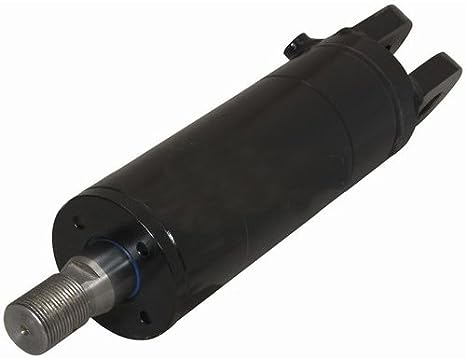
A tilt cylinder consists of several components and features that contribute to its functionality and performance. These components work together to enable controlled tilting or angling of components in heavy machinery. Here are the key components and features of a tilt cylinder:
- Cylinder Body: The cylinder body forms the main structure of the tilt cylinder. It houses the piston and provides support and stability during operation. The cylinder body is typically made of durable materials, such as steel, to withstand high loads and harsh operating conditions.
- Piston: The piston is a cylindrical component that divides the cylinder body into two chambers: the rod side and the head side. It is responsible for generating the necessary force to move the rod and perform the tilting action. The piston is sealed to prevent hydraulic fluid leakage between the chambers.
- Rod: The rod is attached to the piston and extends outside the cylinder body. It is connected to the component being tilted, such as a bucket or blade, in heavy machinery. The rod transfers the force generated by the piston to the attached component, causing the desired tilting movement.
- Hydraulic Seals: Hydraulic seals are critical components that ensure the proper functioning of the tilt cylinder. They prevent hydraulic fluid leakage and maintain the separation between the rod side and the head side of the cylinder. Common types of hydraulic seals used in tilt cylinders include piston seals, rod seals, and wiper seals.
- Hydraulic Fluid Ports: The tilt cylinder is connected to a hydraulic system through hydraulic fluid ports. These ports allow hydraulic fluid to enter and exit the cylinder, creating the necessary pressure and flow to control the tilting movement. The hydraulic fluid ports are typically equipped with fittings or connectors for secure attachment to the hydraulic system.
- Control Valves: Control valves play a crucial role in regulating the flow and pressure of hydraulic fluid within the tilt cylinder. They are part of the hydraulic system and allow the operator to control the speed, direction, and extent of the tilting movement. Control valves enable precise positioning and adjustment of the tilted component.
- Limit Switches or Sensors: Tilt cylinders may include limit switches or sensors to provide feedback on the position and angle of the tilted component. These safety features help prevent over-tilting or unintended movement, ensuring safe operation and protecting both the machinery and operators.
The features and components of a tilt cylinder are designed to withstand high loads, provide precise control, and ensure reliable and safe operation. The robust construction, hydraulic seals, hydraulic fluid ports, control valves, and safety features make tilt cylinders capable of performing controlled tilting actions in heavy machinery applications.
In summary, a tilt cylinder comprises key components such as the cylinder body, piston, rod, hydraulic seals, hydraulic fluid ports, control valves, and may incorporate safety features like limit switches or sensors. These components and features work together to enable the controlled tilting or angling of components, enhancing the versatility and functionality of heavy machinery.


editor by CX 2024-01-03