Description du produit
Model Number: ISO219-40-150
valve:QF-2C
Material: Steel 37Mn
new seamless steel gas cylinder for N2,O2
Industrial nitrogen Gas
Pressure: High
Place of Origin: China (Mainland)
Brand Name: DSW
Thickness of seamless:5.7mm
weight of seamless: 47to 50kg
working pressure:150bar
test pressure: 250bar
TP:250KG/CM2
PW:150KG/CM2
| 40L and 50L medical oxygen cylinders | |||||||
| Type | (mm) Outside Diameter | (L) Water Capacity | (mm) Height | (Kg) Weight(Without valve,cap) | (Mpa) Working Pressure | (mm) Design Wall Thickness | Matériel Grades |
| ISO232-40-150 | 219 | 40 | 1167 | 43 | 200 | 5.2 | 37Mn |
| ISO232-47-150 | 47 | 1351 | 49 | ||||
| ISO232-50-150 | 50 | 1430 | 51.6 | ||||
| ISO232-40-200 | 232 | 40 | 1156 | 44.9 | 200 | 5.2 | 34CrMo4 |
| ISO232-46.7-200 | 46.7 | 1333 | 51 | ||||
| ISO232-47-200 | 47 | 1341 | 51.3 | ||||
| ISO232-50-200 | 50 | 1420 | 54 | ||||
| EN232-40-210 | 232(TPED) | 40 | 1156 | 44.9 | 230 | 5.8 | 34CrMo4 |
| EN232-46.7-210 | 46.7 | 1333 | 51 | ||||
| EN232-47-210 | 47 | 1341 | 51.3 | ||||
| EN232-50-210 | 50 | 1420 | 54 | ||||
| EN232-40-230 | 40 | 1156 | 44.9 | 230 | 5.8 | 34CrMo4 | |
| EN232-46.7-230 | 46.7 | 1333 | 51 | ||||
| ISO232-47-230 | 47 | 1341 | 51.3 | ||||
| ISO232-50-230 | 50 | 1420 | 54 | ||||
| ISO267-40-150 | 267 | 40 | 922 | 43.3 | 150 | 5.8 | 37Mn |
| ISO267-50-150 | 50 | 1119 | 51.3 | ||||
100% new high quality seamless steel pipe from Bao Shan Iron co.,ltd (Baosteel).
Total 5 working line make 3000pcs per day for oxygen gas cylinder, argon gas cylinder, helium gas cylinder, Nitrogen gas cylinder , Co2 gas cylinder, N2O gas cylinder..etc
China top 1 advanced heat treatment machine. And China top 1 internal polishing machine to make high purity gas cylinder with 99.999% oxygen gas, helium gas, N2O gas and argon gas.
100% Hydrostatic prssure test and leakage test to keep the quality
Advanced automatic spraying working line make the spraying at high top quality , no any bubble , without shrinkage and distoration .
Japan imported shoulder marking machine make it the most qualified ones .
DSW seamless gas cylinder have nice appearance shoulders because we use shape-correction machine treatment make the cylinder shoulder most beautiful shape which other supplier can’t be compared.
Laboratory test standard ISO9809-3 and ISO9809-1, DOT-3AA, EN1964,GB5099 ..etc
Specification
| RECORD OF HYDROSTATIC TESTS ON CYLINDERS TIME ≥ 60S | ||||||||
| S.N | Serial No. | The weight without valve&cap(kg) | Volumetric Capacity(L) | Total expansion(ml) | Permanent expansion(ml) | Percent of Permanent to totalexpanison(%) | Test Pressure 250Bar | Lot and Batch No. |
| 401 | 2070968 057 | 48.6 | 40.0 | 200.3 | 2.6 | 1.3 | 250 | 2070968 |
| 402 | 2070968 058 | 48.3 | 40.0 | 204.2 | 2.3 | 1.1 | 250 | 2070968 |
| 403 | 2070968 059 | 48.2 | 40.1 | 205.1 | 2.6 | 1.3 | 250 | 2070968 |
| 404 | 2070968 060 | 48.5 | 40.1 | 195.2 | 2.6 | 1.3 | 250 | 2070968 |
| 405 | 2070968 061 | 48.2 | 40.1 | 205.1 | 2.7 | 1.3 | 250 | 2070968 |
| 406 | 2070968 062 | 48.6 | 40.0 | 206.2 | 2.2 | 1.1 | 250 | 2070968 |
| 407 | 2070968 063 | 48.3 | 40.3 | 193.9 | 2.2 | 1.1 | 250 | 2070968 |
| 408 | 2070968 064 | 48.0 | 40.1 | 200.1 | 2.9 | 1.4 | 250 | 2070968 |
| 409 | 2070968 065 | 48.4 | 40.0 | 205.2 | 2.9 | 1.4 | 250 | 2070968 |
| 410 | 2070968 066 | 47.9 | 40.1 | 200.1 | 2.6 | 1.3 | 250 | 2070968 |
| 411 | 2070968 067 | 47.9 | 40.2 | 201.0 | 2.2 | 1.1 | 250 | 2070968 |
| 412 | 2070968 068 | 48.7 | 40.0 | 200.3 | 3.0 | 1.5 | 250 | 2070968 |
| 413 | 2070968 069 | 48.3 | 40.2 | 201.0 | 2.8 | 1.4 | 250 | 2070968 |
| 414 | 2070968 070 | 48.2 | 40.1 | 197.2 | 2.5 | 1.3 | 250 | 2070968 |
| 415 | 2070968 071 | 47.9 | 40.0 | 206.2 | 2.6 | 1.3 | 250 | 2070968 |
| 416 | 2070968 072 | 48.5 | 40.4 | 193.8 | 3.0 | 1.5 | 250 | 2070968 |
| 417 | 2070968 073 | 49.0 | 40.0 | 201.3 | 3.0 | 1.5 | 250 | 2070968 |
| 418 | 2070968 074 | 49.2 | 40.1 | 201.1 | 2.3 | 1.1 | 250 | 2070968 |
| 419 | 2070968 075 | 48.3 | 40.2 | 196.0 | 2.3 | 1.2 | 250 | 2070968 |
| 420 | 2070968 076 | 47.7 | 40.2 | 198.0 | 2.3 | 1.2 | 250 | 2070968 |
| 421 | 2070968 077 | 48.2 | 40.2 | 198.0 | 2.3 | 1.2 | 250 | 2070968 |
| 422 | 2070968 078 | 48.5 | 40.3 | 201.8 | 2.3 | 1.1 | 250 | 2070968 |
| 423 | 2070968 079 | 49.2 | 40.1 | 194.2 | 2.7 | 1.4 | 250 | 2070968 |
| 424 | 2070968 080 | 48.5 | 40.4 | 200.7 | 3.0 | 1.5 | 250 | 2070968 |
| 425 | 2070968 081 | 48.2 | 40.1 | 197.2 | 2.3 | 1.2 | 250 | 2070968 |
| 426 | 2070968 082 | 48.3 | 40.0 | 200.3 | 2.7 | 1.3 | 250 | 2070968 |
| 427 | 2070968 083 | 48.5 | 40.3 | 197.9 | 3.0 | 1.5 | 250 | 2070968 |
| 428 | 2070968 084 | 48.3 | 40.1 | 200.1 | 2.3 | 1.1 | 250 | 2070968 |
| 429 | 2070968 085 | 48.6 | 40.1 | 194.2 | 2.3 | 1.2 | 250 | 2070968 |
| 430 | 2070968 086 | 48.5 | 40.1 | 199.1 | 2.6 | 1.3 | 250 | 2070968 |
| 431 | 2070968 087 | 48.4 | 40.1 | 199.1 | 2.9 | 1.5 | 250 | 2070968 |
| 432 | 2070968 088 | 48.1 | 40.2 | 203.9 | 2.3 | 1.1 | 250 | 2070968 |
| 433 | 2070968 089 | 48.6 | 40.2 | 198.0 | 3.0 | 1.5 | 250 | 2070968 |
| 434 | 2070968 090 | 48.0 | 40.2 | 201.0 | 2.5 | 1.2 | 250 | 2070968 |
| 435 | 2070968 091 | 49.6 | 40.0 | 206.2 | 3.0 | 1.5 | 250 | 2070968 |
| 436 | 2070968 092 | 48.5 | 40.1 | 197.2 | 2.3 | 1.2 | 250 | 2070968 |
| 437 | 2070968 093 | 48.1 | 40.1 | 197.2 | 2.3 | 1.2 | 250 | 2070968 |
| 438 | 2070968 094 | 48.0 | 40.1 | 197.2 | 2.2 | 1.1 | 250 | 2070968 |
| 439 | 2070968 095 | 48.1 | 40.1 | 197.2 | 2.9 | 1.5 | 250 | 2070968 |
| 440 | 2070968 096 | 48.3 | 40.1 | 199.1 | 2.3 | 1.2 | 250 | 2070968 |
| 441 | 2070968 097 | 48.1 | 40.2 | 203.0 | 2.4 | 1.2 | 250 | 2070968 |
| 442 | 2070968 098 | 48.6 | 40.1 | 199.1 | 2.6 | 1.3 | 250 | 2070968 |
| 443 | 2070968 099 | 48.5 | 40.2 | 198.0 | 2.3 | 1.2 | 250 | 2070968 |
| 444 | 2070968 100 | 48.4 | 40.1 | 202.1 | 2.4 | 1.2 | 250 | 2070968 |
| 445 | 2070968 101 | 48.7 | 40.0 | 204.2 | 2.3 | 1.1 | 250 | 2070968 |
| 446 | 2070968 102 | 49.2 | 40.0 | 204.2 | 3.0 | 1.5 | 250 | 2070968 |
| 447 | 2070968 103 | 48.1 | 40.2 | 200.0 | 2.6 | 1.3 | 250 | 2070968 |
| 448 | 2070968 104 | 48.0 | 40.1 | 202.1 | 3.0 | 1.5 | 250 | 2070968 |
| 449 | 2070968 105 | 48.3 | 40.1 | 196.2 | 2.4 | 1.2 | 250 | 2070968 |
| 450 | 2070968 106 | 48.8 | 40.0 | 206.2 | 2.2 | 1.1 | 250 | 2070968 |
| Material: | Steel |
|---|---|
| Usage: | Oxygen Gas and Nitrogen Cylinder |
| Structure: | Gas – Liquid Damping Cylinder |
| Power: | Hydraulic |
| Standard: | Standard |
| Pressure Direction: | Single-acting Cylinder |
| Personnalisation : | Disponible |
|
|---|
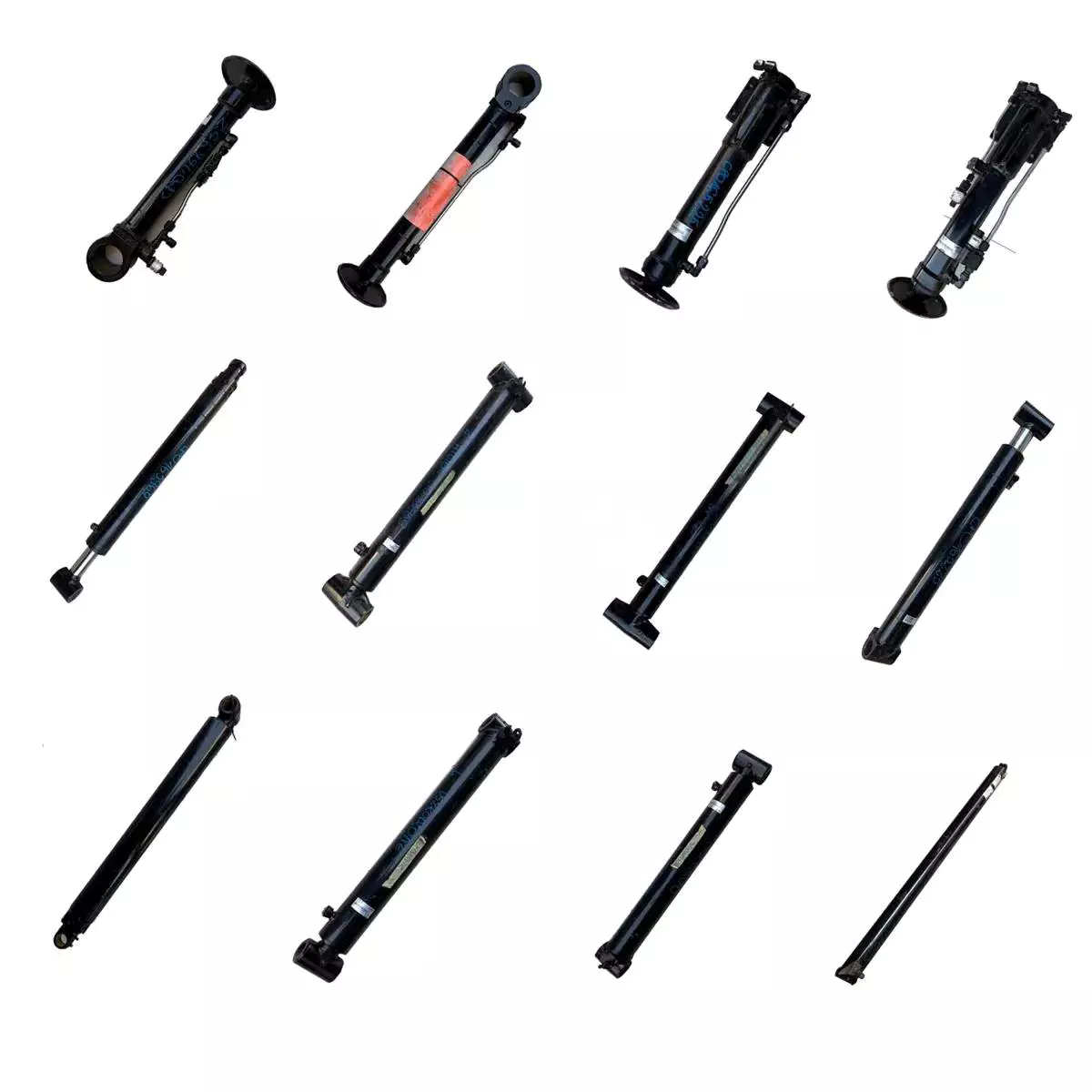
How do hydraulic cylinders handle the challenges of precise positioning and control?
Hydraulic cylinders are designed to handle the challenges of precise positioning and control with a combination of engineering principles and advanced control systems. These challenges often arise in applications where accurate and controlled movements are required, such as in industrial automation, construction, and material handling. Here’s a detailed explanation of how hydraulic cylinders overcome these challenges:
1. Fluid Power Control:
– Hydraulic cylinders utilize fluid power control to achieve precise positioning and control. The hydraulic system consists of a hydraulic pump, control valves, and hydraulic fluid. By regulating the flow of hydraulic fluid into and out of the cylinder, operators can control the speed, direction, and force exerted by the cylinder. The fluid power control allows for smooth and accurate movements, enabling precise positioning of the hydraulic cylinder and the attached load.
2. Control Valves:
– Control valves play a crucial role in handling the challenges of precise positioning and control. These valves are responsible for directing the flow of hydraulic fluid within the system. They can be manually operated or electronically controlled. Control valves allow operators to adjust the flow rate of the hydraulic fluid, controlling the speed of the cylinder’s movement. By modulating the flow, operators can achieve fine control over the positioning of the hydraulic cylinder, enabling precise and accurate movements.
3. Proportional Control:
– Hydraulic cylinders can be equipped with proportional control systems, which offer enhanced precision in positioning and control. Proportional control systems utilize electronic feedback and control algorithms to precisely regulate the flow and pressure of the hydraulic fluid. These systems provide accurate and proportional control over the movement of the hydraulic cylinder, allowing for precise positioning at various points along its stroke length. Proportional control enhances the cylinder’s ability to handle complex tasks that require precise movements and control.
4. Position Feedback Sensors:
– To achieve precise positioning, hydraulic cylinders often incorporate position feedback sensors. These sensors provide real-time information about the position of the cylinder’s piston rod. Common types of position feedback sensors include potentiometers, linear variable differential transformers (LVDTs), and magnetostrictive sensors. By continuously monitoring the position, the feedback sensors enable closed-loop control, allowing for accurate positioning and control of the hydraulic cylinder. The feedback information is used to adjust the flow of hydraulic fluid to achieve the desired position accurately.
5. Servo Control Systems:
– Advanced hydraulic systems employ servo control systems to handle the challenges of precise positioning and control. Servo control systems combine electronic control, position feedback sensors, and proportional control valves to achieve high levels of accuracy and responsiveness. The servo control system continuously compares the desired position with the actual position of the hydraulic cylinder and adjusts the flow of hydraulic fluid to minimize any positional error. This closed-loop control mechanism enables the hydraulic cylinder to maintain precise positioning and control, even under varying loads or external disturbances.
6. Integrated Automation:
– Hydraulic cylinders can be integrated into automated systems to achieve precise positioning and control. In such setups, the hydraulic cylinders are controlled by programmable logic controllers (PLCs) or other automation controllers. These controllers receive input signals from various sensors and use pre-programmed logic to command the hydraulic cylinder’s movements. The integration of hydraulic cylinders into automated systems allows for precise and repeatable positioning and control, enabling complex sequences of movements to be executed with high accuracy.
7. Advanced Control Algorithms:
– Advancements in control algorithms have also contributed to the precise positioning and control of hydraulic cylinders. These algorithms, such as PID (Proportional-Integral-Derivative) control, adaptive control, and model-based control, enable sophisticated control strategies to be implemented. These algorithms consider factors such as load variations, system dynamics, and environmental conditions to optimize the control of hydraulic cylinders. By employing advanced control algorithms, hydraulic cylinders can compensate for disturbances and achieve precise positioning and control over a wide range of operating conditions.
In summary, hydraulic cylinders overcome the challenges of precise positioning and control through the use of fluid power control, control valves, proportional control, position feedback sensors, servo control systems, integrated automation, and advanced control algorithms. By combining these elements, hydraulic cylinders can achieve accurate and controlled movements, enabling precise positioning and control in various applications. These capabilities are essential for industries that require high precision and repeatability in their operations, such as industrial automation, robotics, and material handling.
Ensuring Controlled and Safe Force Application in Heavy Machinery with Hydraulic Cylinders
Hydraulic cylinders play a critical role in heavy machinery by ensuring controlled and safe force application. The ability to exert and control high forces is essential for heavy machinery operations, such as lifting, pressing, pushing, or pulling heavy loads. Let’s explore how hydraulic cylinders ensure controlled and safe force application in heavy machinery:
- Force Control: Hydraulic cylinders provide precise force control capabilities. The hydraulic system’s pressure can be adjusted to regulate the force exerted by the cylinder. This control allows operators to apply the necessary force for a specific task while ensuring it remains within safe limits. By accurately controlling the force, hydraulic cylinders help prevent excessive force that could damage the machinery or compromise the safety of the operation.
- Load Balancing: In heavy machinery, multiple hydraulic cylinders are often used in conjunction to distribute and balance the applied force. By using multiple cylinders, the load can be evenly distributed across the machinery, minimizing stress concentrations and ensuring controlled force application. This load balancing approach enhances the stability and safety of the machinery, preventing uneven loading that could lead to structural issues or instability.
- Safety Valves: Hydraulic systems in heavy machinery are equipped with safety valves to protect against excessive force or overloading. Safety valves are designed to release hydraulic fluid from the cylinder when the force exceeds a predetermined threshold. This prevents the force from reaching dangerous levels, safeguarding the machinery and preventing potential accidents or damage. Safety valves provide an additional layer of safety and ensure controlled force application even in unexpected circumstances.
- Pressure Relief Systems: Hydraulic cylinders incorporate pressure relief systems to further enhance safety. These systems are designed to relieve excess pressure in the hydraulic system, which could occur due to factors such as thermal expansion or system malfunctions. By relieving excess pressure, the pressure relief systems prevent sudden and uncontrolled force surges, maintaining safe and controlled force application in heavy machinery.
- Structural Integrity: Hydraulic cylinders are designed to withstand the high forces and loads associated with heavy machinery applications. The cylinders are constructed using robust materials, such as high-strength steel, and undergo rigorous testing to ensure their structural integrity. This ensures that the cylinders can safely handle the forces applied during heavy machinery operations without experiencing failures or deformations that could compromise the safety and controlled force application.
In summary, hydraulic cylinders ensure controlled and safe force application in heavy machinery through force control, load balancing, safety valves, pressure relief systems, and robust structural design. These features and design considerations enable operators to exert the necessary force while maintaining safety and preventing excessive loads or force surges. By incorporating hydraulic cylinders into heavy machinery, manufacturers can achieve controlled force application, enhance operational safety, and protect the machinery from damage or failure.
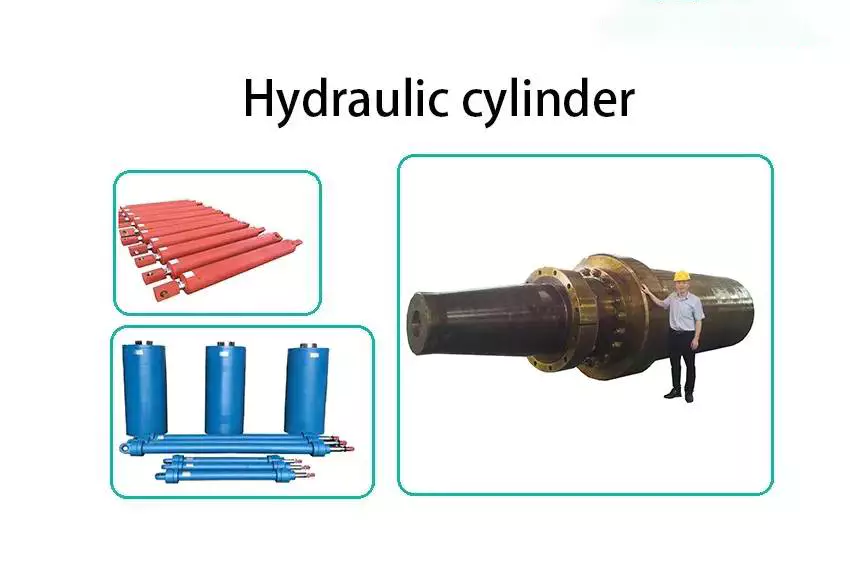
How do hydraulic cylinders handle variations in load and pressure during operation?
Hydraulic cylinders are designed to handle variations in load and pressure during operation, making them versatile and efficient in various applications. Hydraulic systems use the principle of transmitting force through incompressible fluid to generate linear motion. Here’s a detailed explanation of how hydraulic cylinders handle variations in load and pressure:
1. Load Handling:
– Hydraulic cylinders are capable of handling different loads by utilizing the principle of Pascal’s law. According to Pascal’s law, when pressure is applied to a fluid in a confined space, the pressure is transmitted equally in all directions. In a hydraulic cylinder, the force applied to the piston results in an equal force output at the rod end of the cylinder. The size of the piston and the pressure exerted determine the force generated by the cylinder. Therefore, hydraulic cylinders can handle a wide range of loads by adjusting the pressure applied to the fluid.
2. Pressure Compensation:
– Hydraulic systems incorporate pressure compensation mechanisms to handle variations in pressure during operation. Pressure compensating valves or regulators are often used to maintain a consistent pressure in the hydraulic system, regardless of load changes. These valves automatically adjust the flow rate or pressure to ensure stable and controlled operation of the hydraulic cylinder. By compensating for pressure variations, hydraulic cylinders can maintain a consistent force output and prevent damage or instability due to excessive pressure.
3. Control Valves:
– Control valves play a crucial role in managing variations in pressure and load during hydraulic cylinder operation. Directional control valves, such as spool valves or poppet valves, control the flow of hydraulic fluid into and out of the cylinder, enabling precise control of the cylinder’s extension and retraction. By adjusting the position of the control valve, the speed and force exerted by the hydraulic cylinder can be regulated to match the load and pressure requirements of the application. Control valves allow for efficient handling of variations in load and pressure by providing fine-tuned control over the hydraulic system.
4. Accumulators:
– Hydraulic accumulators are often used to handle fluctuations in pressure and load. Accumulators store hydraulic fluid under pressure, which can be released or absorbed as needed to compensate for sudden changes in load or pressure. When the load on the hydraulic cylinder decreases, the accumulator releases stored fluid to maintain pressure and prevent pressure spikes. Conversely, when the load on the cylinder increases, the accumulator absorbs excess fluid to maintain system stability. By utilizing accumulators, hydraulic cylinders can effectively handle variations in load and pressure, ensuring smooth and controlled operation.
5. Feedback and Control Systems:
– Advanced hydraulic systems may incorporate feedback and control systems to monitor and adjust the operation of hydraulic cylinders in real-time. Position sensors or pressure sensors provide feedback on the cylinder’s position, force, and pressure, allowing the control system to make continuous adjustments to optimize performance. These systems can automatically adapt to variations in load and pressure, ensuring precise control and efficient operation of the hydraulic cylinder.
6. Design Considerations:
– Proper design considerations, such as selecting the appropriate cylinder size, piston diameter, and rod diameter, are essential for handling variations in load and pressure. The design should account for the maximum anticipated load and pressure conditions to ensure the hydraulic cylinder operates within its specified range. Additionally, the selection of suitable seals, materials, and components that can withstand the anticipated load and pressure variations is crucial for maintaining the reliability and longevity of the hydraulic cylinder.
By utilizing the principles of hydraulic systems, incorporating pressure compensation mechanisms, employing control valves and accumulators, and implementing feedback and control systems, hydraulic cylinders can effectively handle variations in load and pressure during operation. These features and design considerations allow hydraulic cylinders to adapt and perform optimally in a wide range of applications and operating conditions.


editor by CX 2023-11-24