Description du produit
Specifications:
| Product Name | HSG Series Hydraulic Cylinder |
| Work Press | 7/14/16/21/31.5MPa 37.5/63MPa Can be Customized |
| Matériel | Aluminum, Cast Iron,45mnb Steel, Stainless Steel |
| Bore Size | 40mm–320mm, Customizable |
| Shaft Diameter | 20mm–220mm, Customizable |
| Stroke Length | 30mm–14100mm, Customizable |
| Rod Surface Hardness | HRC48-54 |
| Operating Temperature | -40°C to +120 °C |
| Paint Color | Black, Yellow, Blue, Brown, Customizable |
| Service | OEM&ODM |
| Warranty | 1 Year |
| MOQ | 1 Piece |
| Delivery Time | 7-15 Days, Also depending on specific demands |
| Certification | ISO9001,CE |
| Capacity | 50,000Pcs per year |
Product Display:
Mounting:
Working Flow: About Us
Tongte designs and manufactures durable, heavy-duty hydraulic products and accessories and offers lifecycle services to them. We constantly develop our machine base and operations to meet customer-specific needs and remain leaders in the industry. Beyond all else, we want to be the trusted, groundbreaking partner our customers truly need.
In addition to the customized cylinders, CHINAMFG offers hydraulic power units, Electric-Hydraulic linear actuators, piston accumulators, system configurations, and versatile services such as repair and manufacturing services. The modern production facilities are located in HangZhou, ZheJiang (China) where production started in 2001. The core values of Tongke guiding its business strongly are commitment, sustainability, interaction, and customer-first.
We possess over 20 years of experience in the industry and extensive global market experience, our customers are located all over the world, and we truly commit to the customers’ needs – these are the success factors of our family-owned company. Our vision is to grow and expand the business further into global markets.
FAQ:
Q1: What does your company do?
A: we are a supplier of high-quality hydraulic products including Hydraulic Cylinders, Hydraulic Power packs, Hydraulic Linear, and other Hydraulic components.
Q2:Are you a manufacturer or trading company?
A: We are a manufacturer.
Q3:Are you able to make Non-standard or customized products?
A: Yes, we can.
Q3: How long is your delivery time?
A: Normally, the delivery time is 7 days if we have stock, and 15-30 working days if we don’t. but it
also depends on the product
requirements and quantity.
Q4: Do you provide samples? are the samples free or not?
A: Yes, we can provide samples, but they are not free of charge.
Q5: What are your payment terms?
A: 30% deposit T/T or Irrevocable L/C at sight, If you have any questions, please feel free to
contact us.
Q6: What is your warranty policy?
A: All our products are warranted for 1 full year from the date of delivery against defects in materials and workmanship. Each individual product will be strictly inspected on our factory QC Process
System before shipment. We also have a Customer Service team to respond to customers’ questions within 12 hours.
| Certification : | ISO9001 |
|---|---|
| Pression: | High Pressure |
| Température de fonctionnement : | Température normale |
| Manière d'agir : | Double jeu |
| Méthode de travail : | Voyage direct |
| Forme ajustée : | Type réglementé |
| Personnalisation : | Disponible |
|
|---|
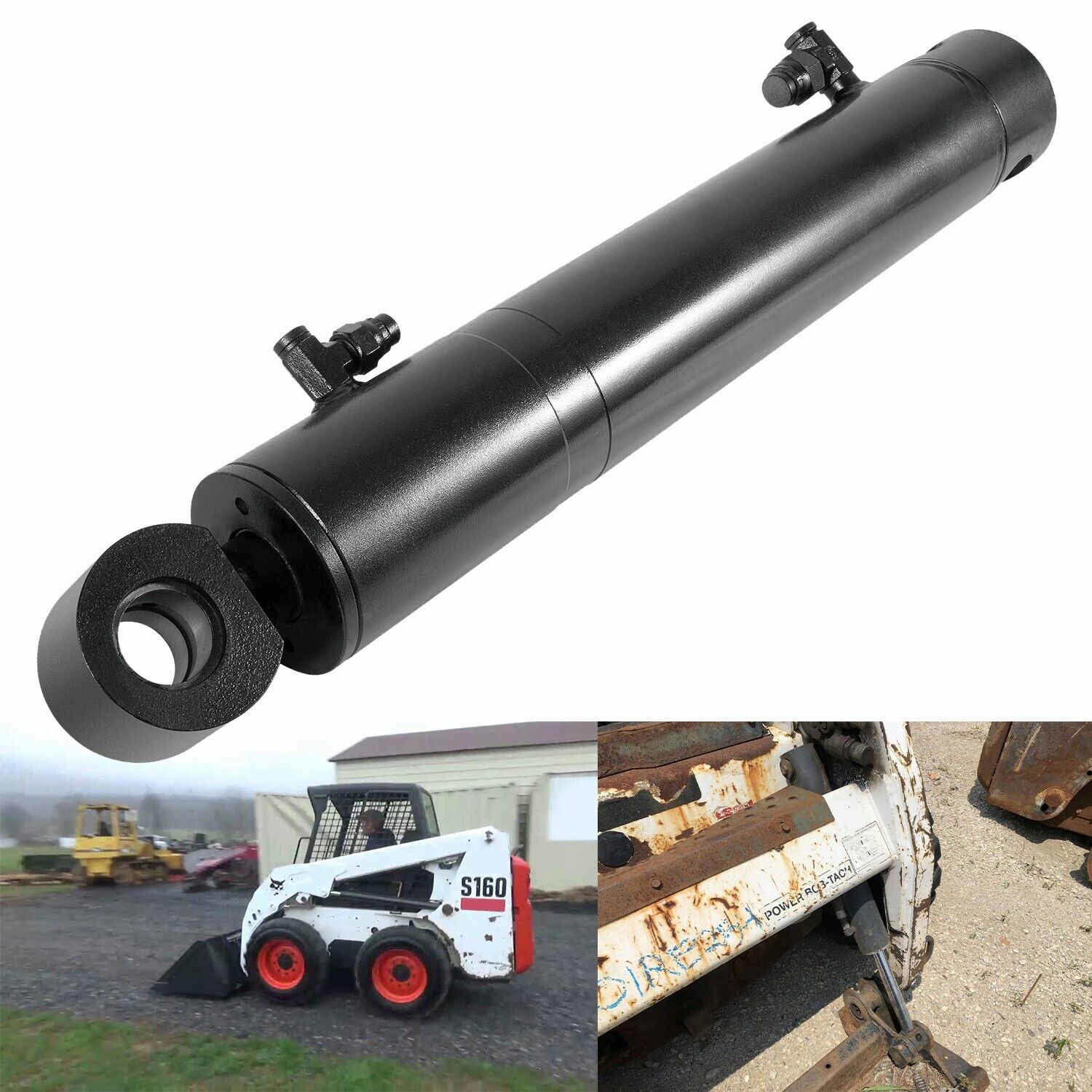
Comment un vérin d'inclinaison contribue-t-il au positionnement précis des équipements ?
Un vérin d'inclinaison joue un rôle crucial dans le positionnement précis des équipements. Il fournit la force et le contrôle nécessaires pour ajuster l'angle d'inclinaison de l'équipement, permettant ainsi aux opérateurs de le positionner avec précision pour diverses tâches. Voici une explication détaillée :
- Réglage de l'angle d'inclinaison : Un vérin d'inclinaison permet aux opérateurs de régler l'angle d'inclinaison de l'équipement. En actionnant le vérin, ils peuvent incliner l'équipement vers l'avant ou vers l'arrière, facilitant ainsi un positionnement précis. La possibilité d'ajuster finement l'angle d'inclinaison permet aux opérateurs d'aligner l'équipement sur des cibles ou des zones de travail spécifiques, garantissant une précision et une efficacité optimales.
- Répartition de la charge : Un positionnement précis de l’équipement est essentiel pour une répartition optimale de la charge. Un vérin d’inclinaison permet aux opérateurs d’ajuster l’angle d’inclinaison afin de répartir la charge uniformément sur l’équipement. Ceci est particulièrement important lors de la manipulation de charges inégales ou déséquilibrées. Grâce à un positionnement précis obtenu par la commande du vérin d’inclinaison, les opérateurs peuvent optimiser la répartition de la charge, minimiser les contraintes sur l’équipement et améliorer la stabilité pendant le fonctionnement.
- Adaptation au relief : Dans certaines applications, comme le nivellement ou le terrassement, un positionnement précis de l’équipement est nécessaire pour s’adapter au relief du terrain. Un vérin d’inclinaison permet aux opérateurs d’ajuster l’angle d’inclinaison de l’équipement en fonction de la pente ou de la forme du sol. Cette capacité d’adaptation au relief garantit un contact constant avec la surface, favorisant un nivellement ou une excavation uniforme et permettant d’obtenir les résultats souhaités avec précision.
- Réglage en hauteur : Certains vérins d’inclinaison permettent également un réglage en hauteur, en plus du réglage de l’angle d’inclinaison. En déployant ou en rétractant le vérin, les opérateurs peuvent relever ou abaisser l’équipement. Cette fonction de réglage en hauteur améliore la précision du positionnement, permettant ainsi aux opérateurs d’aligner l’équipement à la hauteur souhaitée pour des tâches ou des conditions de travail spécifiques.
- Intégration aux systèmes de commande : Les vérins d’inclinaison peuvent être intégrés aux systèmes de commande avancés des équipements modernes. Ces systèmes peuvent inclure des commandes électroniques ou hydrauliques permettant des réglages précis et automatisés de l’angle d’inclinaison. Grâce à ces systèmes, les opérateurs bénéficient d’un positionnement précis et constant des équipements, ce qui réduit les erreurs humaines et améliore la productivité globale.
- Retour d'information à l'opérateur : Les vérins d'inclinaison équipés de capteurs ou de mécanismes de retour d'information fournissent aux opérateurs des informations en temps réel sur l'angle d'inclinaison de l'équipement. Ce retour d'information leur permet d'effectuer des réglages précis et de garantir un positionnement exact. En surveillant en continu l'angle d'inclinaison, les opérateurs peuvent maintenir la position souhaitée pendant le fonctionnement et apporter les corrections nécessaires.
Par conséquent, un vérin d'inclinaison contribue de manière significative au positionnement précis des équipements en permettant le réglage de l'angle d'inclinaison, l'optimisation de la répartition de la charge, l'adaptation au relief, le réglage de la hauteur, l'intégration aux systèmes de commande et le retour d'information à l'opérateur. Ces fonctionnalités améliorent la précision, l'efficacité et la polyvalence des équipements dans divers secteurs, notamment la construction, la manutention, l'agriculture, etc.
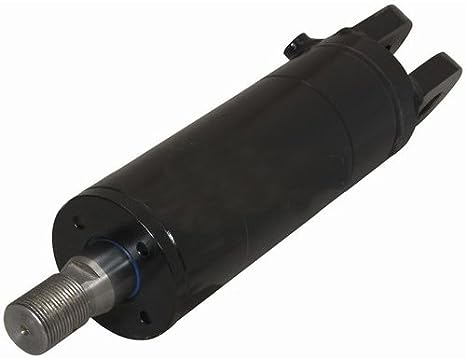
How does a tilt cylinder contribute to efficient and controlled tilting?
A tilt cylinder plays a crucial role in ensuring efficient and controlled tilting of heavy equipment. It incorporates several features and mechanisms that contribute to this functionality. Here’s a detailed explanation:
- Hydraulic Power: Tilt cylinders are typically powered by hydraulic systems, which provide the necessary force for tilting. Hydraulic power allows for smooth and controlled movement, enabling operators to precisely adjust the tilt angle of the equipment.
- Adjustable Force and Speed: Tilt cylinders offer adjustable force and speed, allowing operators to customize the tilting action based on the specific task or load requirements. By adjusting the hydraulic pressure or flow rate, operators can control the force exerted by the cylinder and the speed at which the tilting movement occurs. This flexibility ensures efficient and controlled tilting, regardless of the load or terrain conditions.
- Position Feedback: Many tilt cylinders incorporate position feedback mechanisms, such as position sensors or encoders, which provide real-time information about the cylinder’s tilt angle. This feedback enables precise positioning and control of the equipment, allowing operators to achieve the desired tilt angle accurately. It also ensures consistent and repeatable tilting performance, enhancing efficiency and productivity.
- Integrated Valves and Controls: Tilt cylinders often feature integrated valves and controls that enable operators to manipulate the tilting action conveniently. These valves regulate the flow of hydraulic fluid to the cylinder, allowing operators to control the direction and speed of the tilt. Integrated controls, such as joysticks or switches, provide intuitive operation and facilitate precise tilting adjustments.
- Stability and Load Management: Tilt cylinders are designed to maintain stability and manage loads during tilting operations. They are engineered to withstand the forces and stresses associated with heavy loads and dynamic movements. This ensures controlled tilting and minimizes the risk of instability or tipping, contributing to safe and efficient operation.
- Sealing and Lubrication: Tilt cylinders incorporate seals and lubrication systems to minimize friction and ensure smooth operation. Seals prevent leakage and contamination, maintaining the integrity of the hydraulic system. Proper lubrication of the cylinder’s moving parts reduces wear and tear, enabling efficient and controlled tilting over an extended period.
By leveraging hydraulic power, offering adjustable force and speed, providing position feedback, integrating valves and controls, ensuring stability and load management, and incorporating sealing and lubrication systems, tilt cylinders contribute to efficient and controlled tilting of heavy equipment. These features empower operators to perform tasks with precision, optimize productivity, and maintain safe working conditions.
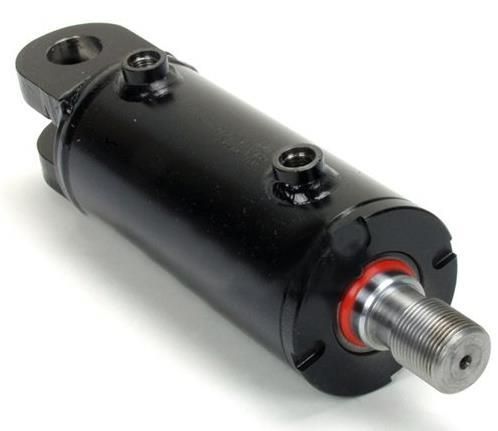
How does a tilt cylinder handle variations in equipment tilt and positioning?
A tilt cylinder is designed to handle variations in equipment tilt and positioning by incorporating specific features and mechanisms. These features allow the tilt cylinder to adapt to different angles and positions effectively. Here’s an explanation of how a tilt cylinder handles variations in equipment tilt and positioning:
- Range of Motion: Tilt cylinders are engineered to provide a wide range of motion. They can tilt or angle components within a specified range, allowing for various positions and angles. The range of motion is determined by the design and construction of the cylinder, as well as the attachment points on the equipment. This versatility enables the tilt cylinder to accommodate different tilting requirements and adapt to varying equipment positions.
- Control Valves: Tilt cylinders are equipped with control valves that enable precise control over the tilting movement. These valves regulate the flow and direction of hydraulic fluid, allowing operators to control the speed, extent, and direction of the tilt. By adjusting the control valves, operators can fine-tune the positioning of the equipment, compensating for variations in tilt and ensuring accurate alignment.
- Feedback Mechanisms: Some tilt cylinders incorporate feedback mechanisms such as limit switches or sensors. These mechanisms provide real-time feedback on the position and angle of the tilted component. By monitoring the feedback, operators can precisely adjust the tilt cylinder to compensate for variations in equipment tilt and positioning. This ensures that the component remains in the desired position and angle, enhancing operational efficiency and safety.
- Hydraulic System Control: The hydraulic system that powers the tilt cylinder plays a crucial role in handling variations in equipment tilt and positioning. The hydraulic system includes pressure regulators, flow control valves, and other components that allow operators to finely adjust the hydraulic pressure and flow. By manipulating the hydraulic system controls, operators can compensate for variations in equipment tilt and achieve the desired positioning with precision.
- Robust Construction: Tilt cylinders are built with robust materials and construction to withstand variations in equipment tilt and positioning. They are designed to handle high loads and resist external forces that may impact the tilting movement. The robust construction ensures the durability and stability of the tilt cylinder, enabling it to maintain consistent performance even in challenging operating conditions.
Overall, a combination of factors such as the range of motion, control valves, feedback mechanisms, hydraulic system control, and robust construction allows a tilt cylinder to handle variations in equipment tilt and positioning. These features work together to ensure precise control, adaptability, and stability, enabling the tilt cylinder to effectively handle different angles and positions of the equipment it is attached to.


editor by CX 2023-11-19