Description du produit
Single acting telescopic hydraulic oil cylinder for dump truck
Description du produit
Hyva & CHINAMFG & Custom hoist & Xihu (West Lake) Dis.r type hydraulic telescopic Cylinders are used for Dump Truck, Tipper Truck, Trailer, Agricultural Machinery, Garbage Truck, Landing Platform etc.
Clients hydrauliques Tsingshi, MAN, JAC, VOLVO, SHACMAN, DAF, JMC, HUNO, CIMC, SINOTRUK, TATRA, BENS, XIHU (WEST LAKE) DIS.FENG, FOTON, etc.
1. Chaque étape consiste en un chromage dur par électrolyse ;
2.lighter and easier to maintenance hydraulic telescopic cylinder;
3. Les tubes en acier sans soudure allié de haute qualité possèdent de meilleures propriétés mécaniques ;
4. Les marques de sceaux de renommée mondiale, telles que HALLITE, PARKER, etc. ;
5. Une technologie de traitement de classe mondiale garantit une qualité stable et fiable.
| NON | ARTICLE | DATA OF dump truck hydraulic cylinder |
| 1 | Matériel | Acier au carbone, acier allié, 27SiMn, 45#, 20#, etc. |
| 2 | Tube rodé | 40-300 mm, Traitement thermique, rodage, laminage |
| 3 | Tube rodé | 30-280 mm, nickelé, chromé dur ou céramique |
| 4 | Kit de joints | Parker, Merkel, Hallite, Kaden, etc. |
| 5 | Revêtement | Sablage, peinture d'apprêt, peinture intermédiaire, peinture de finition, La couleur peut être appliquée selon les exigences du client. |
| 6 | Technologie | Parker, palan personnalisé, hyco, HYVA, Meiller SAM, DAT |
| 7 | Type de montage | Œillet, bride, montage à tourillon, montage à rotule, filetage. FC, FE, FEE, FSE, TPIN |
| 8 | milieu de travail | Huile hydraulique |
| 9 | Pression de service | 16-20Mpa telescopic hydraulic cylinder |
| 10 | Plage de température | -50°C à +100°C |
Photos détaillées
Profil de l'entreprise
Tsingshi hydraulic is a hydraulic telescopic cylinder for dump tipper truck company which takes up with hydraulic design, R&D, manufacturer, sell and service hydraulic products-Telescopic hydraulic cylinder for dump truck.
-Hydraulic Cylinders Certification ISO9001 TS16949, etc;
-Telescopic jack Hydraulic Cylinder Export to North America, South America, Australia, South Korea, Southeast Asia, South Africa, Europe, Middle East, etc;
-ODM&OEM Single acting Hydraulic Telescopic Cylinder according to client’s requirements;
-Professional manufacturer& supplier of Hydraulic Cylinders over 30 years;
Les vérins hydrauliques télescopiques peuvent être utilisés pour les camions-bennes, les semi-remorques, les engins agricoles, les camions à ordures, les nacelles élévatrices, etc. Nous fabriquons des vérins hydrauliques des marques suivantes : HYVA, BINOTTO, EDBRO, PENTA, MAILHOT, CUSTOM HOIST, MUNCIE, METARIS, HYDRAULEX GLOBAL, HYCO, PARKER, COMMERCIAL HYDRAULICS, MEILLER, WTJX, XT, JX, HCIC, ZX, SZ et SJ.
PHOTOS DES CLIENTS
GARANTIE DE QUALITÉ
HIGH QUALITITY GUARANTEE-Telescopic hydraulic cylinder for dump truck
-Service 24h/24 et 7j/7.
-Prix compétitif.
-Équipe technique professionnelle.
- Un système de service après-vente irréprochable.
-ODM et OEM selon les besoins du client.
- Forte capacité de production pour garantir une livraison rapide.
- Garantie de qualité. Chaque étape du processus est inspectée et tous les produits sont testés avant de quitter l'usine.
<Hydraulic Cylinder Leak Test
<Telescopic Hydraulic jack Buffer Test
<Hydraulic Telescopic Cylinder Reliability Test
<Dump truck Hydraulic Cylinder Full Stroke Test
<Dump trailer Hydraulic Cylinder Trial Operation Test
<Tipper truck Cylinder Pressure Tight Test
<Dump truck telescopic Hydraulic Cylinder Load Efficiency Test
<Dump trailer telescopic Hydraulic Cylinder Start-up Pressure Test
<Long stroke single acting hydraulic telescopic cylinder Testing the Effect of Limit
VENTES ET SERVICE
UN MONDE, UN AMOUR
| Certification : | CE, ISO/TS16949 |
|---|---|
| Pression: | moyenne pression |
| Température de fonctionnement : | Température normale |
| Manière d'agir : | Single Acting |
| Méthode de travail : | Voyage direct |
| Forme ajustée : | Type réglementé |
| Exemples : | US$ 1000/Pièce 1 pièce (commande minimale) | |
|---|
| Personnalisation : | Disponible |
|
|---|
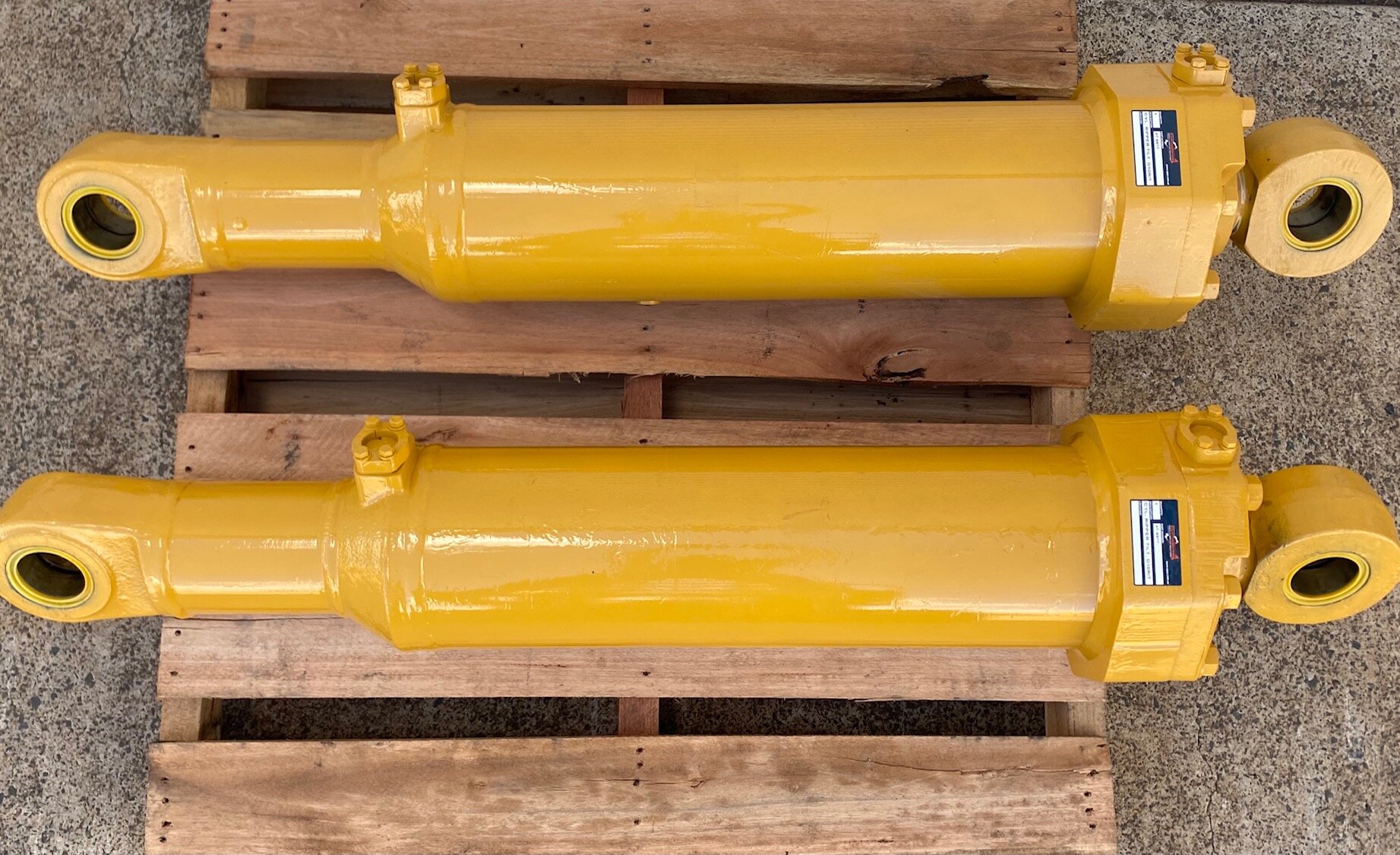
How does a tilt cylinder contribute to stable and safe equipment operation?
A tilt cylinder plays a crucial role in ensuring stable and safe equipment operation. It provides key benefits that enhance stability, control, and overall safety. Here’s a detailed explanation:
- Load Distribution: One of the primary ways a tilt cylinder contributes to stability is by facilitating proper load distribution. By adjusting the tilt angle of the equipment’s attachment, operators can distribute the weight of the load more evenly. This balanced load distribution helps prevent excessive stress on the equipment, reducing the risk of instability or tipping during operation.
- Center of Gravity Management: Tilt cylinders allow operators to manage the center of gravity of the equipment. By adjusting the tilt angle, they can optimize the positioning of the load and maintain a stable center of gravity. This is particularly important when operating on uneven or inclined terrain. Proper center of gravity management helps prevent equipment imbalance and improves overall stability.
- Operator Control: Tilt cylinders provide operators with precise control over the equipment’s tilt angle. This control allows operators to make fine adjustments to the equipment’s position, ensuring stability during various tasks, such as material loading, dumping, or maneuvering. The ability to finely control the tilt angle contributes to safe and controlled equipment operation.
- Enhanced Maneuverability: Tilt cylinders improve the maneuverability of the equipment by allowing operators to adjust the tilt angle as needed. This flexibility enables the equipment to navigate through tight spaces, uneven surfaces, or challenging environments more effectively. The enhanced maneuverability reduces the likelihood of accidents or collisions, contributing to safe equipment operation.
- Compatibility with Safety Systems: Tilt cylinders can be integrated with safety systems and features to further enhance equipment stability and operator safety. For example, they can be linked to stability control systems that monitor and adjust the equipment’s tilt angle in real-time to maintain stability and prevent tip-overs. Additionally, tilt cylinders may be incorporated into safety interlock systems that prevent certain equipment functions from operating unless the proper tilt angle is maintained, ensuring safe operation.
- Robust Design and Construction: Tilt cylinders are designed and constructed to withstand the demanding conditions of equipment operation. They are built to handle heavy loads, resist external forces, and endure harsh environments. The robust design and construction of tilt cylinders contribute to the overall stability and safety of equipment operation.
Therefore, a tilt cylinder contributes to stable and safe equipment operation through load distribution optimization, center of gravity management, operator control, enhanced maneuverability, compatibility with safety systems, and robust design. By utilizing tilt cylinders, operators can maintain stability, improve control, and mitigate risks, ensuring a safer working environment and reducing the likelihood of accidents or equipment failures during operation.
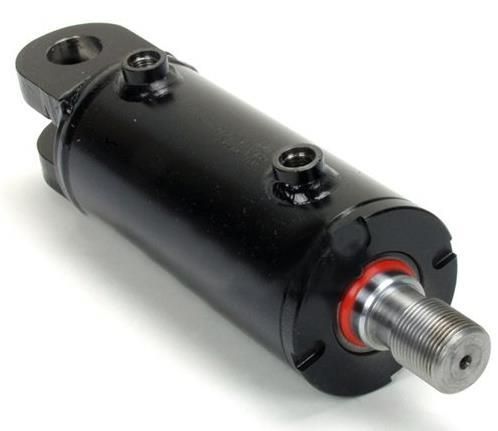
Can tilt cylinders be used in construction equipment like bulldozers and excavators?
Yes, tilt cylinders are commonly used in construction equipment like bulldozers and excavators. These cylinders play a crucial role in enhancing the functionality and versatility of such equipment. Here’s a detailed explanation:
- Bulldozers: Tilt cylinders are essential components in bulldozers, enabling the adjustment of the blade’s angle for efficient earthmoving and grading operations. The tilt cylinders allow the operator to control the blade’s tilt, allowing it to adapt to the terrain, achieve desired slopes, and efficiently push or move materials. By tilting the blade, bulldozers can perform tasks such as leveling ground, creating embankments, or pushing debris aside. Tilt cylinders provide the necessary force and control to execute these operations effectively.
- Excavators: Tilt cylinders also find application in excavators, particularly in the tilting of the excavator bucket. By incorporating tilt cylinders, excavators gain the ability to tilt the bucket and precisely control the material’s dumping or placement. This feature is valuable in tasks such as digging trenches, loading trucks, or shaping terrain. Tilt cylinders allow operators to adjust the bucket’s angle, ensuring accurate positioning and efficient material handling.
- Versatility and Efficiency: The use of tilt cylinders in construction equipment like bulldozers and excavators enhances their versatility and efficiency. By providing controlled tilting capabilities, these cylinders enable operators to adapt to different work conditions, achieve precise results, and optimize productivity. The ability to adjust the blade or bucket angle allows for more efficient material handling, improved grading accuracy, and reduced rework.
- Integration with Hydraulic Systems: Tilt cylinders are integrated with hydraulic systems present in bulldozers and excavators. Hydraulic power is utilized to actuate the cylinders, providing the required force and control for tilting. The hydraulic system allows for smooth and precise movement, enabling operators to adjust the tilt angle accurately and quickly respond to changing requirements.
- Customization and Compatibility: Tilt cylinders can be customized to suit specific bulldozer and excavator models. Manufacturers offer tilt cylinders with varying specifications, such as different force capacities, stroke lengths, and mounting options, to ensure compatibility and optimal performance with specific equipment. This customization allows for seamless integration and enhances the overall functionality of construction machinery.
Therefore, tilt cylinders are widely used in construction equipment like bulldozers and excavators, enabling controlled tilting of blades and buckets. These cylinders contribute to the versatility, efficiency, and precision of the equipment, empowering operators to accomplish various earthmoving and material handling tasks with enhanced productivity and performance.
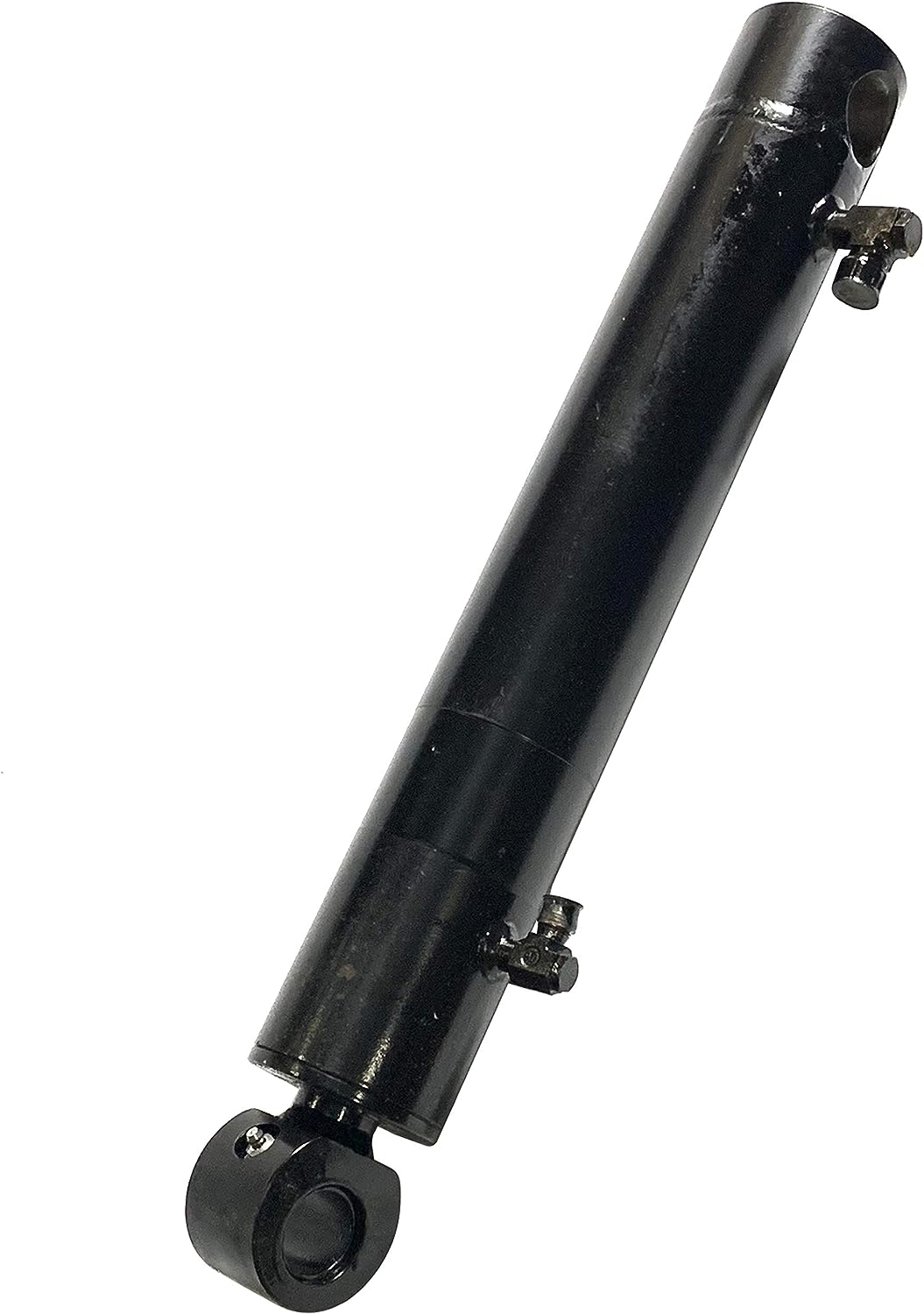
Pouvez-vous expliquer le rôle du fluide hydraulique dans un vérin d'inclinaison ?
Le fluide hydraulique joue un rôle crucial dans le fonctionnement d'un vérin d'inclinaison. C'est un milieu essentiel qui permet la transmission de la force et contrôle le mouvement du vérin. Voici une explication détaillée du rôle du fluide hydraulique dans un vérin d'inclinaison :
- Transmission de la force : Le fluide hydraulique transmet la force du système hydraulique au vérin d’inclinaison. Le système hydraulique pressurise le fluide, créant une pression hydraulique qui agit sur la surface du piston. Ce déséquilibre de pression génère une force qui déplace le piston et, par conséquent, étend ou rétracte la tige du vérin d’inclinaison. La force transmise par le fluide hydraulique permet l’inclinaison contrôlée du composant fixé sur les engins lourds.
- Contrôle du débit : Le fluide hydraulique contrôle le flux de force au sein du vérin d’inclinaison. Le système hydraulique utilise des distributeurs pour réguler le débit et la direction du fluide. En ajustant la position de ces distributeurs, l’opérateur peut contrôler la vitesse, la direction et l’amplitude du mouvement d’inclinaison. Ce mécanisme de contrôle du débit permet un positionnement et un réglage précis de l’élément incliné, en fonction des exigences spécifiques de la tâche.
- Régulation de la pression : Le fluide hydraulique permet également de réguler la pression à l’intérieur du vérin d’inclinaison. Le système hydraulique intègre des régulateurs de pression ou des soupapes de décharge afin de maintenir les niveaux de pression souhaités. Ces soupapes garantissent que la pression du fluide hydraulique reste dans la plage de fonctionnement sécuritaire, évitant ainsi une surpression susceptible d’endommager le vérin ou d’autres composants. La régulation de la pression contribue au fonctionnement sûr et efficace du vérin d’inclinaison.
- Lubrification et refroidissement : Le fluide hydraulique lubrifie le vérin d’inclinaison, réduisant ainsi le frottement entre les pièces mobiles. Cette lubrification minimise l’usure et prolonge la durée de vie du vérin. De plus, le fluide hydraulique absorbe et dissipe la chaleur générée pendant le fonctionnement, agissant comme un liquide de refroidissement. Une lubrification et un refroidissement efficaces contribuent aux performances et à la durabilité globales du vérin d’inclinaison.
- Étanchéité et protection contre la contamination : L’huile hydraulique contribue à préserver l’intégrité des joints hydrauliques du vérin d’inclinaison. Elle assure l’étanchéité entre le piston et la paroi du vérin, empêchant ainsi les fuites d’huile hydraulique. Elle fait également office de barrière, empêchant les contaminants tels que la poussière, les débris ou l’humidité de pénétrer dans le vérin et de l’endommager. Cette fonction d’étanchéité et de protection contre la contamination garantit le bon fonctionnement et la longévité du vérin d’inclinaison.
En résumé, le fluide hydraulique joue un rôle essentiel dans un vérin d'inclinaison. Il transmet la force, contrôle le débit et la pression, assure la lubrification et le refroidissement, garantit l'étanchéité du vérin et prévient toute contamination. Grâce à une utilisation optimale du fluide hydraulique, le vérin d'inclinaison permet une inclinaison contrôlée des composants des machines lourdes, assurant un fonctionnement précis et améliorant les performances et la fiabilité de l'équipement.


editor by CX 2023-11-20