தயாரிப்பு விளக்கம்
Double Acting Double Extend Cylinder Double Retract Hydraulic Cylinder
தயாரிப்பு விளக்கம்:
Widely used in equipment for Coal&mine,Engineering.
சிறப்பு கட்டமைப்பு வடிவமைப்பு, அதிக வலிமை கொண்ட பொருட்களின் பயன்பாடு, மற்றும் சிறப்பு வெப்பச் செயலாக்கம் மற்றும் பற்றவைப்பு செயல்முறைகள் ஆகியவை, உயர் அழுத்தம் மற்றும் அதிக சுமையின் கீழ் எண்ணெய் உருளை மிக உயர்ந்த சோர்வுத் தாங்குதிறனைக் கொண்டிருப்பதை உறுதி செய்கின்றன.
வாடிக்கையாளர்கள் வழங்கும் அளவுருக்களின் அடிப்படையில் முன் மற்றும் பின் சஸ்பென்ஷன் சிலிண்டர்களைப் பகுப்பாய்வு செய்து கணக்கிடலாம், மேலும் வாடிக்கையாளர்களுக்குத் தேவையான விறைப்புத்தன்மை மற்றும் தணிப்பு வளைவுகளையும் வடிவமைக்க முடியும்.
பிஸ்டன் தண்டின் சிறந்த தேய்மானம் மற்றும் அரிப்பு எதிர்ப்பை உறுதி செய்வதற்காக, அதன் மேற்பரப்பில் சிறப்பு மேற்பரப்பு பதப்படுத்தல் செய்யப்படுகிறது.
சுரங்கப் பகுதியின் கடுமையான வேலைச் சூழல்களை எதிர்கொள்ளவும், எண்ணெய் சிலிண்டரின் சிறந்த தூசு புகாத மற்றும் காற்றுப்புகாத செயல்திறனை உறுதி செய்யவும், அதிக திறன் கொண்ட காற்றுப்புகாத அடைப்பு வளையங்களைத் தேர்ந்தெடுக்கவும்.
வலுவான பக்கவாட்டு விசை எதிர்ப்பாற்றல் கொண்ட, அகலமான தொடர் மற்றும் அதிக தாங்குதிறன் ஒருங்கிணைந்த வழிகாட்டி வளையத்தைத் தேர்ந்தெடுக்கவும்.
தூக்கும் மற்றும் இறக்கும் செயல்முறைகளின் போது ஏற்படும் அதிகப்படியான தாக்கத்தைத் தவிர்ப்பதற்காக, தூக்கும் உருளையின் உட்புறம் ஒரு தாங்கு அமைப்புடன் வடிவமைக்கப்படலாம்.
ஸ்டீயரிங் சிலிண்டரின் இயக்கத்தை நிகழ்நேரத்தில் கண்காணிக்க, அதில் உள்ளமைக்கப்பட்ட இடப்பெயர்வு சென்சாரைப் பொருத்தலாம்.
இந்த பிஸ்டன் அக்குமுலேட்டர், பல்வேறு சாலை நிலைமைகளை எதிர்கொள்ளும் வகையில், உயர் மற்றும் குறைந்த அழுத்த அறைகளைக் கொண்ட இரட்டைப் பிஸ்டன் வடிவமைப்பைப் பயன்படுத்துகிறது.
பிஸ்டன் அக்குமுலேட்டரின் நம்பகமான சீலிங் கட்டமைப்பு வடிவமைப்பு, எண்ணெய் மற்றும் வாயுவின் பிரிப்பை உறுதி செய்கிறது.
தயாரிப்பு காட்சி:
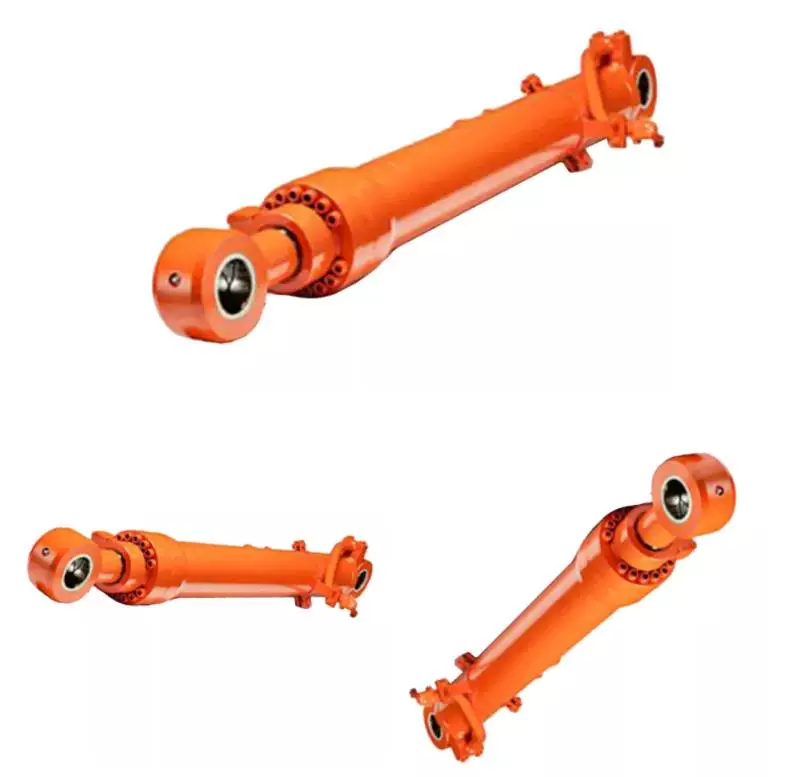
Double Extend Cylinder Double Retract Hydraulic Cylinder
விவரக்குறிப்புகள்:
| பொருள் | விவரக்குறிப்புகள் |
| Bore Diameter | 60mm-450mm,Customized |
| தடி விட்டம் | 40mm-400mm,Customized |
| பக்கவாதம் | 100-6000mm,Customized |
| வேலை அழுத்தம் | 7-45Mpa,Customized |
| பிஸ்டன் தண்டின் மேற்பரப்பு சிகிச்சை | கடின குரோம் பூச்சு, மின்முலாம் பூசப்பட்ட பால் வெண் குரோமியம்+கடின குரோமியம், நிக்கல் பூச்சு+கடின குரோமியம் பூச்சு, அதிவேக ஆக்சிஜன் எரிபொருள் CrC NiC, செராமிக் பூச்சு, நைட்ரைடிங், லேசர் கிளாடிங் |
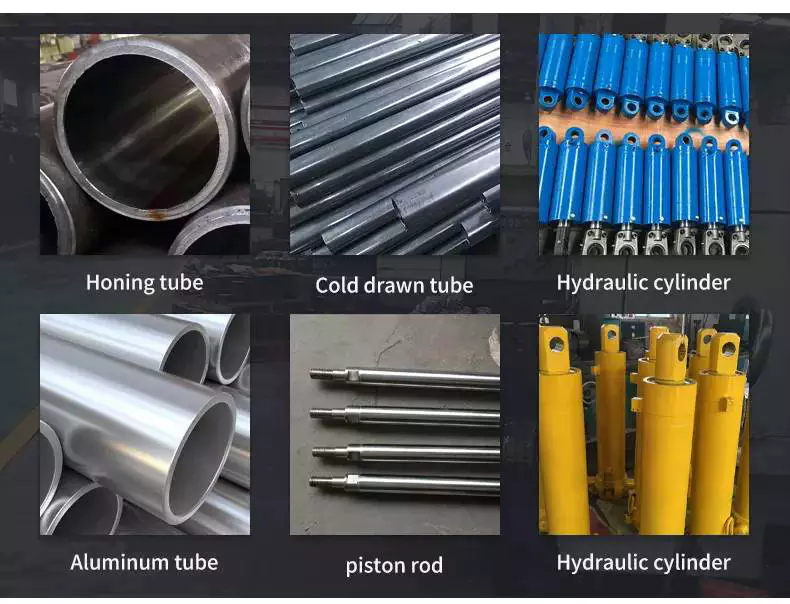
| Tube&Barrel | உயர் இழுவிசை கொண்ட குளிர் இழுத்தல் குழாய், நீடித்த சீல் ஆயுளுக்காகத் துல்லியமாக மெருகூட்டப்பட்டது. |
| சீல் வகை | பார்க்கர், என்ஓகே, ஹாலைட் ஜிஏபிஐ அல்லது வாடிக்கையாளரின் தேவைக்கேற்ப |
| Certificate | ISO9001,CE,SGS. |
| நிறம் | Yellow,Red,Black,Pink,Customized |
| பேக்கேஜிங் | உலோகப் பெட்டி; ஒட்டுப்பலகைப் பெட்டி; அட்டைப்பெட்டி அல்லது தேவைக்கேற்ப |
| குறைந்தபட்ச ஆர்டர் அளவு | 1pcs,According to products |
| பிராண்ட் | tianjian or customer’s logo |
| சேவை | OEM & ODM |
| உற்பத்தி நேரம் | Based on order quantity. normally 30-45days. |
| விலை அனுகூலம் | உத்தரவாதமான தரத்துடன் கூடிய போட்டித்தன்மை வாய்ந்த தொழிற்சாலை விலை. |
| வணிக வகை | உற்பத்தியாளர் |
பொருத்தும் முறை:
எங்கள் தொழிற்சாலை:
பரிசோதனை செயல்முறை:
| ஆய்வு வகை | ஆய்வுத் தரநிலை |
| மூலப்பொருள் ஆய்வு | சேமிப்பதற்கு முன், தரக்கட்டுப்பாடு மூலப்பொருட்களின் அளவை எடுக்கிறது. |
| செயல்முறை பொருள் ஆய்வு | உற்பத்தியின் போது, தரக்கட்டுப்பாட்டாளர்கள் திடீர் பரிசோதனை நடத்துகின்றனர். ஹைட்ராலிக் சிலிண்டர் பாகங்கள் அடுத்த செயல்முறைக்கு மாற்றப்படுவதற்கு முன்பு, தரக்கட்டுப்பாட்டாளர்கள் அவற்றை ஆய்வு செய்கிறார்கள். |
| இறுதி செயல்பாட்டு சோதனை | அனைத்து ஹைட்ராலிக் சிலிண்டர்களும் ஹைட்ராலிக் செயல்பாட்டுச் சோதனையை மேற்கொள்கின்றன. |
பொதி செய்தல் மற்றும் விநியோகம்:
About US:Certificates
ZheJiang Tianjian Hydraulic Technology Co.,Ltd is பல்வேறு வகையான ஹைட்ராலிக் சிலிண்டர்கள், அத்துடன் சிலிண்டர் பேரல், பிஸ்டன் சிலிண்டர் மற்றும் பிற சிலிண்டர் துணைக்கருவிகள் ஆகியவற்றை உற்பத்தி செய்வதில் நிபுணத்துவம் பெற்றது.
ஹைட்ராலிக் சிலிண்டர்களின் மிகவும் சிறப்பு வாய்ந்த உற்பத்தியாளர் என்ற வகையில், tianjian provides design optimization solutions and reliable products to many customers at home and abroad. No matter in construction machinery, railway bridge machinery, port ship machinery, metallurgy and mining machinery, oil and light industry machinery, special vehicles and other industries, tianjian can provide various standard and non-standard hydraulic cylinder design optimization schemes and products according to users’ requirements, and provide integrated services for perfection and quality.
Our Customers
முடிந்தால், எங்களைத் தொடர்பு கொள்ளும்போது, கீழே உள்ள தகவல்களைப் பயன்படுத்தவும்.
துளை | ராட் | பக்கவாதம் | வேலை அழுத்தம் | பொருத்துதல் | பணிச்சூழல் |
|
|
|
|
|
|
அல்லது, நீங்கள் கூறுவதை நாங்கள் துல்லியமாகப் புரிந்துகொண்டு, தவறுகளைத் தவிர்க்க உதவும் வகையில், உங்கள் வரைபடத்தையோ அல்லது புகைப்படங்களையோ எங்களுக்கு வழங்கலாம்.
மேலும், உங்களிடம் மாதிரிகள் இருந்தால், அவற்றை எங்களுக்கு அனுப்பிய பிறகு, நாங்கள் அதற்கேற்ப உற்பத்தி செய்வோம்.
உங்களுக்கு நேரமிருந்தால் எங்கள் தொழிற்சாலைக்கு வருக.
உங்களின் திருப்தியே எங்களின் மிகப்பெரிய உத்வேகம்.
இனி, எந்தவொரு கேள்வி அல்லது விசாரணைக்கும் நீங்கள் எங்களைத் தொடர்பு கொள்ளலாம்.
அடிக்கடி கேட்கப்படும் கேள்விகள்:
1. உங்கள் நிறுவனம் என்ன செய்கிறது?
நாங்கள் ஹைட்ராலிக் சிலிண்டர், ஹைட்ராலிக் மோட்டார், ஹைட்ராலிக் பவர் பேக், ஹைட்ராலிக் ஸ்டேஷன் மற்றும் பிற ஹைட்ராலிக் பாகங்கள் உள்ளிட்ட உயர்தர ஹைட்ராலிக் தயாரிப்புகளை வழங்கும் ஒரு நிறுவனம்.
2. நீங்கள் ஒரு உற்பத்தி நிறுவனமா அல்லது வர்த்தக நிறுவனமா?
அ: நாங்கள் ஒரு உற்பத்தியாளர்.
3. உங்களிடம் என்ன சான்றிதழ் உள்ளது?
எங்கள் தொழிற்சாலைகள் அனைத்தும் ISO சான்றிதழ் பெற்றவை. மேலும், எங்கள் முக்கிய மூலப்பொருட்கள் மற்றும் உதிரிபாகங்கள் வழங்குநர்கள் CE, RoHS, CSA மற்றும் UL சான்றிதழ்களைப் பெற்றுள்ளனர்.
4. உங்கள் விநியோக நேரம் எவ்வளவு?
A: The delivery time depends on different products and quantity. The cylinder usually need about 45-60 days and the Motor need about 30-50days.
5. வாடிக்கையாளரின் தேவை அல்லது வரைபடத்தின்படி உங்களால் பாகங்களைத் தயாரிக்க முடியுமா?
ஆம், உங்கள் வரைபடங்களின்படி நாங்கள் உங்களுக்காக OEM முறையில் தயாரித்துத் தருவோம். மேலும், எங்கள் பொறியாளர் தொழில்நுட்ப ஆலோசனைகள் மூலம் உங்களுக்குத் தொழில்முறை ஆதரவை வழங்குவார்.
6. நீங்கள் எவ்வகையான கட்டண விதிமுறைகளை ஏற்றுக்கொள்கிறீர்கள்?
நாங்கள் வங்கி மூலமான T/T முறையை விரும்புகிறோம். ஆர்டர் உறுதிசெய்யப்பட்டதும் 30% முறையிலும், சரக்கு அனுப்பப்படுவதற்கு முன்பு 70% முறையிலும் பணம் செலுத்தலாம். 20,000 அமெரிக்க டாலருக்கும் அதிகமான தொகைக்கு L/C முறையும் ஏற்றுக்கொள்ளப்படும்.
7. உங்கள் உத்தரவாதக் கொள்கை என்ன?
A: All our products are warranted for 1 full year from date of delivery against defects in materials and workmanship. This warranty does not cover parts that are worn out through the course of normal operation or are damaged through negligence. We serious remind that unclean hydraulic oil will definitely cause damage to your Hydraulic components. And this damage is not included in the warranty range. So we strongly suggest you to use new clean oil or make sure the system oil are clean when using our parts.
/* May 10, 2571 16:49:51 */!function(){function d(e,r){var a,o={};try{e&&e.split(“,”).forEach(function(e,t){e&&(a=e.match(/(.*?):(.*)$/))&&1
How do hydraulic cylinders handle the challenges of minimizing friction and wear?
Hydraulic cylinders employ several mechanisms and techniques to effectively minimize friction and wear, ensuring optimal performance and longevity. Minimizing friction and wear is crucial for hydraulic cylinders as it helps to maintain efficiency, reduce energy consumption, and prevent premature failure. Here’s a detailed explanation of how hydraulic cylinders handle the challenges of minimizing friction and wear:
1. Lubrication:
– Proper lubrication is essential for minimizing friction and wear in hydraulic cylinders. Lubricating fluids, such as hydraulic oils, are used to create a thin film between moving surfaces, reducing direct metal-to-metal contact. This lubricating film acts as a protective barrier, reducing friction and preventing wear. Regular maintenance practices include monitoring and maintaining the appropriate lubricant levels to ensure optimal lubrication and minimize frictional losses.
2. Surface Finishes:
– The surface finishes of components in hydraulic cylinders play a crucial role in minimizing friction and wear. Smoother surface finishes, achieved through precision machining, grinding, or the application of specialized coatings, reduce surface roughness and frictional resistance. By minimizing surface irregularities, the risk of wear and friction-induced damage is significantly reduced, resulting in improved efficiency and extended component life.
3. High-Quality Sealing Systems:
– Well-designed and high-quality sealing systems are crucial for minimizing friction and wear in hydraulic cylinders. Seals prevent fluid leakage and contamination while maintaining proper lubrication. Advanced sealing materials, such as polyurethane or composite materials, offer excellent wear resistance and low friction characteristics. Optimal seal design and proper installation ensure effective sealing, minimizing friction and wear between the piston and cylinder bore.
4. Proper Alignment and Clearances:
– Hydraulic cylinders must be properly aligned and have appropriate clearances to minimize friction and wear. Misalignment or excessive clearances can result in increased friction and uneven wear, leading to premature failure. Proper installation, alignment, and maintenance practices, including regular inspection and adjustment of clearances, help ensure smooth and even movement of the piston within the cylinder, reducing friction and wear.
5. Filtration and Contamination Control:
– Effective filtration and contamination control are essential for minimizing friction and wear in hydraulic cylinders. Contaminants, such as particles or moisture, can act as abrasive agents, accelerating wear and increasing friction. By implementing robust filtration systems and proper maintenance practices, hydraulic systems can prevent the ingress of contaminants, ensuring clean and properly lubricated components. Clean hydraulic fluids help minimize wear and friction, contributing to improved performance and longevity.
6. Material Selection:
– The selection of appropriate materials for hydraulic cylinder components is crucial in minimizing friction and wear. Components subject to high frictional forces, such as pistons and cylinder bores, can be made from materials with excellent wear resistance, such as hardened steel or composite materials. Additionally, selecting materials with low coefficients of friction helps reduce frictional losses. Proper material selection ensures durability and minimized wear in critical components of hydraulic cylinders.
7. Maintenance and Regular Inspection:
– Regular maintenance and inspection practices are vital for identifying and addressing potential issues that could lead to increased friction and wear in hydraulic cylinders. Scheduled maintenance includes lubrication checks, seal inspections, and monitoring of clearances. By promptly detecting and rectifying any signs of wear or misalignment, hydraulic cylinders can be kept in optimal condition, minimizing friction and wear throughout their operational lifespan.
In summary, hydraulic cylinders employ various strategies to handle the challenges of minimizing friction and wear. These include proper lubrication, employing suitable surface finishes, utilizing high-quality sealing systems, ensuring proper alignment and clearances, implementing effective filtration and contamination control measures, selecting appropriate materials, and conducting regular maintenance and inspections. By implementing these practices, hydraulic cylinders can minimize friction and wear, ensuring smooth and efficient operation while extending the overall lifespan of the system.
Ensuring Consistent Force Output for Repetitive Tasks with Hydraulic Cylinders
Hydraulic cylinders are designed to ensure consistent force output for repetitive tasks. This consistency is essential for maintaining precise control, achieving uniform results, and optimizing the performance of hydraulic systems. Let’s explore how hydraulic cylinders achieve consistent force output for repetitive tasks:
- Design and Manufacturing Standards: Hydraulic cylinders are manufactured to meet strict design and manufacturing standards. These standards ensure that the cylinders are built with precision and accuracy, enabling them to deliver consistent force output. The components, such as the piston, cylinder barrel, seals, and valves, are engineered to work together harmoniously, minimizing variations in force generation.
- Pressure Regulation: Hydraulic systems incorporate pressure regulation mechanisms to maintain a constant pressure level. Pressure relief valves, pressure regulators, and pressure-compensated pumps help maintain a consistent hydraulic pressure throughout the system. By regulating the pressure, hydraulic cylinders receive a consistent supply of pressurized fluid, resulting in consistent force output for repetitive tasks.
- Flow Control: Flow control valves are utilized in hydraulic systems to manage the flow rate of hydraulic fluid. These valves regulate the speed at which the fluid enters and exits the hydraulic cylinder, influencing the force output. By controlling the flow rate, hydraulic cylinders can achieve consistent force output for repetitive tasks. This is particularly important when it comes to tasks that require precise and uniform force application.
- Effective Seal Performance: Sealing systems play a crucial role in hydraulic cylinders by preventing fluid leakage and maintaining pressure integrity. High-quality seals and proper installation ensure effective sealing throughout the cylinder’s operation. By minimizing internal leakage, hydraulic cylinders can maintain consistent force output, even during repetitive tasks.
- Maintenance and Inspection: Regular maintenance and inspection of hydraulic cylinders are essential for ensuring consistent force output. By following maintenance schedules, replacing worn-out components, and monitoring cylinder performance, any potential issues that could affect force consistency can be identified and addressed promptly. This proactive approach helps maintain the reliability and performance of hydraulic cylinders over time.
In summary, hydraulic cylinders employ various mechanisms to ensure consistent force output for repetitive tasks. Adherence to design and manufacturing standards, pressure regulation, flow control, effective seal performance, and regular maintenance all contribute to achieving consistent force output. By maintaining precision, minimizing variations, and addressing potential issues, hydraulic cylinders provide reliable and consistent force generation, facilitating the successful completion of repetitive tasks in various applications.
How do hydraulic cylinders generate force and motion using hydraulic fluid?
Hydraulic cylinders generate force and motion by utilizing the principles of fluid mechanics, specifically Pascal’s law, in conjunction with the properties of hydraulic fluid. The process involves the conversion of hydraulic energy into mechanical force and linear motion. Here’s a detailed explanation of how hydraulic cylinders achieve this:
1. Pascal’s Law:
– Hydraulic cylinders operate based on Pascal’s law, which states that when pressure is applied to a fluid in a confined space, it is transmitted equally in all directions. In the context of hydraulic cylinders, this means that when hydraulic fluid is pressurized, the force is evenly distributed throughout the fluid and transmitted to all surfaces in contact with the fluid.
2. Hydraulic Fluid and Pressure:
– Hydraulic systems use a specialized fluid, typically hydraulic oil, as the working medium. This fluid is stored in a reservoir and circulated through the system by a hydraulic pump. The pump pressurizes the fluid, creating hydraulic pressure that can be controlled and directed to various components, including hydraulic cylinders.
3. Cylinder Design and Components:
– Hydraulic cylinders consist of several key components, including a cylindrical barrel, a piston, a piston rod, and various seals. The barrel is a hollow tube that houses the piston and allows for fluid flow. The piston divides the cylinder into two chambers: the rod side and the cap side. The piston rod extends from the piston and provides a connection point for external loads. Seals are used to prevent fluid leakage and maintain hydraulic pressure within the cylinder.
4. Fluid Input and Motion:
– To generate force and motion, hydraulic fluid is directed into one side of the cylinder, creating pressure on the corresponding surface of the piston. This pressure is transmitted through the fluid to the other side of the piston.
5. Force Generation:
– The force generated by a hydraulic cylinder is a result of the pressure applied to a specific surface area of the piston. The force exerted by the hydraulic cylinder can be calculated using the formula: Force = Pressure × Area. The area is determined by the diameter of the piston or the piston rod, depending on which side of the cylinder the fluid is acting upon.
6. Linear Motion:
– As the pressurized hydraulic fluid acts on the piston, it generates a force that moves the piston in a linear direction within the cylinder. This linear motion is transferred to the piston rod, which extends or retracts accordingly. The piston rod can be connected to external components or machinery, allowing the generated force to perform various tasks, such as lifting, pushing, pulling, or controlling mechanisms.
7. Control and Regulation:
– The force and motion generated by hydraulic cylinders can be controlled and regulated by adjusting the flow of hydraulic fluid into the cylinder. By regulating the flow rate, pressure, and direction of the fluid, the speed, force, and direction of the cylinder’s movement can be precisely controlled. This control allows for accurate positioning, smooth operation, and synchronization of multiple cylinders in complex machinery.
8. Return and Recirculation of Fluid:
– After the hydraulic cylinder completes its stroke, the hydraulic fluid on the opposite side of the piston needs to be returned to the reservoir. This is typically achieved through hydraulic valves that control the flow direction, allowing the fluid to return and be recirculated in the system for further use.
In summary, hydraulic cylinders generate force and motion by utilizing the principles of Pascal’s law. Pressurized hydraulic fluid acts on the piston, creating force that moves the piston in a linear direction. This linear motion is transferred to the piston rod, allowing the generated force to perform various tasks. By controlling the flow of hydraulic fluid, the force and motion of hydraulic cylinders can be precisely regulated, contributing to their versatility and wide range of applications in machinery.


editor by Dream 2024-11-07