
Өнім сипаттамасы
Products Description
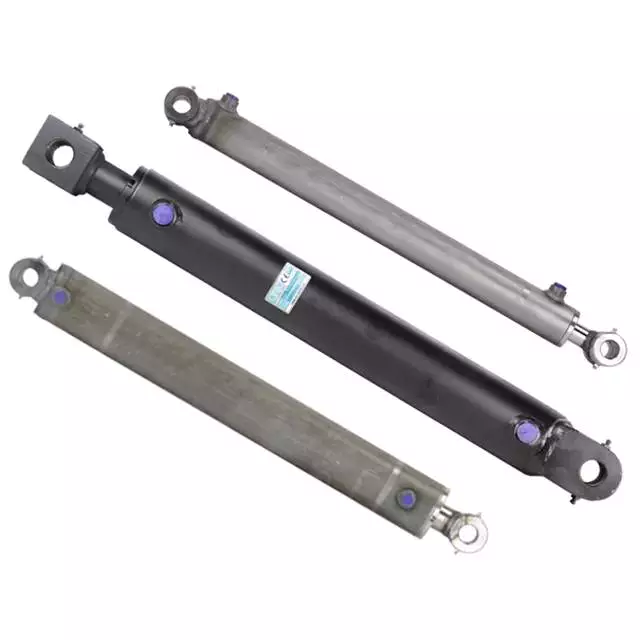
Product Name | HSG Series Hydraulic Cylinder | |||
Work Press | 7/14/16/21/31.5MPa 37.5/63MPa Can be Customized | |||
Материал | Aluminum,Cast Iron,45mnb Steel,Stainless Steel | |||
Bore Size | 40mm–320mm,Customizable | |||
Shaft Diameter | 20mm–220mm,Customizable | |||
Stroke Length | 30mm–14100mm,Customizable | |||
Rod Surface Hardness | HRC48-54 | |||
Paint Color | Black,Yellow,Blue,Brown,Customizable | |||
Mounting | Earring,Flange,Clevis.Foot,Trunnion,Customizable | |||
Warrenty | 1 Year | |||
MOQ | 1 Piece | |||
Delivery Time | 7-15 Days,Also depands on specific demands | |||
Certification | ISO9001,CE | |||
Компания профилі
QIANGLIN HYDRAULIC MACHINERY CO., LTD
| QiangLin is a professional hydraulic equipment manufacturer, mainly engaged in hydraulic system design, manufacture, installation, transformation, sales, and technical services. Our manufacturing facilities are certified to the ISO 9001 standard. We are an approved supplier to many equipment manufacturers in China. We are also partners with many customers from America, Canada, Australia, Germany, England, and other European Countries. Product quality, shorter delivery time, and customer satisfaction are our long-term commitments to our CHINAMFG customers. Hope to be your partner. |
FAQ:
Q1: Are you a trading company or a manufacturer?
A: We have our own factory.
Q2: Are you able to make Non-standard or customized products?
A: Yes, we can.
Q3: How long is your delivery time?
A: Normally, the delivery time is 7 days if we have stock, 15-30 working days if we don’t. but it
also depends on the product
requirements and quantity.
Q4: Do you provide samples? are the samples free or not?
A: Yes, we can provide samples, but they are not free of charge.
Q5: What are your payment terms?
A: 30% deposit T/T or Irrevocable L/C at sight, If you have any questions, please feel free to
contact us.
Q6: What are your After-sales services?
A: Before shipment, Each individual product will be strictly inspected on our factory QC Process
System. In addition, We have a
Customer Service team to respond to customers’ questions within 12 hours. Being helpful in
solving customers’ problems is always our goal.
| Сертификаттау: | CE, ISO9001 |
|---|---|
| Қысым: | High Pressure |
| Жұмыс температурасы: | Қалыпты температура |
| Теңшеу: | Қолжетімді |
|
|---|
.shipping-cost-tm .tm-status-off{background: none;padding:0;color: #1470cc}
| Shipping Cost: Estimated freight per unit. | about shipping cost and estimated delivery time. |
|---|
| Payment Method: |
|
|---|---|
| Initial Payment Full Payment |
| Currency: | US$ |
|---|
| Return&refunds: | You can apply for a refund up to 30 days after receipt of the products. |
|---|
Can hydraulic cylinders be integrated with modern telematics and remote monitoring?
Yes, hydraulic cylinders can indeed be integrated with modern telematics and remote monitoring systems. The integration of hydraulic cylinders with telematics and remote monitoring technology offers numerous benefits, including enhanced operational efficiency, improved maintenance practices, and increased overall productivity. Here’s a detailed explanation of how hydraulic cylinders can be integrated with modern telematics and remote monitoring:
1. Sensor Integration:
– Hydraulic cylinders can be equipped with various sensors to gather real-time data about their performance and operating conditions. Sensors such as pressure transducers, temperature sensors, position sensors, and load sensors can be integrated directly into the cylinder or its associated components. These sensors provide valuable information about parameters such as pressure, temperature, position, and load, enabling remote monitoring and analysis of the cylinder’s behavior.
2. Data Transmission:
– The data collected from the sensors in hydraulic cylinders can be transmitted wirelessly or through wired connections to a central monitoring system. Wireless communication technologies such as Bluetooth, Wi-Fi, or cellular networks can be employed to transmit data in real-time. Alternatively, wired connections such as Ethernet or CAN bus can be utilized for data transmission. The choice of communication method depends on the specific requirements of the application and the available infrastructure.
3. Remote Monitoring Systems:
– Remote monitoring systems receive and process the data transmitted from hydraulic cylinders. These systems can be cloud-based or hosted on local servers, depending on the implementation. Remote monitoring systems collect and analyze the data to provide insights into the cylinder’s performance, health, and usage patterns. Operators and maintenance personnel can access the monitoring system through web-based interfaces or dedicated software applications to view real-time data, receive alerts, and generate reports.
4. Condition Monitoring and Predictive Maintenance:
– Integration with telematics and remote monitoring enables condition monitoring and predictive maintenance of hydraulic cylinders. By analyzing the collected data, patterns and trends can be identified, allowing for the detection of potential issues or anomalies before they escalate into major problems. Predictive maintenance algorithms can be applied to the data to generate maintenance schedules, recommend component replacements, and optimize maintenance activities. This proactive approach helps prevent unexpected downtime, reduces maintenance costs, and maximizes the lifespan of hydraulic cylinders.
5. Performance Optimization:
– The data collected from hydraulic cylinders can also be utilized to optimize their performance. By analyzing parameters such as pressure, temperature, and load, operators can identify opportunities for improving operational efficiency. Insights gained from the remote monitoring system can guide adjustments in system settings, load management, or operational practices to optimize the performance of hydraulic cylinders and the overall hydraulic system. This optimization can result in energy savings, improved productivity, and reduced wear and tear.
6. Integration with Equipment Management Systems:
– Telematics and remote monitoring systems can be integrated with broader equipment management systems. This integration allows hydraulic cylinder data to be correlated with data from other components or related machinery, providing a comprehensive view of the overall system’s performance. This holistic approach enables operators to identify potential interdependencies, optimize system-wide performance, and make informed decisions regarding maintenance, repairs, or upgrades.
7. Enhanced Safety and Fault Diagnosis:
– Telematics and remote monitoring can contribute to enhanced safety and fault diagnosis in hydraulic systems. Real-time data from hydraulic cylinders can be used to detect abnormal conditions, such as excessive pressure or temperature, which may indicate potential safety risks. Fault diagnosis algorithms can analyze the data to identify specific issues or malfunctions, enabling prompt intervention and reducing the risk of catastrophic failures or accidents.
In summary, hydraulic cylinders can be effectively integrated with modern telematics and remote monitoring systems. This integration enables the collection of real-time data, remote monitoring of performance, condition monitoring, predictive maintenance, performance optimization, integration with equipment management systems, and enhanced safety. By harnessing the power of telematics and remote monitoring, hydraulic cylinder users can achieve improved efficiency, reduced downtime, optimized maintenance practices, and enhanced overall productivity in various applications and industries.
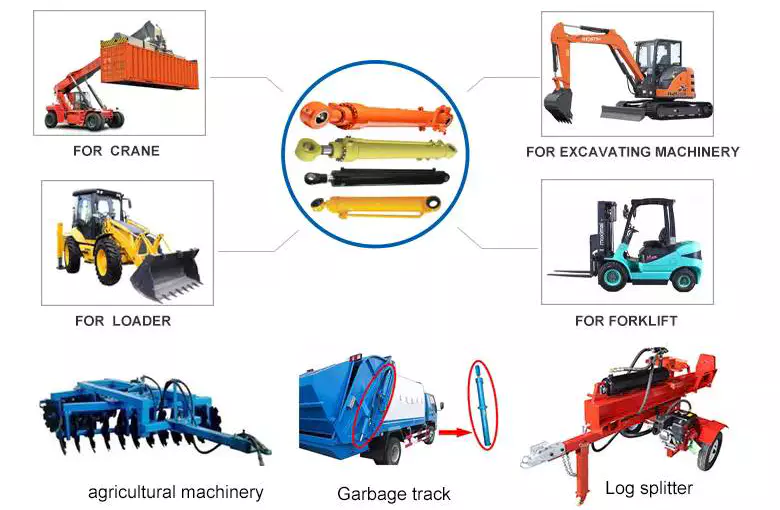
Can you provide real-world examples of machinery that heavily rely on hydraulic cylinders?
Hydraulic cylinders are widely used in various industries and applications due to their ability to provide powerful and precise linear motion. They play a crucial role in enabling the operation of heavy machinery that requires controlled force and movement. Here are some real-world examples of machinery that heavily rely on hydraulic cylinders:
1. Construction Equipment:
– Hydraulic cylinders are extensively used in construction machinery, such as excavators, bulldozers, loaders, and cranes. These machines rely on hydraulic cylinders to perform tasks like lifting heavy loads, extending and retracting booms, tilting buckets, and controlling the movement of various components. Hydraulic cylinders provide the power and precision required to handle the demanding conditions and heavy loads encountered in construction projects.
2. Agricultural Machinery:
– Many agricultural machines, including tractors, combine harvesters, and sprayers, utilize hydraulic cylinders for critical operations. Hydraulic cylinders are used to control the movement of attachments, such as front loaders, backhoes, and plows. They enable functions like lifting and lowering implements, adjusting cutting heights, and controlling the positioning of harvesting equipment. Hydraulic cylinders enhance efficiency and productivity in agricultural operations.
3. Material Handling Equipment:
– Hydraulic cylinders are integral components of material handling equipment, such as forklifts, pallet jacks, and cranes. These machines rely on hydraulic cylinders to lift and lower loads, tilt platforms or forks, and control the movement of lifting mechanisms. Hydraulic cylinders provide the necessary strength and precision to handle heavy loads and ensure safe and efficient material handling operations.
4. Industrial Machinery:
– Various industrial machinery and equipment heavily rely on hydraulic cylinders for critical functions. Examples include hydraulic presses, injection molding machines, metal-forming machines, and hydraulic-powered robots. Hydraulic cylinders enable precise control of force and movement in these applications, allowing for accurate shaping, pressing, and assembly processes.
5. Mining Equipment:
– Hydraulic cylinders are extensively used in mining machinery and equipment. Underground mining machines, such as continuous miners and longwall shearers, utilize hydraulic cylinders for cutting, shearing, and roof support operations. Surface mining equipment, including hydraulic shovels, draglines, and haul trucks, rely on hydraulic cylinders for tasks like bucket movement, boom extension, and vehicle suspension.
6. Automotive Industry:
– The automotive industry extensively utilizes hydraulic cylinders in various applications. Hydraulic cylinders are employed in vehicle suspension systems, power steering systems, convertible tops, and hydraulic brake systems. They enable smooth and controlled movement, precise steering, and efficient braking in automobiles.
7. Aerospace and Aviation:
– Hydraulic cylinders are utilized in aerospace and aviation applications, such as aircraft landing gear systems, wing flaps, and cargo handling equipment. Hydraulic cylinders provide the necessary force and control for extending and retracting landing gear, adjusting wing flaps, and operating cargo doors, ensuring safe and reliable aircraft operations.
8. Marine and Offshore Industry:
– Hydraulic cylinders are essential components in marine and offshore equipment, including ship cranes, winches, and hydraulic-powered anchor systems. They enable lifting, lowering, and positioning of heavy loads, as well as the control of various marine equipment.
These are just a few examples of machinery and industries that heavily rely on hydraulic cylinders. The versatility, power, and precise control offered by hydraulic cylinders make them indispensable in a wide range of applications, where controlled linear motion and force are essential.
Қолдануға арналған дұрыс гидравликалық цилиндрді таңдағанда қандай факторларды ескеру қажет?
Қолдануға арналған дұрыс гидравликалық цилиндрді таңдаған кезде бірнеше маңызды факторларды ескеру қажет. Бұл факторлар таңдалған гидравликалық цилиндрдің қолданыстың нақты талаптарына сәйкес келетініне және сенімді жұмыс істейтініне кепілдік береді. Міне, ескеру қажет негізгі факторлар:
1. Жүктеме талаптары:
– Ескеру қажет маңызды факторлардың бірі – қолданудың жүктеме талабы. Гидравликалық цилиндр көтере алатын максималды жүктемені анықтаңыз. Статикалық жүктемені (цилиндр қозғалмайтын кезде) және динамикалық жүктемені (цилиндр қозғалыста болған кезде) ескеріңіз. Жүктеме талабы цилиндрдің тесік өлшеміне, шыбық диаметріне және жалпы беріктігіне әсер етеді. Қауіпсіздік пен ұзақ мерзімділікті қамтамасыз ету үшін қолданудың максималды жүктемесінен асатын жүктеме сыйымдылығы бар гидравликалық цилиндрді таңдаңыз.
2. Соққының ұзындығы:
– Жүріс ұзындығы гидравликалық цилиндрдің қажетті қозғалысты орындау үшін созылуы және тартылуы қажет қашықтықты білдіреді. Қолданбаның пайдалану талаптарына негізделіп, қажетті жүріс ұзындығын өлшеңіз. Жүріс ұзындығы қажетті қашықтыққа сәйкес келетін немесе одан асатын гидравликалық цилиндрді таңдау өте маңызды. Болашақта қажет болуы мүмкін жүріс ұзындығындағы кез келген ықтимал ауытқуларды немесе түзетулерді ескеріңіз.
3. Жұмыс қысымы:
– Қолдануға қажетті жұмыс қысымын ескеріңіз. Гидравликалық цилиндр гидравликалық жүйедегі максималды қысымға төтеп бере алуы керек. Таңдалған цилиндрдің қысым көрсеткіші қолданбаның максималды жұмыс қысымынан асатынына көз жеткізіңіз. Бұл қауіпсіздікті қамтамасыз етеді және мерзімінен бұрын істен шығудың алдын алады.
4. Жылдамдық талаптары:
– Қолдану үшін гидравликалық цилиндрдің қажетті қозғалыс жылдамдығын анықтаңыз. Ұзарту және тарту жылдамдықтарын ескеріңіз. Дәл басқару мен тұрақтылықты сақтай отырып, қажетті жылдамдыққа қол жеткізе алатын цилиндрді таңдаңыз. Өнімділікке немесе қауіпсіздікке нұқсан келтірмей, қажетті жылдамдықты көтере алатын цилиндрді таңдау маңызды.
5. Орнату:
– Гидравликалық цилиндрге арналған бос орынды және бекіту талаптарын бағалаңыз. Бекіту түрін (мысалы, фланец, табан, түйреуіш немесе кілт), қолжетімді бекіту нүктелерін және кез келген нақты бекіту шектеулерін ескеріңіз. Таңдалған цилиндрдің қажетті жерге оңай және сенімді түрде орнатылатынына көз жеткізіңіз.
6. Қоршаған орта факторлары:
– Гидравликалық цилиндр жұмыс істейтін қоршаған орта жағдайларын бағалаңыз. Температураның шектен шығуы, ылғалдылық, химиялық заттардың, шаңның немесе коррозиялық заттардың әсері сияқты факторларды ескеріңіз. Қолданудың нақты қоршаған орта жағдайларына төтеп беруге арналған цилиндрді таңдаңыз. Бұл цилиндрдің ұзақ қызмет ету мерзімі мен жұмысын қамтамасыз ету үшін тиісті материалдарды, жабындарды немесе тығыздағыштарды таңдауды қамтуы мүмкін.
7. Цилиндр конфигурациясы:
– Қолданбаның талаптарына негізделген тиісті цилиндр конфигурациясын анықтаңыз. Бір реттік немесе қос реттік цилиндрлер, шектеулі кеңістікке арналған телескопиялық цилиндрлер немесе ерекше қолданбаларға арналған арнайы конфигурациялар сияқты факторларды ескеріңіз. Ең қолайлы цилиндр конфигурациясын таңдау үшін қолданбаның нақты қажеттіліктерін бағалаңыз.
8. Техникалық қызмет көрсету және қызмет көрсетуге жарамдылық:
– Гидравликалық цилиндрдің техникалық қызмет көрсету және қызмет көрсету талаптарын ескеріңіз. Техникалық қызмет көрсетуге қолжетімділіктің қарапайымдылығы, қосалқы бөлшектердің қолжетімділігі және өндірушінің немесе жеткізушінің тұтынушыларды қолдау және сатудан кейінгі қызмет көрсету тұрғысынан беделі сияқты факторларды бағалаңыз. Сенімді және беделді брендті таңдау қажет болған жағдайда қосалқы бөлшектердің үздіксіз қолдауын және қолжетімділігін қамтамасыз ете алады.
9. Сәйкестік және стандарттар:
– Салаға және қолданысқа байланысты белгілі бір сәйкестік стандарттарын сақтау қажет болуы мүмкін. Гидравликалық цилиндр сәйкес келуі керек кез келген салалық ережелерді, қауіпсіздік стандарттарын немесе сертификаттарын қарастырыңыз. Таңдалған цилиндрдің қолданыстағы талаптарға сай келетін стандарттар мен сертификаттарға сәйкес келетініне көз жеткізіңіз.
10. Шығындар және бюджет:
– Соңында, гидравликалық цилиндрдің құны мен бюджетін ескеріңіз. Қолданба талаптарына сай келетін цилиндрді таңдау маңызды болғанымен, жалпы шығын тиімділігін де ескеру қажет. Бастапқы сатып алу құнын, ұзақ мерзімді техникалық қызмет көрсету шығындарын және цилиндрдің күтілетін қызмет ету мерзімін бағалаңыз. Құны мен сапаны теңестіру қолданыс үшін ең жақсы құндылықты қамтамасыз ететін гидравликалық цилиндрді таңдауға көмектеседі.
Таңдау процесінде осы факторларды ескере отырып, жүктеме көтергіштігі, жүріс ұзындығы, жұмыс қысымы, жылдамдық, орнату, қоршаған орта жағдайлары, техникалық қызмет көрсету қажеттіліктері, сәйкестік және шығындар тиімділігі тұрғысынан қолданудың нақты талаптарына сай келетін дұрыс гидравликалық цилиндрді таңдау мүмкін болады. Дұрыс таңдау гидравликалық цилиндрдің мақсатты қолданыста оңтайлы өнімділігін, сенімділігін және ұзақ қызмет етуін қамтамасыз етеді.


editor by CX 2023-11-21