製品説明
Chinese manufacturers Counterweight hydraulic cylinders for Cranes for sale
In cranes, a counterweight hydraulic cylinder is not a commonly used component. However, the counterweight system is crucial in crane stability and balance. It’s important to note that while hydraulic systems are not directly involved in the counterweight system, they play a significant role in overall crane functionality. Hydraulic systems provide the power and control necessary for lifting, extending, and positioning the crane’s components, including the boom, jib, and other operational elements.
| bore diameter (D) | rod diameter (d) | stroke (S) | Installation distance (L) | working pressure | Interface dimensions (M) | weight |
| Φ200 | Φ100 | 180 | 530 | 25MPa;40MPa | 3-G1/4;M20*1.5;2-M14*1.5 | 124kg |
The counterweight system in cranes and its relation to hydraulic systems.
Counterweight System: Cranes are designed with a counterweight system to provide stability and balance during lifting operations. The counterweights are typically heavy weights attached to the rear of the crane, opposite the boom. They counterbalance the importance of the lifted load, preventing the crane from toppling over.
Hydraulic Systems in Cranes: While hydraulic systems are extensively used in cranes for various functions such as lifting, extending the boom, or controlling the jib, they are not directly involved in the counterweight system. Hydraulic systems in cranes are primarily responsible for powering the crane’s lifting and positioning mechanisms.
Importance of Counterweight System: The counterweight system is crucial for safe crane operation. The weight and position of the counterweights are carefully calculated to maintain the crane’s stability and prevent tipping. Proper distribution and adjustment of the compensations are essential for ensuring safe lifting operations and maintaining the crane’s structural integrity.
Hydraulic Cylinder Applications in Cranes: Hydraulic cylinders in cranes are primarily used to telescope the boom sections, raise and lower the jib, or control the boom angle. These cylinders provide the force and control to maneuver the crane and position the load accurately.
How do counterweights work on a crane?
Balance and Stability: Cranes are designed with a center of gravity that must be maintained within the crane’s footprint to prevent tipping or instability. When a crane lifts a load, it creates a moment, or force, that can cause the crane to tip CHINAMFG if not counterbalanced. Counterweights are used to offset this moment and maintain stability.
Weight Distribution: Counterweights are typically large, heavy weights attached to the rear of the crane, opposite the boom. The weight and distribution of the counterweights are carefully calculated to provide the necessary balance. The counterweights are positioned to ensure the crane remains stable while lifting loads at various boom angles and radii.
Calculations and Adjustments: The size and configuration of the counterweights are determined based on the crane’s lifting capacity, boom length, boom angle, and other variables. Engineers calculate the required counterweight mass and position to maintain stability during lifting scenarios. Adjustments to the counterweights may be necessary for crane operators to accommodate different load weights, boom configurations, or operating conditions.
Load Moment Indicator (LMI): Many modern cranes have a Load Moment Indicator (LMI), which measures and displays the crane’s real-time load moment. LMI systems consider the weight of the load, boom length, boom angle, and counterweight configuration to provide the operator with information about the crane’s stability. The LMI helps operators ensure that the crane remains within safe operating limits.
Additional Counterweight Systems: Some cranes may have other counterweight systems, such as removable or modular counterweights. These systems allow operators to adjust the counterweight configuration based on specific lifting requirements. Adding or removing offsets can optimize the crane’s lifting capacity and stability for different applications.
当社
当社は、組立に関する一流の独立研究開発プラットフォームを有しています。フォークリフトシリンダー生産工場には、半自動昇降シリンダー組立ラインが4本、全自動傾斜シリンダー組立ラインが1本あり、年間生産能力は100万個です。特殊シリンダー工場には、様々な仕様の半自動洗浄・組立システムが備えられており、年間生産能力は20万個です。また、有名なCNC加工設備、マシニングセンター、高精度シリンダー加工専用設備、ロボット溶接機、自動洗浄機、自動シリンダー組立機、自動塗装生産ラインなどを備えています。300セット以上の重要設備が稼働しており、設備資源の最適化された配分と効率的な利用により、製品の精度要件を満たし、高い品質基準を満たしています。
フォークリフトシリンダー組立工場 | その他のタイプのシリンダー組立工場 |
溶接
塗装とコーティング
塗装・コーティングライン | 全自動水性 |
テスト
To further improve product performance and establish the leadership position of our hydraulic cylinder in the industry, our company and zjimee jointly established a Comprehensive performance laboratory of hydraulic cylinders, hydraulic valves, and hydraulic pumps; the lab is computer-assisted testing, using electro-hydraulic control technology, the test conditions preset by computer, which improves the test accuracy and system versatility, and the experimental data.
センサーの適用により自動収集が実現され、シリンダーやバルブの内部漏れや負荷効率などの出力データは、コンピュータによって直接処理され、標準単位(ml/分、%)に変換されます。同時に、油圧システムの安全な動作を確保するため、「油温監視、液面監視、フィルター装置監視」などの主要な性能パラメータの状態監視機能が実行されます。中でも、油圧シリンダー試験台は、読み取り値によって「負荷効率」と「内部漏れ」の性能をテストできます。また、国家規格の油圧シリンダー製品のすべての試験項目の要件を満たす格子定規測定器が装備されています。
当社の工場
梱包と配送
| 認証: | GS、RoHS、CE、ISO9001 |
|---|---|
| プレッシャー: | 高圧 |
| 動作温度: | 通常の温度 |
| 行動様式: | ダブルアクト |
| 作業方法: | ロータリー |
| 調整済みフォーム: | 規制対象タイプ |
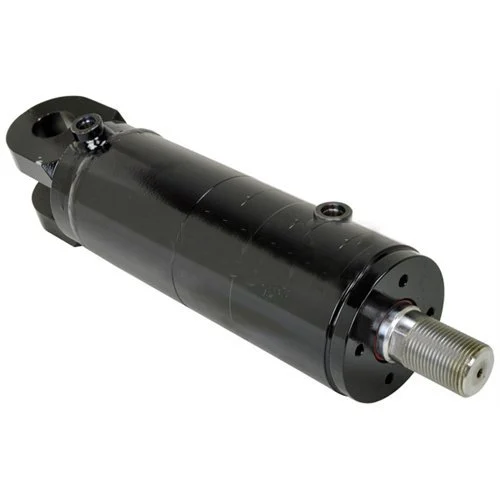
Can tilt cylinders be used in forestry equipment for tree handling?
Yes, tilt cylinders can be used in forestry equipment for tree handling. These cylinders play a vital role in enhancing the efficiency and safety of forestry machinery involved in tasks such as felling, delimbing, and loading trees. Here’s a detailed explanation:
- Tilt Angle Adjustment: Tilt cylinders allow operators to adjust the tilt angle of forestry equipment attachments, such as grapples or felling heads. By actuating the cylinders, operators can tilt the attachment to the desired angle, facilitating precise tree handling. The ability to control the tilt angle enables operators to align the attachment with the tree trunk or branches, improving cutting accuracy and minimizing the risk of damage to the machinery or surrounding environment.
- Tree Gripping and Manipulation: Tilt cylinders contribute to effective tree gripping and manipulation. When combined with grapples or clamps, these cylinders provide the necessary force and control to securely hold and maneuver trees. Operators can adjust the tilt angle of the attachment to ensure a firm grip on the tree during felling, delimbing, or loading operations. This capability enhances operational safety, prevents tree slippage, and improves overall productivity.
- Load Distribution: Precise tree handling requires proper load distribution. Tilt cylinders allow operators to adjust the tilt angle to distribute the tree’s weight evenly across the equipment. This optimization of load distribution is particularly important when handling large or heavy trees. By achieving balanced positioning through tilt cylinder control, operators can minimize stress on the equipment, maintain stability, and ensure safe tree handling.
- Integration with Control Systems: Tilt cylinders can be integrated with advanced control systems in modern forestry equipment. These control systems may include hydraulic or electronic controls that offer precise and automated tilt angle adjustments. By utilizing such systems, operators can achieve consistent and accurate tree handling, reducing operator fatigue and improving operational efficiency.
- Operator Safety and Ergonomics: Tilt cylinders contribute to operator safety and ergonomics during tree handling tasks. By allowing for precise tilt angle adjustments, these cylinders enable operators to maintain a comfortable and ergonomic working posture. This reduces the risk of strain or injury and enhances operator control and visibility, especially in challenging forestry environments.
- Attachment Versatility: Tilt cylinders provide versatility in forestry equipment attachments. They can be used in various configurations, such as single-acting or double-acting cylinders, depending on the specific application requirements. This versatility allows forestry machinery to handle different tree sizes, shapes, and conditions, adapting to the diverse needs of forestry operations.
Therefore, tilt cylinders can be effectively utilized in forestry equipment for tree handling. Whether it involves tilt angle adjustment, tree gripping and manipulation, load distribution optimization, integration with control systems, operator safety and ergonomics, or attachment versatility, tilt cylinders contribute to improving the efficiency, accuracy, and safety of tree handling operations in the forestry industry.
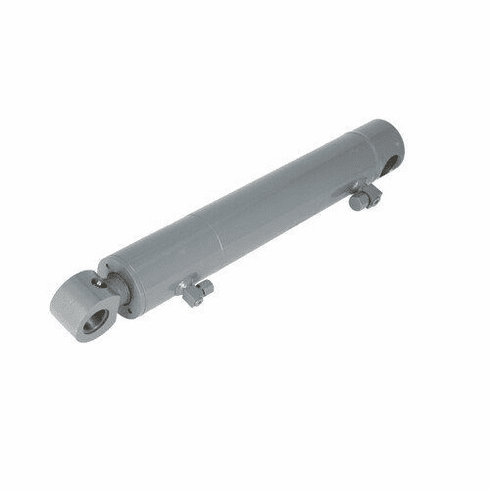
Can tilt cylinders be used in material handling equipment for load manipulation?
Yes, tilt cylinders are commonly used in material handling equipment for load manipulation. These cylinders play a crucial role in enhancing the versatility and efficiency of equipment designed for lifting, moving, and manipulating various types of loads. Here’s a detailed explanation:
- Load Tilting: Tilt cylinders enable material handling equipment to tilt loads, allowing for precise positioning and manipulation. By adjusting the tilt angle, operators can optimize load distribution, accommodate uneven surfaces, and ensure secure handling. Tilt cylinders provide the necessary force and control to achieve the desired load tilting, enhancing safety and operational efficiency.
- Load Stabilization: In material handling applications, load stability is essential to prevent shifting, sliding, or toppling during transport or manipulation. Tilt cylinders contribute to load stabilization by allowing operators to adjust the load tilt angle and maintain a stable position. This feature is particularly important when dealing with unbalanced or irregularly shaped loads. By utilizing tilt cylinders, material handling equipment can ensure safe and secure load manipulation.
- Load Dumping: Tilt cylinders also facilitate load dumping in certain material handling equipment. For example, in dump trucks or dumpers, tilt cylinders allow the controlled tilting of the cargo bed to unload the materials. By actuating the cylinders, operators can achieve controlled and efficient dumping of the load, minimizing material waste and optimizing productivity.
- Load Rotation: Some material handling equipment, such as rotating telehandlers or rotating fork attachments, utilize tilt cylinders to enable load rotation. By adjusting the tilt angle, the equipment can rotate the load horizontally, providing flexibility in positioning or transferring materials. Tilt cylinders provide the necessary force and control for smooth load rotation, expanding the equipment’s capabilities.
- Integration with Hydraulic Systems: Tilt cylinders are integrated with hydraulic systems present in material handling equipment. Hydraulic power is utilized to actuate the cylinders, providing the required force and control for load manipulation. The hydraulic system allows for precise and responsive movement, enabling operators to adjust the load tilt angle according to specific requirements.
- Customization and Compatibility: Tilt cylinders can be customized to suit different types of material handling equipment and load manipulation applications. Manufacturers offer tilt cylinders with varying specifications, such as different force capacities, stroke lengths, and mounting options, to ensure compatibility and optimal performance. This customization allows for seamless integration and enhances the overall functionality of material handling machinery.
Therefore, tilt cylinders are widely used in material handling equipment for load manipulation tasks. Whether it involves load tilting, stabilization, dumping, or rotation, tilt cylinders provide the necessary force, control, and flexibility to handle various loads efficiently and safely. Their integration with hydraulic systems and customization options make them indispensable components in material handling applications.
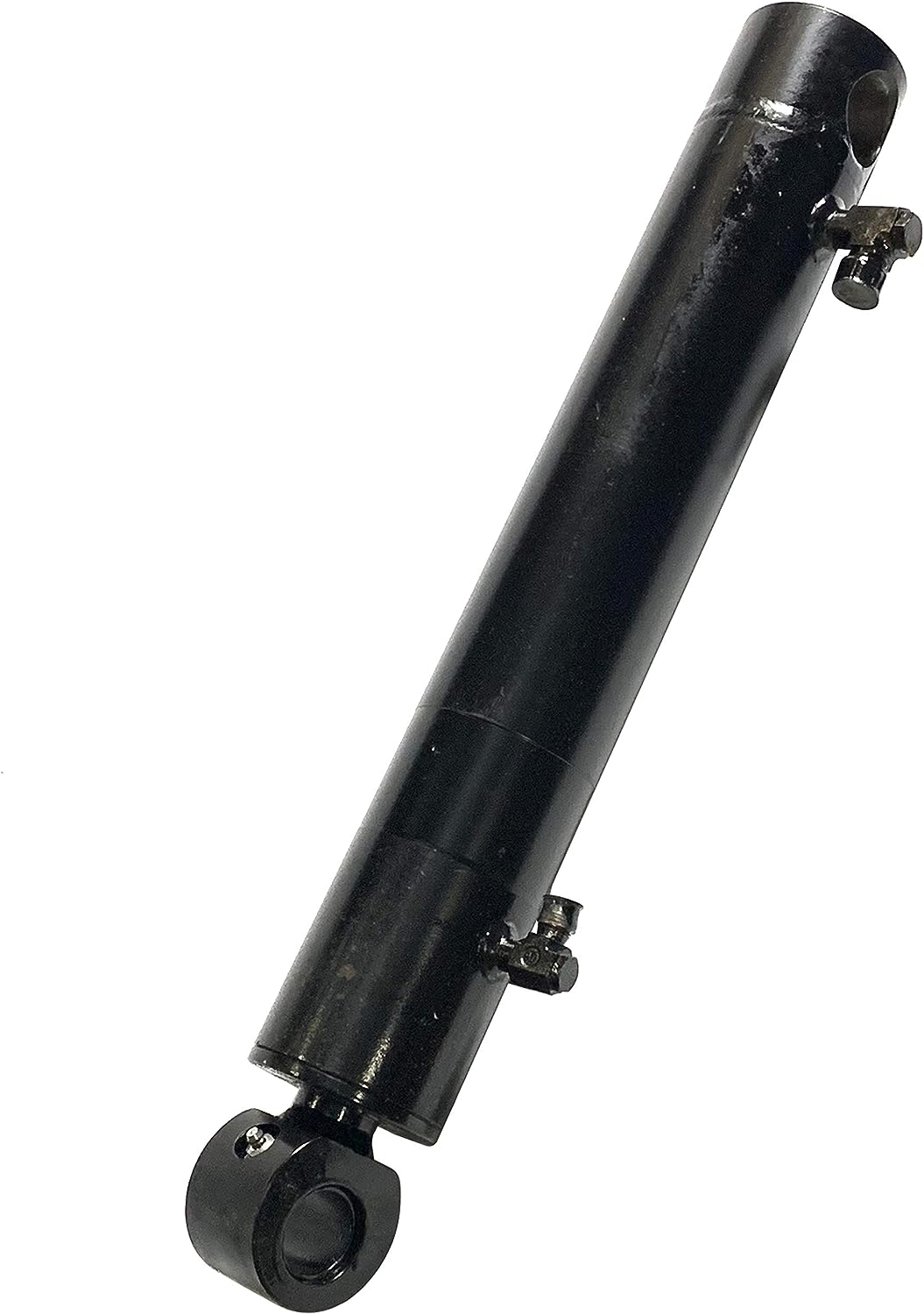
Can you explain the role of hydraulic fluid in a tilt cylinder?
Hydraulic fluid plays a crucial role in the operation of a tilt cylinder. It is an essential medium that enables the transfer of force and controls the movement of the cylinder. Here’s a detailed explanation of the role of hydraulic fluid in a tilt cylinder:
- Force Transmission: Hydraulic fluid is used to transmit force from the hydraulic system to the tilt cylinder. The hydraulic system pressurizes the fluid, creating hydraulic pressure that acts on the surface of the piston. This pressure imbalance generates a force that moves the piston and, in turn, extends or retracts the rod of the tilt cylinder. The force transmitted through the hydraulic fluid allows for controlled tilting of the attached component in heavy machinery.
- Flow Control: Hydraulic fluid is responsible for controlling the flow of force within the tilt cylinder. The hydraulic system uses control valves to regulate the flow and direction of the fluid. By adjusting the position of the control valves, the operator can control the speed, direction, and extent of the tilting movement. This flow control mechanism enables precise positioning and adjustment of the tilted component according to the specific task requirements.
- Pressure Regulation: Hydraulic fluid also allows for the regulation of pressure within the tilt cylinder. The hydraulic system incorporates pressure regulators or relief valves to maintain the desired pressure levels. These valves ensure that the hydraulic fluid pressure remains within the safe operating range, preventing excessive pressure buildup that could damage the cylinder or other components. Pressure regulation contributes to the safe and efficient operation of the tilt cylinder.
- Lubrication and Cooling: Hydraulic fluid serves as a lubricant within the tilt cylinder, reducing friction between moving components. This lubrication minimizes wear and tear, extending the lifespan of the cylinder. Additionally, the hydraulic fluid absorbs and dissipates heat generated during operation, acting as a coolant. Effective lubrication and cooling contribute to the overall performance and durability of the tilt cylinder.
- Sealing and Contamination Prevention: Hydraulic fluid helps maintain the integrity of the tilt cylinder’s hydraulic seals. The fluid creates a seal between the piston and cylinder wall, preventing hydraulic fluid leakage. It also acts as a barrier, preventing contaminants such as dirt, debris, or moisture from entering the cylinder and potentially causing damage. This sealing and contamination prevention function ensures the proper functioning and longevity of the tilt cylinder.
In summary, hydraulic fluid plays a multifaceted role in a tilt cylinder. It transmits force, controls the flow and pressure, provides lubrication and cooling, seals the cylinder, and prevents contamination. By utilizing hydraulic fluid effectively, the tilt cylinder enables controlled tilting of components in heavy machinery, ensuring precise operation, and enhancing the performance and reliability of the equipment.


editor by CX 2023-11-19